REVIEW · TOKYO
Samurai Experience in Tokyo / SAMURAI’ve
Book on Viator →Operated by SAMURAI EXPERIENCE in Tokyo【SAMURAI've】 · Bookable on Viator
Sword class in Tokyo is unexpectedly fun. This hands-on session teaches basic samurai sword use while you’re dressed in traditional costume, with step-by-step instruction from professional performers. I like that the training isn’t just posing with props, it’s structured lessons that build from respect to real practice.
Two big wins for me are the hands-on instruction and the photoshoot at the end. You’ll get the costume experience up close, then you’ll learn and repeat basic movements, and finally you’ll wrap it up with pictures you can actually use.
One thing to consider: timing can matter a lot. If you’re late for the start (the ticket details can be easy to misread), you may miss the experience entirely, so plan to arrive early.
In This Review
- Key Highlights You Should Care About
- What You Do First: Kitsuke Costume Dressing and Quick Samurai Look
- Reigi Sahou: Etiquette and Manners Before Any Sword Moves
- Basic Lesson to Tachimawari: How the Training Builds
- Your Instructors in Action: Professional Samurai Performers and Real Teaching
- The Photoshoot Moment: Get Your Samurai Look on Camera
- Timing and Meeting Point in Sendagaya (Shibuya): Don’t Get Tripped Up
- Price and Value: What You Get for About $71.85
- Who This Works Best For (and Who Might Skip It)
- Should You Book Samurai’ve in Tokyo?
- FAQ
- FAQ
- How long is the Samurai sword class?
- What time slots are available?
- What’s included in the experience?
- Do you use real sharp swords?
- Is a samurai performance included?
- Where is the meeting point?
- Is this a small group?
- Do we get a photoshoot?
- Can I cancel for free?
- When should I book?
Key Highlights You Should Care About
- Kitsuke kimono dressing first: You start by learning how to wear the outfit before any sword practice.
- Reigi sahou etiquette matters: The class includes manners and respect, not just fight choreography.
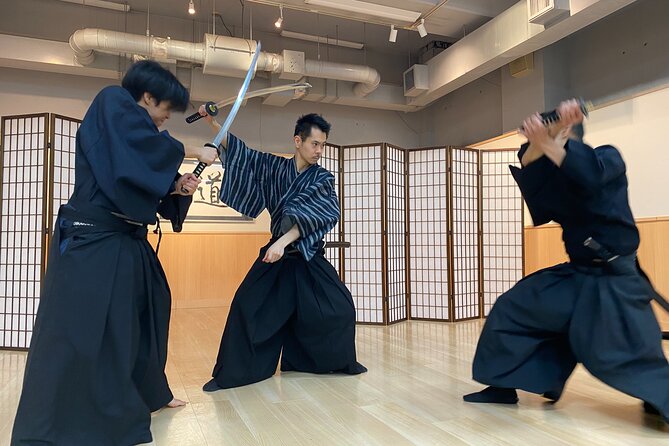
- Practice katana that’s safe by design: Metal training swords are heavy but not sharp where you’d worry.
- Tachimawari hands-on sword experience: You don’t just watch; you try the moves with guidance.
- A built-in photo finish: You’ll get a photoshoot while you’re in full samurai gear.
- Small group size (max 19): Easier to ask questions and get individual help.
What You Do First: Kitsuke Costume Dressing and Quick Samurai Look
The session starts with Kitsuke, which is all about getting into the samurai costume. If you’ve never worn a kimono-style outfit before, this is where the class earns its keep. Instead of you guessing how to tie things (and looking tense in photos), an instructor handles the process and teaches you enough to feel confident.
For photos, this opening part is more than costume admin. You get dressed, you get set up, and you build your “samurai face” early, which makes the later photo moment feel like the payoff instead of an afterthought. You’ll also understand how the outfit changes movement, which matters once you’re holding a sword.
Practical tip: wear comfortable layers underneath. You’ll be standing for photos and moving during the training parts, so avoid anything that’s overly restrictive.
You can also read our reviews of more tours and experiences in Tokyo.



Reigi Sahou: Etiquette and Manners Before Any Sword Moves
Before anyone swings anything, the class moves into Reigi sahou, the etiquette and manners of samurai sword culture. This part can feel surprising if you expected pure action. But it’s also what makes the training feel grounded, not like a stunt show.
The etiquette piece gives context for how the movements are taught. You’re not learning sword technique in a vacuum. You’re learning that stance, attention, and respect come first, then the body follows.
In plain terms: this helps beginners. If you’re new to sword training, having a “why” behind the steps keeps you from treating every instruction like random choreography.
Basic Lesson to Tachimawari: How the Training Builds
After the etiquette foundation, you get the basic sword lesson. The goal here is control. You learn basic moves of samurai sword fighting, then you practice them in a way that connects the earlier respect/stance ideas to actual technique.
Then comes Tachimawari, the part where you experience sword fighting first-hand. This is where you feel the difference between watching sword lessons on video and actually trying to coordinate your hands, stance, and timing. The swords are practice versions, so the focus is on correct motion and safety.
Safety note that’s worth your attention: the class provides metal practice swords that are described as heavy, but not sharp where it would be dangerous. That combination matters. Heavy means you feel the weight and learn handling. Not-sharp where it counts means you can focus without constant fear.
If you like learning by repetition, this setup works well. You get a lesson, then you immediately test it with guidance, so it sticks.
Your Instructors in Action: Professional Samurai Performers and Real Teaching
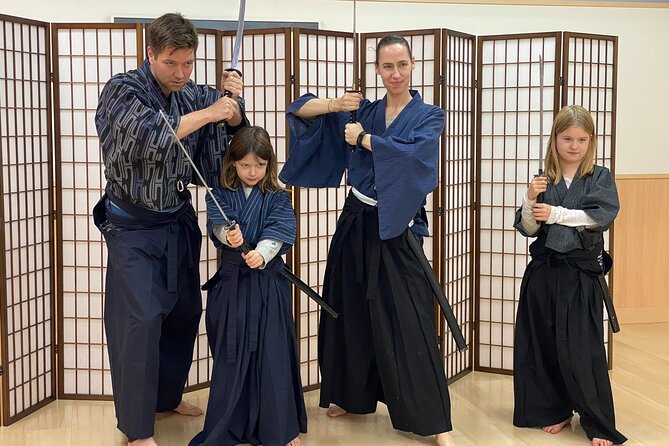
The instructors are professional samurai performers who work in shows and events. That shows in how the session is delivered: it’s performance-quality energy, but it’s still a class with structure.
A name that comes up in feedback is Master Shin. One write-up specifically calls him talented and experienced, with patience and humor that works well even with young teens. Another helpful detail: an assistant takes care of supporting roles and helping with photos, so the class feels smoother and you aren’t left alone trying to manage costume, gear, and camera angles.
What I like about this is the blend of discipline and fun. Sword work can be intense if it’s only about intimidation. Here, you’re taught in a way that keeps it safe and lets you ask questions.
The Photoshoot Moment: Get Your Samurai Look on Camera
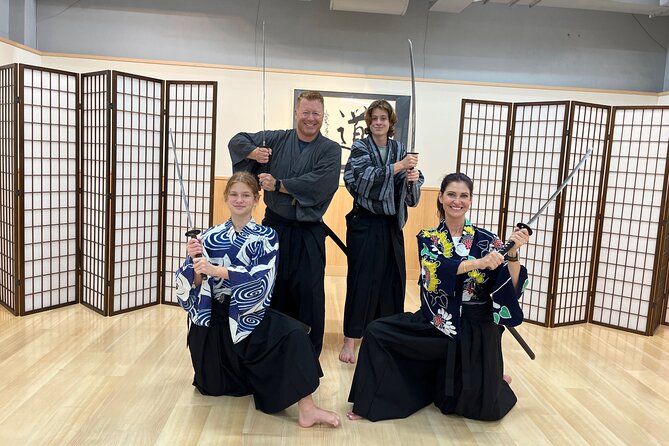
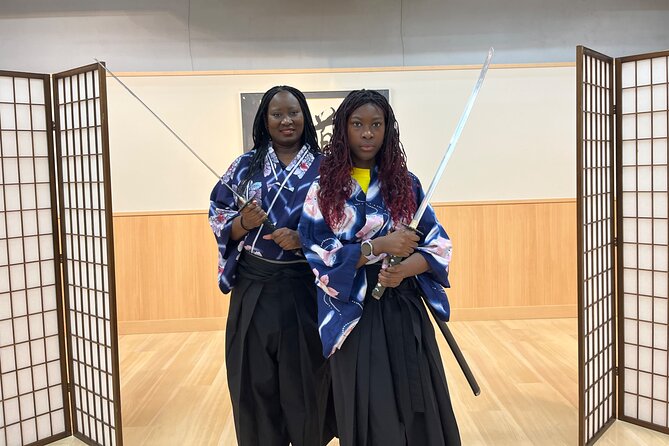
The session ends with a photo shoot, and it’s not just a quick phone snap. The class setup makes it easy to look like you’re actually part of the action sequence you practiced.
Multiple tips from feedback align on one point: instructors take lots of pictures for posting, and the assistant helps handle the camera side. That’s huge if you don’t want to rely on a friend who’s busy holding the sword too.
My suggestion: if you care about photos (and you probably do, since you’re dressing up), ask for simple photo variations during the final segment. Most people focus on the posed shot, but you’ll get better results if you request at least one where you hold the stance you practiced.






Timing and Meeting Point in Sendagaya (Shibuya): Don’t Get Tripped Up
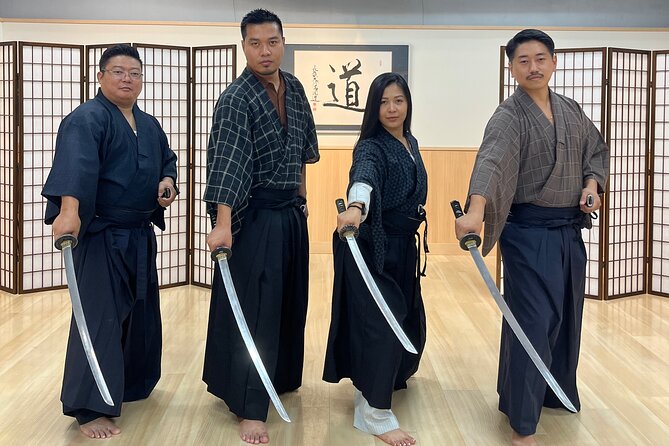
You’ll do the class in about one hour. There are two time slots listed in the schedule: 10:30A.M.–11:30A.M. and 3:00P.M.–4:00P.M. So check your calendar carefully before you head out.
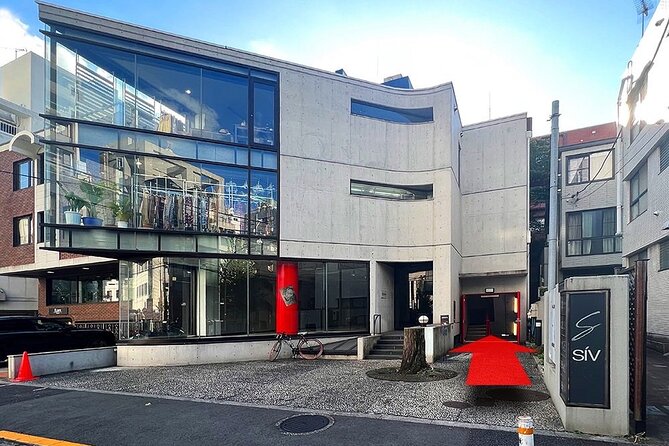
The meeting point is in Shibuya’s Sendagaya area: SAMURAI EXPERIENCE in Tokyo / 侍体験 / Sword Fighting Class SAMURAI’ve, Shibuya, Sendagaya, 3-chōme3-12 Shibata Building B2 (151-0051). It’s described as near public transportation, but Tokyo buildings can be confusing, so use the exact address and give yourself extra time to find the entrance.
Here’s the reality: there’s at least one situation where start-time confusion led to disappointment. To avoid that, arrive early and double-check the start time shown on your own device. If your phone calendar uses a different default time, you’ll want to catch it before you’re standing at the door wondering what happened.
Price and Value: What You Get for About $71.85
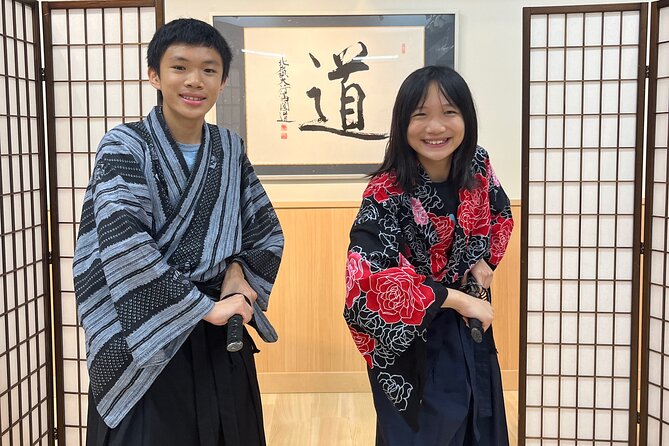
The price is $71.85 per person, and it’s typically booked about 70 days in advance. For a one-hour experience, that’s not “cheap,” but it also isn’t just a costume rental.
You get:
- Samurai costumes (including kimono-style dressing)
- A practice katana (metal fake sword)
- A structured lesson path (etiquette, basic moves, hands-on practice)
- A photoshoot at the end
That combo is what makes it good value. You’re paying for guided teaching plus the full costume-and-photo experience that makes the training feel complete. If you’re traveling with a friend or family member, the group discounts can also make it easier to justify.
Optional add-on: there’s an option to incorporate a samurai performance show by the instructors, but it requires additional fees. If you want straight training, you can skip that. If you’re chasing maximum samurai content in one stop, the add-on can be a logical match.
Who This Works Best For (and Who Might Skip It)
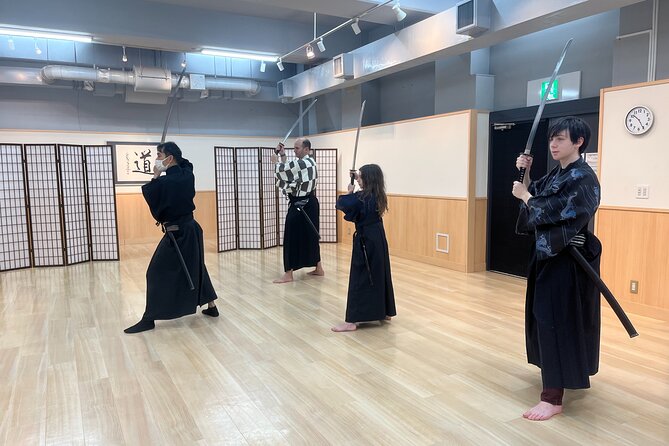
This class fits a wide range of people because “most” can participate and the format is structured. It’s especially good if you:
- Want a memorable Tokyo activity that isn’t just another museum stop
- Like hands-on classes where you actually try the skill
- Have a phone camera addiction and want real costume photos
- Travel with kids or teens who respond well to guided instruction and safe practice (feedback includes a father and child duo, plus a family with a 10-year-old and 14-year-old)
You might skip it if you:
- Want a long, deep historical lecture only (this is skill practice within a short session)
- Are traveling on a super tight schedule and can’t comfortably arrive early to find the B2 meeting spot
Should You Book Samurai’ve in Tokyo?
I’d book it if you want one hour of focused action with a full costume and photo finish. The mix of etiquette + technique + hands-on practice is what turns it from a gimmick into a real activity you’ll remember.
Book it sooner rather than later since it’s commonly scheduled about 70 days out. And do yourself a favor: confirm the exact start time you’ll attend, then arrive early enough to avoid the kind of timing mismatch that ruins the day.
FAQ
FAQ
How long is the Samurai sword class?
It runs for about 1 hour.
What time slots are available?
The schedule lists 10:30A.M.–11:30A.M. and 3:00P.M.–4:00P.M.
What’s included in the experience?
You get samurai costumes, and you use a katana (metal fake sword). The session also includes a photo shoot.
Do you use real sharp swords?
No. You’re provided a katana that is described as a metal fake sword for practice.
Is a samurai performance included?
There’s an option to see a samurai performance during your experience, but it’s an additional cost.
Where is the meeting point?
SAMURAI EXPERIENCE in Tokyo / 侍体験 / Sword Fighting Class SAMURAI’ve at Shibuya, Sendagaya 3-chōme-3-12 Shibata Building B2 (151-0051 Tokyo).
Is this a small group?
Yes. The class has a maximum of 19 travelers.
Do we get a photoshoot?
Yes. The program ends with a photo shoot.
Can I cancel for free?
Yes. You can cancel up to 24 hours in advance for a full refund.
When should I book?
On average, it’s booked about 70 days in advance.