REVIEW · TOKYO
Tokyo: Scenic Bay Cruise with Local Guide on Private Boat
Book on GetYourGuide →Operated by Tokyo Water Taxi · Bookable on GetYourGuide
Tokyo Bay from a small boat feels like cheating. I love gliding under Rainbow Bridge and getting close to Odaiba in a way big boats don’t manage, and I also like how guide Sho turns the skyline stops into easy-to-follow stories. One caution: if you’re prone to seasickness, this small-boat ride may feel rough even though it’s only an hour.
This is the kind of Tokyo outing that lets you slow down without losing the drama of the views. You cruise with a captain and a live English guide, you get a quick safety briefing, and then you spend the rest of the time on deck (plus an indoor area if you want shelter).
At $38 per person for a full hour with guide time, safety gear, and onboard sound, it’s a practical splurge—especially if you’ve been walking for days. Just remember it’s not a long sightseeing tour; it’s a concentrated “look at Tokyo from the water” experience.
In This Review
- Key things to know before you book
- Entering Tokyo Bay’s best seat: the Shibaura waterline
- Why this small-boat cruise feels more like a local outing
- Rainbow Bridge and Odaiba: the part you’ll want photos of
- Practical photo tip
- Tokyo Tower and Tokyo Skytree: quick stops that still matter
- Seabirds near your boat (daytime only): a surprisingly fun add-on
- Sunset on Tokyo Bay: where the skyline becomes a moving photo
- Statue of Liberty, Tokyo: the waterline makes it feel different
- The guide and captain make or break the vibe
- What’s included, and what you’ll want to plan yourself
- What you can’t do on board
- Timing and comfort: who should love this and who should skip it
- Price and value: what $38 buys you in Tokyo
- Should you book this Tokyo Bay cruise?
- FAQ
- How long is the Tokyo Bay cruise?
- Where do we meet for the cruise?
- Is there a live guide, and what language is it?
- What’s included in the price?
- Are food and snacks included?
- Can I bring drinks on board?
- What restrictions are there on the boat?
- Is it suitable for wheelchair users or people prone to seasickness?
Key things to know before you book
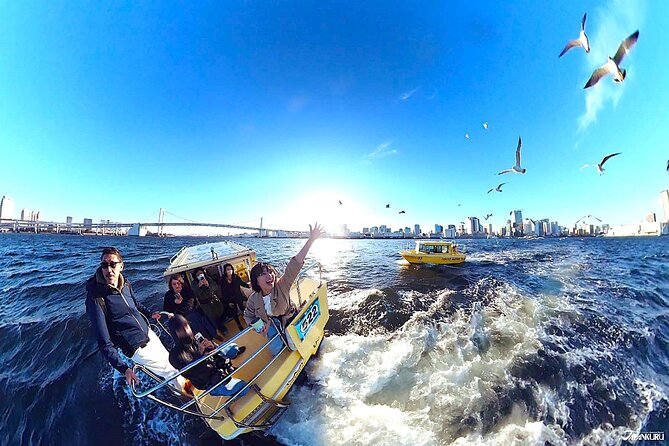
- Small-boat access: You can get under and past viewpoints that feel unreachable on larger vessels.
- Close Rainbow Bridge moments: Plan on photo time while the bridge is right there, not way off in the distance.
- English guide with real stories: Sho-style commentary makes the ride feel personal, not like a lecture.
- Daytime seabird feeding (if running): Friendly seabirds may swoop near the boat during daytime cruises.
- Sunset-friendly timing: When skies cooperate, the bay can turn into a moving postcard—Rainbow Bridge especially.
- Not for everyone: Not set up for wheelchair users, and it’s not recommended if you get seasick easily.
Entering Tokyo Bay’s best seat: the Shibaura waterline
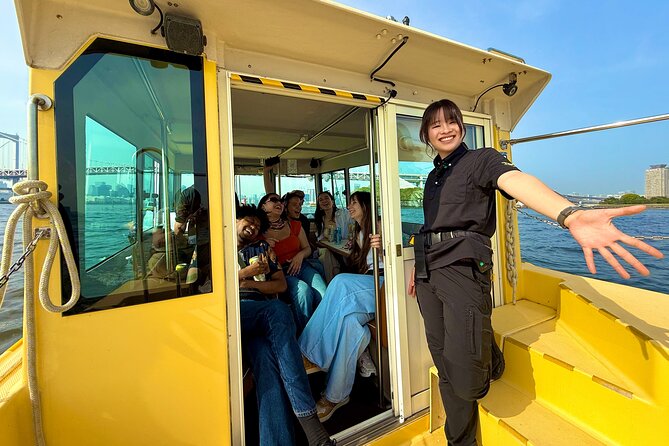
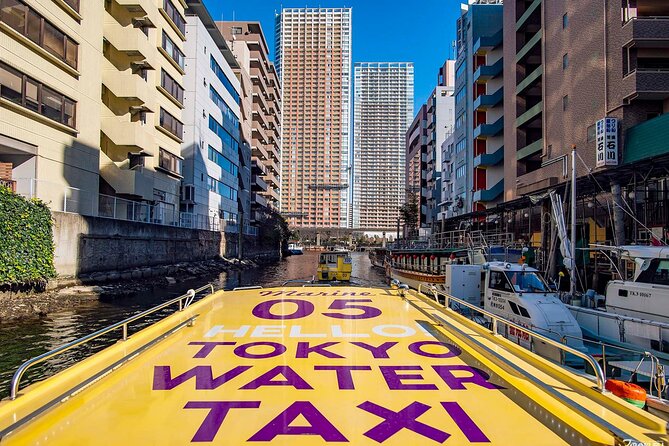
You start at the Tokyo Water Taxi area, right in front of the office, then you follow staff on a short two-minute walk to the pier. From there, it’s a straightforward cruise that feels like a break from Tokyo’s usual pace—less hunting for train times, more looking out at the city.
There’s a brief safety briefing after you’re out on the water, and you’ll have a life jacket on board. After that, you settle in and enjoy what Tokyo looks like when it’s framed by water instead of streets.
You can also read our reviews of more boat tours in Tokyo


Why this small-boat cruise feels more like a local outing
Big sightseeing boats do their job. Still, they can feel distant: more crowd, less connection, and you watch the shoreline glide by like it’s on a screen.
A small boat changes the feel. You get closer to the action and you can actually notice details—wave texture under the hull, the way light hits buildings across the bay, and the sense of speed that bigger boats often blur.
The onboard setup is also simple in the best way. You’ve got a JBL speaker for music if the crew uses it, and you’ll find a comfortable indoor space if the weather shifts. That indoor room matters in Tokyo, where a “nice” day can turn breezy fast.
Rainbow Bridge and Odaiba: the part you’ll want photos of
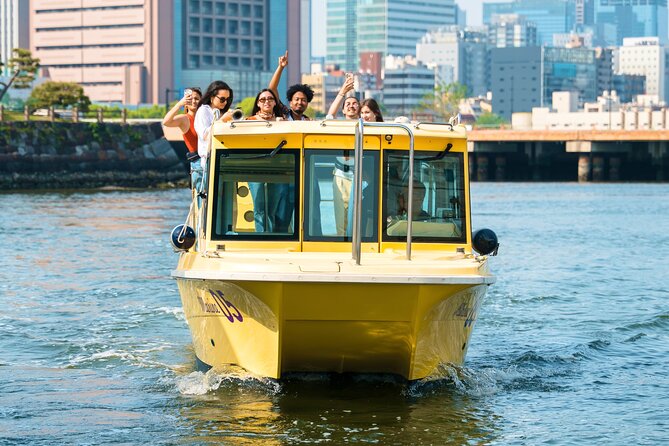
This is the headline moment. You don’t just see Rainbow Bridge from far away—you glide near it and pass through the kind of close-up views that are hard to replicate from land.
Odaiba plays right into that. You sail past the futuristic shoreline up close, so the skyline doesn’t feel like a collection of buildings you’ve already photographed from somewhere else. It feels like you’re sliding through Tokyo’s “future by the water.”
Because this is a small craft, you also get a better sense of scale. Bridges and waterfront buildings stop looking like postcard props and start looking like real structures you’re traveling beside.
Practical photo tip
If you’re shooting on your phone, hold your camera steady at the bridge approach and let the boat do the moving. The bridge looks best when the view is clean and uninterrupted, not when you’re rushing to chase the angle at the last second.
Tokyo Tower and Tokyo Skytree: quick stops that still matter
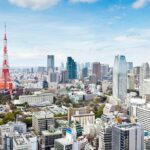
The cruise includes short photo-and-view moments for Tokyo Tower and Tokyo Skytree. Yes, they’re brief, but that’s part of the logic here: you’re not trying to “tour” Tokyo’s landmarks. You’re using the water to capture angles you won’t get easily on foot.
What makes these stops work is the pacing. You’re already on the bay, so you’re not burning time commuting between spots. You just get a window of time where the views line up, you take your pictures, and you keep moving.
The trade-off is obvious. If you want long landmark time—shopping, museum visits, lingering for sunset from one exact spot—this is not designed for that. It’s designed for rolling scenery and on-the-water angles.
You can also read our reviews of more guided tours in Tokyo

Seabirds near your boat (daytime only): a surprisingly fun add-on
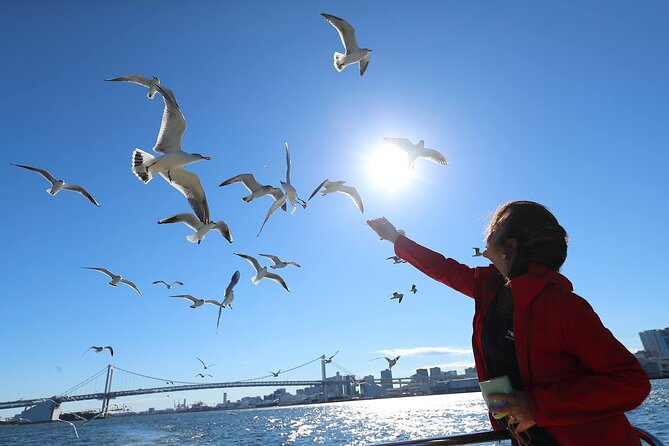
If you’re on a daytime cruise, there’s a special twist: you may enjoy seabird feeding with birds swooping near the boat. That’s one of those Tokyo details that feels small until you’re standing on the deck and they’re actually flying close.
It also changes how you experience the shoreline. Instead of only watching buildings and bridges, you’re watching movement in the sky—birds crossing, circling, and reacting as the boat travels.
Keep your expectations friendly, not chaotic. This isn’t a safari; it’s a natural “Tokyo Bay has wildlife too” moment. Still, it’s a great break from the usual landmark focus.
Sunset on Tokyo Bay: where the skyline becomes a moving photo
Even when you’ve seen Tokyo at night before, the bay has a different rhythm. The lights stretch across the water, and the reflections give the skyline a depth you don’t usually get from streets or sidewalks.
This is where the sunset ride concept really shines. Rainbow Bridge can glow with colors that look more layered from the water, and the city lights feel closer because you’re literally moving alongside them.
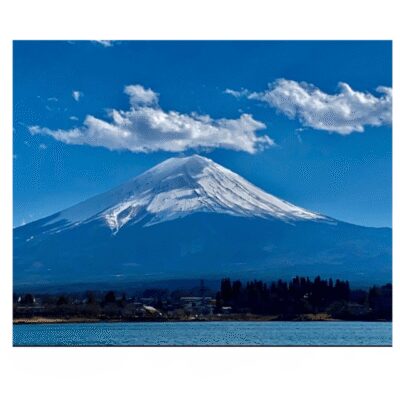
If you’re lucky with conditions, you might even catch a glimpse of Mount Fuji in the distance. It’s not something to count on like a scheduled stop, but it’s the kind of bonus that makes people remember this cruise.
Statue of Liberty, Tokyo: the waterline makes it feel different
The cruise also includes a photo-and-view moment near the Statue of Liberty, Tokyo. From land, you can see it like a landmark. From the bay, it gets framed by the water and becomes part of the broader story of Tokyo’s waterfront choices.
There’s also a “visit or pass by” style moment here. Translation: you’ll have a short time to look and photograph, but you’re still on a cruise schedule rather than a land excursion. So go for the views, not for a long sit-down stop.
The guide and captain make or break the vibe
The cruise works because the guide keeps it human. Guide Sho, in particular, is the kind of person who makes the ride feel like a conversation instead of a script. You’ll get useful explanations at the stops, plus small recommendations that help you understand what you’re looking at.
You also get the comfort of having a captain on board who’s managing the boat. That matters because you’re on moving water, and the vibe stays calm when everything runs smoothly.
One more small detail: because the experience is short, the guide’s timing matters. The commentary lands while the views are still fresh, which keeps you from feeling “information overload” or “we talked and then nothing happened.”
What’s included, and what you’ll want to plan yourself
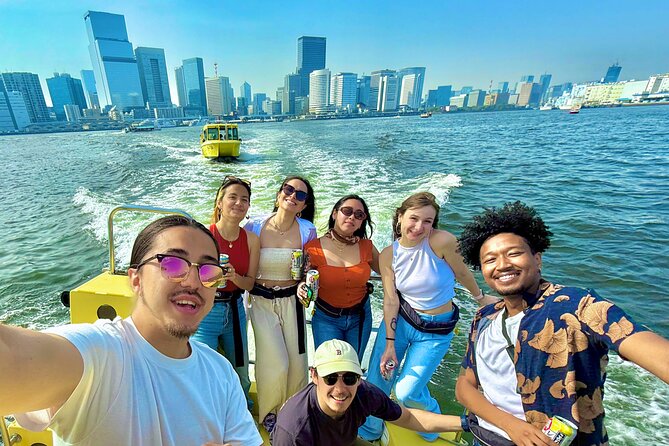
Included in the cruise:
- A 1-hour cruise
- Captain and live local guide on board
- Life jacket
- JBL speaker
Not included:
- Foods and snacks
So I treat this like a flexible Tokyo evening snack plan. If you want something to eat, bring it. The allowed option is pretty clear: you can bring drinks in plastic bottles or cans only—no glass—and you can bring a light meal like a rice ball or sandwich.
There’s also an indoor space on board, so if you’d rather not eat out in the wind, you can settle in comfortably. That’s a good safety valve for Tokyo weather and for anyone who just wants to relax without staying exposed on deck.
What you can’t do on board
To keep things smooth and safe, these are not allowed:
- Smoking
- Fishing
- Umbrellas
- Littering
- Jumping
- Swimming
- Diving
If you’re the umbrella type, leave it behind unless you’ve got a clear plan for staying dry without it.
Timing and comfort: who should love this and who should skip it
This cruise is 1 hour, which is perfect when you’ve already done a big day of Tokyo walking. It’s also ideal when you want a change of pace without committing to a full half-day outing.
It’s private or small-group in style, so you get a more personal experience than the big-boat scene. That personal feel can be a big deal if you’re traveling as a couple, as a small family, or just want fewer people crowding your photo angles.
The main compatibility issues are straightforward:
- Not suitable for wheelchair users
- Not suitable if you’re prone to seasickness
If you know you get queasy on boats, don’t gamble. Tokyo has plenty of other waterfront views that don’t involve moving water.
Price and value: what $38 buys you in Tokyo
$38 per person sounds like a splurge until you look at what you’re actually getting: a full hour on Tokyo Bay with a live English guide, plus a captain, life jackets, and onboard audio. In a city where “just getting to the view” can take time and transit stress, this is a clean pay-for-convenience setup.
Is it “cheap”? No. But it’s also not trying to be a full-day theme park experience. You’re buying time on the water at a reasonable duration, which makes it feel like value when your schedule is tight.
For me, the value comes from the angles. If Rainbow Bridge, Odaiba closeness, and waterfront skyline views are on your list, you’re paying to get those specific perspectives without spending all day chasing them.
Should you book this Tokyo Bay cruise?
Book it if you want:
- Close-up Rainbow Bridge views
- Odaiba waterfront scenery without the commute headache
- A short, relaxing break from walking
- A guide-led experience in English where the stops actually make sense
Skip it if:
- You’re wheelchair-bound
- You know you get seasick easily
- You want long on-land sightseeing time at each landmark
If you’re on the fence, here’s the simplest decision rule: if you’d happily pay to trade crowds and sidewalk time for a guided, one-hour bay ride, this fits. If you’d rather spend that time doing more neighborhoods on foot, you’ll probably prefer sticking to Tokyo’s streets and viewpoints.
FAQ
How long is the Tokyo Bay cruise?
The experience lasts 1 hour.
Where do we meet for the cruise?
Meet right in front of the Tokyo Water Taxi office. Staff will guide you on a short two-minute walk to the pier.
Is there a live guide, and what language is it?
Yes. There’s a live tour guide on board, and the tour is in English.
What’s included in the price?
Included are the 1-hour cruise, the captain and local guide on board, life jackets, and a JBL speaker.
Are food and snacks included?
No. Foods and snacks aren’t included, but you can bring your own light meal and drinks.
Can I bring drinks on board?
Yes, you can bring your own drinks in plastic bottles or cans only. Glass isn’t allowed.
What restrictions are there on the boat?
Smoking, fishing, umbrellas, littering, jumping, swimming, and diving are not allowed.
Is it suitable for wheelchair users or people prone to seasickness?
It’s not suitable for wheelchair users, and it’s also not suitable if you’re prone to seasickness.