REVIEW · TOKYO
Mt. Fuji & Hakone: Fuji Sengen Shrine, Cruise, and Ramen-Making
Book on Viator →Operated by LIMON Tours · Bookable on Viator
Mt. Fuji can feel close here. This full-day trip strings together Lake Ashi views, Shinto shrine panoramas, the Oshino Hakkai ponds, and hands-on ramen-making without you juggling trains and transfers. I like how the day is tightly packed yet still gives real moments to look up at the mountain. One heads-up: the schedule includes a fair bit of walking, and rain can change what you can see from the water.
What makes this one work especially well from Tokyo is the “one ticket, one bus” approach. You leave early (7:40am), ride in an air-conditioned coach with free Wi‑Fi, and come back to Shinjuku the same day. If you’re trying to do Hakone and Mt. Fuji in a single shot, this is a practical way to hit several top sights without burning half your day on transit.
The main consideration is weather and visibility. Even on clear-looking days, Mt. Fuji is famously moody—plus the Lake Ashi cruise may be suspended during bad weather. And if your walking pace is slow, plan carefully around shrine stairs.
In This Review
- Key things that make this tour feel worth it
- Getting out of Tokyo: Shinjuku meeting point and early start
- Why the bus ride matters more than you think
- Lake Ashi cruise: the Fuji-from-the-water payoff
- Ramen-making at Mt. Fuji area: lunch you actually make
- Arakura Fuji Sengen Shrine: torii views and the stair reality
- Oshino Hakkai: eight ponds, snowmelt water, and wandering time
- Price and value: what $128.69 is really buying you
- Guide experience: Yoko, Hiro, and Mami style of storytelling
- Weather, walking, and timing: the stuff that can change your mood
- Should you book this Mt. Fuji & Hakone day trip?
- FAQ
- How long is the Mt. Fuji & Hakone tour?
- Where do I meet, and when does it start?
- Is the Lake Ashi cruise included?
- What’s included in the ramen-making lunch?
- Can I request a vegetarian meal?
- How much walking is involved?
- Will the bus wait for late arrivals?
Key things that make this tour feel worth it
- Air-conditioned bus with free Wi‑Fi so you start the day fresh instead of tired from Tokyo connections
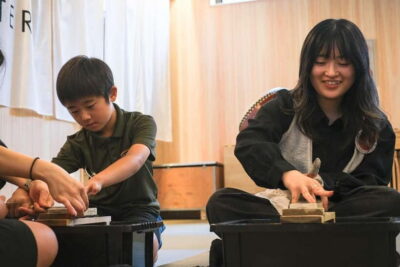
- Hands-on ramen-making where you actually shape the noodles and choose your flavor base and toppings
- Lake Ashi cruise for the classic Fuji-from-the-water angle (weather permitting)
- Arakura Fuji Sengen Shrine with big views and optional stair vs slope walking
- Oshino Hakkai ponds built from Mt. Fuji snowmelt, with easy wandering and snack shopping
Getting out of Tokyo: Shinjuku meeting point and early start
This tour launches from Shinjuku Center Building at 7:40am. It’s about a 7-minute walk from JR Shinjuku Station, which is good news if you like predictable logistics. The catch is simple: the bus leaves as scheduled and doesn’t wait for late arrivals, so I’d rather you arrive early than try to “time it perfectly.”
The group size caps at 42 travelers, which helps keep the day from feeling like a cattle-car rush. Most days, you’ll be on and off the bus with clear timing, plus you get a bathroom window and a chance to eat on the itinerary. One practical tip: in Shinjuku, “a city block” can feel like a maze. Before you go, save the exact meeting address on your phone and pin it on a map. If your phone dies, you’ll be glad you can show the address quickly.
You’re also getting an English-speaking guide, so you’re not left guessing what you’re looking at while everyone else chats in Japanese. The guide can make the big photo stops feel more meaningful instead of just scenic checkboxes.
You can also read our reviews of more boat tours in Tokyo


Why the bus ride matters more than you think
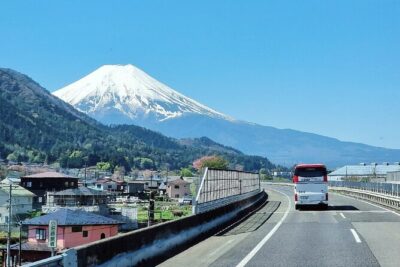
A comfortable coach sounds like a small detail until you realize the day runs about 11 to 12 hours. This is an early departure day, which means you’ll feel every stop if you’re stuck standing in crowded transport. Here, the bus is air-conditioned and includes free Wi‑Fi, and riders have noted it feels roomy with reclining seats and power outlets.
You’re paying not just for destinations, but for energy management. When the transit is handled, you can put your attention where it belongs: the views, the food, and the cultural stops.
Lake Ashi cruise: the Fuji-from-the-water payoff
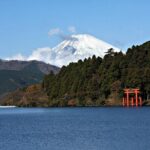
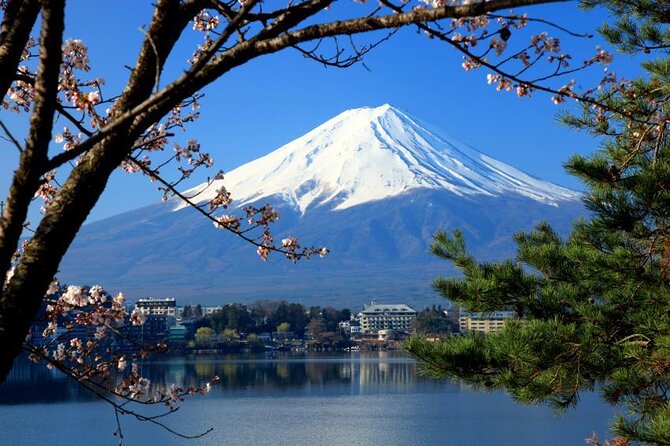
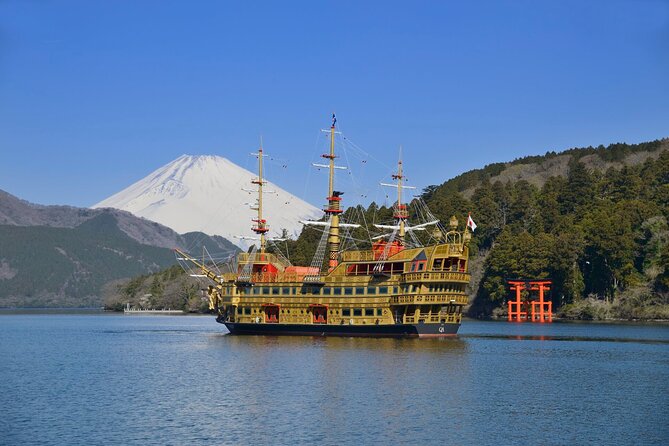
Lake Ashi (also called Lake Hakone area) is your first major “wow” moment. You board the Hakone Pirate Ship for a 25-minute cruise, and the main idea is simple: you get that classic perspective where Mt. Fuji can show up cleanly across the water.
This is also where weather makes or breaks the experience. The day can be spectacular even with clouds, but heavy rain or bad conditions can cause the cruise to become inaccessible. If that happens, you won’t get a refund for the cruise situation, but the tour will take you to alternative facilities.
What I’d do as a practical traveler: dress for changing conditions. Even if it’s mild in Tokyo, Hakone-area weather can feel different once you’re out by the lake. A light rain layer is worth packing because photo opportunities are time-sensitive, and the cruise doesn’t pause for dramatic weather.
Photo-wise, you’re set up for multiple angles. If Mt. Fuji is visible, the lake view tends to look more iconic than street-level viewpoints because you’re seeing the mountain over water, not between buildings.
Ramen-making at Mt. Fuji area: lunch you actually make
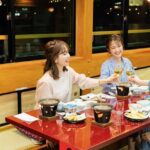
Next comes the most hands-on part of the day: ramen-making in the Mt. Fuji area. The lunch stop is about 1 hour, and this is not the usual “watch a chef” food show. You start from scratch and make your own noodles, then customize your ramen.
Here’s what you control:
- Your soup base
- Your seasonings
- Your toppings
- Even the noodle firmness (how long you boil them)
That customization matters because it turns lunch into an experience rather than a quick meal break. And it’s a rare chance to bring something home with your brain, not just your camera: you learn how Japanese noodle texture changes with timing and how flavor choices stack.
Diet notes to keep you comfortable: vegetarian requests require contacting the provider at least 7 days in advance. Halal and vegan lunches are listed as not available, so plan around that if your diet is strict.
One small downside to know: some riders have said the lunch can be a bit cold when served, and that you’ll eat in traditional low seating, which can be awkward if you’re not used to sitting close to the floor for a while. If you want a comfort-first meal, it’s smart to come with grippy socks and be ready to sit.
Arakura Fuji Sengen Shrine: torii views and the stair reality
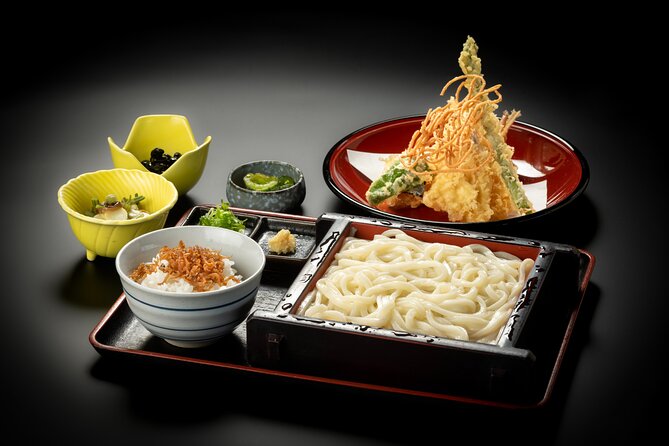
Arakura Fuji Sengen Shrine is one of the most photogenic Mt. Fuji shrine spots for a reason. The shrine is tied to Shinto tradition and includes an older sacred feel—plus the real draw is the view. You’ll pass a grand red torii gate and continue toward the main area.
What makes this stop feel more than scenic is the design and symbolism along the route. As you ascend, you’ll encounter smaller shrines tied to specific protections—safe childbirth and fire protection are called out as part of the area’s dedication.
Then comes the key detail for your legs: to reach the Churei-to Pagoda, you can choose either 398 steps or a gentler sloping path. If you’re traveling with aching knees or you simply move slowly, I’d choose the sloped option without negotiating with yourself.
The pagoda viewpoint is a “look up and breathe” moment. Some days, cherry blossoms are part of the scenery at this shrine, which is why it’s popular during spring. Even when blossoms aren’t out, the structure plus the Fuji view (when visible) gives you that framed, classic Japan photo.
You may also finish the day with a different shrine choice depending on the tour option: Tenku no Torii is listed as an alternative shrine visit. The overall concept is the same—ceremony, views, and a chance to slow down.




Oshino Hakkai: eight ponds, snowmelt water, and wandering time
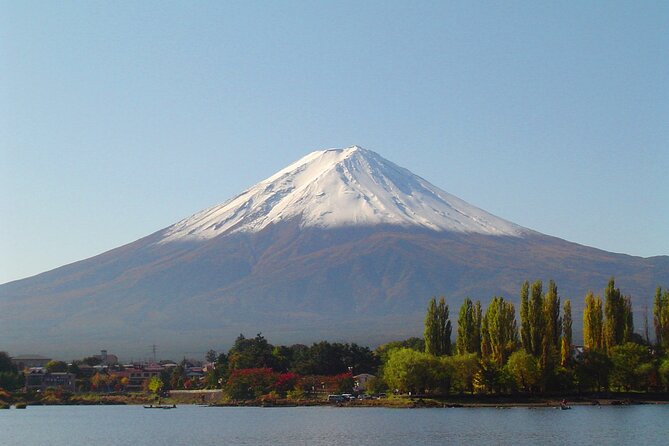
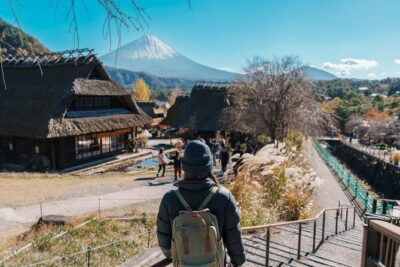
After shrine time, you’ll head to Oshino Hakkai. This place is famous for its clear ponds, and the name gives you the story: “hakkai” refers to eight seas. The ponds are formed from melted snow from Mt. Fuji’s peak, filtered through volcanic rock over an 80-year process.
That matters because it explains the vibe: this is not an amusement-style stop. You’re walking around water that has a long, geological timeline behind it. The ponds are the center, and the surrounding area supports you with snacks, local produce, and souvenir shopping.
You’ll also find markets and smaller vendors. Expect fruit, local treats, and souvenirs. Wine and regional snacks show up here too, so if you like sampling small amounts rather than committing to one big meal, this is a good place to do that.
Some context helps: Oshino Hakkai sits in Yamanashi Prefecture, often described as the fruit region of Japan. That’s why a lot of what you see in the shops leans toward produce-forward items rather than only tourist trinkets.
Price and value: what $128.69 is really buying you
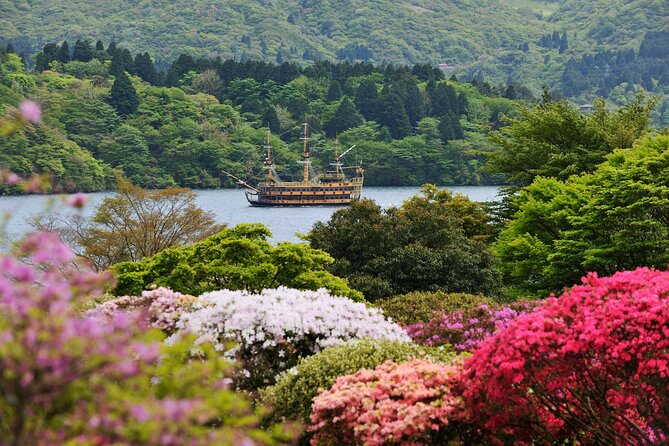
At $128.69 per person, this tour is priced for convenience plus included activities. Here’s the value breakdown you’re paying for:
- Round-trip transfers from Tokyo (hotel pickup isn’t included, but the meeting point is set in Shinjuku)
- An English-speaking guide managing time and movement
- An air-conditioned coach with free Wi‑Fi
- Ramen-making lunch (includes noodles and customization)
- A Lake Ashi cruise boarding ticket if selected
Not included: hotel pickup/drop-off, and lunch only if the option isn’t selected. Personal expenses are obviously on you.
So does it feel expensive? It can, if you expected a free-form day where you take your time. But the included bus ride plus ramen-making plus multiple major sightseeing stops is exactly what keeps the total from becoming “cheap transport + expensive add-ons.”
Also note the trade-offs. If weather ruins the cruise, you don’t get that cruise refund. The tour still runs, but you’re betting on visibility for one of the biggest “Fuji from the water” moments.
Guide experience: Yoko, Hiro, and Mami style of storytelling

A big reason this tour earns strong ratings is the guide experience. Names that come up include Yoko, Hiro, and Mami, and they’re described as friendly and professional, with clear explanations during the ride.
Yoko stands out in multiple accounts for being polite and understanding, and she handled at least one operational hiccup by helping arrange an alternative pickup point when the original cruise boarding station was missed. That matters more than it sounds: on a day with fixed timing, one missed station can scramble your whole schedule—having a guide who adapts smoothly reduces the stress.
Mami gets credit for giving Mt. Fuji information during transit and for helping the day feel like a story, not just a set of photos. Hiro is also praised for being warm and professional, and for choosing good stops.
In plain terms: you’re not just paying to be transported. You’re paying for interpretation. When you’re seeing shrines, water ponds, and Mt. Fuji viewpoints in one day, context makes a huge difference.
Weather, walking, and timing: the stuff that can change your mood
This tour is very dependent on weather—not just for Mt. Fuji visibility, but also for the Lake Ashi cruise. Morning rain can still clear later, and sometimes you get a glimpse of the mountain once clouds lift. Other times, it stays overcast. Either way, the tour can still be worthwhile for the culture and ramen-making, but you should manage expectations about seeing a perfect clear-sky Fuji.
Timing also affects the day. The return trip can be slower due to traffic, especially leaving areas around Hakone and Fuji. That’s normal for the region, but it means you may arrive back tired even if everything goes smoothly.
Walking is the other big factor. The tour involves a significant amount of it, and the shrine pagoda route specifically gives you the choice between stairs and a slope. If you have trouble with distances around 10 to 15 minutes of walking, the tour warns it may not be a good match.
If you’re worried, do this: plan for comfortable shoes, a light layer for cold conditions, and a realistic pace. Don’t “save energy” by under-dressing. You’ll spend a lot of time outside at viewpoint-style stops.
Should you book this Mt. Fuji & Hakone day trip?
Book it if:
- You want a single-day Mt. Fuji + Hakone combo from Tokyo with minimal transit hassle
- You like hands-on experiences and want a ramen lunch where you shape the noodles
- You’re okay with early mornings and moderate walking
- You care about cultural context as much as photos
Skip or switch to something else if:
- You need halal or vegan meals (not available on this tour)
- You have mobility limits that make 10–15 minutes of walking tough
- You hate schedules and hate the idea that the bus won’t wait if you’re late
- You’re only interested in a perfect, unobstructed Mt. Fuji view and won’t enjoy the day if it’s cloudy
If your goal is a practical, packed day that mixes nature views with real Japanese food and shrine culture, this is the kind of tour that makes sense.
FAQ
How long is the Mt. Fuji & Hakone tour?
The tour runs about 11 to 12 hours.
Where do I meet, and when does it start?
You meet at the Shinjuku Center Building in Shinjuku at 7:40am. The tour ends back at the meeting point.
Is the Lake Ashi cruise included?
The cruise boarding ticket is included if the option is selected. If the cruise becomes inaccessible due to weather or other issues, the tour will use alternative facilities and refunds will not be given for that reason.
What’s included in the ramen-making lunch?
You’ll make ramen from scratch, including noodles. You can choose your soup base and seasonings, pick toppings, and choose your noodle firmness.
Can I request a vegetarian meal?
Vegetarian requests are supported if you contact the provider at least 7 days before the tour. Halal and vegan lunches are listed as not available.
How much walking is involved?
There is a significant amount of walking. For the shrine pagoda area, you can choose between a staircase route (398 steps) or a gentler sloping path.
Will the bus wait for late arrivals?
No. The bus will leave as scheduled and will not wait for late arrivals.