REVIEW · TOKYO
Tokyo Private Walking Tour With Fresh Eyes, Local Hearts
Book on Viator →Operated by Exploring Tokyo · Bookable on Viator
Tokyo feels less overwhelming with a plan. This private Tokyo walking tour with customizable stops is built for people who want smart direction without rigid schedules, and it shines as an intro to Tokyo’s classic sights plus neighborhood personality. One thing to know up front: some major attractions are visit-from-the-outside or partial access, like the Imperial Palace public areas and a Kabuki-za gallery rather than the main hall.
I especially like the way the guide plans around your interests, so the day doesn’t turn into a checklist you tolerate. I also like the mix of old and new, from shrines and temples to Shibuya Crossing and Akihabara. The main consideration is simple: this is a walking-and-transit day, so you’ll want comfortable shoes and a realistic pace for 1 to 8 hours.
If you’re a first-timer or a repeat visitor who wants a fresh angle, you’ll get a lot of Tokyo in a controlled way. The tour length can flex, which helps if you’re trying to fit a lot into limited time. If you need only one area at a slow, lingering pace, you may want to choose a shorter route and skip the rest.
In This Review
- Key things to know before you go
- Why this private Tokyo walking tour works better than a fixed agenda
- Price and value: what $26.36 per person really buys you
- How 1 to 8 hours changes your Tokyo day plan
- Stop-by-stop: from Imperial Palace to Asakusa, Shibuya, and beyond
- Hello, Exploring Tokyo: your guide’s first step matters
- Imperial Palace public areas: the calm side of central Tokyo
- Tsukiji Outer Market: breakfast energy without a time-waster
- Tsukiji Fish Market inner area: less visited, more Tokyo-real
- Shibuya Crossing: Tokyo’s modern pulse at street level
- Meiji Jingu Shrine: a walk from city noise into forest quiet
- Kabukiza Theater: Kabuki culture, but not inside the main hall
- Senso-ji Temple and Asakusa streets: the classic Asakusa walk
- Shinjuku Gyoen National Garden: paid entry for the green break
- Shinjuku Golden Gai: tiny bars and alley drama
- Akihabara: pop culture, tech, and the shopfront maze
- Hamarikyu Gardens: Edo-era views along Tokyo Bay
- Koishikawa Korakuen and Rikugien: garden-stroll time
- Yoyogi Park: space to breathe near Harajuku
- Takeshita Street: kawaii fashion and snack browsing
- Nezu Shrine: azalea-season calm
- Kiyosumi Teien: a pond-centered stroll garden break
- Tokyo Tower: iconic skyline views, especially at night
- Zojo-ji: Tokugawa family temple context
- Ueno Park: museums, art, and spring crowds
- Gotokuji Temple: the maneki-neko origin story
- Kanda Shrine: a long-standing guardian shrine
- The guide factor: what you gain from someone like Toko
- Practical tips to make the walking route feel easy
- Who should book this, and who might want a different plan
- Should you book this Tokyo Private Walking Tour?
- FAQ
- How much does the Tokyo private walking tour cost?
- How long is the tour?
- Is this tour private or group-based?
- Is hotel pickup included?
- Do I get a mobile ticket?
- Can the itinerary be customized?
- Does the tour include entry inside the Imperial Palace?
- Does the tour include entry inside the main Kabuki-za Theater?
- Are admission tickets included for all stops?
- Is there free cancellation?
Key things to know before you go
- Born-and-raised local guides who can tailor the day to your interests
- Custom itinerary that helps you avoid decision fatigue
- Private time with your guide, no group march, no waiting for the slowest person
- A practical mix of neighborhoods, from Asakusa and Shinjuku to Harajuku and Akihabara
- Some sites are partial access, so check what is included before you plan your expectations
Why this private Tokyo walking tour works better than a fixed agenda
Tokyo can be a lot. It’s huge, layered, and full of options that all look equally tempting on Google Maps. This tour solves that by giving you a local guide who starts by asking what you care about, then builds a route that makes sense for your day.
Two things matter a lot here. First, it’s truly private, so your questions get answered right away instead of later, and you don’t lose time negotiating with a big group. Second, the itinerary is customizable, which means you can steer toward temples, street life, gardens, pop culture, or a blend.
That custom approach also helps with the small but real friction of Tokyo travel: you can’t always tell which streets are worth detouring through. With a guide who knows what’s worth seeing at walking speed, you get to spend your energy on experiences, not navigation.
You can also read our reviews of more walking tours in Tokyo


Price and value: what $26.36 per person really buys you
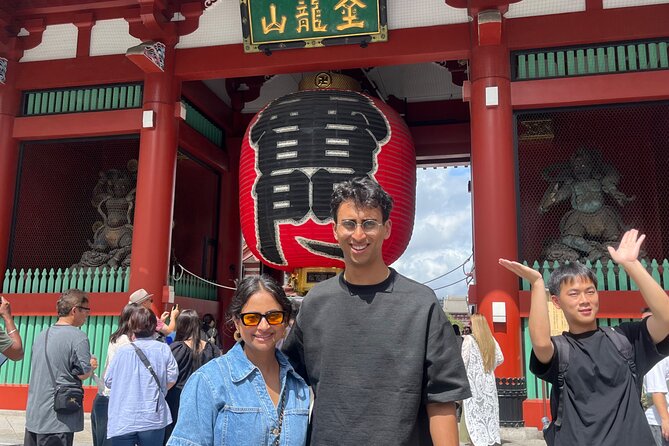
At $26.36 per person, the standout value isn’t just the price tag. It’s what’s included in the experience design: a private guide, walking plus public transportation, and hotel pickup.
Here’s how to think about it. You’re paying for time with a local who can compress planning into a single day for you. You’re also paying for convenience, because hotel pickup removes one more friction point before you even start.
The trade-off: the tour includes free admissions for some stops, but not every site. Some gardens and specific shrines have admission listed as not included, and public transportation fees are not included either. You should budget a little extra for transit fares and any paid entrances that come up in your chosen route.
How 1 to 8 hours changes your Tokyo day plan
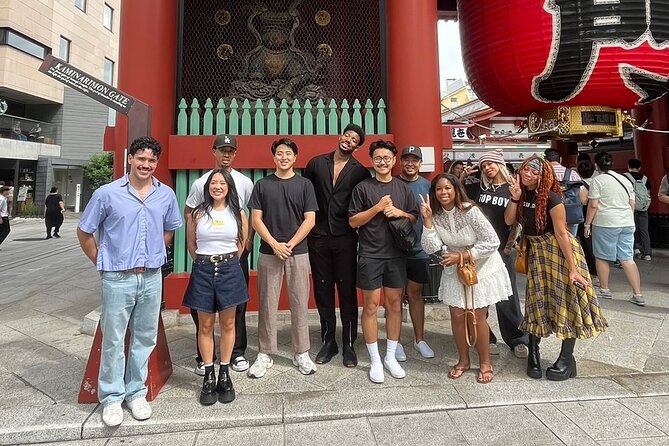
The duration can run from about 1 hour up to about 8 hours, which is a huge advantage if your Tokyo schedule is tight. A shorter option works best if you want a concentrated hit of a few places. A longer option is where you can slow down and include gardens, viewpoints, and nightlife pockets.
Also, many stops are designed as short visits. Several key locations have about 15 minutes set aside, while places like Senso-ji get around 30 minutes. That doesn’t mean you’ll rush past everything. It means the guide can keep momentum and cover more Tokyo in the time you have.
My practical advice: pick your theme first. If you want classic sights and history, lean toward Imperial Palace, Meiji Jingu, and Asakusa. If you want Tokyo as a pop culture machine, add Shibuya Crossing and Akihabara. If you need a breather, pick one or two garden stops and don’t overload the day with too many neighborhoods.
Stop-by-stop: from Imperial Palace to Asakusa, Shibuya, and beyond
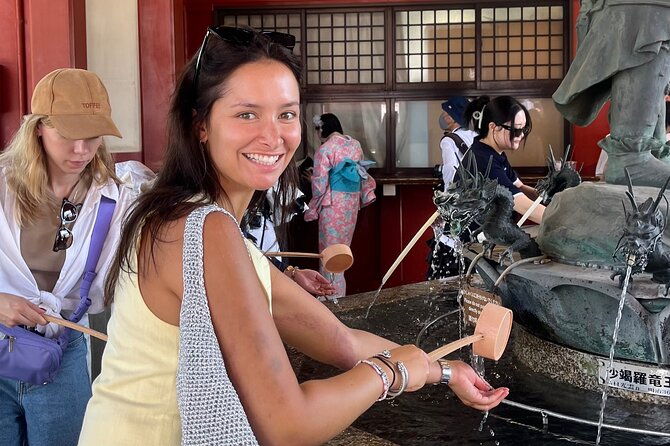
Your guide can mix and match from a menu of stops. Here’s what each one tends to add to your day, plus the realistic considerations so you’re not surprised.
Hello, Exploring Tokyo: your guide’s first step matters
You’ll start with an intro stop that sets the tone. Guides born and raised in Tokyo are the point of the whole concept: you’re not just getting directions, you’re getting someone who understands how these places fit into daily life.
In at least one documented case, the guide reached out in advance to learn what a family wanted to see, then built the itinerary from there. That matters because it turns the first hour into orientation, not guesswork.
You can also read our reviews of more private tours in Tokyo


Imperial Palace public areas: the calm side of central Tokyo
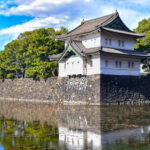
This is the Imperial Palace area, but with a key detail: access is limited to certain public spaces, and entry inside the palace is not included. You still get a strong sense of Tokyo’s layers, because the grounds sit in a historic park setting tied to the old Edo Castle footprint.
This stop is best when you want Tokyo to slow down for a moment. It’s not about buying a ticket and sprinting inside. It’s about walking the edges of a major landmark and seeing how the city frames power with open space.
Tsukiji Outer Market: breakfast energy without a time-waster
Tsukiji Outer Market is an easy win for people who like food culture. It has 400-plus shops and stalls, and it’s well suited to a breakfast stop where you can browse and snack as you go.
The best way to enjoy it is not to treat it like a museum. Walk, point, taste what looks good, and let the guide help you avoid the most generic tourist loop. Also, remember it’s popular, so plan to move with the flow rather than stop dead in the street for long comparisons.
Tsukiji Fish Market inner area: less visited, more Tokyo-real
The inner Tsukiji Fish Market is described as less familiar even to many Japanese people. That’s part of the appeal if you already enjoyed the outer market and want one more step away from the most obvious version of Tsukiji.
The practical consideration: this is still a short stop (around 15 minutes), so treat it as a quick look and context-gathering. If you want a deep market day, you’d usually pair it with more time elsewhere.
Shibuya Crossing: Tokyo’s modern pulse at street level
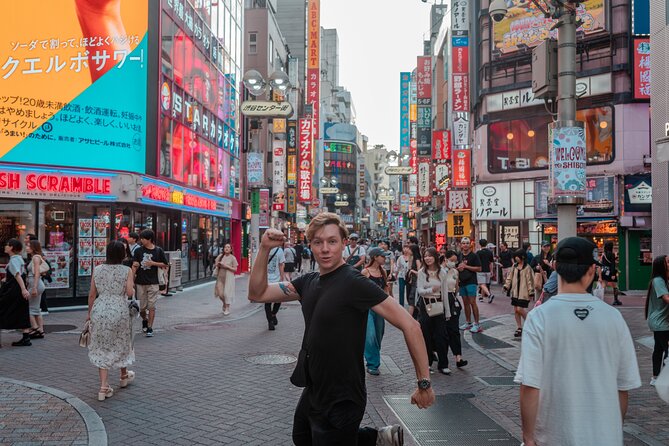
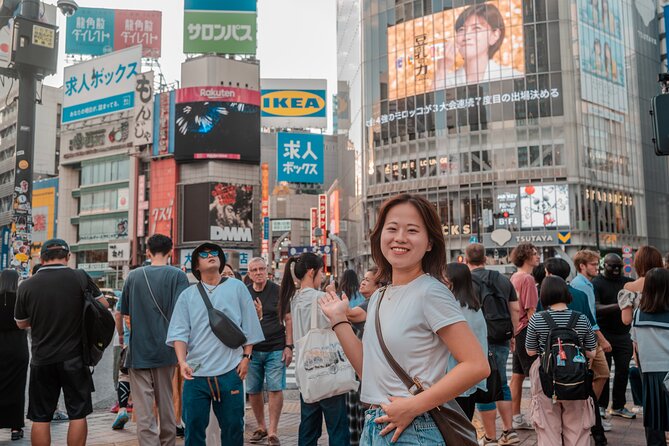
Shibuya Crossing is the “you’re in Tokyo now” moment. It’s known for youth culture, fashion, and entertainment, and the city energy shows right in the middle of the crossing.
This is a great stop for photos and people-watching. It’s also a good reset between quieter temples and the next neighborhood. If crowds make you cranky, time it as a quick visit rather than lingering for a long sit-down plan.
Meiji Jingu Shrine: a walk from city noise into forest quiet
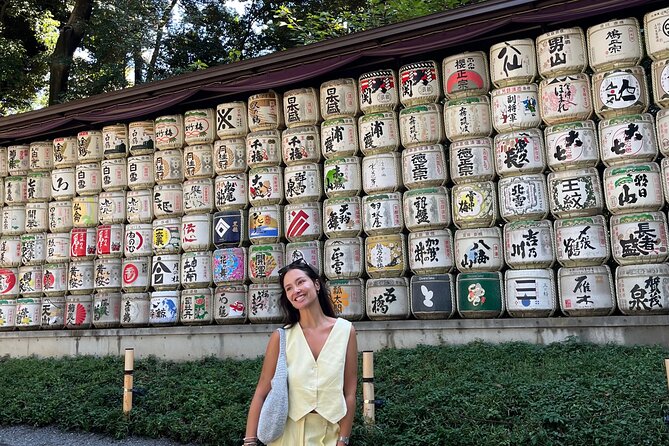
Meiji Jingu Shrine is tied to Emperor Meiji and Empress Shoken, with the shrine built in 1920. You’ll appreciate it most if you want Tokyo that feels different from the streets.
The tour gives you a short window (about 15 minutes), so the goal here isn’t a full religious experience tour. It’s to grasp the atmosphere and understand why this place has become a signature Tokyo pause.
Kabukiza Theater: Kabuki culture, but not inside the main hall
Kabukiza Theater is iconic, but the visit is not inside the main Kabuki-za theater hall. Instead, the tour visits a gallery on another floor within the same building.
This works well if you want the cultural context without committing to a performance. The consideration is important: if you specifically want the main hall experience, you’ll need a different arrangement than this walk-and-gallery format.
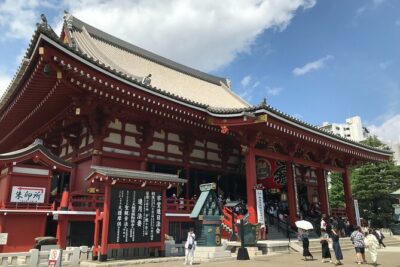
Senso-ji Temple and Asakusa streets: the classic Asakusa walk
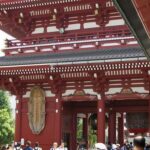
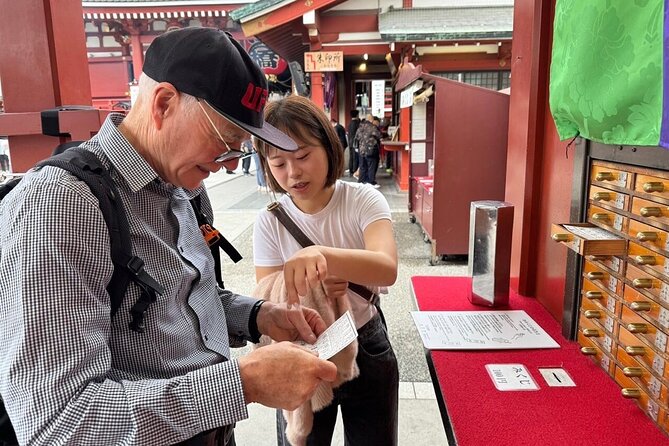
Senso-ji in Asakusa is presented as Tokyo’s oldest temple and one of its most beloved landmarks. The stop is longer than most (about 30 minutes), which helps because this is where you want a little extra time to soak in the scale.
Then Asakusa itself continues the story with streets where history and tradition show up more clearly in daily life. The best way to enjoy Asakusa is to let the walk guide you. Follow the flow and let the guide point out what’s worth pausing for.
Shinjuku Gyoen National Garden: paid entry for the green break
Shinjuku Gyoen is a “get out of the city” type of stop. It’s an oasis of greenery in central Tokyo, with a background as an imperial garden now open to the public.
Admission is not included for this stop. Plan for that upfront if this garden is on your must-see list. It’s a strong add-on when your day needs balance after busy neighborhoods.
Shinjuku Golden Gai: tiny bars and alley drama
Golden Gai is one of Tokyo’s unique nightlife areas, packed with small bars into narrow alleys. The streets are extremely tight, and the buildings are described as traditional two-story structures.
This is ideal if you want Tokyo nightlife texture without a full party plan. The tour keeps it brief, so treat it like a sensory stop you’ll remember, not a time block for a long bar crawl.
Akihabara: pop culture, tech, and the shopfront maze
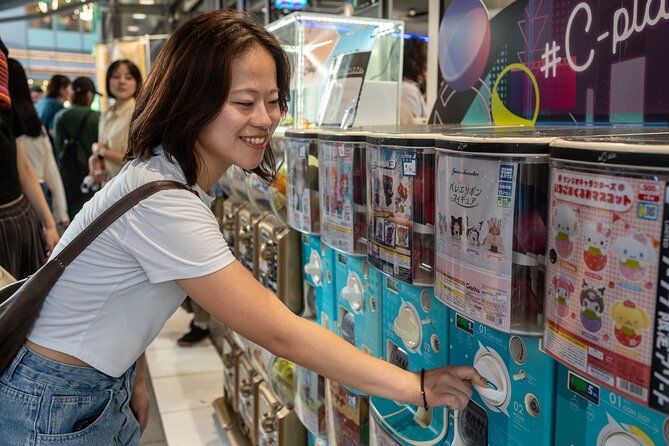
Akihabara is Tokyo’s hub for electronics and cutting-edge pop culture. You’ll see stores tied to anime, manga, and gaming, and the neighborhood feels like a playground for fans.
Again, your stop is short (around 15 minutes). The smart move is to pick one interest lane. If you try to cover all of Akihabara at walking speed, you’ll end up feeling like you did a drive-by. Use your guide to point out what fits your taste.
Hamarikyu Gardens: Edo-era views along Tokyo Bay
Hamarikyu Gardens are an Edo-period garden along Tokyo Bay, originally a villa for the shogun. You’ll find ponds, tidal gardens, and seasonal flowers listed as part of the experience.
Admission for this stop is not included. Consider this a planned splurge in your route: it’s a good contrast to temple days and modern districts.
Koishikawa Korakuen and Rikugien: garden-stroll time
Koishikawa Korakuen is an early Edo Japanese garden with ponds, small bridges, and hills. Rikugien is another feudal-era garden, with a pond-centered stroll layout. Both can be timed for seasonal highlights, like cherry blossoms or autumn foliage, though your actual season will determine what you see.
Admissions for these gardens are not included. If you’re selecting only one garden stop, pick the one that matches what you most want: gentle pond stroll (Koishikawa Korakuen) or a bigger, feudal-feeling garden walk (Rikugien).
Yoyogi Park: space to breathe near Harajuku
Yoyogi Park is described as a big urban park used for jogging, picnics, and events. It’s a calmer option in the middle of the Harajuku energy zone.
This is one of those stops that can reset your mood. Short visit, less decision-making, and a chance to sit down for a minute if your legs need it.
Takeshita Street: kawaii fashion and snack browsing
Takeshita Street sits just outside Harajuku Station and is associated with kawaii culture. Expect shops selling fashion, accessories, sweets, and character goods.
The practical consideration is how quickly this area can overwhelm your eyes. Your guide can help you avoid getting stuck in the most tourist-heavy parts and still enjoy the fun.
Nezu Shrine: azalea-season calm
Nezu Shrine is known for azalea flowers and a serene Shinto atmosphere. It’s described as having traditional architecture and lush greenery, which makes it a good change of pace from the shopping streets.
This stop is about quiet and scenery, not speed. It’s usually a short visit, so come with the mindset of spotting details instead of trying to see everything.
Kiyosumi Teien: a pond-centered stroll garden break
Kiyosumi Garden (Kiyosumi Teien) is an Edo-period stroll garden centered around a pond. It’s described as calm and peaceful despite being in the city.
Admission is not included for this stop. If you want a quieter, slower moment in your day, this is a strong candidate—especially if you’re skipping nightlife and going lighter on busy neighborhoods.
Tokyo Tower: iconic skyline views, especially at night
Tokyo Tower is an observation tower with panoramic city views, and it’s described as illuminated beautifully at night. The stop also notes historical significance, adding another layer beyond photos.
This stop works best when your day includes evening light. If you’re touring earlier, you may still enjoy the view, but night illumination is the big draw described here.
Zojo-ji: Tokugawa family temple context
Zojoji Temple is a historic Edo-period temple and described as the family temple of the Tokugawa clan, where several Tokugawa shoguns are enshrined. It’s a meaningful stop if you want to connect Japan’s political history to the places you walk past.
It’s a 15-minute style stop, so keep it as a focused history beat rather than a long wander.
Ueno Park: museums, art, and spring crowds
Ueno Park is a cultural and natural hub with museums, art galleries, and a zoo. It’s famous for cherry blossoms in spring, which can mean bigger crowds during that season.
Admission is free for the park stop. This is also a flexible choice if you want to keep the day moving but still add culture.
Gotokuji Temple: the maneki-neko origin story
Gotokuji Temple is known as the birthplace of the maneki-neko, the beckoning cat. The stop also mentions traditional buildings and gardens on the grounds.
It’s a great choice if you like folklore that turns into everyday symbols. It’s also a neat contrast after science-and-shop areas like Akihabara.
Kanda Shrine: a long-standing guardian shrine
Kanda Myojin is a Shinto shrine with over 1,300 years of history and listed as one of Tokyo’s traditional guardian shrines. It protects central areas like Kanda and Nihonbashi, tying it to the city’s core.
Admission is not included for this stop. Keep it as a short cultural grounding point when your day feels too modern.
The guide factor: what you gain from someone like Toko
Private tours are only as good as the person holding the leash, so to speak. Here, the strongest praise centers on a pattern: the guide reaches out to learn your interests, then constructs an itinerary that feels made for you.
One guide named Toko is specifically mentioned for doing exactly that with a family—learning preferences ahead of time and then planning a route that included history, culture, and local treats. The result was an introduction to Tokyo that worked even for kids, which tells you something important: the pacing likely made sense, and the guide didn’t force one style of tourism on everyone.
That’s the difference between a generic walking tour and this format. You’ll still walk a lot, but your day feels intentional rather than accidental.
Practical tips to make the walking route feel easy
This tour includes walking and public transportation, and it’s designed around multiple short stops. That means the logistics matter as much as the sights.
I’d plan around comfort first. Wear shoes you can stand in for a while, and carry a light layer because Tokyo weather can shift. Keep water handy, especially if your route includes Shibuya and Takeshita Street, where you’ll be exposed more than in shrine or garden areas.
Also, think about your photos and shopping timing. If you shop at Akihabara or Takeshita Street, do it when your guide is there to help you choose instead of wandering later. If gardens are on your plan, treat them as your decompress windows and don’t stack them back-to-back with the busiest streets.
Who should book this, and who might want a different plan
Book this if you want a first-time-friendly Tokyo day that covers classic landmarks and modern neighborhoods without you doing the heavy lifting. It’s also a great fit if you love having options—shrines one minute, tech and pop culture the next—while still keeping a sane pace.
It’s less ideal if your dream day requires interior access to major sites like the Imperial Palace interior or the main Kabuki-za hall. This tour is set up for public areas and a gallery visit, so you’ll need other arrangements for full interior experiences.
If you’re traveling with kids or a mixed group, this format can work well because the guide can adjust pacing and stop type. If you prefer deep, slow museum time in one area, you might choose a shorter duration or a more focused single-neighborhood plan instead.
Should you book this Tokyo Private Walking Tour?
Yes, if you want a guided day that saves you from decision fatigue and keeps your time practical. The private format, customizable route, and a local guide who knows how to balance Tokyo’s old and new are the main reasons this works.
You should book with a clear expectation: some stops are partial access, some gardens cost extra, and you’ll pay transit fees. If that sounds acceptable, you’ll likely feel like you got a lot of Tokyo in a single day without it turning into chaos.
FAQ
How much does the Tokyo private walking tour cost?
The price is $26.36 per person.
How long is the tour?
The duration is approximately 1 to 8 hours, depending on the route you choose.
Is this tour private or group-based?
It is a private tour/activity. Only your group will participate.
Is hotel pickup included?
Yes, hotel pick-up is included.
Do I get a mobile ticket?
Yes, a mobile ticket is provided.
Can the itinerary be customized?
Yes. The itinerary is customizable based on your requests.
Does the tour include entry inside the Imperial Palace?
No. Entry is limited to certain public areas, and access inside the Imperial Palace is not included.
Does the tour include entry inside the main Kabuki-za Theater?
No. The tour does not include access inside the main Kabuki-za Theater. You visit a gallery located on a different floor within the same building.
Are admission tickets included for all stops?
Not all. Some stops list admission as not included, such as Shinjuku Gyoen National Garden, Hamarikyu Gardens, Koishikawa Korakuen Garden, Rikugien Garden, Kiyosumi Teien, and Kanda Shrine.
Is there free cancellation?
Yes. You can cancel up to 24 hours in advance for a full refund.