REVIEW · TOKYO
Tokyo:Mt.Fuji,Kawaguchiko Oishi Park,Arakurayama Sengen Park
Book on GetYourGuide →Operated by VIP Japan Tour · Bookable on GetYourGuide
Mt. Fuji in one long, scenic day.
I love the multiple Fuji photo angles (you’re not stuck on just one viewpoint), and I love the mix of big sights plus hands-on local time at places like Kawaguchiko Craft Park. One drawback: it’s a long day with lots of walking, so plan to move at a steady pace and wear comfy shoes.
This is a classic Tokyo-to-Fuji circuit run by VIP Japan Tour, and it’s been operating for over 10 years, which usually means better timing, smoother flow, and fewer surprises. You’ll also get a live guide in English or Chinese, and guides named Omar, Koji, Eric, George, and Sumi have come up often for making the day feel organized and fun.
In This Review
- Key things to know before you go
- Tokyo to Lake Kawaguchi: what the 10-hour schedule really feels like
- Arakurayama Sengen Park and the 398-step photo mission
- Lake Kawaguchi reflections: where Fuji often appears
- Kawaguchiko Craft Park: a smarter lunch and souvenir stop
- Oishi Park and the 350-meter Flower Road
- Saiko Iyashi-no-Sato Nenba: thatched-roof village and Fuji photo props
- Price and value: why this $54 Fuji day can make sense
- Timing, weather, and walking: how to set yourself up for success
- Who should book this tour (and who should consider alternatives)
- Should you book this Tokyo-to-Fuji day trip?
- FAQ
- What’s the duration and price of this Tokyo to Mt. Fuji tour?
- Where does the tour start and where does it end?
- Is lunch included?
- What attractions are included with entry tickets?
- What languages is the live guide available in?
- How early should I arrive at the meeting point?
- What happens if traffic delays the bus?
- Can I cancel if my plans change?
Key things to know before you go
- Four Mt. Fuji viewpoints in one loop: Arakurayama area, Chureito pagoda, Lake Kawaguchi, then Oishi Park.
- The Arakurayama step climb (398 steps) gets you to an observation deck with a postcard-style pagoda view.
- Cherry blossoms, lavender, or autumn leaves may be in season depending on when you travel, and each stop has a different seasonal look.
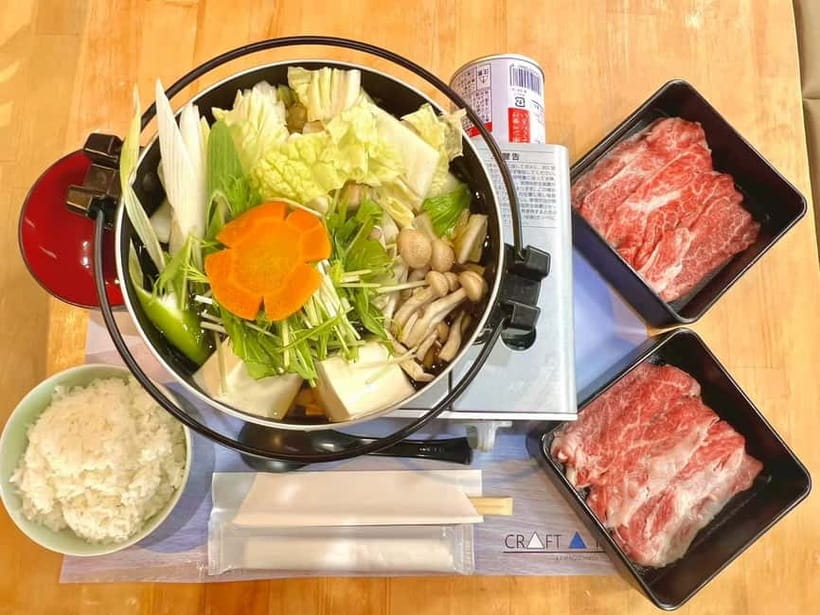
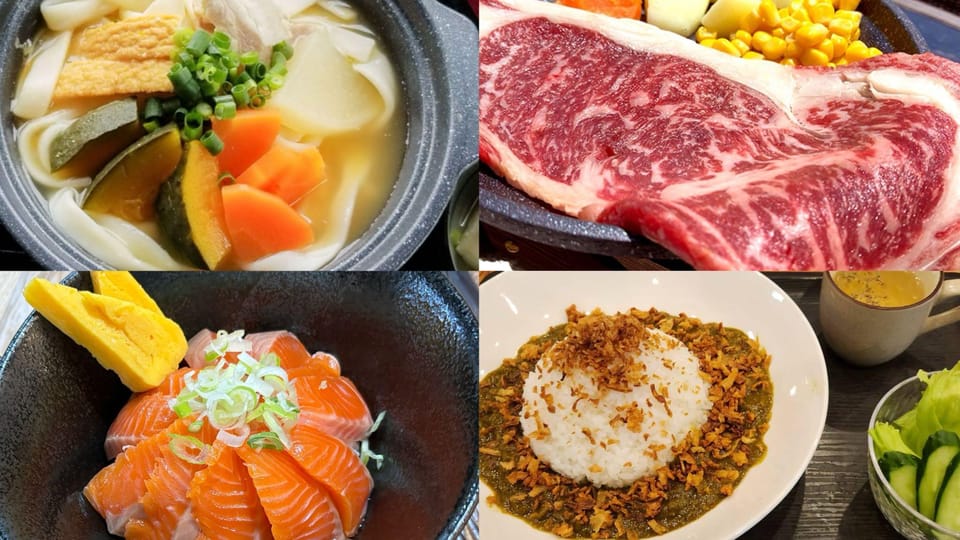
- Lunch can be a planned highlight at Kawaguchiko Craft Park, with options that include A5-grade wagyu shabu-shabu, Koshu wine wagyu steak, or houtou noodles.
- Saiko Iyashi-no-Sato Nenba adds something different: a restored thatched-roof village with craft shops and photo opportunities.
- It’s a lot of time in transit from Tokyo, so you’ll want to treat this as a full-day outing, not a quick taste.
Tokyo to Lake Kawaguchi: what the 10-hour schedule really feels like
This tour is built around one idea: squeeze as many iconic Mt. Fuji moments as possible into a single day. You start in central Tokyo at one of two meeting points (Love Robert Indiana in Shinagawa, or the Kokuyo office in Shinagawa), then ride out to Yamanashi Prefecture on an air-conditioned bus with a live guide.
The day is long, and the rhythm is what matters. You’ll switch between bus time, photo time, and walking time, often back-to-back. If you’re the type who hates rushing, this may test your patience a bit, but the structure is designed to keep you moving without skipping the main scenes. A handful of stops are also intentionally paired with nearby photo targets, so you’re not constantly doubling back.
One practical tip from the vibe of the day: think of this as a “get your pictures and your snacks” trip. The best moments happen when you’re standing still long enough to frame the shot, not when you’re sprinting between attractions.
You can also read our reviews of more tours and experiences in Tokyo.



Arakurayama Sengen Park and the 398-step photo mission
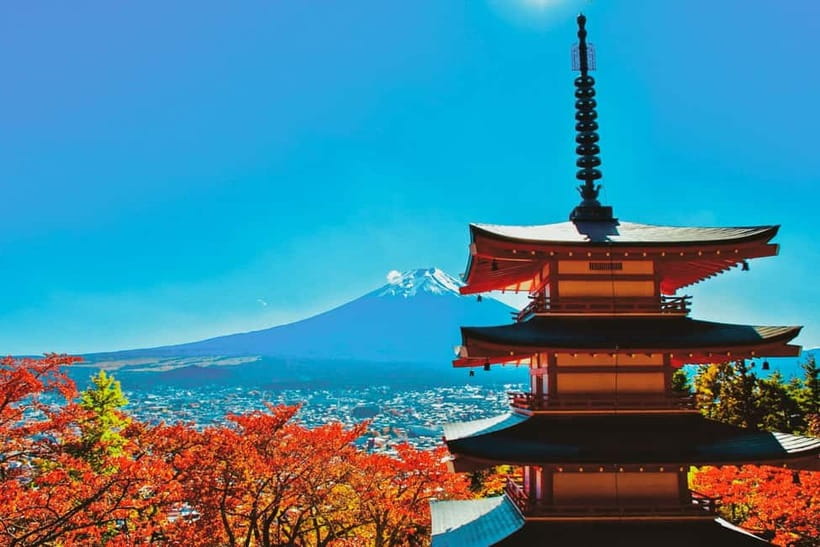
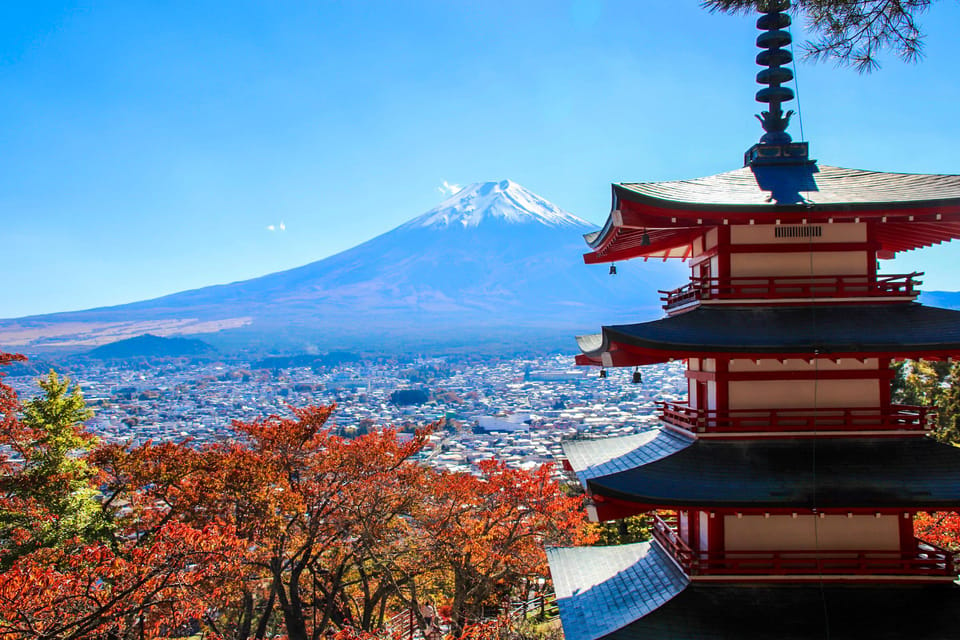
Arakurayama Sengen Park is one of those places where the layout does the work for you. The big draw is the classic combination view: Mt. Fuji, a five-story pagoda, and cherry blossoms (seasonally) all in one frame.
You’ll climb from the entrance to an observation deck via 398 stone steps. That sounds intense because it is, but the reward is exactly what you came for. At the top, you’re looking at a panoramic view that makes the pagoda feel like it belongs to the mountain. This is a favorite stop for photographers because it gives you a strong composition without needing a lot of extra hiking.
Then there’s the extra layer that makes Arakurayama more than a single viewpoint. The area includes nearby stops tied to the Fuji theme:
- Hikawa Clock Shop for background-in-the-frame photos of Mt. Fuji
- Arakura Fuji Sengen Shrine for another stop where the Fuji view can pop behind architecture
- Chureito Pagoda itself for the most recognizable postcard angle
If you’re traveling in late March to mid-April, cherry blossoms can take over the whole scene, with around 650 cherry trees blooming in the park. In autumn, leaves add another contrast: red and gold tones against the vermilion pagoda and Mt. Fuji.
And yes, weather matters. Fuji is not guaranteed. But even when the mountain is hidden behind clouds, the Arakurayama area still gives you a spiritual and scenic outing. You can also use your time to work on photos that don’t rely on seeing the mountain perfectly.
Lake Kawaguchi reflections: where Fuji often appears
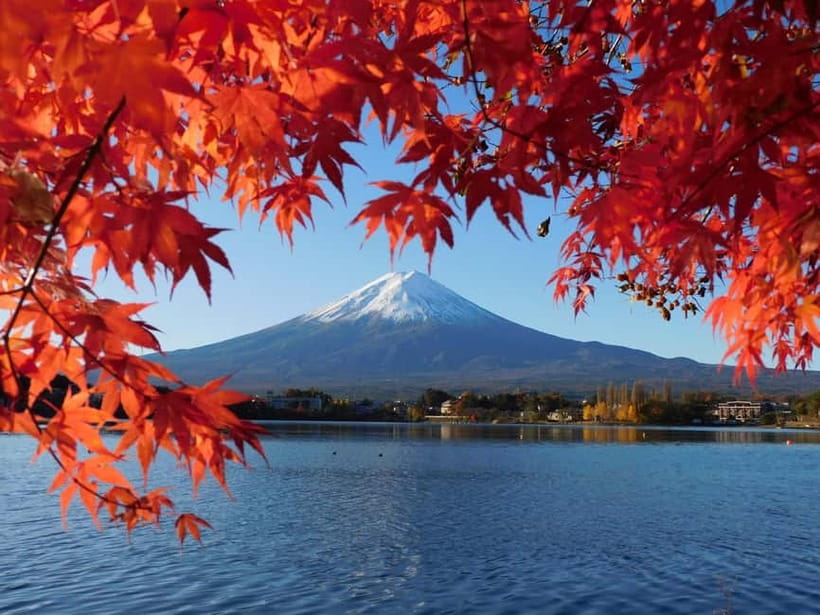
Lake Kawaguchi is the heart of the scenery on this day trip. This is where you get the “Fuji meets water” effect, and it often looks especially dramatic when the weather cooperates.
You’ll get a longer stretch here (about 2 hours), which is important. It’s not just a quick stop where you jump out, take one photo, and run back to the bus. You can walk around, enjoy the lakeside mood, and try for reflections in calmer conditions.
Next up is Lake Kawaguchi Maple Corridor, a photo stop that shines in autumn. If you’re traveling in the fall, this is the kind of setting where color feels close to you, and you’ll get more variety than just one viewpoint. If you’re there in another season, treat it as an easy walk-and-photo break rather than a guaranteed leaf show.
A big practical note: lake weather changes quickly. When you’re standing still for photos, bring a light layer. On days where clouds clear later, it can be worth lingering instead of assuming the view is gone for good.
Kawaguchiko Craft Park: a smarter lunch and souvenir stop
Kawaguchiko Craft Park is a great mid-day anchor because it’s both useful and scenic. The park brings together a sightseeing facility feel—craft experiences, restaurants, and shopping—plus comfort. You’re not just outside in the wind the whole time.
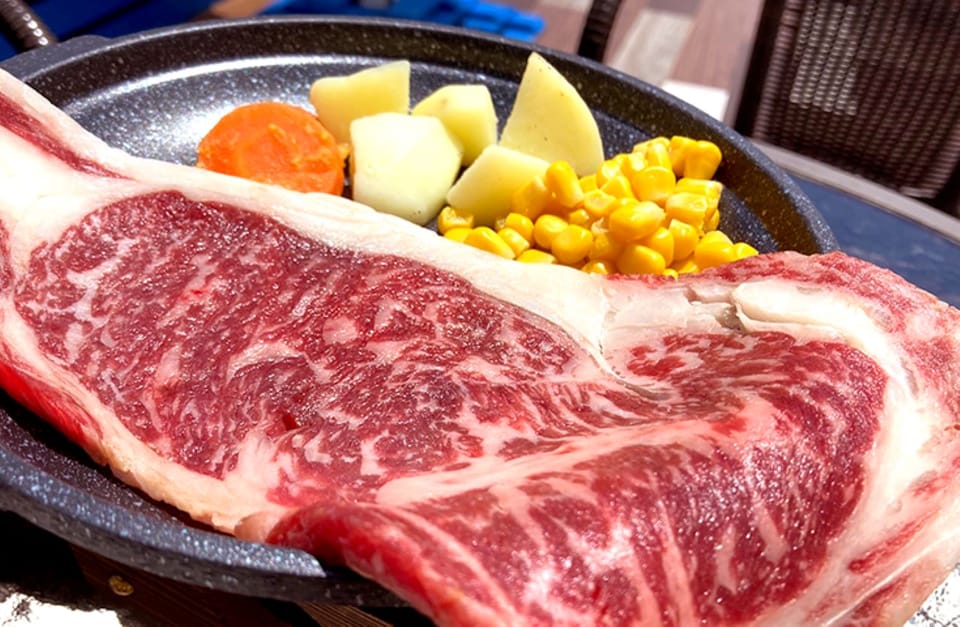
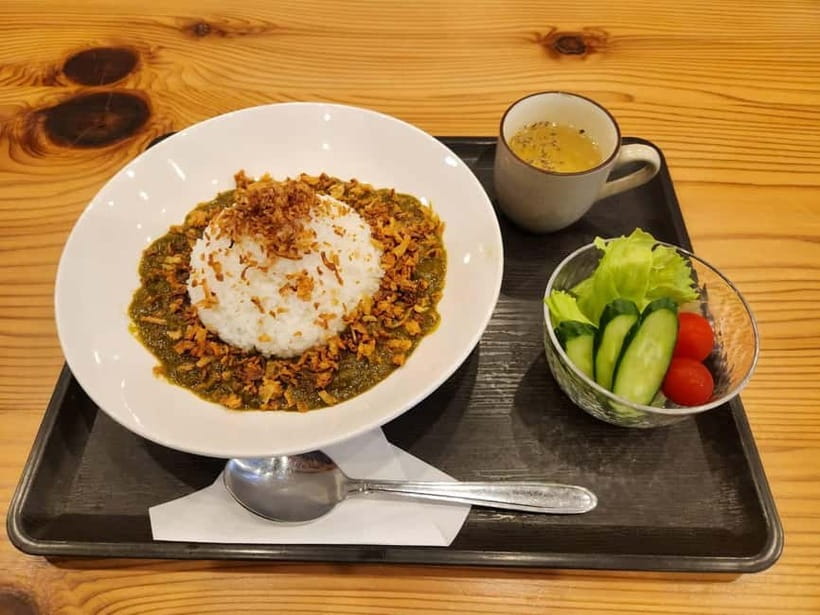
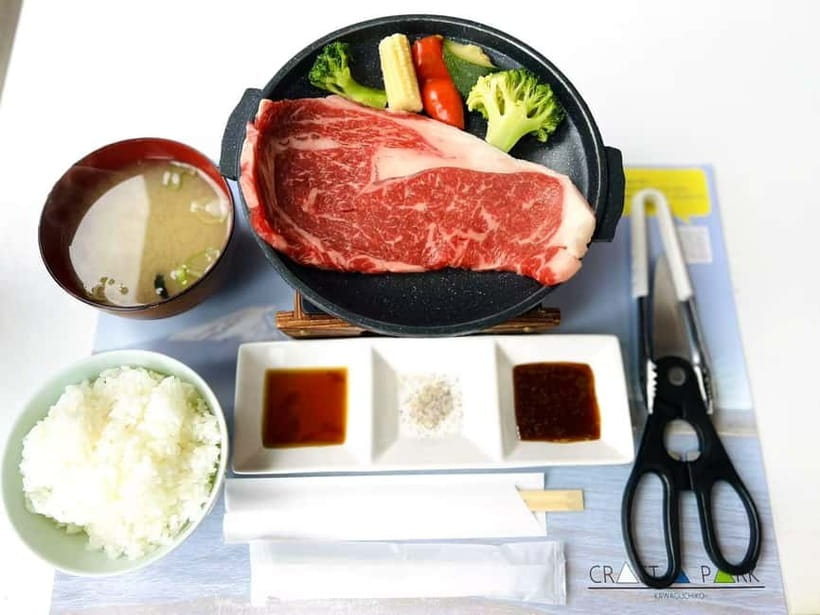
This is also where lunch fits in, and it’s one of the places where the tour offers good value for what you get. Lunch is included only if you select that option, but if you do, you’re choosing from three standout local-feeling choices:
- Kobe beef shabu-shabu using A5-grade Japanese black wagyu
- Koshu wine beef steak, made with wagyu raised on grapes in Yamanashi
- Houtou noodles, a local specialty simmered in miso broth with vegetables and chicken
Even if you’re not a foodie, this matters. A lot of Fuji day trips feed you something quick at a stop that barely counts as lunch. Here, you’re aiming for a meal that feels like it belongs to the region.
After eating, you’ll have free time to shop. There’s also a souvenir area with local specialties and limited-edition items, which is handy if you’re trying to leave Japan with fewer “random gifts” and more “people will actually want this” items.
You’ll also find that just a few minutes’ walk from the park leads you to classic Mt. Fuji lakeside views. So even your downtime turns into another photo chance.
Oishi Park and the 350-meter Flower Road
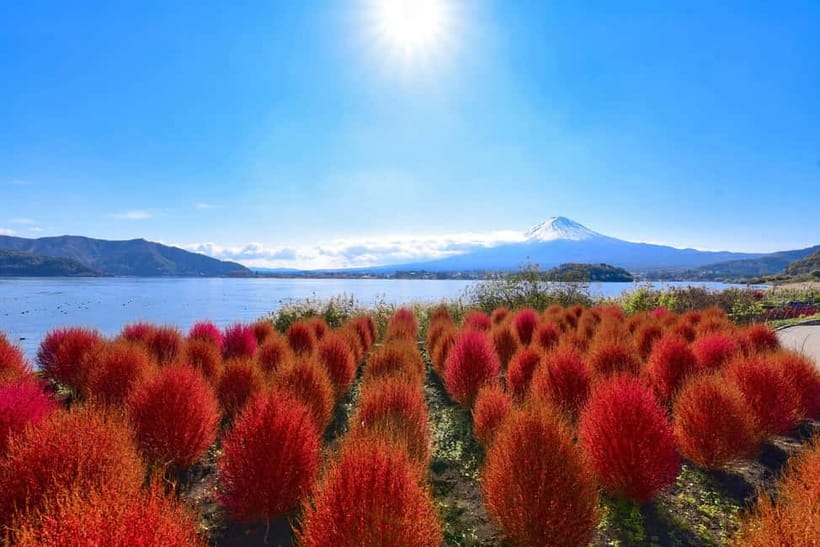
Oishi Park is all about wide Fuji angles. If you want to feel like the mountain is bigger than your screen, this is the stop.
The highlight here is the 350-meter-long Flower Road along the lakeside. The flowers change by season:
- Tulips in spring
- Lavender in summer (often tied to the Kawaguchiko Herb Festival, late June to mid-July)
- Kochia (broom grass) in autumn
So the same place can look totally different depending on when you go. That’s one reason this stop works even on non-perfect Fuji days: you’ll still have color, paths to walk, and space to breathe.
You’ll get a shorter stop window than the lake itself, but enough time to wander the lakeside stretch and capture a few angles. It’s also one of the quieter “spread-out” moments compared with the more step-and-deck focused Arakurayama area.
If your goal is photography, aim to take a slow loop first, then come back for shots once you’ve picked where the light feels best.






Saiko Iyashi-no-Sato Nenba: thatched-roof village and Fuji photo props
Then you switch gears to something cultural and hands-on: Saiko Iyashi-no-Sato Nenba by Lake Saiko. This restored traditional village has thatched-roof houses that recall Shirakawa-go style architecture.
You’ll see about 20 houses that function as craft studios, souvenir shops, and eateries, so you can browse, snack, and take your time without it feeling like a “walk-through museum.” The entry ticket is included.
One of the most fun elements here is that the village offers photo experiences tied to the Fuji backdrop. You can dress up in kimono or ninja outfits and take photos with Mt. Fuji in the background, which is exactly the kind of thing that turns sightseeing into a memory.
Seasonally, the village keeps its own visual calendar:
- Cherry blossoms and carp streamers in spring
- Lush greenery in summer
- Autumn leaves in fall
- Snowy scenes in winter
Even if Fuji is hazy that day, this stop still provides a strong atmosphere: crafts, architecture, and lake-side calm.
Price and value: why this $54 Fuji day can make sense
At $54 per person for a 10-hour outing, the value comes from stacking “high recognition” sights with less effort on planning.
You’re paying for:
- Air-conditioned transport from Tokyo
- A live guide in English or Chinese
- Entry to Saiko Iyashi-no-Sato Nenba
- Lunch only if you choose that option
- A structured path that hits multiple Fuji viewpoints rather than just one
The main reason this price works is efficiency. Doing Mt. Fuji from Tokyo on your own usually means train transfers, timing headaches, and extra paid tickets for each bus hop. This tour turns that into one day, one payment, one guided flow.
That said, it’s still a bus day. You’re not getting luxury speed. If you’re expecting a relaxed outing, adjust your expectations. If you want maximum chances to see Fuji from different angles, this is the kind of format that delivers.
Also, the fact that the tour has been running for over 10 years matters. You’re less likely to feel like you’re trying a brand-new route with unclear timing.
Timing, weather, and walking: how to set yourself up for success
Let’s be real: Fuji visibility can change hour to hour. If you get clear skies, this tour becomes one of the best day trips you’ll do around Tokyo. If clouds roll in, you’ll still enjoy lakes and village sights, but the emotional payoff will be lower.
So here’s how I’d plan your mindset:
- Treat each viewpoint as its own experience, not a single pass/fail test for Mt. Fuji.
- Give yourself permission to take photos and then look up—don’t stare at your camera screen the whole time.
- Wear shoes you don’t mind using on stone steps and walking paths.
Logistics-wise, arrive at the meeting point 10 minutes early, because the bus leaves on time. If traffic delays happen, your stop times may adjust. Also, passengers booking in different languages may be combined into the same car, and the vehicle type can change depending on how many people book.
Who should book this tour (and who should consider alternatives)

This tour is a strong match if you:
- Want an organized Fuji day without planning every connection
- Care about seeing Mt. Fuji from multiple angles
- Like a mix of photos, parks, and a culturally styled village
It’s less ideal if you:
- Want a slow, minimal-walking day
- Get easily frustrated with crowds at famous photo spots
- Plan a day where you cannot handle long transit time back to Tokyo
If you’re traveling with mobility concerns, keep in mind there’s a step climb at Arakurayama. You might find there are ways to reduce the strain, but your best move is to ask the guide ahead of time how to handle the stairs on the day.
If you’re a solo traveler, this kind of shared-bus trip can be surprisingly friendly because you’ll naturally end up helping each other with photos.
Should you book this Tokyo-to-Fuji day trip?
If your priority is seeing Mt. Fuji from several famous viewpoints while also getting a craft-and-lunch break, I’d book this. The price is reasonable for what you pack into a single day, and the mix of Arakurayama, Kawaguchiko, Oishi Park, and Saiko’s thatched village hits both spectacle and local texture.
I’d hesitate only if your travel style is slow and you hate walking stairs. In that case, consider splitting Mt. Fuji into a smaller, calmer day with fewer stops.
Overall, if you can handle a full day out of Tokyo and you want a well-driven route with live guidance, this is a solid way to spend one of your limited Japan days.
FAQ
What’s the duration and price of this Tokyo to Mt. Fuji tour?
The tour runs for about 10 hours and costs $54 per person.
Where does the tour start and where does it end?
You’ll meet at either Love Robert Indiana in Tokyo Shinagawa or the Kokuyo Tokyo Shinagawa office. The tour finishes at Shinjuku Station.
Is lunch included?
Lunch is included only if you select the lunch option. The tour lists lunch choices such as Kobe beef shabu-shabu (A5-grade wagyu), Koshu wine beef steak, or houtou noodles.
What attractions are included with entry tickets?
Entry tickets are included for Saiko Iyashi-no-Sato Nenba.
What languages is the live guide available in?
The live tour guide is available in English and Chinese.
How early should I arrive at the meeting point?
Plan to arrive about 10 minutes before the scheduled departure time, since the bus departs on time.
What happens if traffic delays the bus?
If the bus is delayed due to traffic or other unexpected issues, the time you get at attractions may be adjusted.
Can I cancel if my plans change?
Free cancellation is available up to 24 hours in advance for a full refund.