REVIEW · TOKYO
Tokyo Morning Small Group Tour
Book on Viator →Operated by Tourist Japan · Bookable on Viator
Morning Tokyo makes you pay attention. In just about 3 hours, this small-group tour threads together Tokyo Station, the calm Imperial Palace Outer Gardens, the photo-famous Nijubashi Bridge views, then slides you into Asakusa for Senso-ji and Nakamise-dori. It’s a smart way to see several headline spots without spending your whole day commuting across the city.
I like two things a lot here. First, the group stays small (max 15), so you can actually keep up and ask a question instead of shouting over a crowd. Second, stops like the outer gardens are free to enter, which makes the $59 price feel more like paying for good guidance and timing than paying for a bunch of paid tickets. In the best cases, the guides bring the places to life—people have praised guides like Seiji and Aki for keeping the walk lively and clear.
One possible drawback: it is a walking tour with about 30 minutes per main stop. If you like to linger in temples, chase every side alley, or you’re slower on your feet, the pace can feel tight in a short morning.
In This Review
- Key highlights to know before you go
- Tokyo Station to Asakusa: the real value of the morning plan
- Imperial Palace Outer Gardens: quiet space with big-city contrast
- Nijubashi Bridge views: where the photos make sense
- Asakusa neighborhood: the feel-good part is the shift in pace
- Senso-ji Temple: seeing the main draw without wasting your day
- Nakamise-dori Street and Kaminarimon: souvenir time with guardrails
- Pacing, distance, and who this tour suits best
- Guides can make or break a walking tour
- Practical logistics that matter in Tokyo mornings
- Should you book the Tokyo Morning Small Group Tour?
- FAQ
- Where does the tour start and end?
- What time does the Tokyo Morning Small Group Tour begin?
- How long is the tour?
- Is admission included for the main stops?
- Is the ticket mobile?
- What is included and what is not included?
- How large is the group?
- What if the weather is bad?
- Can I cancel for a full refund?
Key highlights to know before you go
- Max 15 people means easier pacing and more interaction with your guide
- Free entry at the main stops helps your money go to transportation and snacks instead of tickets
- Mobile ticket keeps check-in simple on your phone
- Tokyo-to-Asakusa route that ends near Senso-ji so you can keep exploring right after
- Known guide strengths: Seiji and Aki are examples of guides who bring stories and clarity
- Weather-dependent operation: if conditions are poor, you’ll be offered a different date or a full refund
Tokyo Station to Asakusa: the real value of the morning plan
This tour is built for mornings, when Tokyo feels less like a machine and more like a place you can read. You start at Tokyo Sta. Marunouchi-Kitaguchi (Marunouchi North Exit) at 9:00 am, which is a convenient hub if you’re arriving from elsewhere in the city. Then you work your way east into Asakusa, finishing near Sensō-ji, so you’re not ending in the middle of nowhere.
At $59 per person for roughly 3 hours, the value comes from two places: tight routing and guided context. The route hits major landmarks that are spread out—Imperial Palace area, Nijubashi Bridge views, and then the Senso-ji neighborhood—without making you figure out the best order yourself. You’re also not paying extra entry fees for the core stops, since the itinerary lists free admission for each main stop.
It’s a small-group experience, with a max of 15 travelers, which matters in Tokyo. When you’re moving from place to place, the slowest person (or the person stopping for a photo) can change the whole vibe. A smaller group makes it more likely you’ll keep momentum, stay with the guide, and actually enjoy the scenery instead of racing.
You can also read our reviews of more tours and experiences in Tokyo



Imperial Palace Outer Gardens: quiet space with big-city contrast
The first stop is the Imperial Palace Outer Gardens, and that choice is smart. Even if you’ve seen photos of Tokyo’s palace area, stepping into the gardens early in the day gives you a contrast that’s hard to recreate on your own. You get about 30 minutes here, which is enough time to feel the change in atmosphere without turning it into a whole afternoon detour.
What I like about this stop is the mix of “history-on-a-postcard” and “calm you can breathe.” The gardens act like a reset button. You’re in one of the busiest city areas in the country, but the walk and open space help your brain slow down before the more crowded sights of Asakusa.
The one caution: 30 minutes goes by quickly in a garden setting. If you’re the type to stop for every angle, you’ll want to focus your attention—pick one or two viewpoints to linger at, then move on so you don’t feel rushed later. This is also where your morning shoes matter; you’ll be walking through paths and along public areas.
Nijubashi Bridge views: where the photos make sense
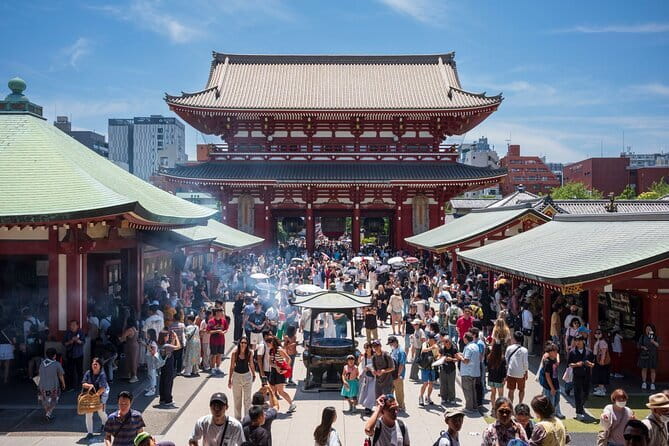
Next up is Nijubashi Bridge, and this is one of those places where the structure earns its fame. Even in a short visit, you get time to enjoy the views and take in the layout of the palace grounds and surrounding waterways. The bridge is visually “clean,” so you don’t need a lot of explanation to understand why photographers love it.
This is also a helpful breathing-and-camera break in the middle of the route. After the gardens, you’re moving from walkways into a clearer, more open viewpoint area. That makes it easier to orient yourself for what’s coming next: the dense, street-level energy of Asakusa.
If you’re sensitive to crowding, aim to time your photos within that 30-minute window. Views are great, but the best pictures usually happen when you’re patient for a clear frame, not when you’re trying to snap instantly as you arrive. Bring your usual photo-game plan—short pauses, then move on—so you don’t miss the next steps.
Asakusa neighborhood: the feel-good part is the shift in pace
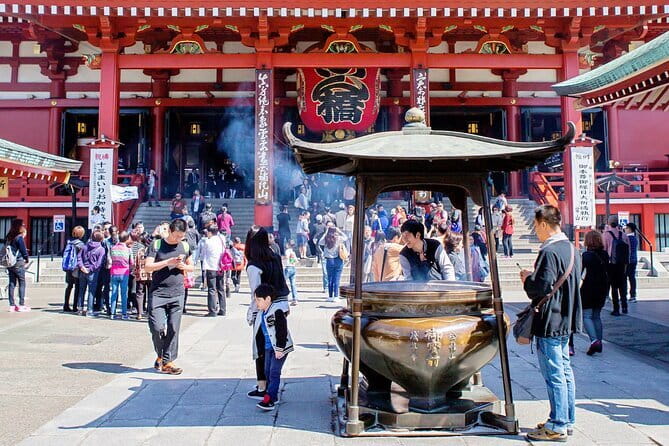
Once you leave the palace area sights, the tour drops you into Asakusa, and the neighborhood shift is the whole point. Asakusa is where Tokyo stops looking like a skyline and starts looking like daily life: shops, street walkers, snack smells, and layers of older styles alongside modern convenience.
You get about 30 minutes to explore the neighborhood with your guide. That’s not long enough to do everything, but it’s enough to get your bearings. If you’ve never been to this part of Tokyo, this kind of guided orientation can save you from wandering in circles, especially when you’re trying to time temple crowds and photo spots.
A practical note: Asakusa can be busy later in the morning. Going early helps. This tour is positioned at 9:00 am start time, so you’re hitting the area before the day’s full surge. That tends to make your walk feel more manageable and your photos less cluttered.
Senso-ji Temple: seeing the main draw without wasting your day
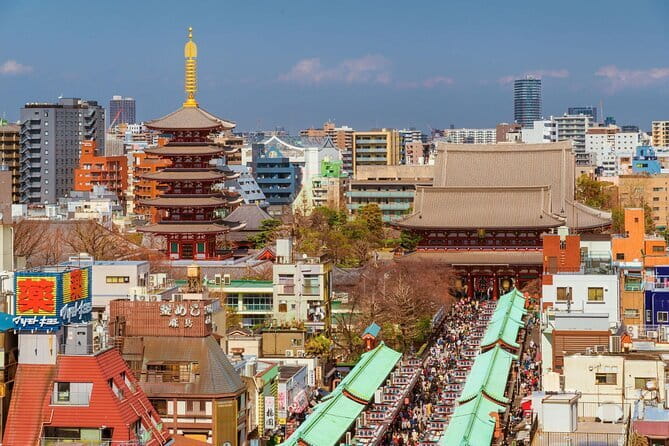
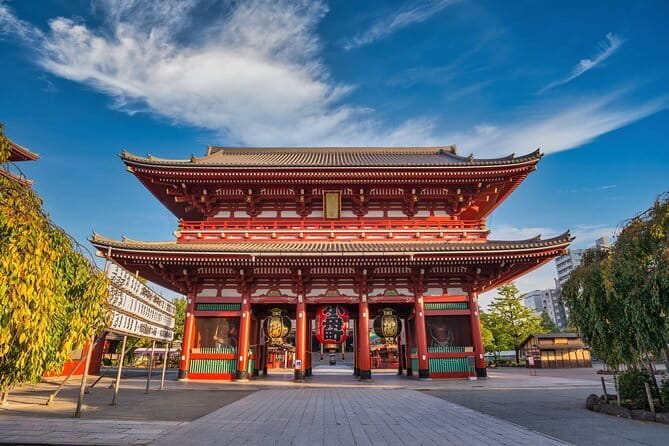
The tour’s biggest headline stop is Senso-ji Temple, with another 30 minutes on the grounds. Senso-ji is the kind of place where the moment you arrive you understand why people come back again and again. It’s not just the architecture—it’s the energy of the approach, the flow of visitors, and the sense that you’re walking through one of Tokyo’s most recognized cultural zones.
The guide’s role here matters, especially in a short window. With only 30 minutes, you want the visit to be more than just walking past things. A good guide helps you decide where to look, what to notice, and how to move so you don’t end up standing in the least interesting spot.
Here’s the trade-off: if you love temples and want time for side areas, prayers, or slower photo stops, you may feel a bit squeezed. The tour is designed for efficiency, not a long meditative visit. The upside is that you’ll still finish near Senso-ji, so you can extend on your own if you want more time after the guided walk ends.






Nakamise-dori Street and Kaminarimon: souvenir time with guardrails

After Senso-ji, you head to Nakamise shopping street, specifically the stretch around Kaminarimon, with about 30 minutes for browsing and buying souvenirs. This stop is practical. It gives you a set time window to shop while things are still easy to walk through, and it prevents the common problem of spending too long shopping early and then feeling rushed at the temple.
What I like about this part is that it’s structured but flexible. Even with a time limit, you’re not locked into a performance or a specific shop. You can scan, compare, and pick up small gifts without dragging the whole morning into retail overload.
One small tip: decide what you’re buying before you go shopping. Nakamise is full of tempting snacks, crafts, and souvenirs, but that kind of browsing can eat your time fast. If you keep a simple goal—one edible treat and one small gift—you’ll enjoy the street instead of feeling stressed by your own cart-making.
Pacing, distance, and who this tour suits best
This is a 3-hour morning walk, and the itinerary is built on 30-minute blocks at the main sights. That means you’ll move at a steady pace, with brief time to enjoy each landmark. The operator also notes a moderate physical fitness level, which is consistent with the idea that you’ll be on your feet for most of the tour.
If you’re traveling with jet lag, this might actually be a good fit. A morning schedule helps you reset your body clock, and walking between big sights gives you something active to focus on. The one catch is comfort: wear shoes you can trust for city walking. Tokyo streets and temple approaches can be uneven, and when you only have a limited time window, it’s not the moment to test new footwear.
Best fit:
- First-time visitors who want headline sights efficiently
- People who like walking but don’t want to spend planning time routing themselves
- Travelers who enjoy morning energy and want the option to keep exploring after
Less ideal if:
- You want long stays at each site
- You dislike short time blocks and prefer slow, unstructured wandering
Guides can make or break a walking tour

Even with a great route, the guide is the difference between just seeing places and actually understanding them. The positive side of the experience has been strongly linked to guides like Seiji and Aki, with praise for being friendly and informative. That kind of guidance can help you connect dots fast—why the sites are where they are, what to notice, and how to enjoy the flow.
Still, one caution: walking tours are intensely dependent on the guide’s communication style. There has been at least one unhappy account tied to a guide who wasn’t giving enough explanation. I can’t predict your guide, but I can help you protect your own experience: show up ready to ask questions, and if something doesn’t click, focus on what you can control—your pace, your photo timing, and your attention to the sights that are right in front of you.
This tour’s strength is consistency of route. Your best chance at a great morning is pairing that route with a good-fit guide conversation—friendly questions, curiosity, and a willingness to keep moving.
Practical logistics that matter in Tokyo mornings
A few details make a difference for how smooth your morning feels.
- Mobile ticket: you can keep everything on your phone, which reduces stress when you’re rushing to meet the group.
- Near public transportation: Tokyo Station is one of the easiest starting points to navigate, even if you’re arriving by train from somewhere else.
- Max 15 travelers: smaller group keeps you from getting swallowed by crowds.
- Service animals allowed: if you travel with a service animal, this is listed as permitted.
- Weather matters: the tour requires good weather, and if it’s canceled for poor conditions, you’ll be offered a different date or a full refund.
Also, bring a light plan for snacks and water. Meals and drinks aren’t included, so if you know you’ll get hungry at 11:00, grab something before the tour ends or plan to pick up food after you finish near Senso-ji.
Should you book the Tokyo Morning Small Group Tour?
If you want a fast, well-sequenced morning that hits Imperial Palace Outer Gardens, Nijubashi Bridge, and Asakusa highlights without getting stuck in decision fatigue, I think it’s a solid value. The $59 price feels more justified when you factor in free admission at the main stops and the fact that the tour gets you from Tokyo Station into a totally different neighborhood in just a few hours.
I’d especially recommend it for first-timers or anyone with limited time who still wants to feel like they got Tokyo’s “morning storyline,” not just a checklist of monuments. If you’re the type who needs long pauses in every location, consider whether your travel style matches a 30-minute stop rhythm.
In the end, this tour is best seen as a guided sampler. You’ll finish with enough context to choose what to do next on your own—especially since it ends near Senso-ji, where you can continue at your own pace.
FAQ
Where does the tour start and end?
It starts at Tokyo Sta. Marunouchi-Kitaguchi (Marunouchi North Exit), 1 Chome-9 Marunouchi, Chiyoda City, Tokyo, and ends at Sensō-ji, 2-chōme-3-1 Asakusa, Taito City, Tokyo.
What time does the Tokyo Morning Small Group Tour begin?
The start time is 9:00 am.
How long is the tour?
The duration is about 3 hours.
Is admission included for the main stops?
The itinerary lists admission for the Imperial Palace Outer Gardens, Nijubashi Bridge views, Asakusa, Senso-ji Temple, and Nakamise-dori shopping street as free.
Is the ticket mobile?
Yes, the tour uses a mobile ticket.
What is included and what is not included?
Included: a hand-picked expert tour guide. Not included: meals & drinks and personal travel insurance.
How large is the group?
The tour has a maximum of 15 travelers.
What if the weather is bad?
The experience requires good weather. If it’s canceled due to poor weather, you’ll be offered a different date or a full refund.
Can I cancel for a full refund?
Yes. You can cancel up to 24 hours in advance of the experience for a full refund. Changes within 24 hours of the start time aren’t accepted, and cancellations less than 24 hours before aren’t refunded.