REVIEW · TOKYO
Tokyo: Shinjuku Nightlife & Secret Backstreets Walking Tour
Book on GetYourGuide →Operated by Local Guide Stars · Bookable on GetYourGuide
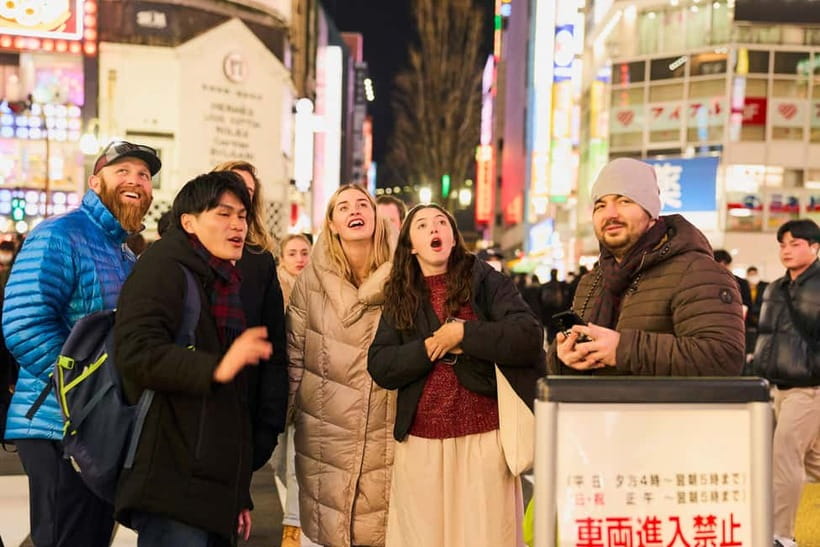
Neon turns into stories on this Shinjuku walk. In 90 minutes, I love how you get dropped into the real night texture of Golden Gai and the Kabukicho side streets, with guides who explain what changed over time and where to eat. I also like the middle-of-the-night contrast: Tokyu Kabukicho Tower gives you a quick sense of scale, then the walk slows at Hanazono Shrine. One thing to consider: the tour notes an included vending machine drink, but there’s at least one report of a mismatch on that point—so I’d ask your guide early.
Shinjuku can feel like information overload fast. This tour helps you read the district in plain terms: how the entertainment scene grew, how the alleys work, and how to spot places that fit your mood. The guides are local experts, and you may get leaders like Sota, Rinna, Akira, Chihiro, Mao, Ai, or Kawa, who tend to answer questions and tailor tips to what you want to do next.
Go prepared. You’ll walk at night, rain or shine, so bring an umbrella or raincoat and wear comfortable shoes (Tokyo pavement is no joke).
In This Review
- Key things I’d plan around
- Entering Shinjuku: why this night walk makes sense
- Meeting at Shinjuku Station East Exit Police Box: get oriented fast
- Shinjuku’s base layer: from the station to Omoide Yokocho
- Kabukicho and the story behind the neon
- Tokyu Kabukicho Tower: a scale check mid-walk
- Golden Gai: tiny bars, big personalities
- Hanazono Shrine at night: the calm reset you’ll remember
- The vending machine drink: a small local ritual
- Price vs. value: why $22 can actually feel fair
- Rain or shine: what to wear and how to avoid a night-feet disaster
- Who this tour fits best (and who might want a different plan)
- Should you book this Shinjuku Nightlife & Backstreets Tour?
- FAQ
- How long is the Tokyo Shinjuku Nightlife & Secret Backstreets walking tour?
- Where is the meeting point for the tour?
- What languages are the guides?
- Is the tour rain or shine?
- Is a vending machine drink included?
- What stops are included during the walk?
- Is the tour wheelchair accessible?
- Can I cancel for a full refund?
Key things I’d plan around
- A fast 90-minute route through Shinjuku’s core nightlife pockets, not a long slog across town
- Omoide Yokocho for small-lane energy and the feeling of Tokyo after dark
- Kabukicho + backstreets with context on how this area evolved into a nightlife hub
- Golden Gai’s tiny-bar culture, where you’re not just seeing neon—you’re learning how it works
- Hanazono Shrine at night, a calm reset between side alleys
- One vending machine drink recommended by your guide, a small local ritual to try
Entering Shinjuku: why this night walk makes sense
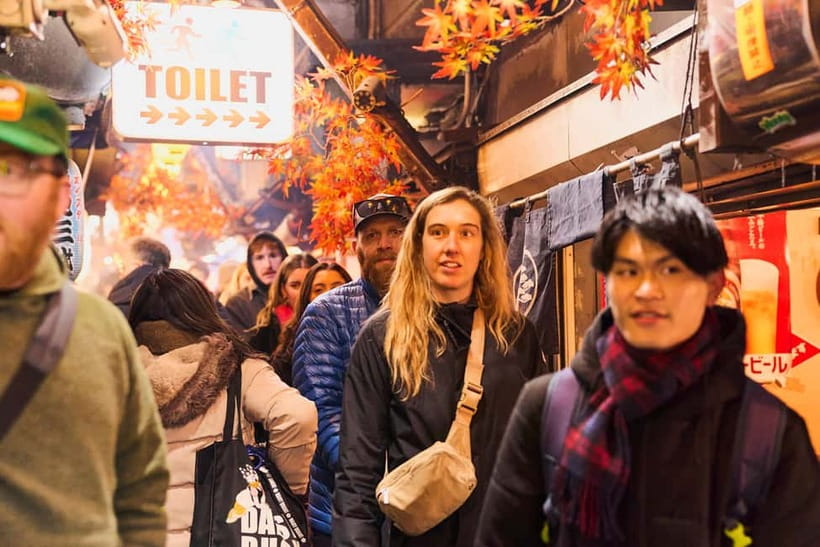
Shinjuku at night is a sensory storm. You’ve got neon, vending machines that look like slot machines, people stepping in and out of narrow lanes, and the constant churn of trains and taxis nearby. The trick is learning what to notice so you don’t just get swept along.
That’s where this tour earns its keep. You’re not chasing random “famous spots.” You’re moving through neighborhoods in a logical flow: older lanes, the entertainment belt, a higher viewpoint at the tower, then the smaller-bar world, and finally a shrine pause. Even if you love photography, you’ll get more out of it when someone teaches you what you’re seeing.
This also helps if you’re a first-timer. Shinjuku can be overwhelming because it’s built for night life and quick decisions. Having a local guide pointing out what matters turns the area from chaos into a map you can reuse later.
You can also read our reviews of more walking tours in Tokyo


Meeting at Shinjuku Station East Exit Police Box: get oriented fast
You meet at the Shinjuku Station East Exit Police Box (新宿警察署 新宿駅東口交番), at 3-38-1 Shinjuku, Shinjuku-ku, Tokyo. The spot is close enough to Shinjuku’s station flow that it’s easy to reach, but it still helps to arrive a few minutes early so your group forms smoothly.
If you’re used to Tokyo logistics, this is an easy starting beat: meet, check in, then start walking immediately. The guide carries a sign that says Local Guide Stars, so you’re not wandering around scanning every face in a station crowd.
Also: you’re starting at night and moving through busy areas. If you’re prone to getting turned around in crowds, this is one of those tours where showing up on time matters more than usual.
Shinjuku’s base layer: from the station to Omoide Yokocho
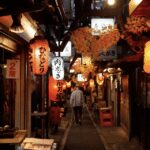
The tour begins with a short orientation stop near the police box. Think of it as a mental warm-up. You’ll get an overview of where you are and what kind of nightlife identity this part of town has.
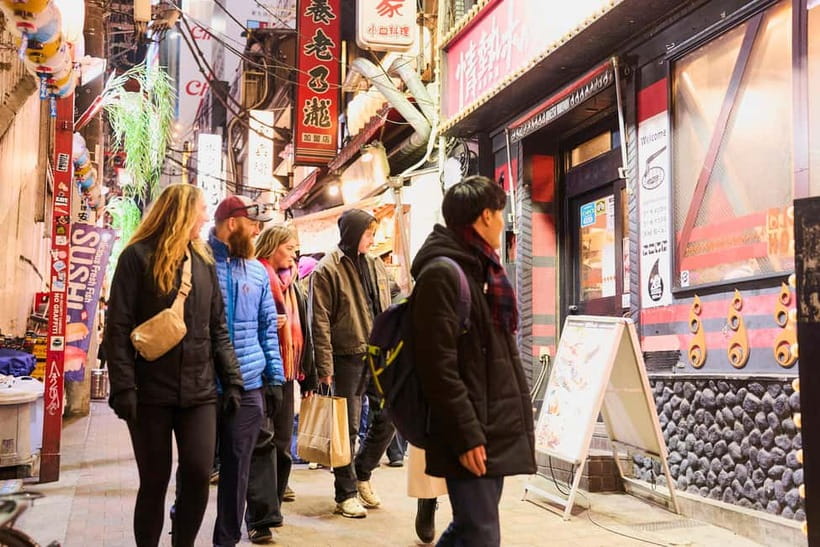
Then you head to Omoide Yokocho. This lane-style dining area is famous for dense, retro-feeling storefront energy. The point here isn’t just the scenery. It’s learning how Tokyo nightlife can be built around small spaces and repeat visitors. Omoide Yokocho gives you a quick baseline: Tokyo can be high-gloss in one direction, and super street-level in another, sometimes just a few turns away.
You’ll spend about 10 minutes here with guided context. That’s enough time to understand the mood and spot what you might want to eat later, without dragging the walk into a full meal stop.
Kabukicho and the story behind the neon
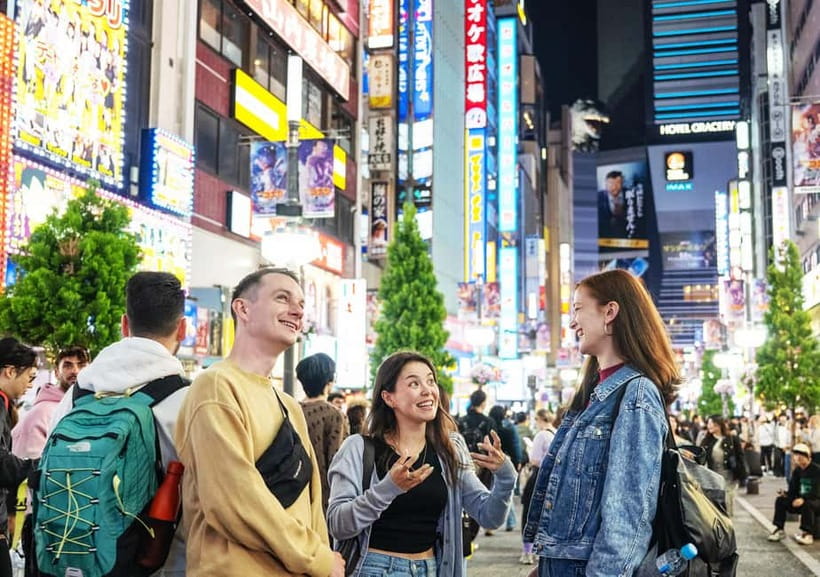
Next comes Kabukicho. This is the entertainment district that defines Shinjuku’s reputation. The tour frames its history in a direct way: it grew out of a rougher past and became the loud, crowded nightlife hub people know today.
What makes this section useful is not the headline. It’s the explanation of how areas change their identity without disappearing. You’ll walk and look at the district through that lens—why certain blocks feel different, why some streets feel more adult-focused, and how the shape of the neighborhood supports that nightlife rhythm.
You get around 10 minutes guided time here, which is brief. But that brevity is part of the value: you’re getting the “why,” not just the “where.”
Tokyu Kabukicho Tower: a scale check mid-walk
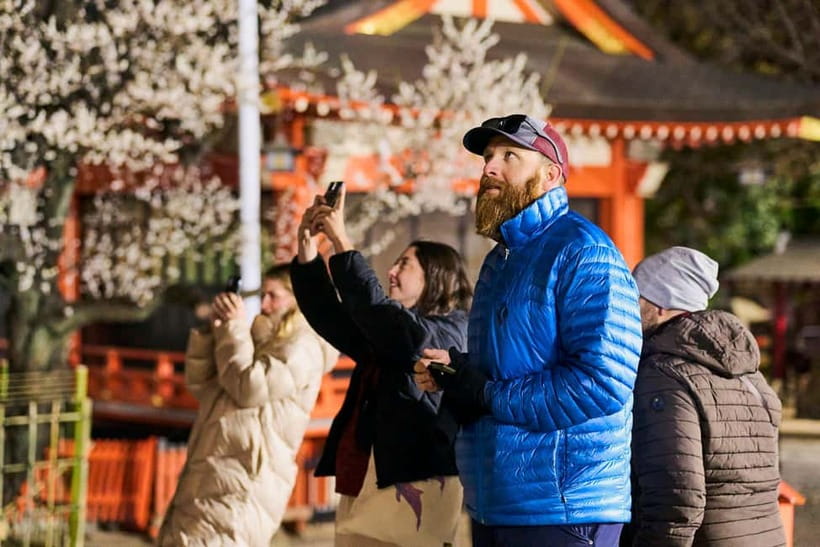
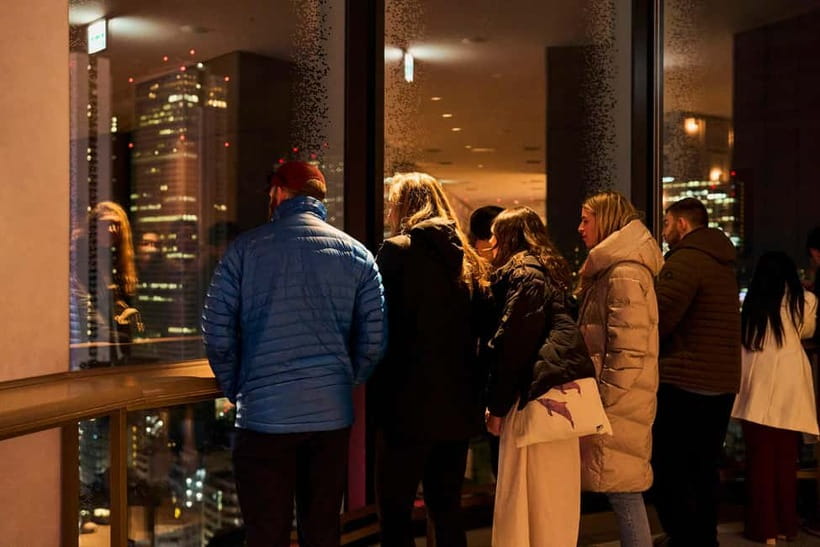
After the street-level chaos, you head to Tokyu Kabukicho Tower for a longer visit (about 30 minutes). This stop is basically a reset point. You leave the ground-level alley flow and spend time in a tower environment where Shinjuku’s scale becomes obvious.
I like this part because it’s practical. Once you’ve looked down or outward from a higher point, you can better picture distances between areas you’ll revisit later. If you’re the type who likes to plan your own night after a tour, this helps you stop guessing.
One more benefit: it’s a chance to catch your breath and regroup with the group. In a district like Kabukicho, your feet get tired before your brain catches up. The tower break makes the rest of the walk easier.
You can also read our reviews of more nightlife experiences in Tokyo




Golden Gai: tiny bars, big personalities
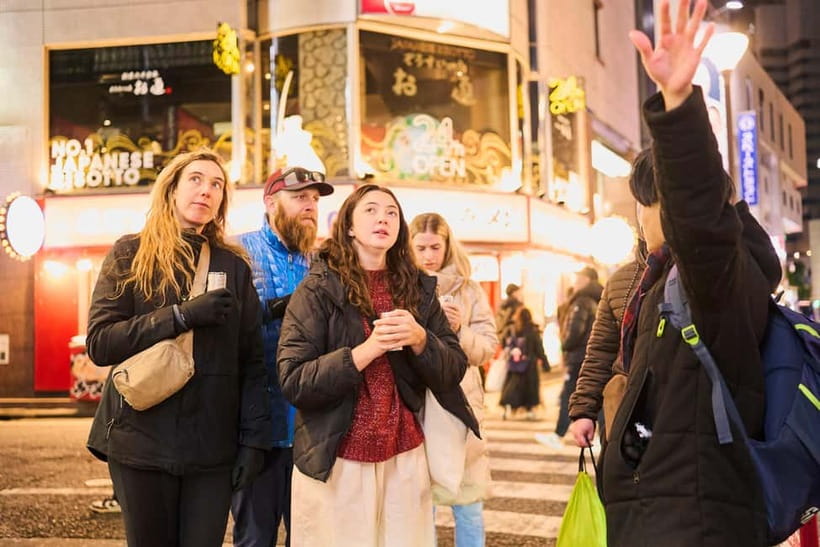
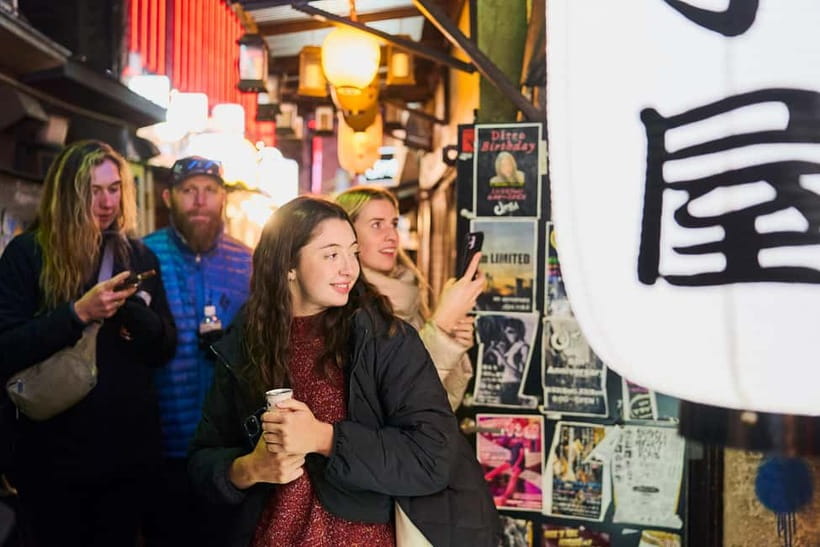
Then you slide into Golden Gai. This is where Shinjuku shifts from larger nightlife zones into micro-neighborhood energy. Golden Gai is known for tightly packed lanes and lots of small bars, each with its own vibe.
You’ll get about 10 minutes guided time here, but it’s not “look and move on.” The guide’s job is to teach you what matters when you’re deciding whether to step into a bar. In this kind of area, the difference between a fun first stop and a confusing detour can be tiny: the entrance flow, the crowd density, the signage style, and whether the vibe matches your comfort level.
This is also where the tour’s promise of insider tips makes real sense. The goal is to help you leave with a short list of places you’ll actually want to try—places you likely wouldn’t find just wandering.
Hanazono Shrine at night: the calm reset you’ll remember
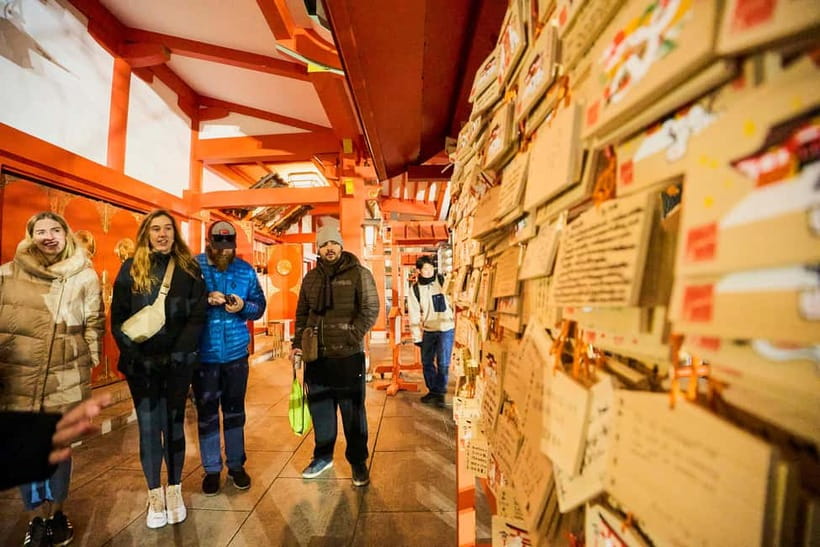
After neon and alley lanes, you reach Hanazono Shrine for about 15 minutes. This is one of the most satisfying parts of the route because it changes the pace on purpose.
Shrines in Tokyo have a way of making you notice your surroundings. The light softens. The crowd sound changes. Even for people who aren’t big on religious sites, it’s a real contrast moment in a night where everything else is built for stimulation.
The tour keeps this stop guided, which helps you understand what you’re seeing and why it matters in the middle of a nightlife district. It also gives you a natural photo pause—without turning the whole experience into a picture scavenger hunt.
Then you finish with a short walking segment back to the meeting point, about 5 minutes.
The vending machine drink: a small local ritual
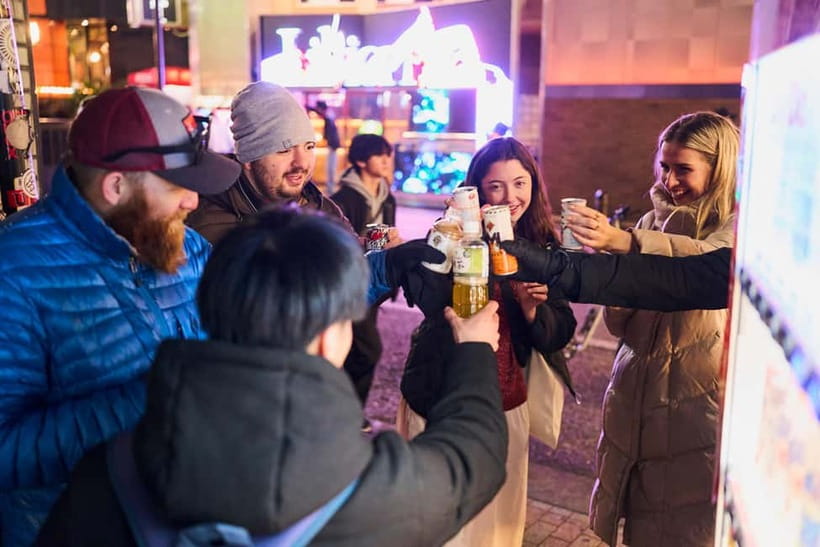
One of the tour perks is one vending machine drink recommended by the guide. It’s a simple detail, but it’s also very Tokyo. Vending machines here are more than snacks on autopilot. Some have flashy designs that feel like little machines-within-machines, and the drink selection can be a cultural cue.
Here’s how I’d handle it: treat it as a tasting moment, not a guaranteed cafe break. Try what the guide recommends, ask questions if you can (flavors, temperature, sweet vs. not), and use it as an excuse to start a conversation in a district where ordering for yourself can be intimidating.
Quick note for peace of mind: at least one past booking reported the drink didn’t match what was stated on the description. So if it matters to you, I’d confirm politely right after you meet—before you assume it’ll happen later.
Price vs. value: why $22 can actually feel fair
At $22 per person for 90 minutes, you’re paying for three things: time, local context, and shortcut thinking.
You could walk Shinjuku on your own, sure. But what you’d miss is the “how to read the district” layer. This tour spends most of its time where you’d otherwise be guessing: which lane styles mean what, where the nightlife culture clusters, and how to move through places without feeling lost or awkward.
Also, the route is tightly timed. You’re not paying for long transit across town. You’re paying to be in the right blocks at the right moment, guided through a night flow that makes sense.
So if you want a low-cost orientation that turns into a useful plan for the rest of your trip, this one stacks up well.
Rain or shine: what to wear and how to avoid a night-feet disaster
The tour runs rain or shine, so plan like a grown-up in Tokyo: pack a raincoat or umbrella, and wear shoes you won’t hate after an hour of walking. The description is clear about comfortable shoes and warm clothing, which tells me the route expects real footwork.
If it’s cold, go for layers. If it’s wet, your biggest enemy is slippery soles and thin padding. Your goal is simple: stay comfortable enough to enjoy the stops, not just survive the pavement.
Who this tour fits best (and who might want a different plan)
This tour is a great fit if you:
- want your first Shinjuku night to feel planned, not random
- enjoy walking and talking through what you’re seeing
- like nightlife but also want cultural context (Kabukicho’s evolution, shrine atmosphere)
- want a short list of places to eat or drink afterward
It may be less ideal if you:
- want a long sit-down food tour or a guaranteed full meal stop (this is a walking orientation)
- need a very slow pace with lots of extra time at each location (the guided stops are timed and move)
- strongly rely on the included vending machine drink without any chance of a mismatch—then confirm it early with your guide
Should you book this Shinjuku Nightlife & Backstreets Tour?
I’d book it if you want an efficient way to understand Shinjuku after dark. Golden Gai, Kabukicho, Omoide Yokocho, and Hanazono Shrine in one guided flow is a smart mix: nightlife culture plus a calm reset. And for the price, you’re buying local interpretation, not just a walk past neon.
If you’re on the fence, here’s my practical checklist:
- You’re okay walking for 90 minutes at night.
- You want insider context that helps you choose what to do next.
- You’ll confirm the vending machine drink details right at the start.
If those match you, this tour is a solid way to get your bearings fast and leave with ideas you can actually use that same night.
FAQ
How long is the Tokyo Shinjuku Nightlife & Secret Backstreets walking tour?
The tour duration is 90 minutes.
Where is the meeting point for the tour?
You meet at the Shinjuku Station East Exit Police Box (新宿警察署 新宿駅東口交番), 3-38-1 Shinjuku, Shinjuku-ku, Tokyo. The guide will hold a sign that says Local Guide Stars.
What languages are the guides?
The live tour guide is available in English and Japanese.
Is the tour rain or shine?
Yes. The tour runs rain or shine, and you should bring an umbrella or raincoat when it rains.
Is a vending machine drink included?
The tour includes one vending machine drink recommended by the guide.
What stops are included during the walk?
You’ll visit or pass through Shinjuku Station East Exit Police Box, Omoide Yokocho, Kabukicho, Tokyu Kabukicho Tower, Golden Gai, and Hanazono Shrine, then return on foot.
Is the tour wheelchair accessible?
Yes, the tour is listed as wheelchair accessible.
Can I cancel for a full refund?
You can cancel up to 24 hours in advance for a full refund.