REVIEW · TOKYO
Tokyo Keen Japanese Knife and Sashimi Workshop
Book on Viator →Operated by 割烹道 · Bookable on Viator
Sharp skills, calm hands in Nishiazabu. This Japanese knife and sashimi workshop is interesting because you learn real technique, not just watch it—especially whetstone sharpening and how to actually cut sashimi with the right angle. One consideration: the session is about 2 hours, so you’ll leave with a strong start, not full lifetime mastery.
I like that the class mixes craft and food in a way that makes sense. You’ll get expert instruction from chef Naoya with interpreter Hiromi, then sit down to eat what you made: the tuna bowl you prepare and miso soup, with a tasting of Kappodo original sake.
If you want a knife lesson that stays strictly theoretical, this probably won’t be your style. Expect hands-on cutting, guided sharpening on a whetstone, and a cooking class where timing matters.
Key points before you go
- Whetstone sharpening practice with help if it’s your first time
- Knife-to-sashimi moment, so you can feel how sharp a real Japanese blade is
- Small group size (maximum 8 travelers), with patience during practice
- Lunch included: zuke-don (marinated fish over rice) plus miso soup
- Sake tasting and a same-day 10% shop discount after your workshop
In This Review
- Where You Start at Kappodo HQ in Nishiazabu
- The Knife-Making Story and the Rules of Japanese Knife Culture
- Watching the Masters Cut, Then Cutting Sashimi Yourself
- Wet-Stone Sharpening: The Skill You Can Repeat at Home
- From Tuna to Zuke-don: Cooking Lunch with Real Timing
- Small-Group Size, Guided Support, and the Value of Direct Feedback
- Price, What You Actually Get, and Who It’s Best For
- Tips for Getting the Most Out of Your 2 Hours
- Should You Book This Tokyo Knife and Sashimi Workshop?
- FAQ
- How long is the Tokyo Keen Japanese Knife and Sashimi Workshop?
- Where does the workshop start?
- What’s included in the price?
- Do I get to sharpen a knife and cut sashimi?
- What do I make for lunch?
- Is alcohol included?
- How big is the group?
- Is cancellation free?
- What about transportation to the workshop?
Where You Start at Kappodo HQ in Nishiazabu
The workshop begins at Kappodo H.Q / Tokyo D kitchen Studio, in Nishiazabu (Minato City), at DK Building, 2-chōme 21-12, with a meeting point that’s described as near public transportation. It’s a practical setup: you show up, get sorted, and quickly shift from travel-mode to kitchen-mode.
The format also matters for your enjoyment. With a maximum group of 8, you’re not lost in a crowd, and the instructors can give specific corrections when your cutting angle or sharpening angle needs adjustment. That’s a big deal if you’re new to Japanese knives.
One more detail I appreciate: tools and aprons are provided, so you don’t need to travel with anything fragile or special. You just need the willingness to focus for a short window of time.
The Knife-Making Story and the Rules of Japanese Knife Culture
Before you touch anything sharp, you’ll get an explanation of how a Japanese knife is made and why knife culture is taken seriously in Japan. You’re not getting a history lecture for its own sake—you’re learning the “why” behind the techniques.
That background helps in two ways. First, it frames the idea that Japanese knives are often used with a specific motion and mindset. Second, it gives context for things like sharpness as a goal, not just a convenience. When you later sharpen on a whetstone and cut sashimi, you’ll understand why the instructor cares about small differences.
This is where the class feels balanced. The emphasis stays on real use: how sharpness changes performance, and how that connects to clean cuts in sashimi.
You can also read our reviews of more tours and experiences in Tokyo


Watching the Masters Cut, Then Cutting Sashimi Yourself
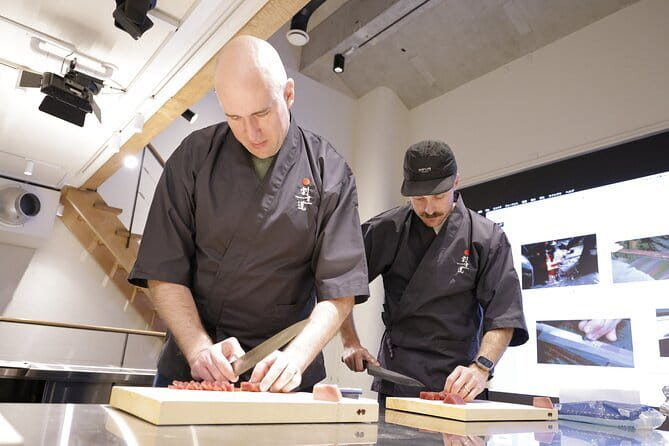
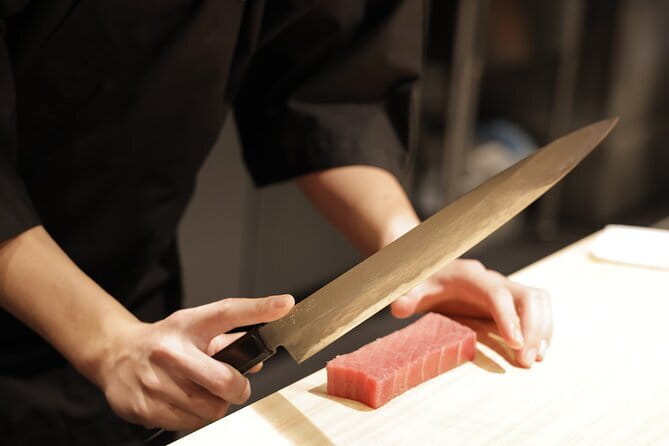
Next comes the demonstration: you’ll observe the instructor’s knife work and then practice your own cutting. This is the moment most people book for, and it’s also where the small group format pays off. You get to try, get feedback, and learn how the knife behaves in motion.
You’ll use a Japanese knife to cut sashimi. That’s an underrated learning step. Even if you’ve cooked at home, sushi-grade precision is a different sport. Cutting sashimi helps you notice what sharpness feels like, how resistance changes when the blade is truly ready, and how angle and rhythm affect the final slices.
A practical point: don’t rush your first attempts. Your goal isn’t to look fast—it’s to make smooth cuts that respect the fish. In a short workshop, that calm focus pays off.
And yes, you’ll leave with the satisfaction of having done it, not just watched it happen.
Wet-Stone Sharpening: The Skill You Can Repeat at Home
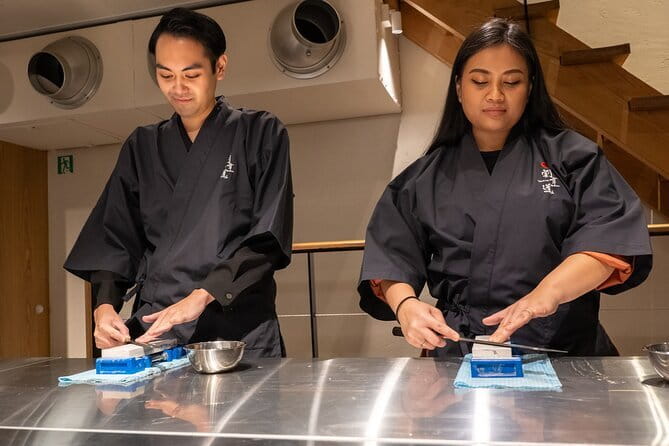
While the tuna is marinating, you’ll learn how to sharpen a Japanese knife using a whetstone. The workshop says the instructor helps even if it’s your first time, which is exactly how this should be. Knife sharpening sounds intimidating until someone shows you what you’re aiming for.
This part is valuable even if you don’t own a Japanese knife yet. Whetstone sharpening teaches fundamentals: how to maintain consistent pressure, how to work through the stone surface, and how to think about edges as something you can maintain.
Because you practice sharpening during the workshop, you also connect the dots in your brain. You’re not learning sharpening as an abstract technique—you’re learning it because it directly affects what you’ll do with the blade next. That “why it matters” connection is where most at-home learning programs fail.
If you want a souvenir that isn’t clutter, this is it. A sharpenable edge is a real, portable skill.
From Tuna to Zuke-don: Cooking Lunch with Real Timing
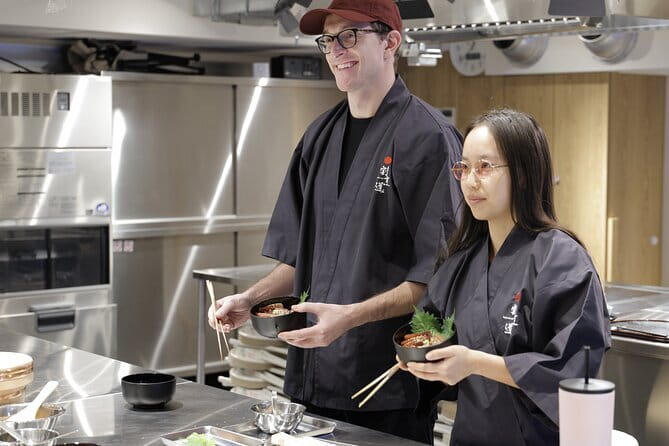
After sharpening and cutting, you move into the cooking class. You’ll learn how to make zuke-don, a bowl of rice topped with marinated sashimi. The workshop notes that tuna is common, and the fish can vary depending on availability—so you’re learning a method, not only one recipe.
The process is built around timing. While the fish is marinating, you’re sharpening and practicing cutting. Then you shift into assembling the bowl, using the skills and mindset you already practiced. That flow makes the whole experience feel efficient.
Your lunch includes what you make—your tuna bowl—and miso soup. That’s a strong payoff: you’re not just tasting, you’re eating the result of both the knife lesson and the cooking lesson.
One nice extra included: a tasting of Kappodo original sake. If you’re curious about how food culture and drink culture mix in Japan, this is a simple, low-pressure way to try it.
Some people also mention enjoying tea along with the sake, which fits the overall “meal as part of the learning” vibe.
Small-Group Size, Guided Support, and the Value of Direct Feedback
The class caps at 8 travelers, and that shows in how the experience feels. You’re not stuck waiting for attention while everyone else rotates through. In practical terms, that means you can correct small technique issues early—before bad habits set in.
I also appreciate the communication setup. The workshop is designed for foreigners, and the instruction includes an interpreter support system. In the responses linked to past guests, the team is named: chef Naoya and interpreter Hiromi. That detail matters because it signals a real effort to make the lesson understandable, not just translated.
If you’ve ever taken a cooking class where you mostly observe, this is different. You cut, you sharpen, and you cook. That’s why the learning sticks.






Price, What You Actually Get, and Who It’s Best For
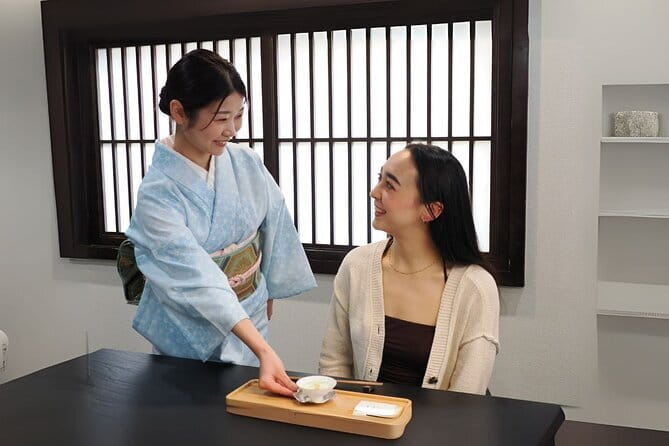
At $130.78 per person, this workshop isn’t a budget activity. But you are getting a bundle: knife skills instruction, hands-on sharpening practice with whetstone, sashimi cutting, cooking a rice bowl dish, lunch, miso soup, and a sake tasting—plus a participation certificate and a 10% discount on shop items on the same day at the 1F shop.
Here’s how I’d judge value if you’re deciding today. The biggest cost drivers for you are time with skilled instructors and the fact that you’re using professional-grade tools. If you tried to replicate this at home, you’d either spend money on classes elsewhere or spend time piecing together the learning with no feedback. For many visitors, paying for direct coaching is the point.
So who should book?
- You want a hands-on skill that’s tied to Japanese food culture, not just a meal
- You’re curious about knife sharpening and slicing technique
- You’d rather practice in a small group than watch a large demonstration
Who might hesitate?
- If you mainly want to eat and don’t care about knife technique, this may feel like too much focus on tools
- If you only have time for a quick bite, the 2-hour timing may feel tight, since you’ll be learning while hungry (though lunch is included)
If your trip includes at least one cooking experience, this one adds a different layer: precision with a knife.
Tips for Getting the Most Out of Your 2 Hours
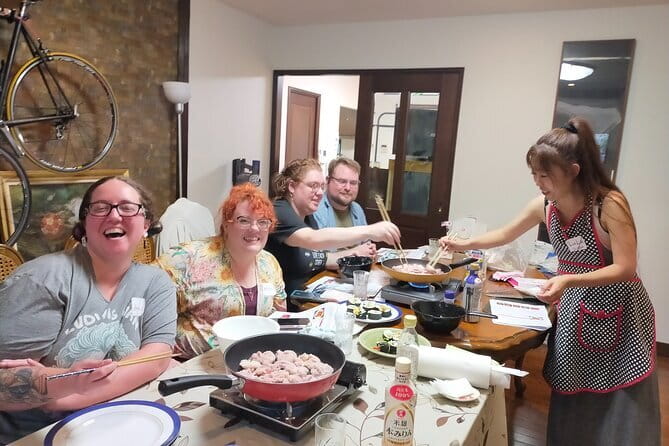
You’ll get more out of this workshop if you go in with a few expectations set correctly.
First, treat it like a practice session, not a show. Japanese knives reward calm technique. If you’re trying to “win” the cutting task, you’ll probably rush and miss the details.
Second, pay attention during the sharpening lesson. The whetstone part is where you’ll either be able to repeat success later or just remember it as a cool moment. Ask questions early while the instructor can still correct your approach.
Third, eat like the class matters. When you sit down to your zuke-don and miso soup, you’ll notice how the knife lesson connects to the final texture and presentation.
Finally, remember to use the same-day 10% shop discount at the 1F shop if you’re shopping for knife-related items. It’s the kind of practical perk that’s easy to overlook if you’re already tired.
Should You Book This Tokyo Knife and Sashimi Workshop?
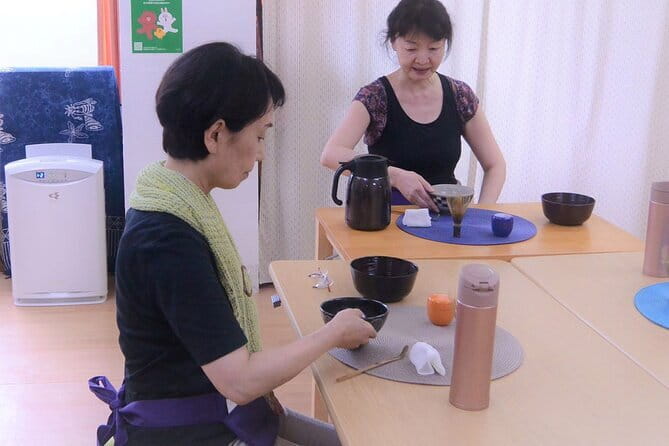
I think you should book it if you want something genuinely hands-on in Tokyo that links skill to food. The standout strengths are whetstone sharpening with guidance, cutting sashimi with a Japanese knife, and the meal payoff—your own zuke-don plus miso soup and sake tasting.
If you’re on the fence, ask yourself one question: do you want to learn a craft you can repeat? If yes, this workshop is a good bet. If you’d rather keep things purely culinary, you might feel like the knives take center stage.
For many visitors, this is the kind of experience that gives you a specific takeaway: not just a nice lunch, but a better understanding of why Japanese knife technique is its own language—and how to start speaking it.
FAQ
How long is the Tokyo Keen Japanese Knife and Sashimi Workshop?
The workshop lasts about 2 hours.
Where does the workshop start?
You meet at Kappodo H.Q / Tokyo D kitchen Studio in Nishiazabu, Minato City at DK Building (106-0031 Tokyo).
What’s included in the price?
The price includes the tour guide, tools and aprons, lunch (the tuna bowl you made), miso soup, a sake tasting (Kappodo original sake), and a participation certificate.
Do I get to sharpen a knife and cut sashimi?
Yes. You’ll learn how to sharpen on a whetstone, and you’ll also use a Japanese knife to cut sashimi.
What do I make for lunch?
You’ll make zuke-don, a bowl of rice topped with marinated sashimi (often tuna, depending on availability). You’ll also enjoy miso soup.
Is alcohol included?
Yes. You can taste Kappodo original sake as part of the included experience.
How big is the group?
The workshop has a maximum group size of 8 travelers.
Is cancellation free?
Yes. You can cancel for a full refund if you cancel at least 24 hours before the experience start time.
What about transportation to the workshop?
Private transportation is not included, so you’ll need to make your own way there. The meeting point is described as near public transportation.