REVIEW · TOKYO
Tokyo City Adventures Private English Tour With Hotel Pickup
Book on Viator →Operated by Emi · Bookable on Viator
A great first day in Tokyo starts with direction. This private English tour strings together the big “wow” stops—then lets your guide shape the pace around what you care about most. I like the hotel pickup/drop-off and the comfort of an air-conditioned car, so you spend less time navigating and more time looking.
What I also like: your guide doesn’t just read a script. Guides such as Sam and Rashid have a knack for tailoring the day and adding context stop by stop, so you leave with more than photos.
The main thing to watch is cost creep from optional or paid entries. Tokyo Skytree and the Meiji Jingu inner garden fee aren’t included, and Shibuya can be crowded, so your time there is best used with good planning.
If you want a smooth, efficient Tokyo highlight reel without building an itinerary from scratch, this is built for you. It’s also sized well: a private group up to four keeps it flexible and avoids the “herding cats” feeling.
In This Review
- Key points that make this tour work
- How hotel pickup turns a Tokyo day into an easier one
- Imperial Palace: the calm start that tells you Japan’s story
- Tsukiji Fish Market: watch the seafood culture in action
- Tokyo Skytree: pay the fee, then cash in the view
- Meiji Jingu: the shrine experience, plus the inner garden fee
- Shibuya Crossing: the movie-famous intersection with a time plan
- Senso-ji Temple: classic old Tokyo in one focused hour
- Customization: how your guide shapes the day
- Price and value: what $453.98 per group really means
- Small friction points to consider before you book
- Who this private Tokyo tour is best for
- Should you book this Tokyo City Adventures private English tour?
- FAQ
- Is this a private tour or a group tour?
- How many people can be in the group?
- How long is the tour?
- Does the tour include hotel pickup and drop-off?
- Are tickets and entrance fees included?
- Is food included?
- Are there multiple departure times?
- Do I get a mobile ticket?
- Can I cancel for a full refund?
- Is it easy to participate if I’m staying near public transport?
Key points that make this tour work
- Hotel pickup and drop-off in an air-conditioned private vehicle: less stress, more sightseeing time.
- A customizable itinerary: you can steer the day toward your interests instead of following a rigid loop.
- First-timer friendly route: mix of old Tokyo and modern Tokyo in one 6–8 hour block.
- Big photo stops with smart context: the guide helps you understand what you’re seeing.
- Time-efficient layout: each major area gets about an hour (longer for Shibuya), so you don’t feel rushed at every corner.
- Clear add-on fees for Skytree and parts of Meiji Jingu: easy to plan for ahead.
How hotel pickup turns a Tokyo day into an easier one
Tokyo can be amazing and exhausting in the same breath. One of the best parts here is that you don’t have to figure out trains, exits, or transfers just to start the day. You get hotel pickup and drop-off, plus a private car with air-conditioning. That matters when the day runs 6 to 8 hours and you’ll move between very different neighborhoods.
This kind of setup is also good for mixed groups—say you’ve got one person who wants viewpoints, another who wants shrines, and someone else who just wants the classics. Because it’s private (your group only), the guide can handle the pacing. You’re not waiting for slow walkers or forced to match the energy level of strangers.
Finally, the tour’s built around multiple morning departure times, which helps you match the day to jet lag and your other plans. If you hate early mornings, you can at least choose a departure window that fits better.
You can also read our reviews of more city tours in Tokyo
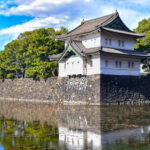


Imperial Palace: the calm start that tells you Japan’s story
The day kicks off at the Imperial Palace, set on the site connected to Edo Castle, the seat of power before the Meiji era. Even before you see anything “temple-like,” this area gives you a sense of scale and order—wide moats, thick walls, and carefully kept grounds. It’s a good opening because Tokyo’s modern chaos can blur together fast; the palace grounds reset your perspective.
You’ll spend about an hour here, with free admission. The payoff isn’t only photos. It’s the context: what this place represents historically, and why Japan’s political center has shaped the way the city grew. If you’re a first-timer, this stop makes the rest of the route feel more connected.
Practical tip: the palace area can feel quieter than the rest of the itinerary. That’s great for beginning. Use that hour to get your bearings mentally before heading into louder, more crowded places later.
Tsukiji Fish Market: watch the seafood culture in action
Next up is Tsukiji Fish Market, famous for the pace and volume of the seafood trade. The real value isn’t fancy shopping. It’s watching buyers and sellers haggle and move quickly, which shows you how food is handled here—fast, practical, and serious.
You’ll have about an hour, and it’s free to visit. If you like food culture (or even if you just like watching people work), Tsukiji delivers. You’ll also see a “Tokyo rhythm” that feels different from shopping districts or sightseeing lanes. It’s one thing to read about Japanese food markets; it’s another to see the energy in motion.
Potential consideration: markets attract early energy. If you arrive when everything is already winding down, the experience can feel less intense. Since this tour runs in the morning, you’re usually set up better than if you tried to schedule Tsukiji on your own.
Tokyo Skytree: pay the fee, then cash in the view
The itinerary includes Tokyo Skytree for a bird’s-eye look over the city. The height matters here: it’s Japan’s tallest structure at 634 meters, and it’s a big step toward understanding Tokyo’s layout. You’re not just seeing buildings; you’re getting a map of neighborhoods and river lines (on clear days), which makes later sightseeing feel more logical.
This stop lasts about an hour, and admission is not included. The SkyTree ticket is listed at ¥1,100 per person. You’ll also want to budget time for moving through the ticketing/entry process. This is one of the few stops where the “time value” depends on how quickly you can get up and enjoy the views.
When Skytree is worth it: if you’re in Tokyo for the first time and want instant orientation. When it’s less worth it: if you already know the city well and only want street-level neighborhoods. For most first-timers, the viewpoint is a smart use of time.
Practical tip: clear weather makes this stop. If the forecast looks grim, you might ask your guide how to balance Skytree time with other photo spots.
Meiji Jingu: the shrine experience, plus the inner garden fee
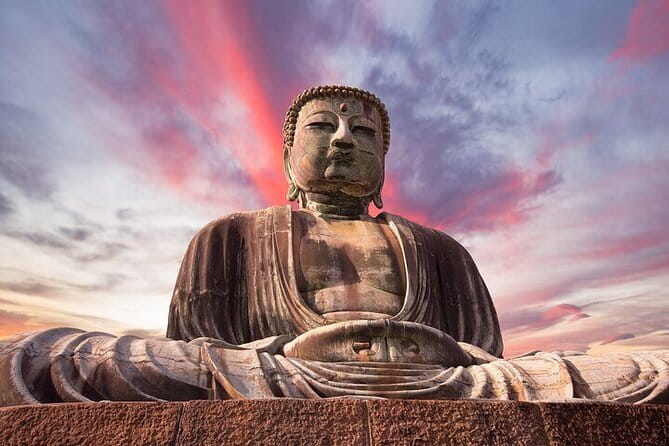
After the skyline view, you switch gears to Meiji Jingu Shrine, a Shinto shrine dedicated to the deified spirits of Emperor Meiji and Empress Shoken. This stop is free, but the inner garden fee is listed as ¥500 per person and is not included.
That split matters. If you only have time for the outer areas, you can still get the core shrine atmosphere. If you want the fuller garden experience, budget that fee so it doesn’t feel like a surprise mid-day.
What makes Meiji Jingu special on a route like this is the contrast. You go from tall-city thinking to a space designed for calm and reflection. You also get a more traditional side of Tokyo that isn’t just a building or a photo stop—it’s a mood.
Practical consideration: Meiji Jingu is popular, so you’ll want to take it slow. Don’t sprint through this one. Give yourself a few minutes to walk and notice the change in sound and pace as you enter the shrine grounds.
You can also read our reviews of more private tours in Tokyo


Shibuya Crossing: the movie-famous intersection with a time plan

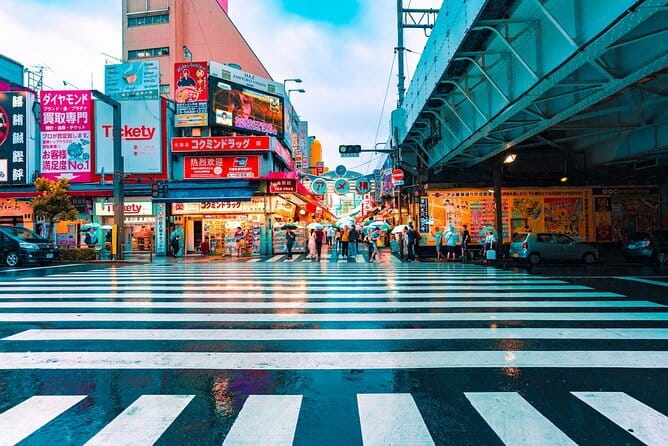
Then comes Shibuya Crossing, one of the most recognizable intersections on earth. In the busiest periods, an estimated 1,000 to 2,500 people can cross at once. That’s the kind of detail that helps you understand what you’re stepping into: it’s a choreography moment built into the city.
You’ll spend about two hours here, which is a good length for this stop. Two hours lets you do more than just cross once. You can take photos, get oriented around the area, and still avoid feeling like you’re rushing between crowds.
Why this stop is included even if you’ve seen it online: Shibuya is not only the crossing. The surrounding streets and storefront energy show how Tokyo mixes trend, tech, and old-meets-new in tight spaces.
Potential drawback: crowds can be intense. If you don’t enjoy standing shoulder-to-shoulder, use that time strategically—cross at a calmer moment if your guide can find one, and keep your attention on where you’re headed rather than only where everyone else is going.
Senso-ji Temple: classic old Tokyo in one focused hour
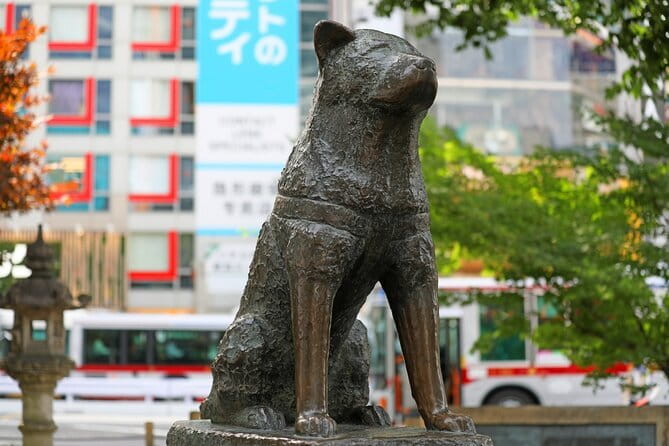
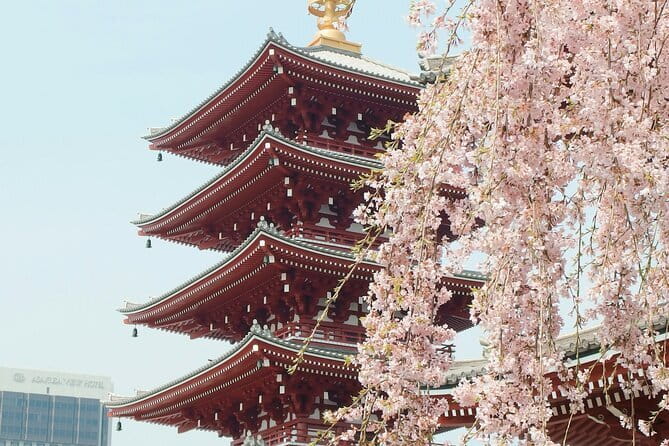
The day ends at Senso-ji Temple, widely known as one of Tokyo’s most photographed temple areas. It’s the oldest Buddhist temple in the capital, with features that practically beg for you to slow down: the five-story pagoda, incense trails, and the dramatic scale of the temple eaves.
You’ll have about an hour, and admission is free. This stop works as a satisfying finale because it ties the day together. You started with a civic, political center. You moved through food culture. You saw modern Tokyo from above. Then you balanced it with spiritual calm. Senso-ji gives you a final dose of tradition you can actually feel in the air.
Practical tip: keep an eye on your photo plan. This area is crowded, so if you want clear shots, you’ll have better luck choosing an angle with fewer people moving through your frame.
Customization: how your guide shapes the day
The itinerary is built around major landmarks, but the real selling point is customization. The tour is designed so you can tick off what you care about rather than just “accept the list.”
In past experiences, guides like Sam have tailored the itinerary based on interests and added history at each stop in a way that makes the landmarks click. Another example from past days: Rashid listened closely, moved you efficiently, and even worked in a detour to a specific experience a group was eager to try, instead of forcing them to stick only to the standard route.
That’s the kind of flexibility you’re paying for. Tokyo is full of high-cost “maybe we’ll see it” decisions. A guide who pays attention can turn those maybes into reality.
If you want the day to feel truly yours, come with a short list:
- One must-see viewpoint
- One must-see spiritual stop
- One neighborhood vibe you want (busy, traditional, food-focused)
Share that upfront, and it’s easier for your guide to optimize the sequence.
Price and value: what $453.98 per group really means
The price is $453.98 per group, up to four people, for roughly 6 to 8 hours. That’s a wide band because timing and traffic can shift in Tokyo, and your guide may adjust the flow to keep the day comfortable.
Here’s the value math in plain terms: if you fill all four spots, you’re effectively paying around $113.50 per person. If you’re just two people, it’s closer to $227 per person. If you’re one person, you’re paying the full group rate.
So the value depends on your group size, but the tour has two cost-saving strengths:
1) Private, air-conditioned transport plus hotel pickup/drop-off
2) A local guide who can reduce wasted time figuring out routes and timing
Also, a few key attractions are free, which helps. Imperial Palace, Tsukiji, Meiji Jingu (main shrine areas), Shibuya Crossing, and Senso-ji are listed as free stops. You only need to plan for Skytree (¥1,100) and the Meiji Jingu inner garden fee (¥500).
Budget snapshot:
- Add roughly ¥1,600 per person if you do both paid items
- Food and drinks are not included, so you’ll handle that on your own
If you’re traveling as a couple or family and want a first-day “greatest hits” overview, this can be a cost-smart way to buy time and comfort.
Small friction points to consider before you book
No tour is perfect, so here’s what to keep in mind.
Crowds and timing: Shibuya can be intense. The tour gives you two hours, but your enjoyment will depend on whether you’re comfortable in busy pedestrian zones.
Fees: You’ll pay for Skytree and possibly the inner garden at Meiji Jingu. It’s not a lot, but it’s real.
Walking time: The route covers major areas with city movement between them. If anyone in your party dislikes walking or standing for long periods, you’ll want to tell the guide early so pacing can be adjusted.
Weather: Some of the magic of Skytree comes from visibility. If it’s cloudy, the view payoff can drop. Still, the viewpoint is often good even with partial cloud cover, but you should manage expectations.
Who this private Tokyo tour is best for
This tour fits best if you:
- Are in Tokyo for the first time and want an efficient overview
- Prefer a guide who can explain what you’re seeing, not just move you between stops
- Want the ease of hotel pickup rather than train math
- Travel as a small group (up to four) and can split the group rate
It can also work well if you want “classic Tokyo” but still care about customization. The day has famous anchors—Imperial Palace, Tsukiji, Skytree, Meiji Jingu, Shibuya, Senso-ji—so you’re not gambling on obscure choices.
If your style is 100% neighborhood wandering with lots of spontaneous side streets, you might find this slightly structured. In that case, you can still use the tour as a foundation and build your own extra time afterward.
Should you book this Tokyo City Adventures private English tour?
I’d book this tour if you want a smooth first day and you like the idea of checking off the big Tokyo icons in a single outing. The hotel pickup, air-conditioned private vehicle, and customizable plan remove the usual friction that hits first-timers.
Skip or reconsider if you already know Tokyo well, hate crowds, or plan to avoid paid viewpoints entirely. Also, if you’re traveling solo, the group rate can feel steep, so you’d want either a strong interest in all the stops or the ability to add value elsewhere.
For most visitors—especially pairs or small groups—it’s a practical way to get oriented fast and still feel like you saw real Tokyo, not just a list of landmarks.
FAQ
Is this a private tour or a group tour?
It’s a private tour/activity, so only your group participates.
How many people can be in the group?
The tour is priced per group and is listed as up to 4 people.
How long is the tour?
It runs about 6 to 8 hours.
Does the tour include hotel pickup and drop-off?
Yes. Hotel pickup and drop-off are included, and you travel in an air-conditioned private vehicle.
Are tickets and entrance fees included?
Some stops are free, but Tokyo Skytree entrance is not included (¥1,100 per person). The Meiji Jingu inner garden fee is also not included (¥500 per person).
Is food included?
No. Food and drinks are not included.
Are there multiple departure times?
Yes, there are multiple morning departure times so you can fit it into your schedule.
Do I get a mobile ticket?
Yes. The tour includes a mobile ticket.
Can I cancel for a full refund?
Yes, free cancellation is available. You must cancel at least 24 hours before the experience’s start time for a full refund.
Is it easy to participate if I’m staying near public transport?
The tour notes that it is near public transportation, and most travelers can participate.