REVIEW · TOKYO
Go Karting Tokyo Old Town Experience | 8 Destinations in 100 Mins
Book on Viator →Operated by Kartzilla Go Kart Tours | Top Cultural & Historic Destinations in Tokyo · Bookable on Viator
Tokyo at kart speed is a rare thrill.
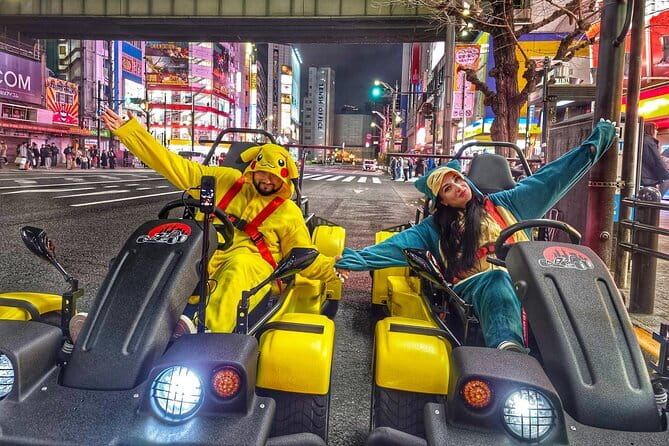
What makes this one feel special is that it mixes Tokyo Old Town sightseeing with hands-on driving, not just watching from a sidewalk. I also like that they provide quirky costumes for the ride, and the group stays small, capped at 10 people, so you don’t feel like one more number in a big crowd.
You also get a guided route that hits major landmarks across different neighborhoods. Expect stops that include Tokyo Skytree, Tokyo Station, Akihabara, Ueno, Asakusa, and the Imperial Palace area, with plenty of chances to capture video and photos during the tour. One consideration: the driving paperwork is strict, and if you show up without the right physical documents, the tour can be canceled with no refund.
In This Review
- Key things to know before you book
- Why karting Tokyo Old Town beats a standard sightseeing loop
- Price and value: what $91.45 covers (and what it doesn’t)
- Getting to the start and staying ready for a 1h40 ride
- The driving-license checklist that can cancel your tour
- Your route in 1h40: Skytree to the Imperial Palace
- Tokyo Skytree: start with big-city height
- Ryogoku and the Sumo Stadium: tradition meets street-level motion
- Tokyo Sword Museum: serious objects, quick context
- Tokyo Station and Marunouchi: architecture as a meeting point
- Akihabara: electronics and anime culture in motion
- Ueno: from Edo-era beginnings to modern culture
- Asakusa: low-city charm and a long timeline
- Tokyo Imperial Palace area: the grand endpoint
- Costumes, photo/video, and how to get the most from it
- Wheelchair accessible, but read the driving rules first
- Who this tour fits best
- Should you book this Go Karting Tokyo Old Town experience?
- FAQ
- How long is the Go Karting Tokyo Old Town experience?
- What is included in the price?
- Do I need pickup and dropoff?
- Where is the meeting point?
- What driving documents do I need?
- Can I show a digital copy of my IDP?
- Is the tour wheelchair accessible?
- What happens if the weather is bad?
- What is the cancellation policy?
Key things to know before you book
- 8 destinations in about 1h40 means a full day feel without a full day commitment
- Costume, fuel, and insurance are included, so you’re not nickel-and-diming basics
- Photo and video are part of the experience, and you can buy extra storage if you want
- Wheelchair accessible (so long as you can follow the driving rules and support needs)
- Bring the physical IDP and original license or you risk losing the tour
Why karting Tokyo Old Town beats a standard sightseeing loop
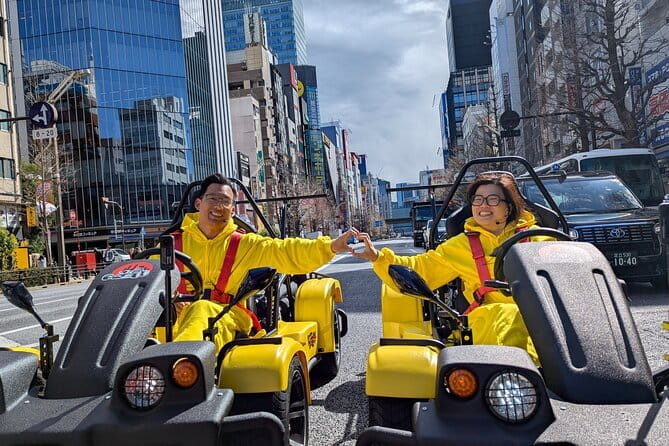
Tokyo is usually built for walking, trains, and careful photo angles. This tour flips the script: you sit behind the wheel and move through the city while a guide helps connect what you’re seeing to the local story.
That’s a big value factor for me. A normal bus or walking tour can feel like you’re passing through. Here, you’re actively participating, and you get that mix of adrenaline plus context. The pace also helps you cover multiple neighborhoods that would take time to stitch together on your own.
The other thing I really appreciate is the small group cap at 10. You still get the buzz of other people on the route, but you’re not stuck waiting forever, or squeezed into a mass of bodies at every photo stop.
You can also read our reviews of more tours and experiences in Tokyo.



Price and value: what $91.45 covers (and what it doesn’t)
At $91.45 per person, you’re paying for more than a kart rental. The included basics are:
- go-kart rental
- tour guide
- costume
- fuel
- insurance
- photo & video
- drinking water
That matters because in Tokyo, the “cheap option” often excludes the stuff that makes the experience easy—like guide coordination, insurance basics, and the actual ride equipment you can’t easily improvise.
What’s not included is also clear:
- pickup and dropoff
- a data card for an Insta360 camera (if you want one, it’s available for purchase)
- food
So if you’re hungry, you’ll want to plan for a snack before or after. If you’re hoping for door-to-door convenience, plan on getting yourself to the meeting point using public transportation.
Getting to the start and staying ready for a 1h40 ride
The tour starts and ends back at the meeting point, so you’re not dragged across town and left to figure out the last leg. The duration is listed as about 1 hour 40 minutes, which is long enough to feel like a real outing, but short enough that you’re not exhausted by the time the photos come.
Your meeting point is in Higashiyotsugi, Katsushika City:
Japan, 124-0014 Tokyo, Katsushika City, Higashiyotsugi, 1-chōme202 小島貸事務所
It’s noted as near public transportation, which is a lifesaver in a city where “easy” and “near” can mean different things. If you like to be safe, give yourself extra buffer time so you’re not rushing paperwork.
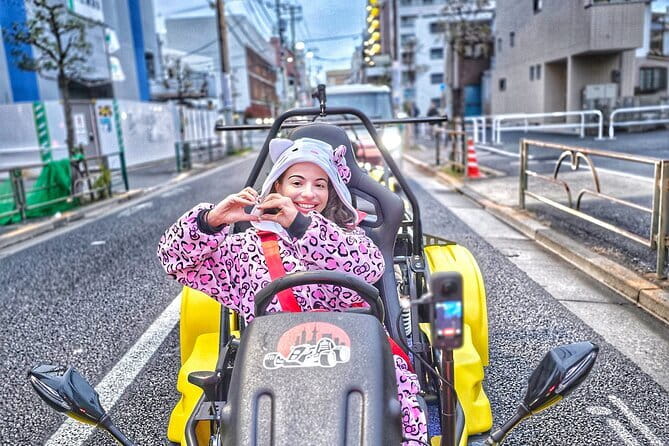
Costume and water are provided. That’s helpful because you won’t waste time thinking about what to wear besides being comfortable and able to fit gear while driving. And since you’ll be taking photos/video during the ride, I’d treat this like a “riding day,” not a “wearing your fanciest outfit” day.
The driving-license checklist that can cancel your tour
This is the part you should treat like a hard rule, not a suggestion.
To drive on public roads in Japan, you need:
- your original local driving license
- an International Driving Permit (IDP) issued under the 1949 Geneva Convention
- and passport
A key detail from the practical experience of others: a digital copy or email proof is not considered a legal substitute. If you show up with only a digital version, you can lose the chance to drive.
If you’re not sure which IDP you have, check the issuing convention format before you travel. Also, plan to keep the documents physically together in your day bag so you don’t end up searching for them five minutes before the start.
There’s also a note for specific nationalities: people from Switzerland, Germany, France, Belgium, Monaco, and Taiwan can drive if they have a Japanese translation of their driving license. The instruction says to contact them a month in advance if you need assistance.
For US Forces in Japan, the requirement is a SOFA driving license.
And the big warning: if you fail to provide the original local license and the IDP, your tour can be canceled with no refund. That’s not the kind of surprise you want at the start of a vacation.
Your route in 1h40: Skytree to the Imperial Palace
This tour is built around a sequence of famous places, connected by a go-kart ride. The point isn’t just seeing each stop; it’s seeing how Tokyo’s different districts feel when you’re moving through them.
Here’s what each stop adds, plus what to watch for.






Tokyo Skytree: start with big-city height
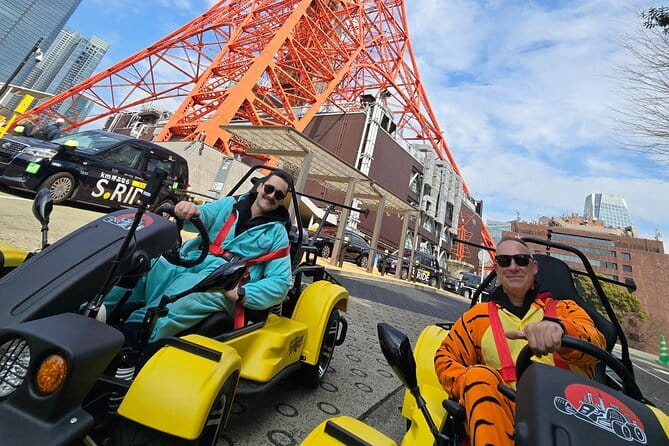
The tour begins with Tokyo Skytree, described as the world’s tallest broadcasting and communication tower and the third tallest structure. It’s located in Sumida City Ward.
Why I like this first: Skytree is instantly recognizable, so it works like a visual anchor for the rest of the day. If you’re arriving in Tokyo for the first time, it also helps you start with a landmark that gives you bearings fast.
Possible drawback: tall landmark areas can draw lots of foot traffic. The kart route helps you avoid just milling around, but you’ll still want to be ready for a crowd vibe around major sights.
Ryogoku and the Sumo Stadium: tradition meets street-level motion
Next comes the Ryogoku area, with the Sumo Stadium as a highlight.
Why it works on a kart: Ryogoku is strongly tied to sumo culture, and riding through the neighborhood helps you feel the “place” rather than just learning dates and terms. This stop also adds contrast—Skytree is modern spectacle; Ryogoku is tradition in a very Tokyo way.
Possible drawback: stadium-adjacent areas can have their own traffic patterns. You’ll want to stay focused when the guide is coordinating photo stops and transitions.
Tokyo Sword Museum: serious objects, quick context
You’ll also visit the Tokyo Sword Museum, tied to the idea that Japanese swords are more than weapons—they’re symbols of authority, art, and objects of worship. The museum is described as preserving important Japanese swords and samurai-related pieces.
I like that this stop adds depth without turning the tour into a lecture marathon. Even a short visit can reset your understanding of what you’re looking at around Tokyo, where tradition shows up in forms you might not expect.
Possible drawback: museum-style stops can feel slower than the street sections. If you’re the type who loves motion more than standing, you’ll want to mentally switch gears for a bit.
Tokyo Station and Marunouchi: architecture as a meeting point
Another major stop is Tokyo Station in the Marunouchi district. The station is described as an early 20th-century landmark and a symbol of architectural brilliance.
This is a smart choice in the route because Tokyo Station is also a transit center for almost everyone. Seeing it from the street through the kart experience can make it feel less like an abstract travel hub and more like a real, detailed building you can appreciate.
Possible drawback: this is a photo magnet. Expect lots of people around. The kart portion helps you cover distance, but you may still need to keep expectations realistic for perfect, unobstructed shots.
Akihabara: electronics and anime culture in motion
You’ll ride through Akihabara, described as the epicenter for anime and known as the Otaku capital of the world, with history dating back to the Meiji period.
Why I think this stop works: on a walking tour, Akihabara can be either overwhelming or oddly repetitive. With the kart route, you get a stronger sense of boundaries—where the “scene” starts, how it changes block to block, and where your eyes want to focus.
Possible drawback: if you’re not into anime or electronics shopping, the sensory overload can still be intense. The best way to enjoy it is to treat it like a people-watching and street-scene stop rather than a must-buy shopping expedition.
Ueno: from Edo-era beginnings to modern culture
Ueno is included for its historical arc: it rose to prominence after the Tokugawa shogunate in Edo in 1603, starting as a mix of Buddhist temples and townsfolk, then evolving into a hub for modern Japanese art and culture during the Meiji era.
This stop gives the tour some “time travel,” and it’s a nice balance after Akihabara’s pop culture vibe. Ueno can feel more grounded, and the contrast helps the whole day make sense.
Possible drawback: Ueno areas often attract lots of visitors. When you’re riding, you’ll keep moving, but if you’re taking lots of photos, you might want to focus on one or two “signature” angles rather than trying to capture everything.
Asakusa: low-city charm and a long timeline
Asakusa is highlighted as having roots going back about 1400 years to the Asuka period, and it’s tied to the feel of Tokyo’s shitamachi—the low city.
I like this stop because it adds a human scale. When Tokyo’s modern side can feel overwhelming, Asakusa is often where people come for character and atmosphere. In a kart, it becomes less of a museum-like visit and more of a neighborhood drive with context.
Possible drawback: Asakusa is a big draw. Even with a guided route, you’ll likely be surrounded by walkers and sightseeing energy.
Tokyo Imperial Palace area: the grand endpoint
Finally, you’ll finish with the Tokyo Imperial Palace, described as the residence of the Japanese Emperor and Empress, constructed in 1457 by Ota Dokan within the expansive grounds of Edo Castle.
This ending spot is useful because it’s a reminder that Tokyo isn’t only neon and shopping streets. It’s also about institutions and history shaped across centuries. If you’ve spent the earlier part of the ride in tech, pop culture, and traditional sumo zones, this provides a clear “center” for the trip.
Possible drawback: palace areas tend to be more controlled and formal. That can mean less spontaneity in where you can linger. Think of it as a respectful, photo-friendly finish rather than a long walk-in sightseeing hour.
Costumes, photo/video, and how to get the most from it
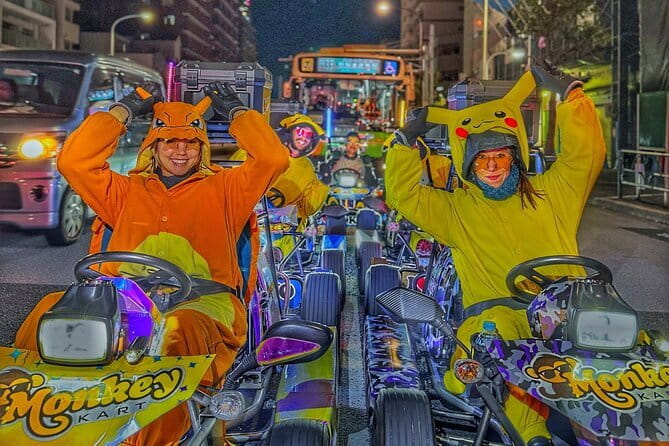
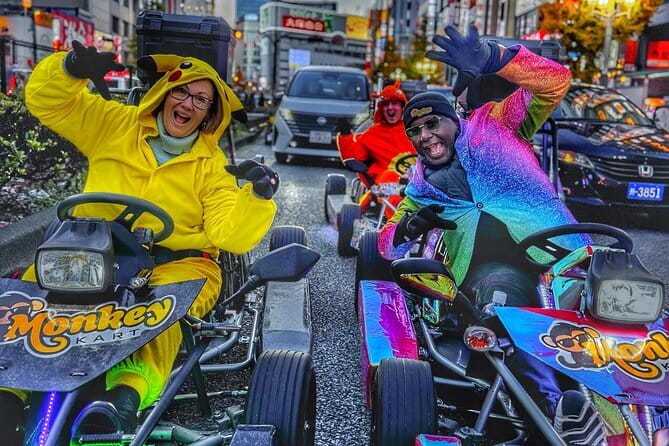
The costume part is small, but it changes the tone. You’ll look the part, and your photos will look like photos from an actual Tokyo adventure—not just a standard tourist snapshot in traffic.
Photo and video are included, which is a practical win. You’re not trying to juggle a phone while getting your turns right. The tour also provides drinking water, which helps because you’ll likely be focused and breathing harder than you expect from a “just sightseeing” day.
One note: a data card for an Insta360 camera is not included, but it’s available for purchase. If you’re serious about keeping high-quality footage, consider that ahead of time rather than deciding later.
Wheelchair accessible, but read the driving rules first
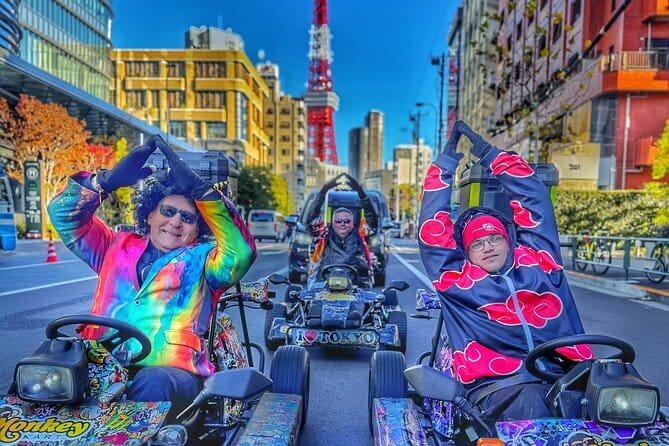
The experience states it is wheelchair accessible. That’s a good sign for physical access to the tour itself.
But because you’ll be on a public-road kart activity, your ability to participate fully still depends on the driving requirements and safety setup. If you’ll be using a wheelchair, your best move is to plan to communicate your needs early so the team can tell you what participation will look like.
Who this tour fits best
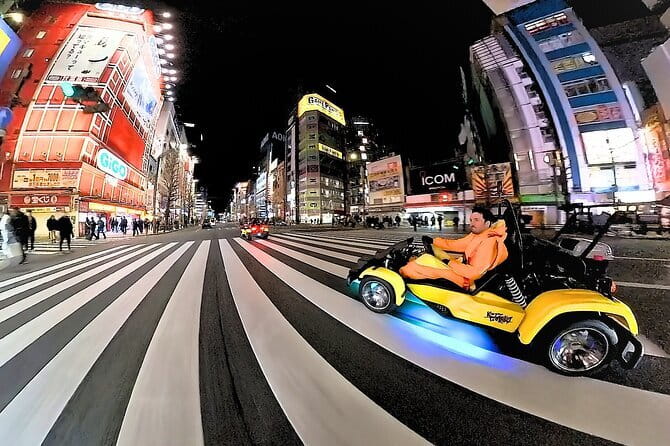
This is a great match if you want:
- a thrill element without losing context
- a guided route that covers multiple neighborhoods in about 100 minutes
- the convenience of included insurance, fuel, and basic ride necessities
It’s also a smart option if you’re the type who likes structure. The itinerary takes you from Skytree to Akihabara to Ueno to Asakusa and ends at the Imperial Palace area, so you’re not choosing what to do next.
You might want to skip or rethink it if:
- you don’t have the physical IDP and original license that Japan requires
- you’re not comfortable driving paperwork rules and possible cancellations
- you’re traveling without flexibility for weather. The experience requires good weather, and if it’s canceled due to poor weather, you’ll be offered another date or a full refund.
Should you book this Go Karting Tokyo Old Town experience?
I’d book it if you have your physical IDP under the 1949 Geneva Convention, your original license, and your passport ready to show. The price starts to make sense fast when you see what’s included: guide, kart rental, costume, fuel, insurance, and photo/video, plus a route that hits major Tokyo landmarks across different neighborhoods.
I wouldn’t book it if your documents are only digital, because the rules on the ground are strict and a drive is the whole point. And if you’re expecting a calm, laid-back sightseeing day, remember: you’re here to drive.
If your goal is a memorable mix of Tokyo landmarks and street-level speed, this is one of the more fun ways to make multiple parts of the city feel connected.
FAQ
How long is the Go Karting Tokyo Old Town experience?
It runs for about 1 hour 40 minutes (approx.).
What is included in the price?
The tour includes go-kart rental, a tour guide, costume, fuel, insurance, photo & video, and drinking water.
Do I need pickup and dropoff?
No. Pickup and dropoff are not included, and the tour ends back at the meeting point.
Where is the meeting point?
The start point is at Japan, 124-0014 Tokyo, Katsushika City, Higashiyotsugi, 1-chōme202 小島貸事務所.
What driving documents do I need?
You need your original local driving license and an International Driving Permit (IDP) issued under the 1949 Geneva Convention, plus your passport.
Can I show a digital copy of my IDP?
The information provided notes that failure to provide the original documents results in cancellation with no refund, and digital copies are not accepted as a substitute.
Is the tour wheelchair accessible?
Yes, the experience is listed as wheelchair accessible.
What happens if the weather is bad?
The experience requires good weather. If it’s canceled due to poor weather, you’ll be offered a different date or a full refund.
What is the cancellation policy?
You can cancel for a full refund up to 24 hours in advance. If you cancel less than 24 hours before the start time, the amount paid is not refunded.