REVIEW · TOKYO
Tokyo: Chopstick Making Workshop with Artisan
Book on GetYourGuide →Operated by Local Guide Stars · Bookable on GetYourGuide
Your hands learn Japanese craft fast. In one hour at Hashiyuki Chopsticks Shop & Workshop, you shape wooden chopsticks with traditional tools, guided in English by artisans such as Yuki and Angie. I love the hands-on carving and the small-group feel (max 10), and I like that you take your pair home the same day. One catch: the hour can feel a bit tight if the room is running multiple groups at once.
You start by choosing from over 10 wood types, with 3 options included in the base price. English-speaking staff explain what you’re doing as you shave, sand, and finish until your chopsticks feel smooth and ready for real meals. The overall vibe is calm and beginner-friendly, especially if you want a creative break from Tokyo’s constant motion.
In This Review
- Key Things That Make This Workshop Worth Your Time
- A Craft Neighborhood Stop in Taito-ku
- Choosing Your Wood: Included Options vs Upgrades
- What Happens During the 1-Hour Chopstick-Making Session
- Optional engraving if you want a keepsake with meaning
- Guidance You Can Actually Use at the Workbench
- Cultural Context: Why Chopsticks Matter Beyond the Carving
- Take Your Chopsticks Home the Same Day
- Price and Value: Is $16 a Good Deal?
- Timing and How to Plan Your Day Around It
- Who Should Book This Chopstick Workshop
- Should You Book This Chopstick-Making Workshop?
- FAQ
- Where is the chopstick workshop meeting point?
- How long is the workshop?
- What is the price per person?
- Is there an English-speaking guide?
- How many people are in the group?
- Is the workshop wheelchair accessible?
- Can I choose different types of wood?
- Do I take the chopsticks home the same day?
- Is free cancellation available?
- Can I reserve now and pay later?
Key Things That Make This Workshop Worth Your Time
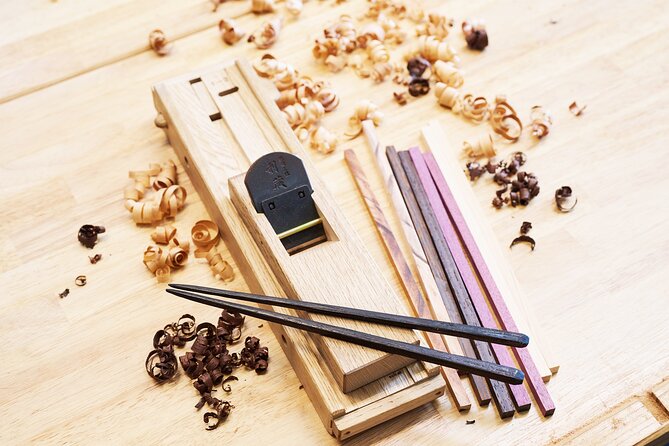
- You make the chopsticks yourself using traditional tools and a step-by-step process
- Pick your wood type, with multiple options and upgrades available for extra cost
- English support is built in, so you’re not stuck guessing the technique
- Small group size (10 max) means more attention at the workbench
- Take-home souvenir same day, wrapped and ready to use or gift
- Optional engraving can add a personal message for extra
A Craft Neighborhood Stop in Taito-ku
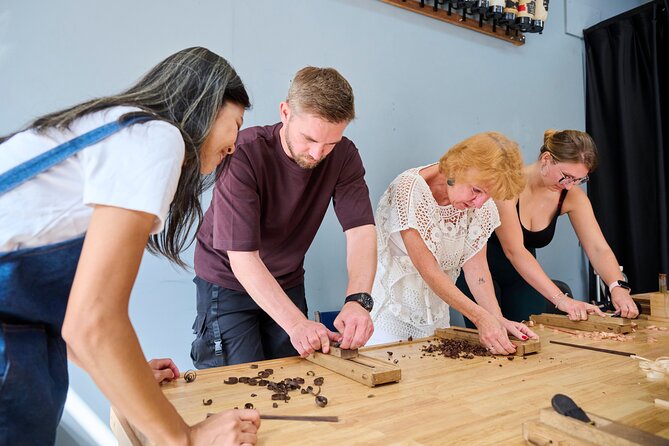
This workshop is set in a real, everyday craft shop setting in Taito-ku, not some packaged museum-style demo. It feels like the kind of place you could walk past a dozen times and still never notice unless you’re looking for hands-on Japanese traditions.
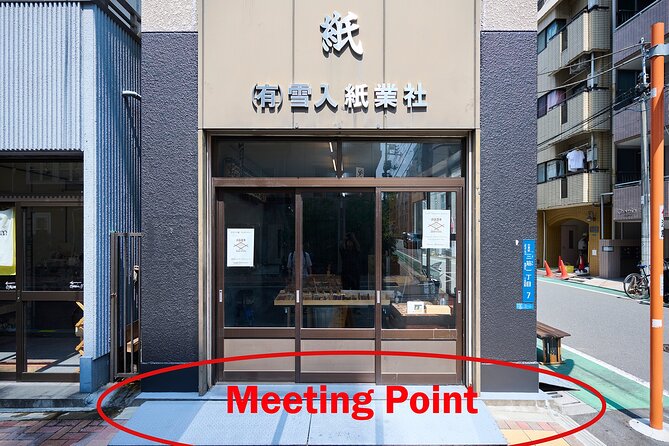
The meeting point is Hashiyuki Chopsticks Shop & Workshop at 1-7-1 Misuji, Taito-ku, Tokyo (雪入紙業社 / Yukiirishigyosya; coordinates 35.7032168, 139.7853879). You’ll spend the bulk of your time right at the work area, so you’re not bouncing between stops. That’s a plus when you’re tired of “see everything” itineraries.
You can also read our reviews of more tours and experiences in Tokyo



Choosing Your Wood: Included Options vs Upgrades
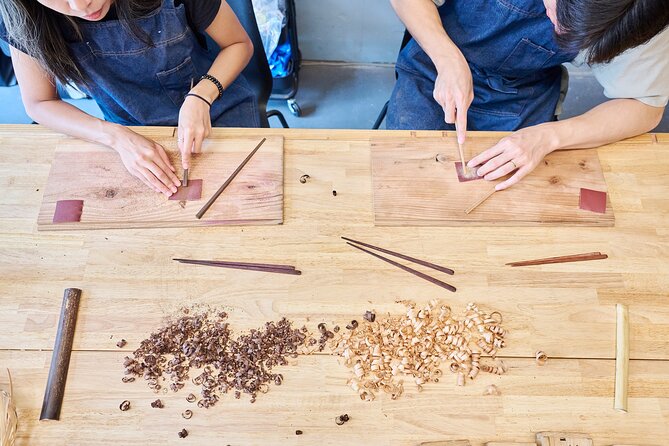
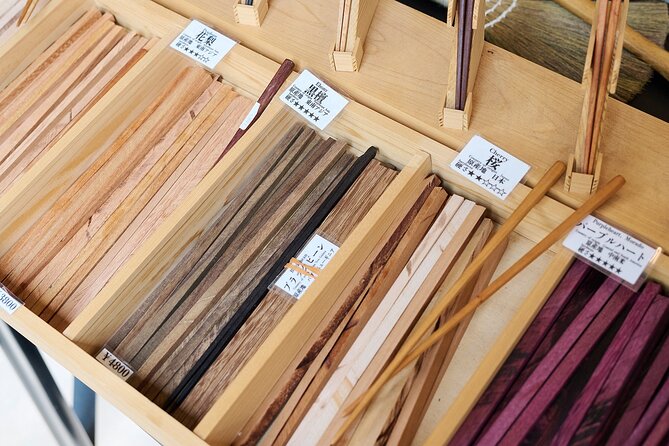
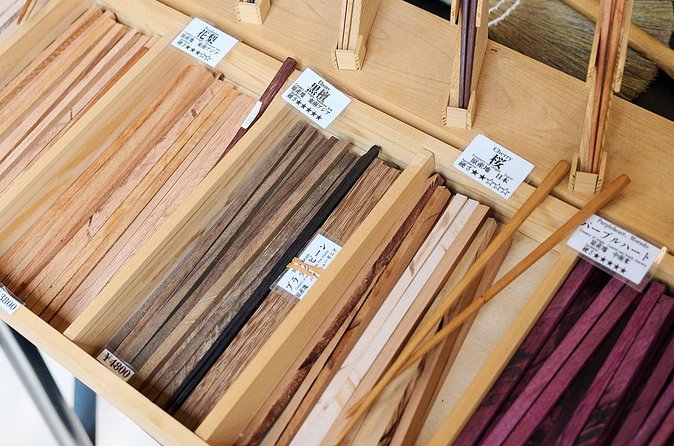
One of the most fun parts is picking the wood before you carve. You can choose from over 10 types of wood, which means the chopsticks you take home can feel more like a choice you made than a generic souvenir.
The base experience includes 3 wood types free of charge. Higher-grade woods are available for an additional fee, so you can decide how fancy you want to go. If you care about materials and not just the activity, this is one of the best “value levers” in the whole workshop.
A practical tip: if you’re giving these as a gift, choose wood you think the recipient will like visually. You’ll be living with the decision every time you eat.
What Happens During the 1-Hour Chopstick-Making Session
The session is scheduled for 1 hour, and it’s designed to be relaxing rather than stressful. Still, you should know the time is real time. One participant felt the pacing could be rushed when staff were supporting around 10 people and groups weren’t starting at the same moment, so plan to enjoy the process without expecting a slow, extra-long workshop.
Here’s the flow you can expect once you’re seated:
- Welcome and setup at your workbench
You’ll be given the tools and materials, and you’ll get guidance in English (and Japanese support if needed).
- Wood selection and personalization start
You’ll choose your chopsticks’ wood type and prepare to shape the pair you’ll take home.
- Shaping and carving with traditional tools
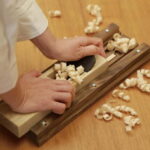
You’ll carve your own chopsticks using the workshop’s traditional tools and techniques. This is the core experience: you’re not just assembling, you’re forming.
- Smoothing and finishing
After shaping, you’ll smooth the surfaces so they feel comfortable to handle. Finish matters here—chopsticks need a good feel, not just a nice look.
- Take-home wrap
When you finish, your chopsticks are wrapped nicely. Several people described the result as beautiful and ready to use immediately.
Optional engraving if you want a keepsake with meaning
Some guests add an engraving for extra cost. One person specifically recommended spending extra around ¥1000 on engraving, pointing out that the engraving looked great and made the souvenir feel more personal. If you’re planning this for a gift or want a date/name etched into something tangible, this is where you make it yours.
Guidance You Can Actually Use at the Workbench
This is the kind of activity where having good instruction matters. The staff aren’t just pointing at a display; they’re helping you as you carve.
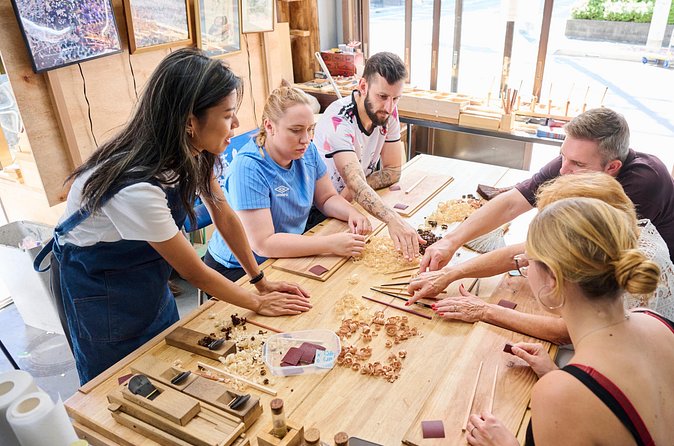
In multiple accounts, instructors are described as patient and encouraging, and they’ll help correct mistakes so your final pair looks right. You may be guided by instructors such as Yuki, Angie, Tomo, Kaana, Chihiro, Rad, Anthony, or Victoria. (You won’t necessarily meet the same person every time, but the common theme is clear: you get real, hands-on coaching.)
A small group (max 10) makes a difference here. If you’re stuck on a step, you don’t want to wait behind a long line. The workshop is set up so help is available while you’re still holding the wood.
And yes, the conversation can be part of the fun. One guest mentioned chatting about Japan and Scotland during the session, which tells you the mood can be friendly, not stiff.






Cultural Context: Why Chopsticks Matter Beyond the Carving
You’ll also learn why chopsticks have cultural weight in Japan. This isn’t a lecture on history. It’s more like, while you’re working with the tool, you understand how it fits into daily life.
That context is what makes the souvenir feel earned. You’re not just taking home something you made. You’re taking home something you understand a little better—why it looks the way it does, why it’s treated with care, and why it shows up so often at meals.
If you’re trying to balance Tokyo sightseeing with something quieter, this is a strong choice. It gives your brain a break and lets you focus on fine motor work for an hour.
Take Your Chopsticks Home the Same Day
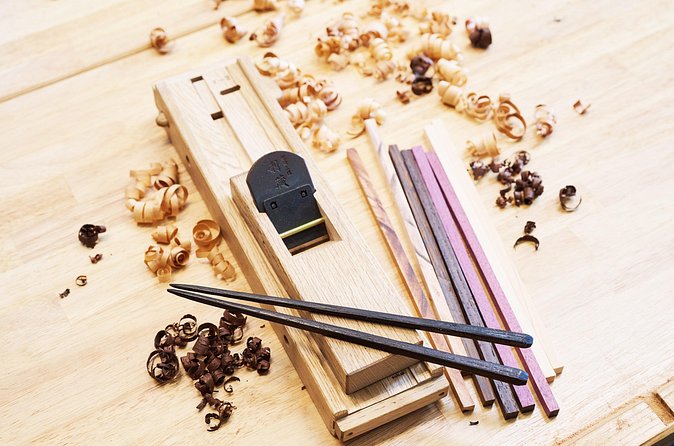
The biggest practical win is that you can take the chopsticks home the same day. No shipping, no waiting. Once you finish, you leave with a functional pair.
Wrapped nicely, they’re ready to use right away or bring as a gift. For gift-giving, the combination of handmade + personalized is hard to beat at this price point.
One helpful way to think about this: you’re buying a skill experience, plus an item you can immediately use. That’s usually better value than a workshop where you make something decorative and it never gets used.
Price and Value: Is $16 a Good Deal?
At $16 per person, this workshop is priced like a straightforward activity. You’re getting an entire hour of guided, hands-on work, plus tools and materials.
Then the value improves when you look at the structure:
- You can choose among multiple wood types
- English-speaking staff are included
- You leave with a take-home souvenir the same day
And there are upgrades if you want them. Three wood types are included, and you can pay extra for higher-grade woods. Optional engraving also adds cost, and one guest highlighted it as worth doing.
So my take: $16 is a fair baseline for a genuine craft experience. If you’re the type who likes personalizing souvenirs, add the engraving or upgrade wood. If you just want the core experience, you can keep it simple and still walk away with something special.
Timing and How to Plan Your Day Around It
The workshop lasts 1 hour, and you should check availability for starting times. That matters because Tokyo days get crowded fast.
If your schedule is tight, this fits well as a focused break between bigger sightseeing blocks. If you’re the type who hates feeling rushed, book when you have a little buffer before and after. One account mentioned the session felt rushed due to group timing, so giving yourself breathing room is smart.
Also consider the “comfort level” of the activity. Several people said the process is challenging enough to feel satisfying, but not so difficult that it becomes frustrating. If you’ve never carved anything before, you’ll still be okay. That’s the whole point of the instruction.
Who Should Book This Chopstick Workshop
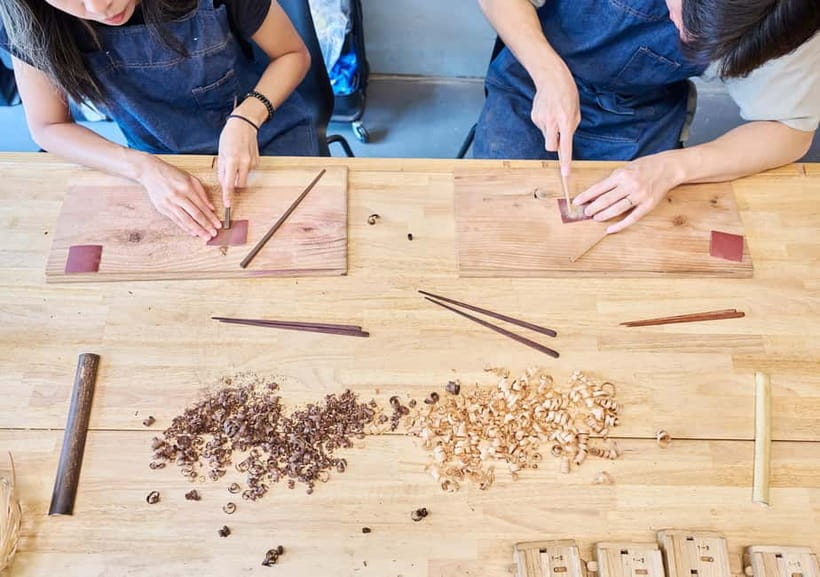
This is a great match if you want:
- A hands-on cultural experience instead of another photo stop
- A calm, focused activity with a small group
- A souvenir you can actually use (not just display)
- English support so you can understand what you’re doing
It’s also a nice option if you’re traveling with family or mixed ages. One family described enjoying it from age 8 to 42, which suggests the workshop can work across a wide range of comfort levels with crafts.
Wheelchair access is listed as available, which helps if your party needs that option. The room can be smaller and more “workbench focused,” so you’ll likely want to arrive a bit early to get settled smoothly.
Should You Book This Chopstick-Making Workshop?
Book it if you like real crafts, calm hands-on activities, and you want a souvenir with a story you can tell easily. The small group setup, the English-speaking guidance, and the fact that you leave with a finished pair the same day make it a strong value.
Skip or reconsider if you’re the type who needs lots of time to go slowly, or if you’re sensitive to feeling rushed. Since one person felt the hour sometimes compresses when staff are handling multiple groups at once, having extra buffer time in your day will help you enjoy it fully.
If you’re deciding between this and another Tokyo activity, I’d lean toward this one—especially if you want something tactile, personal, and genuinely different from the usual city checklist.
FAQ
Where is the chopstick workshop meeting point?
It meets at Hashiyuki Chopsticks Shop & Workshop, 1-7-1 Misuji, Taito-ku, Tokyo (雪入紙業社 / Yukiirishigyosya). Coordinates are 35.7032168, 139.7853879.
How long is the workshop?
The workshop is scheduled for 1 hour.
What is the price per person?
The price is $16 per person.
Is there an English-speaking guide?
Yes. English-speaking staff are included, and the instructor languages are English and Japanese.
How many people are in the group?
It’s a small group limited to 10 participants.
Is the workshop wheelchair accessible?
Yes, wheelchair accessibility is listed.
Can I choose different types of wood?
Yes. You can choose from over 10 types of wood. Three types are included free of charge, and other high-grade woods are available for an additional fee.
Do I take the chopsticks home the same day?
Yes. You make the chopsticks during the session and take them home the same day.
Is free cancellation available?
Free cancellation is available up to 24 hours in advance for a full refund.
Can I reserve now and pay later?
Yes. You can reserve now and pay later, so you book your spot without paying today.