REVIEW · TOKYO
Official Japan Go-Kart Through Shibuya / Shinjuku (IDP Required)
Book on Viator →Operated by JAPANKART · Bookable on Viator
Tokyo traffic, but in a go-kart.
That’s the hook of this Shinjuku-to-Shibuya JapanKart experience: you’re not stuck in crowded trains. A guide leads the way while you cruise past major sights like Shibuya Scramble and through neighborhoods that look totally different on a kart than on foot.
Two things I really like about this tour are the small group size (max 10) and the way the operation is built around keeping you on track. The route is tight, the guidance is constant, and you’re meant to enjoy the ride without worrying about navigation. One drawback to flag early: it’s not a casual activity. You must bring the right driving documents (including the correct International Driving Permit format) or you can be refused participation.
In This Review
- Key things to know before you ride
- Tokyo in motion: why this go-kart route feels like a sightseeing shortcut
- Price and what you actually get for about $125.53
- The biggest requirement: driver’s license plus IDP (and the right IDP type)
- Meeting point reality check: JapanKart Shinjuku branch and what to wear
- How the ride feels in Tokyo: guides, lead vehicles, and that first minutes test
- Stop-by-stop: Shinjuku Gyoen to Omotesando to Harajuku
- Shinjuku Gyoen National Park
- Omotesando
- Harajuku
- Shibuya Scramble and Yoyogi Park: two big contrasts in one loop
- Shibuya Scramble traffic light moment
- Yoyogi Park and the Meiji Jingu neighbor
- Shinjuku viewpoints and Kabukicho: the day’s last mood switch
- Tokyo Metropolitan Government Building observation decks
- Kabukichō entertainment district
- Small group advantage: why max 10 travelers matters
- Safety and comfort: what to focus on while you drive
- Night options and photos: how to turn the ride into lasting memories
- Common snags to avoid (based on real feedback)
- Should you book this JapanKart Shinjuku to Shibuya go-kart ride?
- FAQ
- Do I need an International Driving Permit for this go-kart tour?
- What kind of International Driving Permit is accepted?
- Which documents do I need to bring?
- Are there any exceptions to the IDP requirement?
- Where do I meet, and when should I arrive?
- Is alcohol allowed before the tour?
- What should I wear?
- How many people are in the group?
- What if the tour is canceled due to weather?
Key things to know before you ride
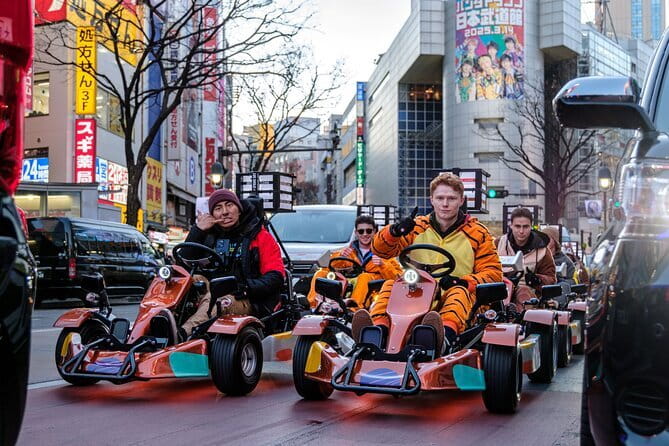
- IDP is required, and it must be the 1949 Geneva Convention format in booklet form
- Max 10 travelers, so you’re not swallowed by a giant crowd
- A guide rides with you, handling navigation so you can focus on the drive
- You hit big-name photo moments, including Shibuya Scramble and multiple Shinjuku/Shibuya areas
- Safety is actively managed with lead and support vehicles following the group
Tokyo in motion: why this go-kart route feels like a sightseeing shortcut
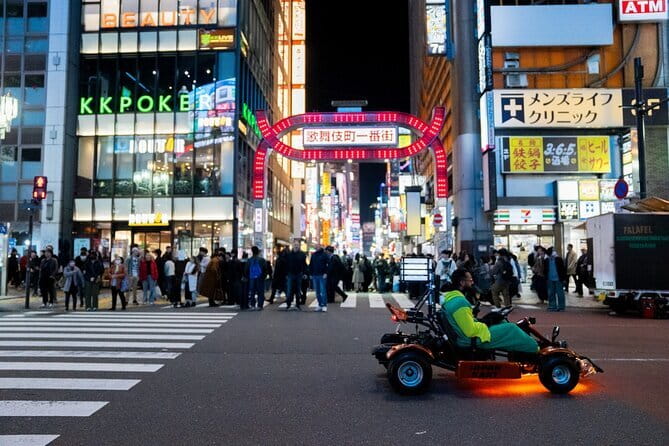
If you only have a couple days in Tokyo, it’s easy to waste time moving between neighborhoods. This is built as a time-saver. Instead of hopping trains, waiting, and second-guessing directions, you get a guided ride that strings together famous districts in a way that feels fast but not chaotic.
I also like the “you’re driving, but you’re not alone” approach. The tour includes a guide, and the ride is organized with a moving formation rather than leaving you to figure out lane changes by yourself. That matters in Tokyo, where traffic can feel intense even when you’re walking.
And yes, it’s a thrill. Several people describe the first minutes as a little nerve-wracking. But the same reviews point out that once you get going, it clicks: controls feel manageable, and the staff keeps the group together.
You can also read our reviews of more tours and experiences in Tokyo.



Price and what you actually get for about $125.53
At $125.53 per person for roughly 2 hours, this isn’t a budget activity. But it can still be good value depending on what you want from Tokyo.
Here’s why the price can make sense:
- You’re paying for a guided ride that covers multiple iconic spots in one go.
- You’re paying for small-group handling (max 10), which usually means more attention and smoother pacing.
- You’re paying for the practical side: the route organization, safety briefing, and support vehicles.
One detail that shows up in feedback is the photo/video effort. Staff take pictures at points along the route, and you can receive photos via shared links. That turns the ride into something you can relive, not just a burst of adrenaline you barely remember.
If you’re the type who likes “one big memory event” on a trip, this price can feel fair. If you’re not comfortable driving in traffic or you’d rather spend that money on a long meal and museum time, you might prefer a different kind of Tokyo day.
The biggest requirement: driver’s license plus IDP (and the right IDP type)
Let me be blunt here because the tour’s rules are strict: you must bring (1) your original driver’s license, (2) your passport, and (3) an International Driving Permit. No document, no ride.
Key points you need to know from the rules:
- Your IDP must be issued in the format of the 1949 Geneva Convention and be in booklet form (not paper or A4).
- Vienna Convention 1968 IDPs are not accepted in Japan for this activity.
- Your IDP must be issued by an approved issuer. Common examples listed include:
- USA: AAA or AATA
- UK: AA or RAC
- Australia: AAA
- Canada: CAA
- If your license is from certain countries (listed in the rules), you may need a Japanese translation from JAF instead of the usual IDP path.
Also: you should not count on last-minute fixes. The responsibility to have correct, valid documents is on you. If you show up without what’s required, participation can be denied, and a refund isn’t part of that situation.
If you’re unsure, the best move is to check your IDP format before you leave home and skim your confirmation instructions so you don’t arrive guessing.
Meeting point reality check: JapanKart Shinjuku branch and what to wear
You meet at JAPANKART Shinjuku Branch, address: Tokyo, 160-0022, Shinjuku City, Shinjuku, 5-chōme 1123 3階.
A couple practical notes matter:
- The meeting point is stated as near public transportation, but that doesn’t always mean it’s easy to spot on the first try. One negative review mentions difficulty for rideshare/taxi drivers finding the location.
- Arrive 15 minutes early. Reviews also echo the value of showing up early with documents ready.
Dress code isn’t “optional vibe.” It affects your comfort and safety. The rules say:
- No long skirts
- No high heel shoes
- No sandals
So bring closed-toe shoes you can move in and that won’t cause problems when you’re strapped into the kart setup.
And one small but useful tip from the reviews: riding so low can mean more fumes in your breathing zone. Some people recommend a mask to help with inhaling fumes.
How the ride feels in Tokyo: guides, lead vehicles, and that first minutes test
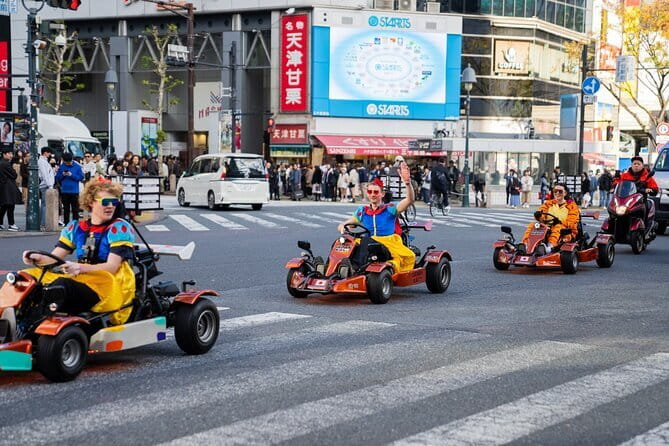
This is not “drive around an empty lot.” You’re on public streets with traffic nearby, and that’s why the tour is structured the way it is.
Here’s what makes it feel safer than it sounds:
- A guide handles navigation. You’re not mapping your way through Shibuya.
- The ride uses a coordinated formation with lead and tail support. Reviews describe lead and back vehicles and a motorcycle to help keep everyone together.
- You’ll get instruction before you start, and staff are described as patient and professional, especially for first-timers.
Many first-time drivers find the first 10 minutes a bit tense. That’s normal. Once you get the rhythm, the tour becomes more fun than stressful.
Two mindset tips that help:
- Treat the first section like training, not like the final parade.
- Keep your focus on the person in front and the lane direction cues from the guide system—don’t look for shortcuts.






Stop-by-stop: Shinjuku Gyoen to Omotesando to Harajuku
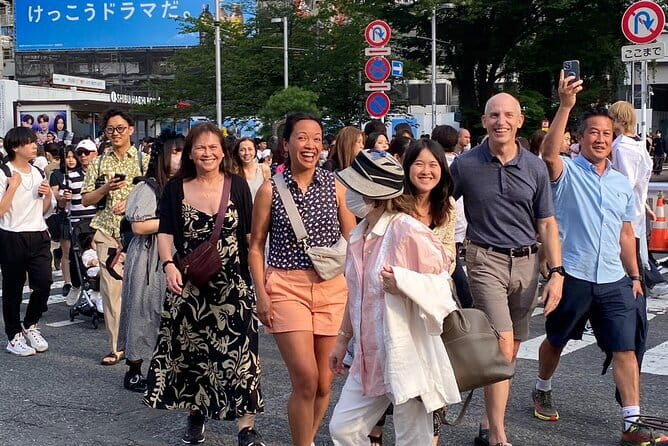
This route strings together very different Tokyo moods, and each stop works as a “flavor change” while you’re still moving.
Shinjuku Gyoen National Park
You pass Shinjuku Gyoen early, a park noted as especially popular for sakura viewing in spring. Even if you’re not in cherry-blossom season, it’s a nice contrast to the dense streets—Tokyo feels softer here, even from a kart.
Possible drawback: because it’s a park area, you might find the pace more about sightseeing than about adrenaline for a moment.
Omotesando
Next up is Omotesando, described as a high-class shopping area. This is where you’ll feel the “Tokyo with style” side of the city—clean streets, upscale storefronts, and a sense of fashion-forward energy.
From a kart, the advantage is timing. You see it without losing time to train transfers or trying to park in a dense neighborhood.
Harajuku
Then you roll past Harajuku, described as trendy with wacky fashion. This section is for people who want Tokyo to feel playful and slightly strange—in a good way.
If you’re expecting quiet, traditional Japan, Harajuku is a sharp pivot. If you want color and personality, it’s a highlight.
Shibuya Scramble and Yoyogi Park: two big contrasts in one loop
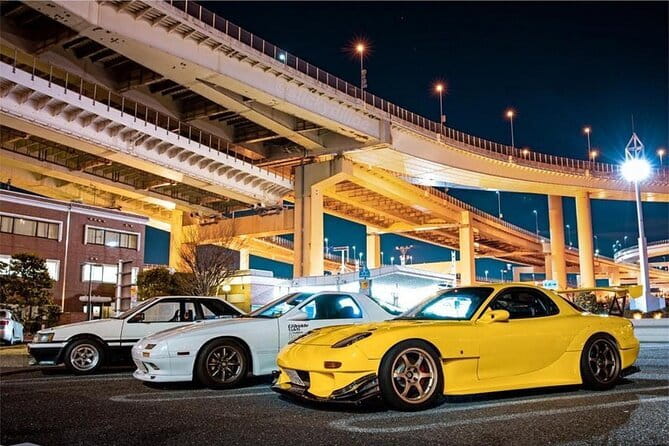
Shibuya Scramble traffic light moment
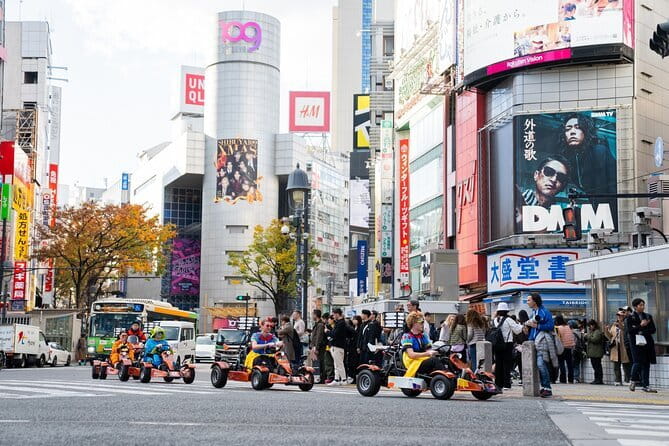
One of the most memorable parts is the tour’s approach to Shibuya Scramble crossing. The itinerary includes watching the scramble crossing as thousands cross, and it’s timed around the traffic light flow.
Why this matters: seeing Shibuya from the road is different than watching from the sidewalks. You’re closer to the action, and the guide coordination helps you experience it without you getting stuck in crowds.
A realism note: this is busy. It’s supposed to be.
Yoyogi Park and the Meiji Jingu neighbor
After Shibuya, you head toward Yoyogi Park, described as a large city park with lawns, ponds, and forested areas. The rules also mention it’s neighbored with Meiji Jingu shrine, so the area gives you that “green break” feeling right after street intensity.
Even if your photo schedule is tight, this stop can help you breathe. It’s not just another landmark—it’s a change of texture.
Shinjuku viewpoints and Kabukicho: the day’s last mood switch
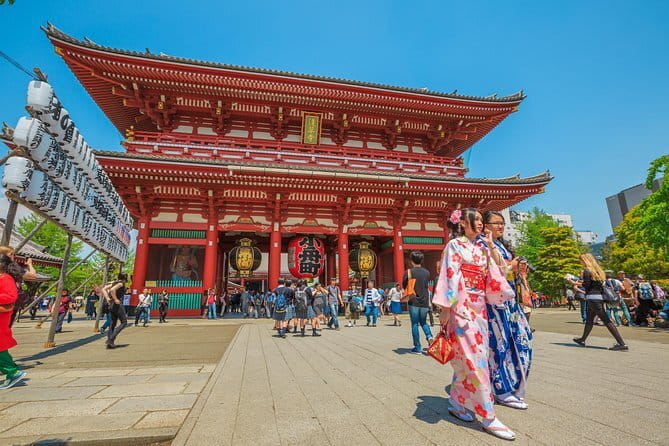
The later stops lean more toward Shinjuku’s scale and nightlife tone.
Tokyo Metropolitan Government Building observation decks
You pass by the Tokyo Metropolitan Government Building. It’s called out for free observation decks and panoramic views of Tokyo and beyond.
Even if you’re not stopping to go upstairs, passing the building ties the route together. It’s a reminder that Shinjuku is Tokyo’s “vertical” side: tall streets, big city energy, and fast-moving districts.
Kabukichō entertainment district
Finally, you pass Kabukichō, described as an entertainment district with host and hostess clubs, love hotels, shops, restaurants, and nightclubs. The rules also note it’s considered a red-light district with a high concentration of that nightlife scene.
This part is for travelers who aren’t shy about Tokyo after dark (or at least the parts that look like it). If you want quiet and calm, Kabukichō is not that stop.
Small group advantage: why max 10 travelers matters
A max group size of 10 sounds like a detail, but it affects your whole experience.
With a smaller group:
- You’re easier for staff to track.
- Instructions can be more clear and more personal.
- You spend less time waiting for a big cluster to regroup.
Reviews back this up with consistent praise for professionalism and how well the crew handles groups. One review praises staff leadership of a group of 10 and mentions a calm, organized ride with proper vehicle spacing.
Safety and comfort: what to focus on while you drive
The safety story here is worth paying attention to, because you’re actually driving in traffic.
The most repeated positive themes include:
- Staff provide thorough safety instructions
- Guides are patient with first-time drivers
- The ride uses support vehicles and a structured formation
Comfort tips that don’t require guesswork:
- Bring closed-toe shoes (no sandals, no heels).
- Wear what allows you to sit and steer without fuss (no long skirts).
- If fumes bother you, consider a mask.
And if you’re the type who hates feeling overwhelmed: start with calm expectations. The first minutes are the hardest. After that, it becomes more natural.
Night options and photos: how to turn the ride into lasting memories
The itinerary is short—about 2 hours—so you’ll want to leave with more than a vague blur of streets.
Photos/video support is a big part of that. Multiple reviews mention:
- pictures taken throughout the route
- staff taking well-angled shots
- sharing photos via a link shortly after
If you’re considering booking, think about when you’ll ride. One review notes that a night booking felt extra special with Tokyo lights. Even if night isn’t your plan, you can still treat this like a “Tokyo highlight” photo session.
Common snags to avoid (based on real feedback)
No tour is perfect, and this one has a couple negative notes you should take seriously.
- Finding the branch: Some people struggled with rideshare/taxi directions. If you’re using a map, double-check the exact address and give yourself extra time.
- Paperwork mistakes: The rules are strict about documents. If your IDP format is wrong (or not in the right booklet form), your participation can be denied.
- Read the fine details mindset: There’s at least one review that accuses the operation of wrongdoing and urges careful reading. I can’t verify any fraud claim from here, but I can say the safe play is to read the instructions you receive, watch the instructional video, and show up with documents ready.
For a smooth ride: arrive early, dress correctly, and treat your IDP like a passport-sized key to the whole experience.
Should you book this JapanKart Shinjuku to Shibuya go-kart ride?
Book it if you want a fast, fun way to see Tokyo neighborhoods you’d otherwise spend a whole day traveling between. This is especially appealing if you like being on the move, enjoy the thrill of driving, and you’re comfortable following a guide in traffic.
Don’t book it if:
- you don’t have the right IDP format (1949 Geneva booklet form) and driver’s license details lined up
- you hate the idea of driving in public-street traffic, even with support vehicles and instructions
- your footwear or clothing won’t meet the rules (sandals, long skirts, high heels)
If you’re prepared with the correct documents and you show up ready, this looks like a high-impact Tokyo highlight. And with the 4.9 rating and 97% recommendation rate, it’s the kind of activity many people consider a “worth it” memory maker—just don’t treat the paperwork like paperwork. Treat it like the ticket to ride.
FAQ
Do I need an International Driving Permit for this go-kart tour?
Yes. You must present both your driver’s license and an International Driving Permit to participate.
What kind of International Driving Permit is accepted?
The rules specify the IDP must be issued in the format of the 1949 Geneva Convention and must be in booklet form. Vienna Convention 1968 IDPs are not accepted.
Which documents do I need to bring?
You’ll need your driver’s license, your International Driving Permit (in booklet form), your passport, and the tour rules note that you must present them for participation.
Are there any exceptions to the IDP requirement?
The rules list exceptions for participants with licenses issued in Switzerland, Germany, France, Taiwan, Belgium, or Monaco, where you’ll need a Japanese translation of your license from JAF plus your own driving license.
Where do I meet, and when should I arrive?
You meet at JAPANKART Shinjuku Branch (Tokyo, 160-0022, Shinjuku City, Shinjuku, 5-chōme 1123 3階). Arrive 15 minutes before the booking time.
Is alcohol allowed before the tour?
No. Alcohol consumption before the tour is prohibited.
What should I wear?
Avoid long skirts, high heels, and sandals. The rules are clear that these are not allowed.
How many people are in the group?
The tour has a maximum of 10 travelers.
What if the tour is canceled due to weather?
If canceled due to bad weather, you’ll be eligible for a full refund or offered a different date, depending on availability.