REVIEW · TOKYO
Tokyo: 3-Hour E-Bike Tour of the City’s Riverside Areas
Book on GetYourGuide →Operated by Tokyo Rental Bicycle · Bookable on GetYourGuide
Tokyo by bike feels faster and friendlier. This 3-hour e-bike tour turns the city’s riverfront and downtown edges into an easy, seat-of-your-pants way to see Tokyo’s famous sights and quieter corners. I like that it’s built for real movement—no long waits, no getting stuck in station stairs—while your guide keeps the stops meaningful with local stories. Honest e-bike touring is the key here.
Two things I’m especially fond of: the small group size (up to 8) and the included Kiyosumi Gardens entrance, which gives the ride a proper “pause” in the schedule. One consideration: there can be a short stretch of busier traffic around Ginza, so if you’re sensitive to cars, keep an eye on how your guide handles that section.
In This Review
- Key moments that make this ride worth it
- Getting rolling at Hibiya Park and learning the e-bike rhythm
- Why the 3-hour route format works (and when it won’t)
- Ginza and Kabuki-za: quick photo stops with a traffic reality check
- Tsukiji Hongan-ji and the Outer Market: history and atmosphere at walking speed
- Tsukishima Monja Street and Sumiyoshi Jinja: side streets you can actually reach by bike
- Crossing the Sumida River: a small moment that changes your whole perspective
- Kiyosumi Gardens (entrance included): the calm break that makes the whole tour feel complete
- Naritasan Fukagawa Fudōdō finish: temple time with a cash choice
- Price and value: is $78 actually fair here?
- What your guide experience can feel like (names to look for)
- Practical tips to make your ride smoother
- Who should book this Tokyo riverside e-bike tour
- Should you book it? My take for a smart Tokyo day
- FAQ
- How long is the Tokyo e-bike tour?
- What’s included in the price?
- Is there an entrance fee at the final temple?
- Where do we meet the guide?
- What should I bring for the ride?
- Who is the tour not suitable for?
Key moments that make this ride worth it
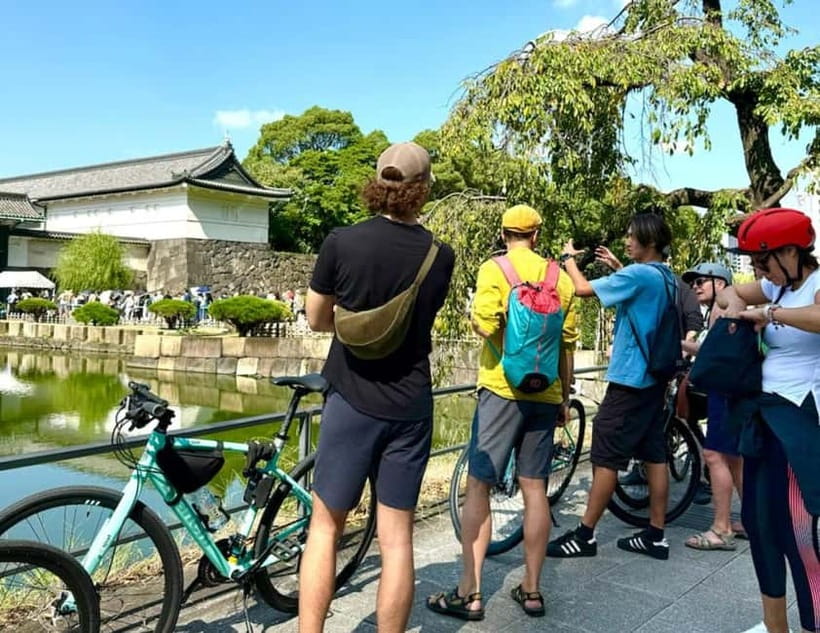
- Hibiya Park meet-up setup: You start from a clear, easy reference point at the right side of the kiosk.
- Iconic landmarks without the whole-day drag: quick photo and guided stops that keep momentum.
- Tsukiji fish-market area time: you get a real look at the action at a comfortable pace.
- Crossing the Sumida River: the ride changes the feel of the city in a hurry.
- Kiyosumi Gardens included: a paid entry slot that would be annoying to arrange on your own.
- Temple finish at Naritasan’s Tokyo branch: you end at a fitting spot so you can opt in or out.
Getting rolling at Hibiya Park and learning the e-bike rhythm
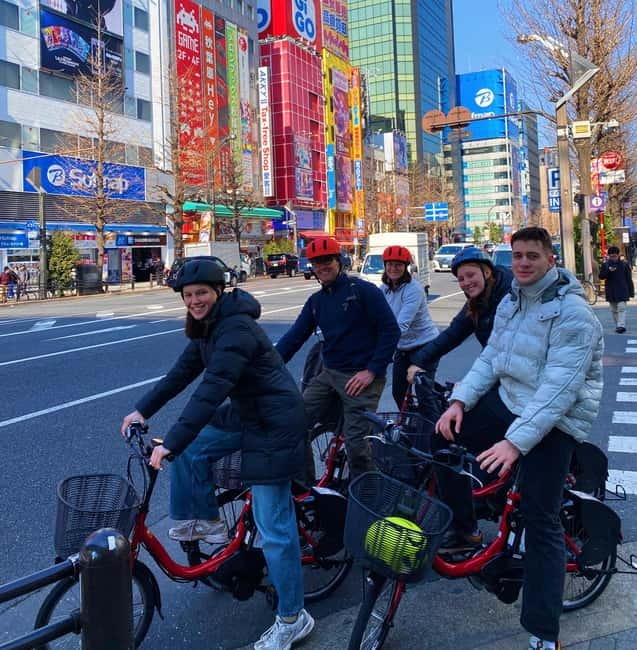
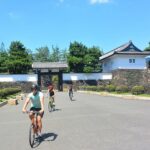
The tour starts at Hibiya Park, at the right side of the kiosk. Arrive about 10 minutes early, because this is one of those experiences where timing matters: you’ll want to get your bike, basket, and route basics squared away before the group rolls out.
The bikes are electric, with a basket for your bag, plus bike insurance included. That combo is what makes the tour work for more people than a normal bicycle loop. You’re not just relying on pure leg power, and you’re not walking your way through parts of the city. Even if you’re a casual rider, you’re still choosing where you spend your energy: slow down for photos, speed up for smoother stretches, and let the assist do the heavy lifting when you need it.
What I like about this setup is that it keeps you in control. You can enjoy the sights without turning the day into a workout you regret. Just pack the basics: comfortable shoes, water, and sunscreen, and bring sunglasses if you like them. No smoking, alcohol, or littering—standard rules, but they matter for a pleasant group ride.
You can also read our reviews of more cycling tours in Tokyo
Why the 3-hour route format works (and when it won’t)
Three hours sounds short until you see how much Tokyo you can cover when you’re not fighting trains and transfers. The tour is paced with multiple photo stops and guided segments, so you get learning time without long, exhausting detours. It’s also a nice “I still have time today” option if you’ve already done a few big-name neighborhoods and you want something different without committing to a half-day.
The catch is simple: you still have to ride a bike. The tour isn’t suitable for people who can’t ride, and it’s not a good match for back problems or for children under 12. It also isn’t recommended for pregnant travelers. If any of those apply, skip this one and look for a walking + transit style tour instead.
For everyone else, the structure is smart. You get enough time at each place to feel like you visited, but not so much time that you lose the momentum that makes Tokyo by bike feel so efficient.
Ginza and Kabuki-za: quick photo stops with a traffic reality check
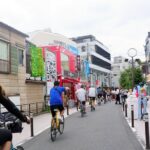
The route hits Ginza first, with a photo stop plus about 10 minutes of guided touring. You’re not meant to wander for hours here. You’re meant to see it, understand the angle of what you’re seeing, and then move on while the group stays together.
Then you pass Kabuki-za with another short photo and guided stop. The value of these stops isn’t that they’re long. It’s that they anchor the ride in recognizable Tokyo so you’re not just chasing streets—you’re building a mental map.
One practical consideration: there may be a more complicated stretch through Ginza circulation. Some guides manage this smoothly, but if you’re tense around cars, mentally prepare for that brief moment. The good news is the tour is built around the idea that not every minute is spent dealing with traffic.
Tsukiji Hongan-ji and the Outer Market: history and atmosphere at walking speed
After Ginza and Kabuki-za, the tour shifts into the Tsukiji area, starting with Tsukiji Hongan-ji for about 15 minutes. Think of this stop as a cultural reset inside the faster pace of cycling. You’ll get guided context and a chance to pause without committing to a long museum-style visit.
Next comes Tsukiji Outer Market, with about 20 minutes. This is the part of the tour where you can feel the city’s everyday energy. Since food and drinks aren’t included, you’ll be responsible for any snacks or drinks you buy, but the time is long enough to grab something small if that’s your style. It’s also one of those moments where the bike tour model helps: instead of relying on crowded transport or walking the entire district, you get access at the right pace.
A subtle benefit here: you’re seeing the market-adjacent streets as part of a ride. That means you get photos and context, then you move on before it turns into a slow, tiring gridlock shuffle.
Tsukishima Monja Street and Sumiyoshi Jinja: side streets you can actually reach by bike
From Tsukiji, the tour heads to Tsukishima Monja Street for around 10 minutes. Short stop, guided tour, photo stop—again, the point is variety without burnout. This is one of the parts that feels more like real neighborhood Tokyo than a checklist stop.
Then you visit Sumiyoshi Jinja for about 10 minutes. It’s another quick cultural moment, and because it’s framed inside the ride, you’re not just stepping into a single spot and then leaving. You’re using the bike to connect Tokyo’s layers—big areas, small streets, and the way the city changes as you move.
This is also where you might notice one of the major ride benefits: you can get to areas that are harder to reach efficiently on public transit, especially when you’re trying to keep the day flowing. The route is designed for momentum.
You can also read our reviews of more city tours in Tokyo



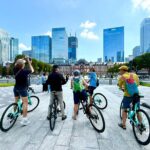
Crossing the Sumida River: a small moment that changes your whole perspective
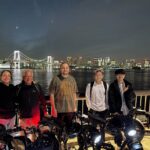
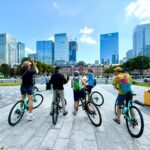
One of the most memorable parts of this kind of ride is where the river interrupts the city grid. In this route, you cross the Sumida River, and the effect is immediate. The city feels different when you’re moving across water—views open up, the skyline and street rhythm shift, and the tour stops feel less like separate places and more like one connected loop.
If you like photos, this is a good stretch to position yourself with the guide’s timing. Don’t rush; just be ready. E-bikes are quiet enough that you can pay attention to surroundings, not just pedal effort.
Kiyosumi Gardens (entrance included): the calm break that makes the whole tour feel complete
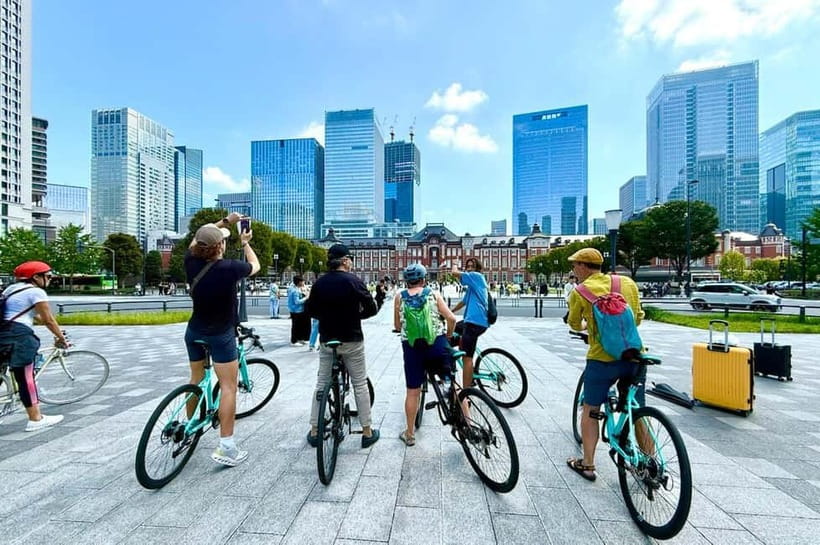
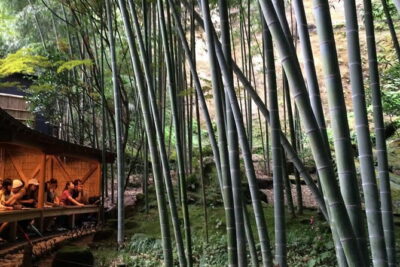
Then comes the best “pause” on the itinerary: Kiyosumi Gardens. The entrance fee is included, and the stop runs about 25 minutes. For a three-hour tour, that’s not a tiny add-on. It’s long enough to actually feel the change from street-level motion to something slower and more reflective.
This is where the ride model shines. If you were doing this on your own, you might not budget time for a garden stop. Here, it’s built in. And because it’s included, you don’t waste time figuring out fees or working out whether you’re doing the garden at the right moment.
You’ll get guided touring during the garden time, so it’s not just wandering. The guide helps you notice what matters in the space, and you come out of it ready to finish the day instead of still mentally stuck in your first neighborhood.
Naritasan Fukagawa Fudōdō finish: temple time with a cash choice
The tour ends at Fukagawa Fudōdō (Naritasan Tokyo branch temple). You get a photo stop plus about 20 minutes of guided tour time. There’s also an optional entrance fee if you want to go inside: ¥1000 per person by cash. If you don’t want to enter, the tour still ends there, so you can simply step out with the group.
This finish is smart because it gives you a clear ending point. You’re not left hunting for where everyone dispersed. If you enjoy temples and you’re comfortable paying the optional fee, you can do it. If not, you still get the setting and the guided context.
Price and value: is $78 actually fair here?
For $78 per person, you’re paying for three big things: guide time, an electric bike with insurance coverage, and at least one paid attraction—Kiyosumi Gardens. You’re also getting a small group cap of 8 participants, which often reduces the chaos factor and makes it easier for the guide to help you.
Could you do parts of this route on your own for less? Sure, but you’d be juggling bike rentals, routing, and the time cost of figuring out which stops are worth your limited Tokyo hours. The best value here is the structure: it strings together iconic areas and quieter stops into one ride with guidance between them.
Also worth noting: food and drinks aren’t included. That’s normal for Tokyo tours, and it keeps the price from climbing too fast. If you want snacks, budget for them.
I also like that the provider offers free cancellation up to 24 hours in advance and a reserve now & pay later option. That’s practical if your Tokyo schedule is still shifting.
What your guide experience can feel like (names to look for)
The tour is led by an English-speaking guide, and reviews reflect a genuinely upbeat, story-forward approach. Names that have come up include Nooki, Casey, Naoki, and Show. Different guides will have different pacing and personality, but the common thread is clear: you’re not just riding between stops—you’re hearing local context that makes the places connect.
If you care about learning in a low-pressure way, this is one of those tours where you can ask questions naturally. You’re stopping often enough that you don’t feel like you’re trapped in a moving bus situation.
Practical tips to make your ride smoother
Small preparation pays off fast on a bike tour.
- Bring water and plan on staying hydrated.
- Wear comfortable clothes and shoes you can walk in.
- Sunglasses help, especially on open stretches.
- Don’t overpack. The basket is helpful, but you still want room to move.
- If you’re anxious around cars, mention it at the start; the guide will help you stay positioned.
One more point: you’re cycling through both river-adjacent areas and downtown areas. That means lighting and wind can change quickly, so sunscreen and water aren’t optional if you’re visiting in warmer months.
Who should book this Tokyo riverside e-bike tour
This tour is a strong fit if you want:
- A 3-hour plan that still feels like you covered real Tokyo
- A way to see the riverside + downtown mix without endless transfers
- A bike experience that’s doable for casual riders thanks to the e-bike support
- A guided loop that includes an actual entry attraction at Kiyosumi Gardens
It’s not a fit if:
- You can’t ride a bike
- You have back problems
- You’re traveling with kids under 12
- You’re pregnant
Should you book it? My take for a smart Tokyo day
If your goal is an efficient, enjoyable Tokyo overview with a real sense of movement, I’d book this riverside e-bike tour. The route hits enough variety to feel satisfying in just three hours, and the included garden stop is a genuine quality upgrade.
The only reason to hesitate is comfort with brief traffic moments around Ginza. If that kind of driving noise spikes your stress level, consider whether you’d rather choose a slower, more pedestrian-focused route.
Otherwise, this is the kind of Tokyo day that leaves you thinking less about logistics and more about what you actually saw: water views, neighborhood streets, and a guided narrative that connects it all.
FAQ
How long is the Tokyo e-bike tour?
The tour lasts 3 hours.
What’s included in the price?
The price includes a friendly English-speaking guide, electric bikes (with a basket), bike insurance, local insights/stories, and the entrance fee to Kiyosumi Gardens.
Is there an entrance fee at the final temple?
Yes, there is an optional entrance fee to Fukagawa Fudōdō of ¥1000 each paid in cash. The tour ends there, so you do not need to enter.
Where do we meet the guide?
Meet at the right of the kiosk in Hibiya Park.
What should I bring for the ride?
Wear comfortable shoes and clothes, and bring water. Sunglasses are recommended, and sunscreen is also helpful.
Who is the tour not suitable for?
It is not suitable for children under 12, pregnant women, people with back problems, or anyone who can’t ride a bike.