REVIEW · TOKYO
How to use Japanese knife, Tuna Cutting and Sushi Workshop
Book on Viator →Operated by Japan Food Journey · Bookable on Viator
Cutting tuna starts everything. This small-group class is interesting because it teaches real technique first, not just showy sushi rolling. I like that your tuna and sushi ingredients are included, so you come as you are and focus on learning. One possible drawback: it runs for about 2 hours in the morning, so you need energy for a true hands-on session.
You’ll cut a block of tuna in a way that most home cooks never see. Then you turn those cuts into sushi you eat right away, which makes the whole lesson feel practical, not theoretical.
If you get an enthusiastic translator (Amy is specifically mentioned in feedback) and a friendly team like Azusa and Adam, the steps land fast. The workshop ends back at the same meeting point in Azabujūban, so your morning stays simple.
In This Review
- Key highlights you’ll actually care about
- A Tuna-First Sushi Lesson in Azabujūban
- The Japanese knife practice: what you learn and why it counts
- How the tuna cutting connects to real Edo-style sushi
- The morning breakfast payoff: sushi you eat right after class
- What happens if your session includes a Toyosu market start
- Small group energy: getting coached instead of watching
- Price and value: $182.43 and what you’re really paying for
- Meeting point in Azabujūban: keeping your morning stress-free
- Who this tuna cutting and sushi workshop is best for
- Should you book this tuna cutting and sushi workshop?
- FAQ
- How long is the tuna cutting and sushi workshop?
- What’s included in the price?
- How many people are in the group?
- Where is the meeting point?
- What do I make and eat during the workshop?
- What if the workshop is canceled due to weather?
Key highlights you’ll actually care about
- Tuna cutting first: learn how a pro approaches a tuna block, then use your own cuts for sushi
- Ingredients are included: tuna and sushi components are part of the price, so there’s no extra shopping pressure
- A knife-focused lesson: you get coached on technique and the parts of the tuna
- Small group pace: maximum 10 people means more time with the chef and fewer waiting gaps
- Edo sushi context: you’ll get a short historical introduction and learn what the cuts are for
- Eat what you make: you’ll have your sushi for breakfast at the end
A Tuna-First Sushi Lesson in Azabujūban
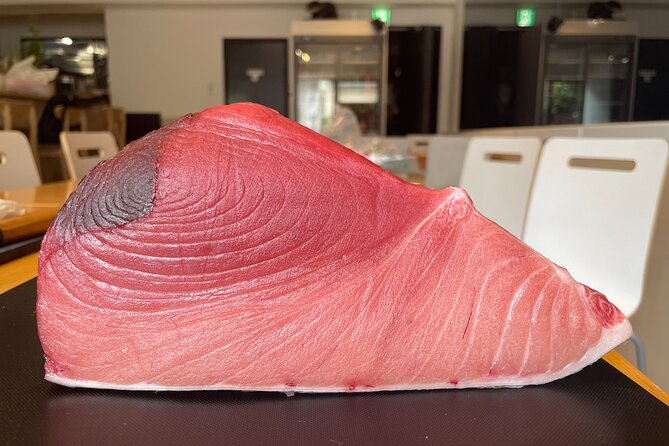
This workshop is built around one idea: tuna cutting comes before sushi. That matters because most classes start with rice and rolling. Here, you learn the part that usually feels most intimidating—how to use a Japanese knife on real fish, with a professional standing right there to correct you.
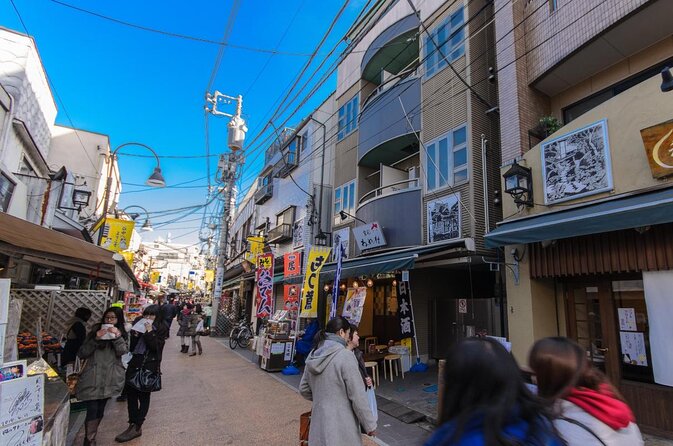
The setting is Tokyo, with the meeting point at Azabujūban (Minato City). It’s designed to be easy to find, near public transportation, and the tour ends back at the same place—so you won’t be wondering where you’re supposed to end up after you eat.
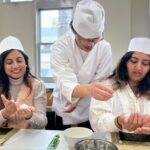
I also like the small-group format. Maximum group size is 10, which changes everything about a food class. Instead of watching from the sidelines, you get more actual repetition and coaching.
You can also read our reviews of more tours and experiences in Tokyo


The Japanese knife practice: what you learn and why it counts
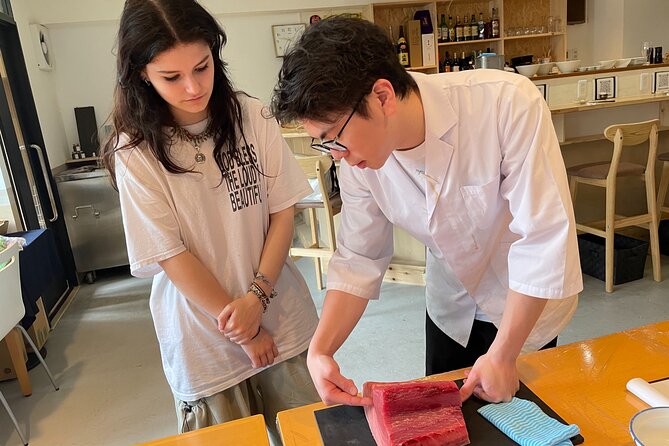
The most valuable part of this experience is that you don’t just get a demo. You cut tuna yourself, and you learn what each part of the fish is used for.
A block of tuna isn’t something most novices handle at home. In pro kitchens, the quality of the cut affects texture, presentation, and how the fish eats. In this class, you get the chance to understand that in a very direct way: you can see and feel how small changes in angle, pressure, and motion change the result.
You’ll also learn about the tuna parts while you work. That’s not just trivia. Knowing what’s what helps you understand why sushi chefs make certain choices—like which sections work best for different styles and how they want the bite to behave.
Even if your knife skills are brand-new, expect the chef to guide you through technique step-by-step. There’s a real chance you’ll finish the session feeling humbled (in a good way) about how precise cutting takes skill.
How the tuna cutting connects to real Edo-style sushi
After the cutting comes the fun part: turning those pieces into sushi you can be proud of.
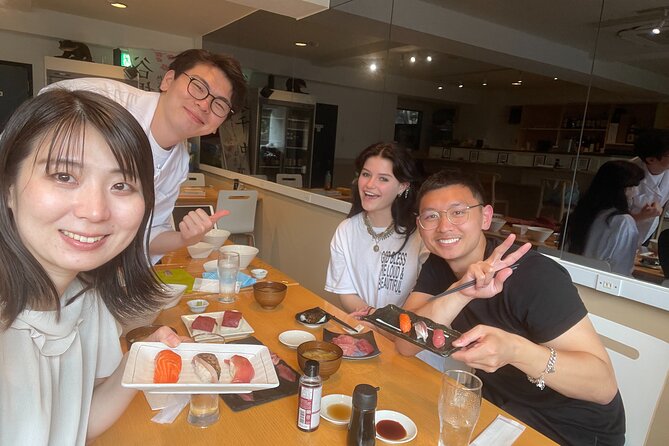
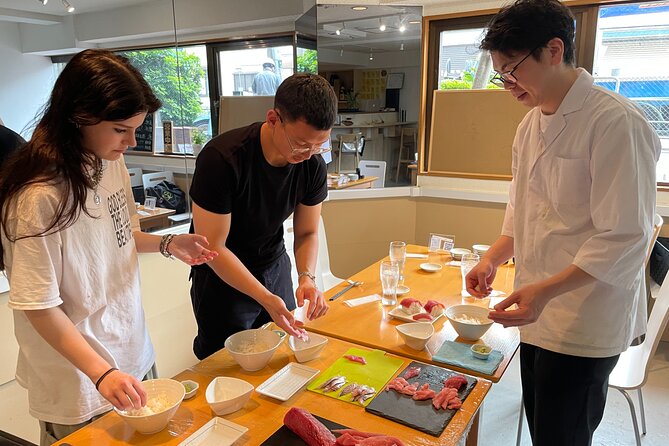
The class includes making sushi with the tuna you cut. You’ll follow the chef’s instructions to shape and assemble pieces—so the lesson closes the loop. Instead of cutting fish and then walking away, you get to eat what your hands made.
You’ll also get some context about Edo sushi, because good sushi isn’t only about technique. It’s about intention: the cut size, the way rice is handled, and the balance between fish and rice. One participant notes that the workshop included an Edo sushi angle, which fits with the idea that sushi skills have a tradition behind them.
When you learn the why behind the cuts, sushi stops being a random pile of ingredients. It becomes something you can replicate with better judgment later.
The morning breakfast payoff: sushi you eat right after class
This is not a class where you make food and then watch it go to someone else. You eat your sushi for breakfast at the end of the workshop.
That sounds simple, but it’s a big value boost. First, you’ll know whether your cuts actually worked—texture and flavor are immediate feedback. Second, you can compare what the chef does versus what you did, and you’ll leave with clearer “I’ll try that next time” memories.
The breakfast part also makes the timing feel natural. You’re not waiting until dinner for the reward; the lesson ends with what you made on your plate.
And yes, the food is delicious. Feedback highlights that the sushi you produce is a big part of why people feel the class was worth it.
What happens if your session includes a Toyosu market start
Some feedback mentions a behind-the-scenes experience that starts at Toyosu Market, including a look at tuna auctions and the wholesale seafood world. That kind of add-on can add real context, because it shows where the tuna comes from and why sushi shops care about freshness and handling.
If your version includes that market portion, you’d likely get a blend of culture, food, and technique. You may also have a small window to shop along the way, then head to the sushi workshop.
If your date doesn’t include a market stop, you’ll still get the core value: the knife work and the sushi-making. Either way, the center of gravity stays the same—tuna cutting with a pro, then sushi you eat.





Small group energy: getting coached instead of watching
Maximum 10 travelers might sound like a minor detail, but it’s the difference between a lecture and a lesson.
In a larger class, you can spend most of your time waiting your turn. Here, small group size helps the chef keep an eye on your technique and correct problems early—especially with the knife work.
Feedback also highlights the role of translators. Amy is specifically mentioned as enthusiastic and clear, and that’s exactly what you want when you’re learning a skill with fine motor control. Good translation helps you understand not just what to do, but why the chef is asking for that specific motion.
This is also a social part of the trip in a low-pressure way. Since you’ll be cutting and assembling alongside a small group, it’s easier to talk with fellow food lovers during the session—without it feeling awkward.
Price and value: $182.43 and what you’re really paying for
The price is $182.43 per person, for about 2 hours. That might feel high if you only compare it to a basic sushi meal. But this isn’t just eating—this is instruction and ingredients.
Two value pieces stand out from the info you have:
- Your tuna and sushi ingredients are included
- You learn from a professional sushi maker, with hands-on cutting practice
When you price it realistically, you’re paying for chef time, specialized training, fish (tuna isn’t cheap), and the overall setup that lets you cut and cook in a guided way. Many cooking classes include ingredients, but fewer give you actual tuna cutting coaching with the knife focus.
Another value detail: the workshop ends with breakfast. So you’re not paying for a class that ends without a meal. You leave having worked, learned, and eaten.
If you care about technique and want something you can later apply at home, this pricing starts to make more sense.
Meeting point in Azabujūban: keeping your morning stress-free
You meet in Azabujūban, Minato City, at:
Japan, 106-0045 Tokyo, Minato City, Azabujūban, 3-chōme34 サンピア麻布十番
Start time is 9:30 am, and the tour lasts about 2 hours. The activity uses a mobile ticket, and it’s near public transportation, which makes the morning easier.
My practical advice: treat the 9:30 start seriously. Knife classes punish late arrivals because the timing matters for cutting practice and sushi assembly.
Also, because the class ends back at the meeting point, you can plan the rest of your day without a complicated route. That’s a small thing, but it helps you enjoy the meal instead of rushing afterward.
Who this tuna cutting and sushi workshop is best for
This workshop is ideal if you want more than a food tour. You’ll enjoy it if you like:
- learning a real skill (not just sampling food)
- the idea of tuna cutting practice with a knife
- sushi technique with a bit of tradition (Edo sushi context)
- small-group experiences where you can actually ask questions
It’s also a good choice for couples and small friend groups who want shared learning. Several feedback notes describe the experience as fun and memorable, and the small class size supports that vibe.
If you hate hands-on cooking and prefer to observe, this one may not be for you. This is a cut-and-make class. You’ll be using your hands.
Should you book this tuna cutting and sushi workshop?
If you’re the type of traveler who wants one unforgettable skill instead of a long list of restaurant stops, I’d book it. The core reason is simple: you cut tuna and then eat what you make. That combination is rare, and it’s what makes this class feel like value, not just entertainment.
I’d especially recommend it if you’re interested in sushi beyond the basics. Learning how pros handle tuna cuts gives you a framework you can use later, even if you never become a full-time sushi chef.
The main reason to hesitate is timing and weather sensitivity. It requires good weather, and it’s a morning session, so plan your day with that in mind.
If you want one Tokyo experience that mixes food, technique, and real instruction, this tuna cutting and sushi workshop is a strong choice.
FAQ
How long is the tuna cutting and sushi workshop?
It runs for about 2 hours.
What’s included in the price?
Your tuna and sushi ingredients are included, and you’ll also make sushi as part of the class.
How many people are in the group?
The workshop has a maximum of 10 travelers.
Where is the meeting point?
You start at Japan, 106-0045 Tokyo, Minato City, Azabujūban, 3-chōme34 サンピア麻布十番, and the activity ends back at the meeting point.
What do I make and eat during the workshop?
You cut tuna with the chef and then make sushi using that tuna. You eat the sushi for breakfast.
What if the workshop is canceled due to weather?
The experience requires good weather. If it’s canceled because of poor weather, you’ll be offered a different date or a full refund.