REVIEW · TOKYO
Tsukiji Fish Market Street Food & Culture Walking Tour
Book on GetYourGuide →Operated by Goen Japan · Bookable on GetYourGuide
Tsukiji feels like a living food film. This walking tour turns the market chaos into a calm, easy route with frequent stops, plus a local guide who adds context while you eat. I really like that it’s built for real strolling time, not a speedrun through crowds. You also get edited photos, which is a small but smart bonus when the market moves fast.
Two things I’d highlight right away: you’ll taste a variety of foods (including items like fatty tuna nigiri and grilled scallops), and you’ll learn the market’s culture and history as you walk. I also like how the guides share what they actually pay attention to, from how stalls operate to why certain vendors matter. For photos, the frequent pauses make it easier to capture smiles and colorful market scenes without rushing.
One possible drawback: Tsukiji is crowded, and it’s still a walking tour. If you’re sensitive to tight spaces or you want a long, slow hangout, the 90 minutes can feel quick.
In This Review
- Key things you’ll notice on this Tsukiji walk
- Tsukiji’s Outer Market, guided the sensible way
- What the $38 price covers (and how to judge value)
- Your tastings: more than one-off bites
- Tsukiji Hongwanji Temple: why that stop isn’t random
- Tsukiji Jogai Market: the quieter cousin you’ll be glad to see
- The walking pace, crowd reality, and photo moments
- Guide energy: small-group feel, big clarity
- Who should book this Tsukiji tour
- Small practical notes that make your tour smoother
- Should you book this Tsukiji Fish Market Street Food & Culture Walking Tour?
- FAQ
- How long is the Tsukiji Fish Market Street Food & Culture Walking Tour?
- Where is the meeting point?
- What is the price per person?
- Is the tour guided in English?
- What’s included in the tour price?
- What should I bring or plan for?
Key things you’ll notice on this Tsukiji walk
- Frequent tasting stops that keep energy up without turning it into a sprint
- English-speaking guides who explain food prep and market specialties
- Tsukiji Hongwanji Temple visit, not just food stalls
- Edited photos included, so you don’t have to play photographer the whole time
- Short walking route with rest breaks, helpful for families and mixed-age groups
Tsukiji’s Outer Market, guided the sensible way
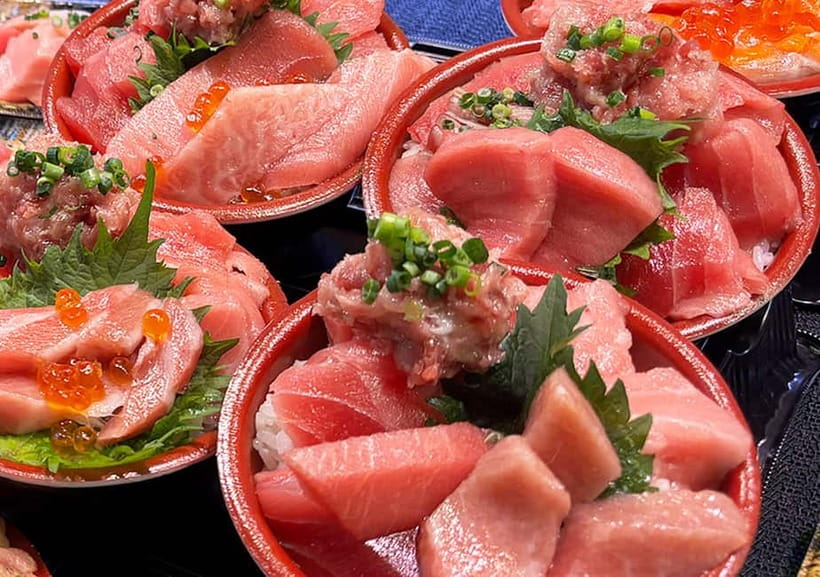
Tsukiji’s Outer Market is famous for a reason: it’s loud, visual, and full of edible temptation at every turn. The problem is simple. Without help, you can end up bouncing between stalls, losing time, and forgetting what you just ate.
This tour solves that by setting a human pace. You’re not racing. You’re taking a relaxed walk with frequent stops, so you can look, taste, and ask questions while you still feel fresh. That matters here, because the crowd density can be intense and your attention needs a job: deciding what’s worth buying now.
I also like the vibe shift a guided tour brings. You’re not just watching the market—you’re understanding how people shop, what vendors are known for, and why certain flavors and items stand out. That turns a list of snacks into a story you can repeat.
You can also read our reviews of more walking tours in Tokyo


What the $38 price covers (and how to judge value)
At $38 per person for 90 minutes, the price isn’t meant to look like a bargain deal on raw cost. It’s priced more like a convenience + experience package.
Here’s what you’re getting that usually costs extra if you try to DIY:
- Guiding fee
- Entry/admission to Tsukiji Hongwanji Temple
- Entry/admission to Tsukiji and Tsukiji Jogai Market
- Edited photos after the tour
The big value point is that admissions and the guide are part of the same ticket. You’re not scrambling to figure out what requires tickets, and you’re not spending your best time hunting for the one spot that sells the thing you want.
What’s not included is also worth noting. Transportation to and from the market is on you, and personal expenses and additional food/drinks beyond tastings are not included. In practice, that means this tour should satisfy your curiosity and give you multiple samples, but you may still want a second meal later if you have a big appetite.
Your tastings: more than one-off bites
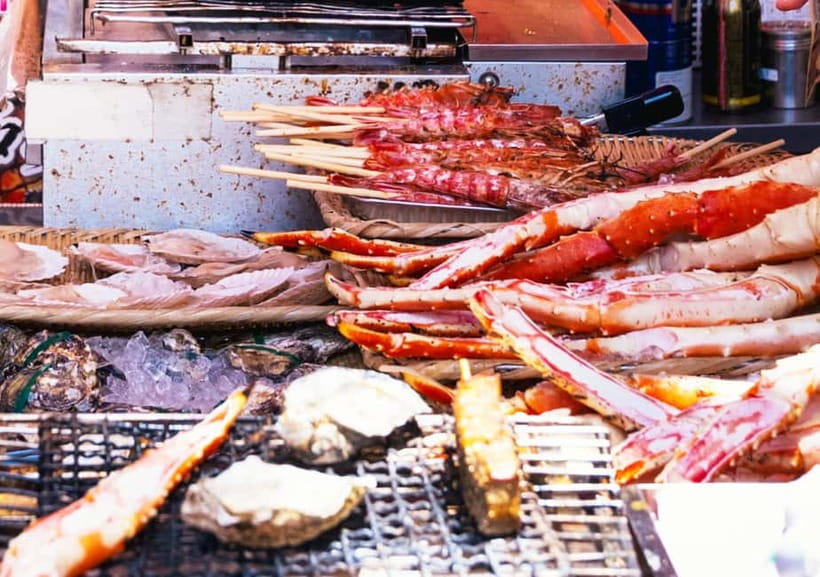
Tsukiji’s food reputation can make people expect one signature item and then a quick goodbye. This tour nudges you toward variety instead, which is the smartest way to enjoy a market like this in only 90 minutes.
You should expect tastings across categories, from juicy meats to sweet treats. The exact mix can vary by day and vendor availability, but the flavor style is consistent: small portions that let you compare textures and seasonings without getting stuffed too early.
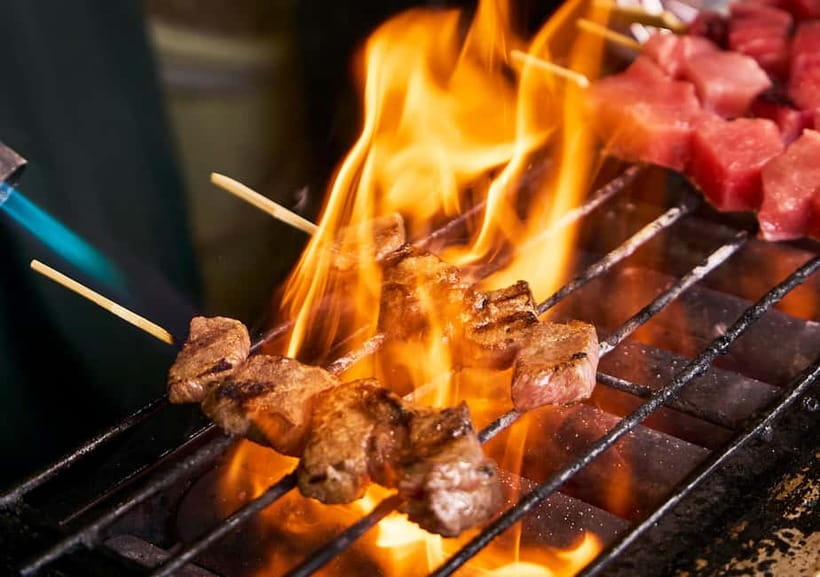
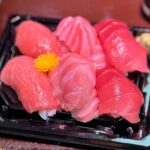
In particular, past tours have included favorites like fatty tuna nigiri and grilled scallops. Those fit Tsukiji’s strengths perfectly. Tuna gives you that rich, clean, ocean-forward taste that everyone talks about. Scallops add a different texture—more char and sweetness—so the experience doesn’t become one-note.
A practical tip: when the guide offers an explanation, take it. Knowing how something is prepared (and why it tastes the way it does) makes the tasting feel bigger. One guide style that comes through strongly is that they’ll take time to explain how food is made before you eat it, so you’re tasting with context rather than just grabbing whatever smells good.
Tsukiji Hongwanji Temple: why that stop isn’t random
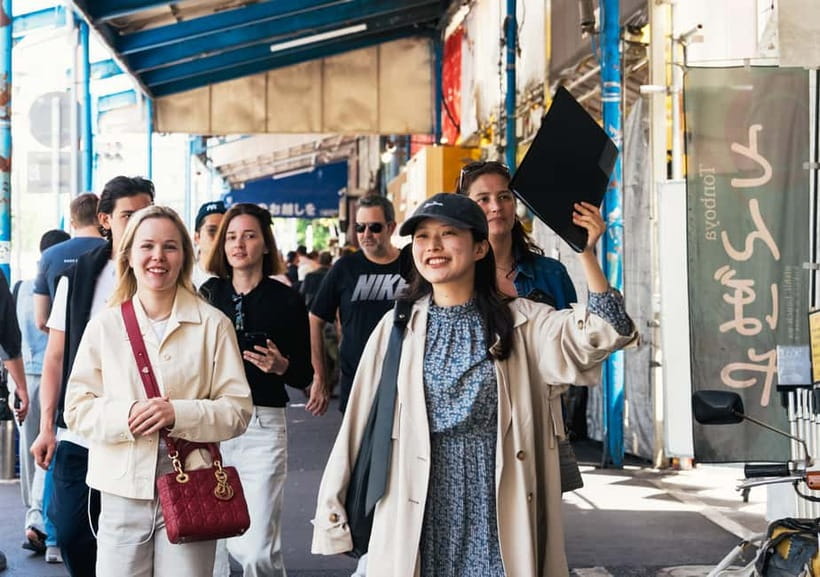
A lot of “food tours” skip anything that isn’t edible. This one includes Tsukiji Hongwanji Temple as part of the route, and that’s a big reason the experience feels more grounded.
Even if your main goal is eating, the temple stop gives you a break from the sharpest market intensity. It’s a change of pace, and it also helps you understand the market as part of a wider neighborhood culture rather than a stand-alone attraction.
Think of it as a reset button. You get a moment to catch your breath, look around, and then re-enter the streets with better focus. For families, it also makes the tour feel less like a food chase and more like a real cultural walk.
Tsukiji Jogai Market: the quieter cousin you’ll be glad to see
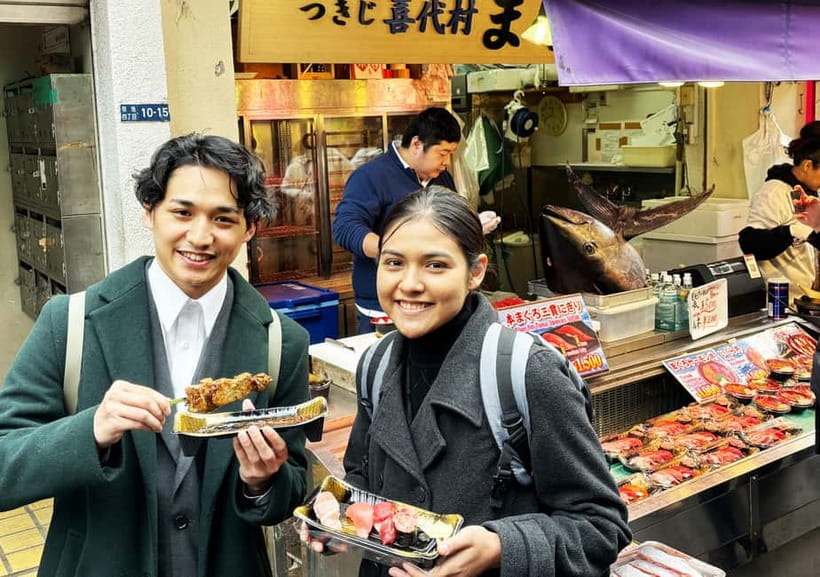
The tour doesn’t stop at only the loudest, most crowded sections. It includes Tsukiji Jogai Market, which can be easier to enjoy because you’re not always fighting for a viewing angle.
This part of the walk tends to give you a different perspective on how market life works day to day. You’ll likely notice that it’s not just about the big-name seafood headlines. It’s also about vendors, routines, and the practical reality of where people go for ingredients and specialty products.
For you, that means more than one “Tsukiji moment.” You can compare what you see at the stalls to what you learn from the guide about vendor roles and food culture. It’s one of the ways this tour can feel richer than a simple snack crawl.
You can also read our reviews of more food & drink experiences in Tokyo




The walking pace, crowd reality, and photo moments
The description of this tour says it’s easy and relaxed, and that lines up with what you need at Tsukiji. You’re walking, but you’re also getting breaks. That sounds basic, yet it’s a big quality-of-life upgrade in a place where the crowd can slow everything down anyway.
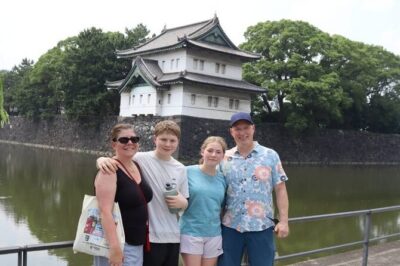
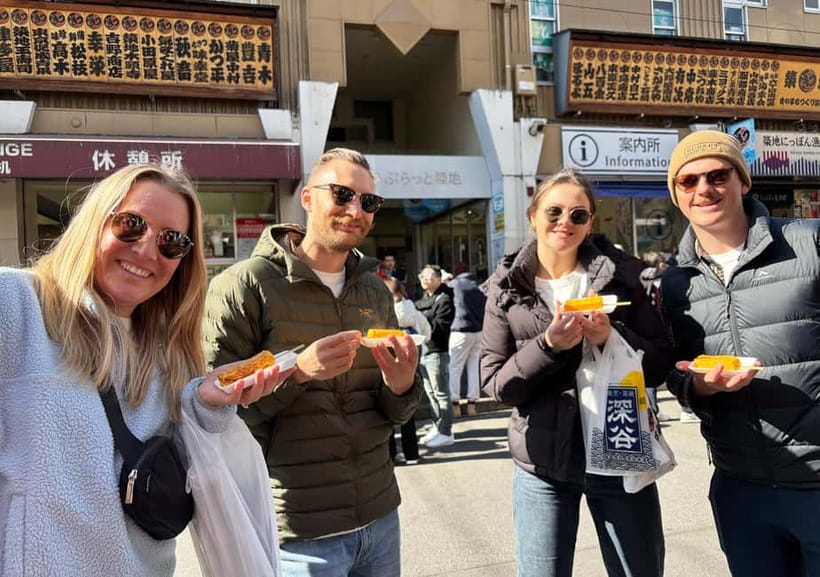
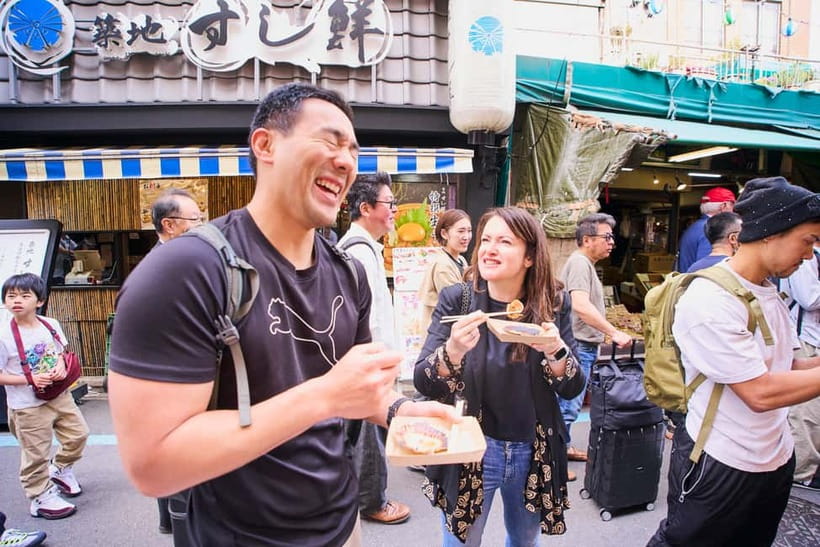
Photo time is built into the route. You get moments to capture colorful market scenes and family smiles, and the fact that edited photos are included makes the whole photo plan less stressful. It also reduces the usual problem where you’re constantly stopping, aiming, and then missing what the guide is telling you.
Still, be smart. The market can be crowded, so keep an eye on personal belongings. Use a crossbody bag you can control, and avoid setting your phone down in a way that tempts a pickpocket’s quick hands. This is the type of place where good habits matter more than fear.
Wear comfortable shoes. The tour is short, but Tsukiji streets and indoor-adjacent walkways add up fast.
Guide energy: small-group feel, big clarity
One strong theme from the experience is that the guides communicate well and keep things moving. In one example, guide Atsu (a university student) helped a solo guest by showing the market, explaining specialties, and sharing his preferred foods. That kind of approach matters because it makes the tour feel personal even when you’re just passing through a busy stall street.
The guides also tend to be conversational and ready with context. They’ll answer questions, explain why certain items are prepared a certain way, and help you understand what you’re seeing. If you care about Japanese food beyond the headline dishes, this is exactly the kind of tour that keeps you engaged.
Another plus: small-group or private-style flexibility can happen. In at least one case, the group ended up being just one person. That’s not something you should count on, but it highlights that the format can feel more like a chat with a local than a scripted bus tour.
Who should book this Tsukiji tour
This tour fits best if you want Tsukiji without the stress of planning every turn.
You’ll like it if:
- You want an easy, 90-minute introduction to Tsukiji’s food culture
- You’d rather eat a variety than commit to one item
- You want English guidance with time to rest and ask questions
- You’re traveling with family and want a route that works for mixed ages
You might reconsider if:
- You want to spend most of the day shopping or comparing prices
- You dislike crowds or tight walking conditions
- You’re expecting a long, slow deep study of market operations (90 minutes is more for tasting + context than a full day)
Small practical notes that make your tour smoother
Meet-up matters. The meeting point is Family Mart, so plan to arrive a few minutes early and confirm you’re at the right location before the group starts moving.
Bring a camera. The tour is set up for photo spots, and the market colors plus your smile shots are part of the fun. If you’re a phone photographer, keep your phone secured while you walk, then pause only when it’s safe to do so.
Also, decide in advance how you’ll handle hunger. This tour includes tastings, and the sampling range can be enough for a satisfying snack-and-learn experience. But because additional food isn’t included, you may want a plan for what you’ll do after the tour if you’re still hungry.
Should you book this Tsukiji Fish Market Street Food & Culture Walking Tour?
If you want the most efficient, least stressful way to taste Tsukiji and understand what you’re eating, I think this is a smart pick. The value isn’t just the food—it’s the guide-led route, the temple and market admissions bundled in, the photo time, and the fact that you get edited photos without having to multitask your way through the crowd.
Book it if you’re the kind of traveler who likes to eat while learning, and you prefer a guided plan over wandering. Skip it only if you’re chasing a long shopping spree or you need a quieter, less crowded setting.
If your goal is a fun, family-friendly Tsukiji introduction with good pacing, this tour is built for exactly that.
FAQ
How long is the Tsukiji Fish Market Street Food & Culture Walking Tour?
It lasts 90 minutes.
Where is the meeting point?
Meet up at Family Mart.
What is the price per person?
The price is $38 per person.
Is the tour guided in English?
Yes, the tour includes a live guide in English.
What’s included in the tour price?
The tour includes the guiding fee, edited photos, and entry/admission to Tsukiji Hongwanji Temple, Tsukiji, and Tsukiji Jogai Market.
What should I bring or plan for?
Wear comfortable shoes because you’ll be walking. Bring a camera for photo opportunities, and keep an eye on your belongings since the market can be crowded.