REVIEW · TOKYO
The Old Quarter of Tokyo – Yanaka Walking Tour
Book on Viator →Operated by Localized Walking & Food Tours · Bookable on Viator
Yanaka feels like another Tokyo. This walking tour takes you through temples, shrines, cemetery customs, and quiet alley life—a side of Tokyo most people never slow down to see. I like how the stops explain not just what’s there, but why people in Japan care about it every day.
Two things I really value: you get small-group, foot-level access to places like Nezu Shrine’s torii row and Yanaka’s residential lanes, and the guides add human details (stories, etiquette, and practical context) that make the architecture feel personal. One thing to consider: this is a walking tour, and a couple of segments may involve ticket costs or small out-of-pocket extras, plus you’ll want to plan for weather and footwear.
If you’re curious about Tokyo beyond the big sights, this is a focused half-day that feels calm, local, and surprisingly story-heavy.
In This Review
- Key highlights in plain terms
- Why Yanaka’s quieter streets feel like Tokyo’s real self
- Price and what you get for $40 (and what you’ll pay extra)
- Starting at Nippori and how the 3-hour pace works
- Tennoji Temple and the Yanaka Buddha (1690): religion with specifics
- Yanaka Cemetery: how to act in a Japanese resting place
- Ueno-Sakuragi Atari: restored wooden houses and a place to regroup
- The 100-year-old cedar tree: a neighborhood symbol worth spotting
- Enju-ji Temple: a god of strong legs and wishes on boards
- Nezu Shrine: torii gates, shrine etiquette, and great photo angles
- Hebimichi back street: daily life you can actually see
- Yanaka Ginza shopping street: snacks, sweets, and a local wrap-up
- What to wear and bring for a comfortable Yanaka walk
- The guides: what makes this tour feel personal
- Should you book the Yanaka walking tour?
- FAQ
- How long is the Yanaka walking tour?
- How much does the tour cost?
- Is this a small-group tour?
- Where does the tour start and end?
- What is included in the ticket price?
- What is not included?
- Are tickets required for the stops?
- Is food available during the tour?
- Can I get a mobile ticket?
- What is the cancellation policy if weather is bad?
Key highlights in plain terms
- Small group (max 10): easier questions, more attention, and a pace that doesn’t bulldoze the neighborhood
- Temple-and-shrine logic: you’ll see Buddhism and Shinto side by side, with real etiquette tips
- Yanaka Cemetery visit: you’ll learn the customs people follow in a Japanese resting place
- Nezu Shrine photo stop: lots of red torii gates like Kyoto’s Fushimi Inari
- Ueno-Sakuragi Atari break: restored wooden homes turned into a café/bakery/beer hall-style community stop
- Yanaka Ginza street time: learn the shopping-street rhythm and options for snacks (food costs extra)
Why Yanaka’s quieter streets feel like Tokyo’s real self
Tokyo can look like one nonstop stream of crowds, neon, and trains. Yanaka is different. Instead of rushing from landmark to landmark, this walk drifts through a residential pocket where wooden houses, smaller temples, and everyday life still set the tempo.
What makes it more than just “old neighborhood vibes” is the way the tour treats religion and daily customs as part of the same story. You’re not only seeing places—you’re learning how people behave around them. That changes your experience fast. A torii gate becomes more than a photo background. A cemetery path becomes something with meaning and manners. And the back streets feel less like “random streets” and more like living Tokyo.
You can also read our reviews of more walking tours in Tokyo


Price and what you get for $40 (and what you’ll pay extra)
At $40 per person, you’re paying for a guided, English-speaking local expert, a small-group walking format, and photo stops built into the route. Several sites have free admission, while a couple don’t. You can think of it as: your guide handles the interpretation; you handle the optional extras like food and any non-free entries.
Here’s the value angle that matters:
- You’re covering multiple religious sites and neighborhoods in about 3 hours, without needing to plan each turn or figure out etiquette on your own.
- You’re going on foot in a small area, which is usually where Japan reveals itself best—if you know where to look.
- You also get photo opportunities throughout, so you’re not left guessing when the best angles are.
What’s not included is straightforward: food, drinks, and personal expenses, plus gratuities if you want to tip. If you plan to snack on Yanaka Ginza, budget a bit extra.
Starting at Nippori and how the 3-hour pace works
The tour meets at Nippori Station (Nishi-Nippori, Arakawa City) and ends around Yanaka Ginza in Taito City. Expect a smooth, half-day rhythm: short walks between stops, then time to look, ask, and listen.
A big advantage is the group size. With up to 10 people, the guide can actually respond to questions instead of rushing past them. In practice, this also makes the whole thing feel less like a factory tour and more like a well-organized neighborhood stroll.
If you’re sensitive to crowds, this is a smart strategy. You’ll spend most of the time in quieter lanes and smaller sacred spaces—places where the mood changes simply because there aren’t tour buses every 10 minutes.
Tennoji Temple and the Yanaka Buddha (1690): religion with specifics
One of the first stops is Tennoji Temple, where you’ll see the Yanaka Buddha, created in 1690. That date matters because it helps you place the site in Japan’s long timeline. The guide doesn’t treat it like a random statue; you’ll hear the temple’s history and how it reflects aspects of Japanese religion.
The practical takeaway for you: you’ll be better at noticing details. Instead of thinking, “Okay, it’s a Buddha,” you start asking, “What story does this site carry, and why do people come here?”
Time on site is brief (about 15 minutes), so it’s not a heavy-duty temple lecture. It’s a fast, meaningful orientation that sets the tone for the rest of the walk.
Yanaka Cemetery: how to act in a Japanese resting place
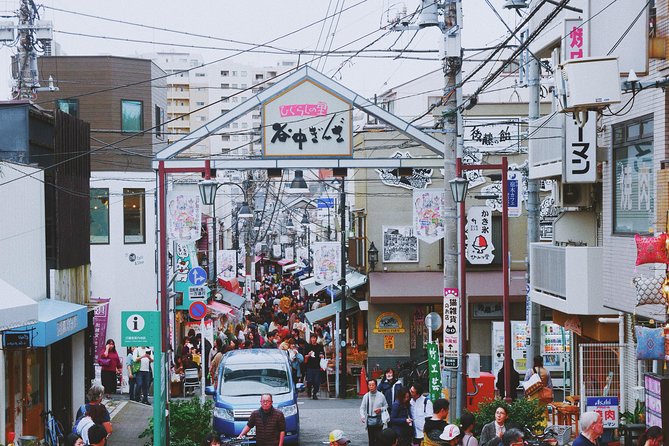
From temples to a different kind of sacred space: Yanaka Cemetery. The tour includes walking into the cemetery and learning what a Japanese cemetery is like, plus some customs locals follow.
This stop stands out because etiquette is usually the part visitors stumble on. Cemeteries can feel awkward if you don’t know the rules, or if you don’t understand what’s being respected. Having a guide explain the basics helps you slow down without worrying that you might be doing something wrong.
Also, this stop gives you emotional context. You see how reverence shows up in everyday landscapes. That makes the later shrine and alley segments feel less like sightseeing and more like a connected cultural walk.






Ueno-Sakuragi Atari: restored wooden houses and a place to regroup
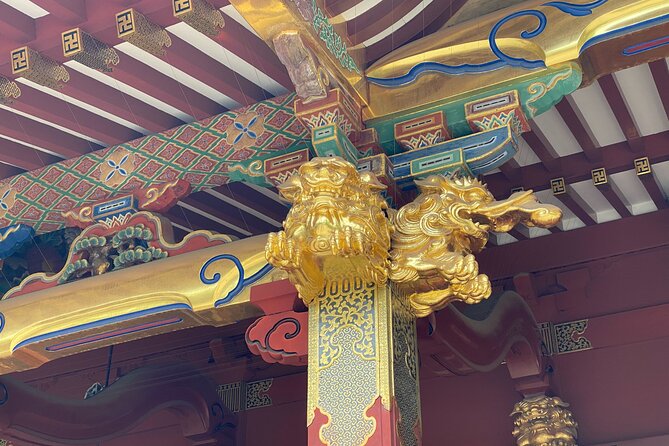
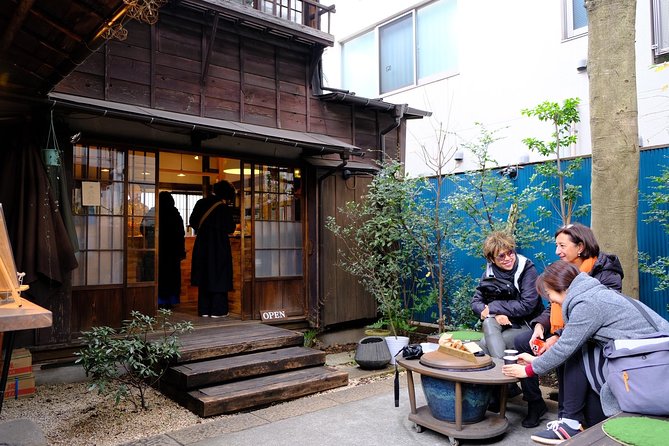
Next comes a break at Ueno-Sakuragi Atari, built around about 80-year-old wooden houses that were renovated into a community space with a café, bakery, and beer hall-style setting.
Two reasons I like this stop for your experience:
- It gives you a reset in the middle of the walk. Three hours sounds short, until you’re paying attention to details for two straight hours.
- It shows how preservation can still be functional, not just decorative.
Admission here isn’t included. And food/drinks aren’t included elsewhere in general, so treat this as a “grab something if you want” moment rather than a required purchase.
Even if you skip buying, it’s a good location to take a breath, regroup, and keep your energy for the next shrine.
The 100-year-old cedar tree: a neighborhood symbol worth spotting
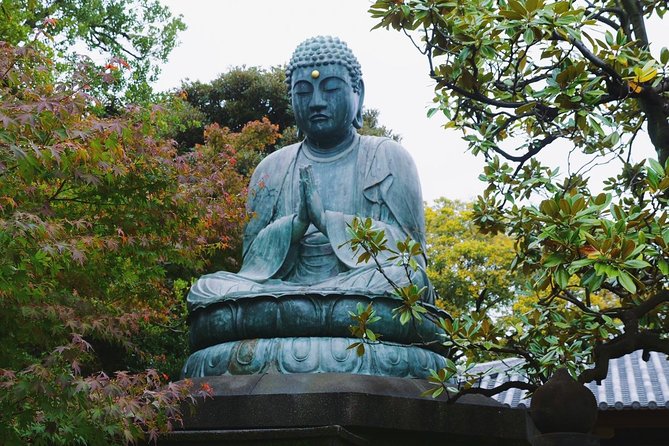
Along the route, there’s a stop around a 100-year-old cedar tree, described as a symbol in Yanaka. It’s one of those “small stop, big meaning” moments.
In a neighborhood like this, symbols help you read the area like a local. You’re not only mapping temples and streets; you’re noticing what residents treat as important landmarks.
If you like walking tours that give you “aha” moments, this kind of stop is exactly that.
Enju-ji Temple: a god of strong legs and wishes on boards
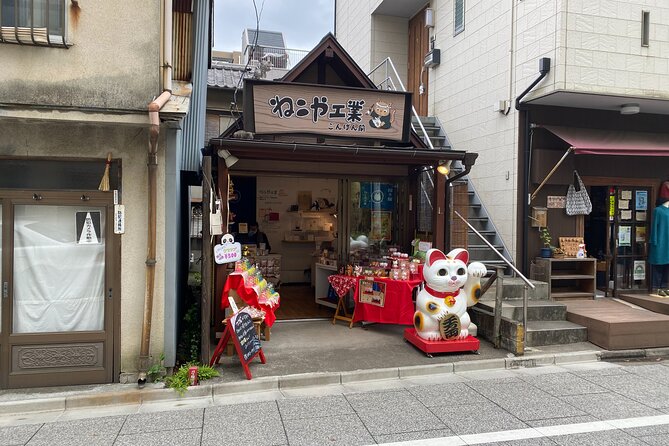
Enju-ji Temple isn’t presented as a typical Buddhist scene. The focus here is a god of strong legs, and you’ll see how people write wishes on wooden boards, especially related to foot problems.
This is a fun contrast because it turns “religious place” into “human needs in plain language.” You’re not just looking at a building—you’re watching how prayers connect to everyday bodies and daily life.
Time on site is short (around 5 minutes), but it’s the kind of quick stop that stays with you because the concept is memorable and easy to understand.
Nezu Shrine: torii gates, shrine etiquette, and great photo angles
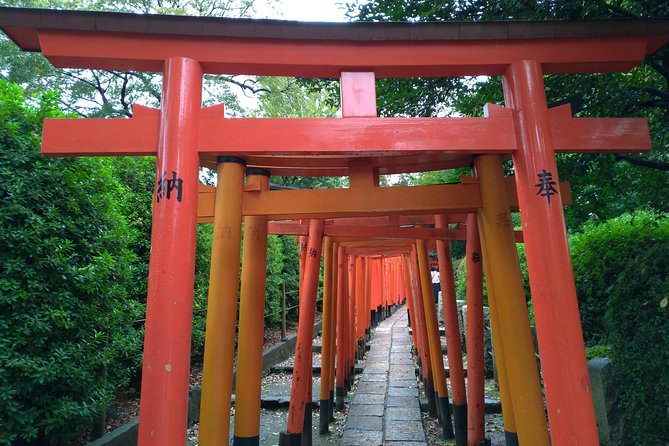
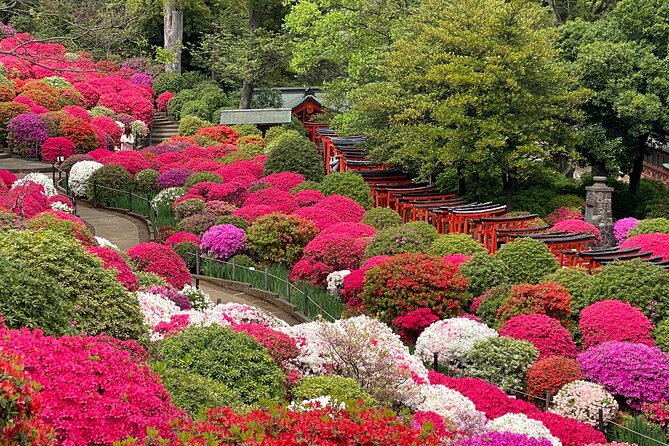
Then you’ll reach Nezu Shrine, famous for many red torii gates, which the tour compares to the look people associate with Kyoto’s Fushimi Inari. This is your main visual wow moment on the walk.
You also get shrine etiquette guidance. That part is practical. You learn what to do before you step into your own assumptions, and it makes your photos more respectful—plus less awkward.
You’ll have about 20 minutes here, which is enough time to get pictures without feeling hurried. It’s also long enough to notice small behaviors that make shrines feel alive, even when they’re quiet.
Admission is free for this stop, which is another plus.
Hebimichi back street: daily life you can actually see
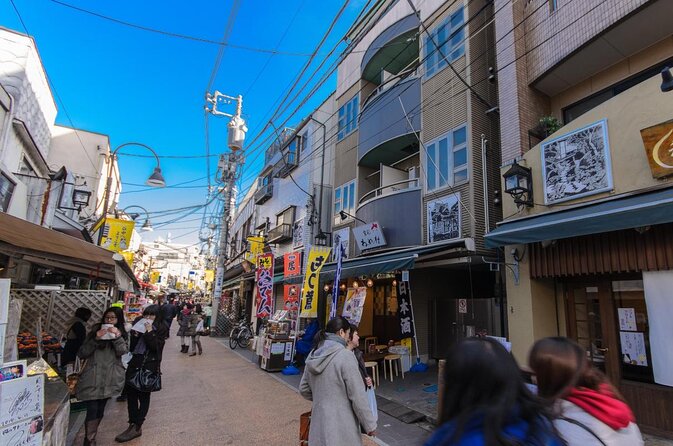
After the shrine, the tour shifts from big spiritual visuals to smaller human-scale streets. You’ll walk into Hebimichi, a back street in the residential area where you’ll see Japanese daily life up close.
This is where the tour earns its “different side of Tokyo” promise. Yanaka isn’t only temples and landmarks. It’s laundry lines, neighborhood flow, and the way people move through spaces that don’t exist for tourists.
For you, this stop does two things:
- It balances the heavy religious content with ordinary life
- It makes the whole day feel like walking through a place, not ticking off points
Yanaka Ginza shopping street: snacks, sweets, and a local wrap-up
The tour ends at Yanaka Ginza, a shopping street where your local guide explains the area and the types of shops you’ll find. This is also where you can try local foods and sweets, with food fees not included.
Think of this as your “use what you learned” moment. After understanding etiquette, history cues, and neighborhood symbols, you can spend your last stretch of time actually browsing like a person who belongs there.
You’ll probably notice the difference immediately. In central Tokyo, shopping can feel anonymous. Here, it feels like a neighborhood routine.
What to wear and bring for a comfortable Yanaka walk
This tour is a comfortable fit for most people, but you’ll still want to prepare like it’s a real walk:
- Wear comfortable shoes. You’ll be moving through temples, cemetery paths, and side streets.
- Bring sun protection if you’re traveling in warmer months. The route is outdoors for much of the day.
- Use sunscreen and consider a hat. Even when the pace is relaxed, Tokyo heat can sneak up on you.
Because the experience requires good weather, have a backup plan for weather changes. If conditions aren’t right, you should expect the operator to adjust with either a different date or a refund.
The guides: what makes this tour feel personal
One of the best parts of this experience is the human layer. Across different guides, you’ll see the same pattern: they connect places to stories and answer questions patiently.
Names you may encounter include Polina, Aya, Junko, Mami, Mei, Rei, and Kiyo (and others). Many descriptions highlight strong English and a real sense of care for the group—like taking time for everyone, offering help with photos, and sharing extra context to help you connect the dots.
A small detail that matters: some guides use helpful visuals such as laminated images to explain what they’re pointing out. That makes it easier to understand when you’re standing in front of something you can’t fully interpret at a glance.
If you’re the type who likes to ask questions—about religion, daily life, or why certain customs exist—this tour supports that kind of curiosity. The pacing also leaves room for it, thanks to the small group size.
Should you book the Yanaka walking tour?
Book it if you want:
- A quiet, older Tokyo experience that isn’t about big-city crowds
- A guided explanation of Buddhism and Shinto as people practice them
- A walk that mixes sacred places with neighborhood streets, so the day feels balanced
- Small-group attention and photo stops included in the flow
Skip it (or choose another format) if:
- You don’t like walking tours at all, even short ones
- You want a schedule packed only with major-ticket sights, not smaller sacred spaces and daily-life streets
- You’d rather not pay for optional extras like food or any non-free stop entries
For $40 and about three hours, this is a strong value if your goal is understanding Tokyo at eye level. Yanaka rewards slow attention. This tour gives you permission—and direction—to do it.
FAQ
How long is the Yanaka walking tour?
The tour runs for about 3 hours.
How much does the tour cost?
The price is $40.00 per person.
Is this a small-group tour?
Yes. The group size is capped at a maximum of 10 travelers.
Where does the tour start and end?
It starts at Nippori Station (2 Chome-19 Nishinippori, Arakawa City) and ends at Yanaka Ginza (3-chōme-13-1 Yanaka, Taito City).
What is included in the ticket price?
You get a guided walking tour with an English-speaking local expert and photo opportunities throughout.
What is not included?
Food and drinks are not included, and personal expenses are on you. Gratuities are also not included (optional).
Are tickets required for the stops?
Some stops are marked as free admission, while others list admission as not included. Your guide will take you through the route, and any non-free entry costs would be covered by you.
Is food available during the tour?
There is a stop at Ueno-Sakuragi Atari and time at Yanaka Ginza where you can try local foods and sweets, but the food cost is not included.
Can I get a mobile ticket?
Yes, the tour uses a mobile ticket.
What is the cancellation policy if weather is bad?
You can cancel for a full refund up to 24 hours in advance. If the experience is canceled due to poor weather, you’ll be offered a different date or a full refund.