REVIEW · TOKYO
Sumi-e Ink Painting Suiboku-Ga Workshop in a Japanese Teahouse
Book on Viator →Operated by Beauty of Japan · Bookable on Viator
Ink meets calm in a Tokyo teahouse. I love the small group setup (up to eight people), because you actually get time to ask questions and adjust your technique with the instructor right there. I also love the value of leaving with a finished piece plus a green tea souvenir you can take home.
One thing to consider: the workshop is about one hour, so if you’re slow to start, you’ll want to commit to simple, clean strokes rather than trying to perfect every detail.
In This Review
- Key highlights before you go
- Finding the Teahouse Vibe in Tsukiji (and why it matters)
- Suiboku-ga Basics: The Simple Method That Feels Like Zen
- Picking Your Motif: Pine, Bamboo, Plum, Orchid, Chrysanthemum, Kanji
- What Happens During the 1-Hour Workshop (Tea, Practice, Then Your Piece)
- 1) Tea and setup in the teahouse
- 2) Your instructor explains the basics you need right now
- 3) Practice strokes before the final work
- 4) Painting your chosen theme
- 5) Wrap-up and take-home time
- Take-Home Value: A Real Souvenir You Actually Made
- Price and logistics: Is $93.34 worth it?
- Who Should Book This Workshop (and who might prefer something else)
- Should You Book This Suiboku-ga Ink Painting in a Tokyo Teahouse?
- FAQ
- How long is the sumi-e suiboku-ga workshop?
- How many people are in the class?
- Where does the workshop start?
- Will I get green tea during and after the class?
- What motifs can I choose to paint?
- Who teaches the workshop?
- Is hotel pickup included?
- What’s included in the price?
- Is it beginner-friendly?
- What is the cancellation policy?
Key highlights before you go
- Award-winning instructor Rensui guides your basics of suiboku-ga in a relaxed teahouse setting
- Max 8 people means real attention, not a quick demo
- Motif choice at booking from pine, bamboo, plum, orchid, chrysanthemum, or kanji characters
- Suiboku-ga technique focus on water, ink wash texture, and contrast (no heavy layering)
- Tea included: you drink green tea and also take a green tea packet home
- Take-home art designed to be a gift or keepsake, made by you
Finding the Teahouse Vibe in Tsukiji (and why it matters)
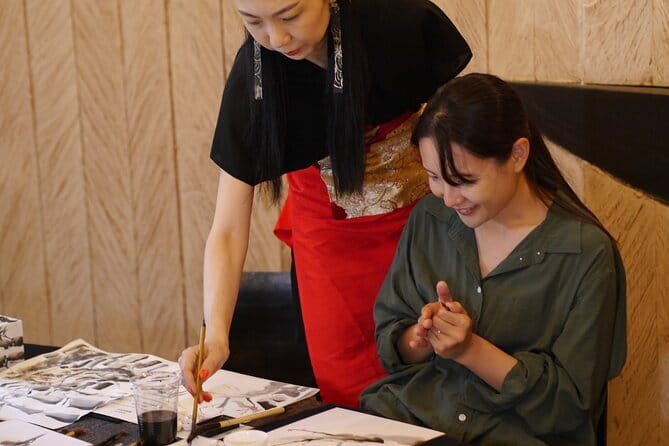
This workshop takes place in a Japanese teahouse area around Tsukiji (meeting at Uogashi Meicha Chanomi Club, 2-chōme-11-12 Tsukiji). The setting matters more than you’d think. Ink painting isn’t just about drawing; it’s about control—water amount, ink density, timing, and even how still you stay while the brush moves.
You’ll be near public transportation, so you don’t have to plan around complicated transfers. And because it ends back at the meeting point, you can fit it cleanly into a day of sightseeing without a long “after” transit scramble.
The experience is also set up to feel intimate rather than performative. With a max of eight participants, you don’t get lost in a crowd, and you’re less likely to freeze when you’re staring at a blank space.
You can also read our reviews of more tours and experiences in Tokyo



Suiboku-ga Basics: The Simple Method That Feels Like Zen
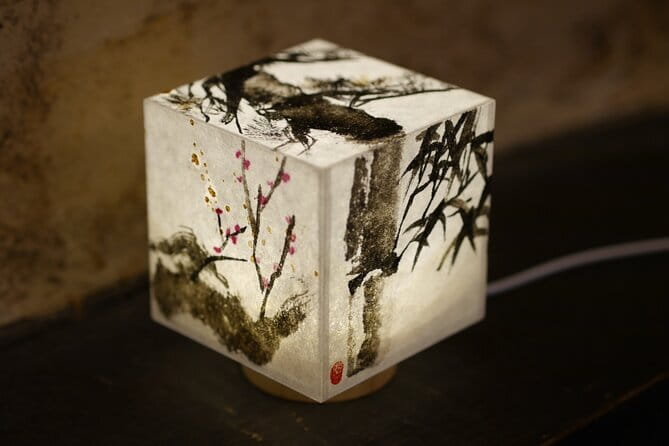
Suiboku-ga is a type of sumi-e ink painting using ink washes to build texture and contrast. The big idea: you’re not stacking lots of layers of paint. That changes everything. Instead of covering mistakes, you manage them in real time—how wet the paper is, how quickly ink spreads, and how your brushstroke sets the tone.
That’s why people describe it as a technique from the heart. The process is simple on paper, but it’s honest. Your intention shows up immediately. If you rush, the wash bleeds. If you press too hard, the line gets heavy. If you pause, the ink settles. There’s a Zen quality to that cause-and-effect.
Here’s what I think makes this style so satisfying for beginners: you’re not trying to copy a detailed illustration. You’re learning a small set of moves—then letting the ink do its part. When you get it right, the result looks intentional even if you’re not a lifelong artist.
Picking Your Motif: Pine, Bamboo, Plum, Orchid, Chrysanthemum, Kanji
At booking, you choose which object you want to paint. The possible themes are:
- pine
- bamboo
- plum
- orchid
- chrysanthemum
- Chinese kanji characters
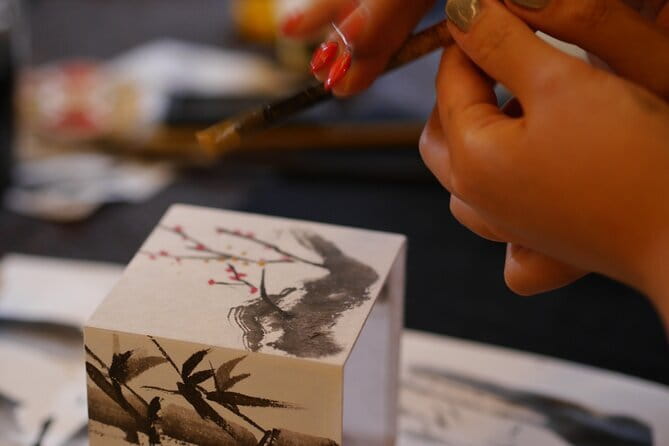
This choice is practical because it shapes your brush strategy. Pine and bamboo, for example, tend to invite long, directional strokes and structure. Plum and chrysanthemum usually feel more about controlled curves and spacing. Kanji shifts the focus toward clean line work and balance.
A useful tip for your session: choose the theme you actually want to live with afterward. Since your finished work becomes a take-home souvenir, picking something you’ll recognize and like helps a lot when you’re tired, mid-process.
Also, the workshop is described as relaxed and beginner-friendly. In real ink painting, even a small difference in ink/water ratio can change the look. That means your final piece will still feel yours, even if two people start with the same motif.
What Happens During the 1-Hour Workshop (Tea, Practice, Then Your Piece)
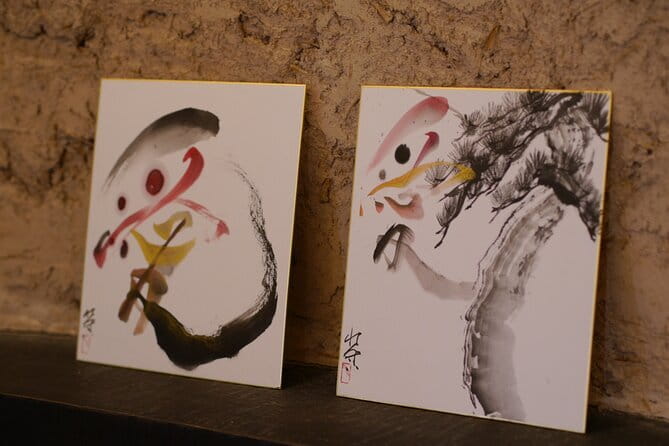
The workshop is about one hour, so it’s designed to move quickly without feeling rushed. Expect a flow like this:
1) Tea and setup in the teahouse
You’ll enjoy Japanese green tea during the class, and there’s also light green tea refreshment included. The drink is more than a nice touch—it helps you slow down. Ink doesn’t forgive frantic movements. When your body is calmer, your brush control improves fast.






2) Your instructor explains the basics you need right now
You’ll be guided by Rensui, an award-winning calligrapher and artist. The teaching focuses on how to use water and ink so you get texture and contrast in a natural way. This is where you learn what matters most: not endless steps, but the right habits.
This is also where the workshop earns its “intimate” reputation. With only eight people, you can get corrections while you’re still working, not after the moment passes.
3) Practice strokes before the final work
The class teaches simple methods, including finishing with a single brushstroke. That one-stroke idea is key in suiboku-ga. It forces you to commit. Instead of filling in forever, you end with a decisive mark—one that anchors the piece.
Even if you don’t nail it instantly, practice time helps you feel the ink behavior on that specific paper and under your hand.
4) Painting your chosen theme
Once you start painting, you’ll apply those basics to your motif. Because suiboku-ga uses ink washes rather than many paint layers, you’ll notice your early choices matter. If you spend time “reworking,” the wash can shift and spread in ways you didn’t plan.
The upside: that can feel magical. The ink moves differently than a pencil line. When you let it do its thing, your artwork starts looking like ink—not like a sketch that got covered.
5) Wrap-up and take-home time
You’ll finish with a completed souvenir to take home or gift. The workshop includes the materials you need, so you’re not hunting for supplies afterward or worrying about what to buy in Japan.
Take-Home Value: A Real Souvenir You Actually Made
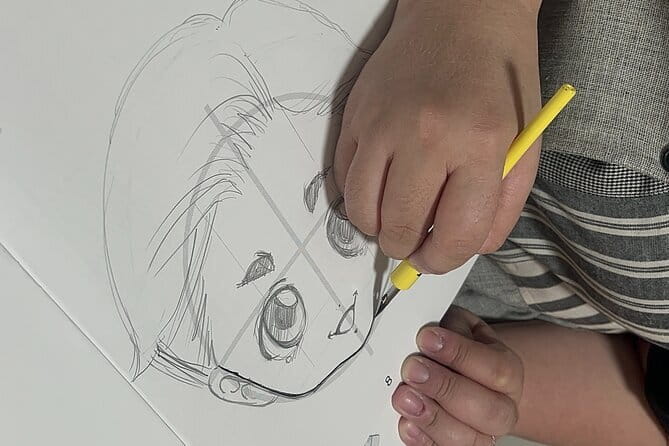
Most Tokyo souvenirs are easy to buy and hard to keep. This is different. Your finished painting is a tangible outcome of learning suiboku-ga basics, not a mass-produced item.
On top of the artwork, you also get a green tea packet as a souvenir. That’s a nice extra because it gives the experience another physical memory—something you can taste later and associate with the teahouse atmosphere.
One more practical detail: since it’s a small class, your item feels personal. You’re not handed a cookie-cutter craft. You made brush choices, and the ink recorded them.
Price and logistics: Is $93.34 worth it?
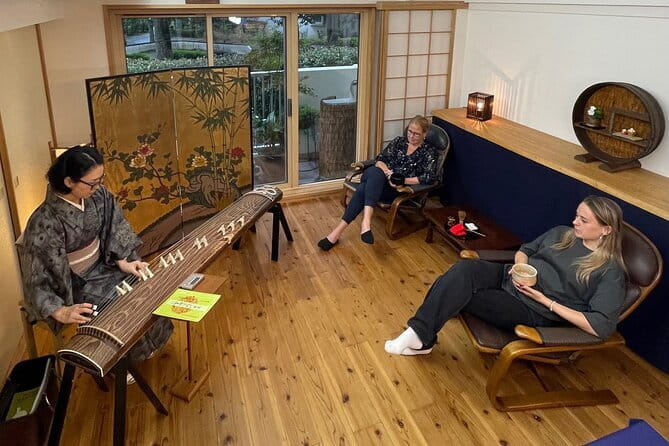
At $93.34 per person, this workshop sits in the “pay for the teacher and the materials” category. You’re not just paying for paper and ink. You’re paying for:
- instruction from Rensui (award-winning artist)
- a small-group class size so you get feedback
- all materials included
- a full teahouse experience with green tea, plus a take-home green tea packet
- a finished piece you keep
For me, the value comes down to attention and outcome. If the class were large, you’d likely struggle more and leave with less confidence. The max eight participants is part of what makes the price feel reasonable. And the fact that you leave with something finished is the other half of the equation.
If you’re on a tight schedule, note the duration is about an hour. It’s enough time to learn and produce a souvenir, but it’s not meant to be a long, slow art session.
Who Should Book This Workshop (and who might prefer something else)
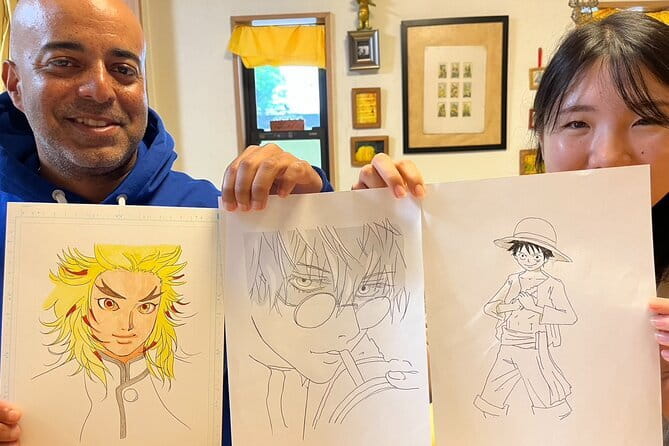
This workshop is a strong fit if you:
- want a Tokyo experience that feels local and not like another city walking tour
- like hands-on art, even if you’ve never done it before
- want a meaningful souvenir you can’t buy in a shop
- enjoy calm, structured guidance rather than open-ended crafting
It can also work well for families. In the small-class setting, you get attention that scales to different skill levels. One family highlighted the class as especially enjoyable with children around elementary age, which suggests the atmosphere is welcoming and not intimidating.
A possible mismatch: if you’re looking for a long studio session or lots of advanced techniques, this is intentionally intro-focused. The teaching is about basics and getting a good first result, not mastering complex styles in one sitting.
Should You Book This Suiboku-ga Ink Painting in a Tokyo Teahouse?
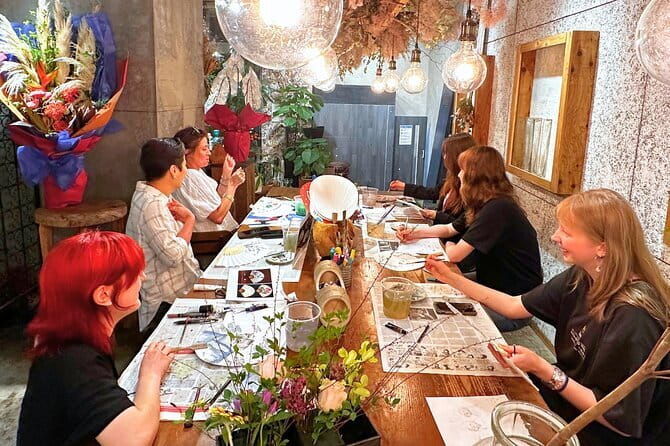
I’d book it if you want a compact, memorable art experience in Tokyo—one that’s hands-on, calm, and tied to a real output you take home. The small group limit, the instruction from Rensui, and the built-in tea experience are the main reasons this feels like good value for your time.
Skip it only if you hate the idea of working quickly or you want a very detailed, multi-hour masterpiece. Since the class is about one hour, success here comes from focusing on clean strokes and the ink wash effect, not perfecting every tiny element.
If you’re even mildly curious about sumi-e/suiboku-ga, this is the kind of activity that leaves you with a story you can tell later—and not just a photo.
FAQ
How long is the sumi-e suiboku-ga workshop?
The workshop runs for about 1 hour (approx.).
How many people are in the class?
The workshop has a maximum of 8 travelers, so it stays intimate.
Where does the workshop start?
The meeting point is Uogashi Meicha Chanomi Club, 2-chōme-11-12 Tsukiji, Chuo City, Tokyo 104-0045, Japan.
Will I get green tea during and after the class?
Yes. You’ll enjoy Japanese green tea during the workshop, and you also receive a green tea packet as a souvenir.
What motifs can I choose to paint?
You can choose from pine, bamboo, plum, orchid, chrysanthemum, or Chinese kanji characters.
Who teaches the workshop?
The class is led by award-winning artist and calligrapher Rensui.
Is hotel pickup included?
No. Hotel pickup and drop-off are not included.
What’s included in the price?
Included: workshop fee, materials, green tea souvenir, and light green tea refreshment.
Is it beginner-friendly?
Yes. It’s an introductory course that teaches basic suiboku-ga techniques.
What is the cancellation policy?
Free cancellation is available. You can cancel up to 24 hours in advance for a full refund.