Shibuya at night hits different from street level. This guided walk strings together the big Shibuya set pieces and ends with an included rooftop viewpoint, so you see the same area twice: eye level, then sky level. I especially liked how the guide Lily keeps the group moving and makes the chaos feel organized. One possible drawback: the meeting area around Hachiko can be hectic, so if you arrive late you may end up guessing who’s leading.
My favorite second piece is the rooftop payoff. You get Shibuya Sky-style 360° city views, where the streets and landmark hints turn into a glowing grid as night deepens. And I like that the walk includes the human-scale stuff too—Nonbei Yokocho alley energy and the pedestrian lanes around Center-gai—so you’re not just staring at buildings.
The whole tour runs about 2 hours with a small group (up to 25), and it’s built for comfortable night wandering rather than long museum-style pacing.
In This Review
- Key highlights
- Why Shibuya by night works so well on foot
- Start at Hachiko Statue: getting oriented fast
- Shibuya Crossing: see the choreography up close
- Miyashita Park: the rooftop break in the middle of Shibuya
- Shibuya Nonbei Yokocho: neon alley life and snack energy
- Shibuya Center-gai: youthful pedestrian Tokyo energy
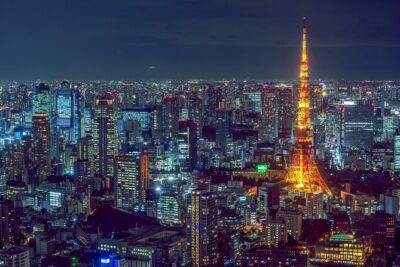
- The rooftop finale: 360° views from Shibuya Sky
- Price and value: what $161 gets you in practice
- Logistics that matter: group size, timing, and crowd reality
- Practical tips for your smoothest Shibuya night
- Who should book this tour?
- Should you book this Shibuya night walking tour with rooftop views?
- FAQ
- How long is the Shibuya night walking tour?
- Where does the tour start and where do I end?
- Is the rooftop observation deck admission included?
- What’s included in the walking portion around Shibuya?
- Are there any restrictions on what I can bring?
- Is the tour dependent on weather?
Key highlights
- Hachiko Statue start gives you a clear launch point in the Shibuya hub
- Shibuya Crossing up close, then you see it again from the heights later
- Miyashita Park on top of a former parking structure, with green roof space and a skatepark
- Nonbei Yokocho and Center-gai at night for neon lanes, snacks, and street vibe
- Rooftop finale includes admission for a 360° panorama
Why Shibuya by night works so well on foot
Tokyo at night has a different rhythm. Shibuya is one of the easiest places to feel that shift because you can walk from neon lanes to open views without changing neighborhoods. This tour leans into that simple advantage: you move through key areas at street level first, then you finish with a panoramic look that puts everything into context.
Also, there’s a smart “compare-and-contrast” feel to the timing. The tour shows you the big sights when they’re busy, then later shows you the same region from above, so your brain connects the grid of streets with the real-world experience of crossing them.
You can also read our reviews of more walking tours in Tokyo



Start at Hachiko Statue: getting oriented fast
You meet at the Hachiko Statue area (2 Chome-1 Dogenzaka), right in Shibuya’s busiest zone. That’s a good thing. It means you’re starting at a well-known landmark instead of wandering around an anonymous block looking for a meeting flag.
The practical tip: arrive at least 15 minutes early. The area is crowded, and you don’t want the stress of hunting for the guide while the group is already getting assembled. If you’re the type who likes to be 100% ready, this is one tour where that habit pays off quickly.
This is also where the “small-group” reality matters. With a maximum of 25 people, you’ll usually get enough attention to stay together, especially when your route funnels you through packed sidewalks and crossing points.
Shibuya Crossing: see the choreography up close
The evening begins with Shibuya Crossing, the world-famous intersection where people fan out like a living pattern. On foot, it’s loud in motion. The lines feel tighter, the crossings feel more immediate, and you get a feel for how the area moves as one big machine.
A key detail here: you’re not just standing and pointing. You’ll cross through the intersection as part of the walking route, so you experience the flow instead of watching it from the curb. That makes the later rooftop view mean more, because you’ll recognize the geometry you just walked through.
The duration for this part is short—around 5 minutes—so think of it as a quick ignition point. You’re there to set your bearings and get that first hit of Shibuya energy, then move on before the crowd pressure maxes out.
Miyashita Park: the rooftop break in the middle of Shibuya
Next up is Miyashita Park, a modern urban space built on top of a former parking structure. That detail matters because it explains the vibe: it’s not just a park dropped into the city. It’s a reused urban layer—green areas on top, plus a skatepark and shops/dining around the scene.
At night, this kind of stop is valuable because it gives you a breather from the sharp edges of streets and intersections. You’ll still see plenty of people, but the feel shifts from “cross and go” to “hang and watch.”
The tour keeps this segment brief (about 10 minutes). That works well because you’re not waiting around for the park to become something else—it’s more like a quick reset button before the neon lanes.
Shibuya Nonbei Yokocho: neon alley life and snack energy
Then comes Shibuya Nonbei Yokocho, an alley packed with tiny bars and eateries under neon lights. This is where Shibuya turns from icon to atmosphere.
What I like about this stop is the texture. You get the close-up scale: narrow lanes, quick conversations, and the kind of street-food smells that make you want to pause even when the schedule keeps moving. It’s also the kind of place where you can learn the difference between Tokyo that looks like a postcard and Tokyo you actually want to linger in.
This stop is around 10 minutes, which is enough time to orient yourself and get a sense of what the alley is like at night. If you’re hungry, keep in mind the tour rules say no outside food or drinks during the experience, so if you plan to snack, you’ll want to check what you’re allowed to do on-site and time it with the group pace.
You can also read our reviews of more city tours in Tokyo





Shibuya Center-gai: youthful pedestrian Tokyo energy
After the alley, you move to Shibuya Center-gai, a busy pedestrian street lined with shops, cafés, and entertainment. This is classic Shibuya: music energy, crowds, and storefront lights doing their best impression of a theme park.
This section lasts around 10 minutes, and that brevity is a feature. Center-gai can feel overwhelming if you try to “do it” like a shopping district. With a guided walk, you get the vibe without having to make too many decisions. You also get an easy mental map of where things are if you want to return later on your own.
This is the point in the walk where you’ll likely start matching streets you’ve seen with signs and storefronts. That’s exactly what you want from a short, guided night route—recognition by the end.
The rooftop finale: 360° views from Shibuya Sky
The highlight lands at the end. You’ll head up to a rooftop observation deck (Shibuya Sky) with admission included, and you’ll spend about 1 hour up there.
This is the “now I get it” moment. From above, Shibuya Crossing is no longer an intersection. It’s a moving pattern inside a dense city grid. You can look in every direction and see the skyline unfold, with glimpses of famous areas when the view lines cooperate.
Also, timing matters. As the night goes darker, the city lights sharpen and expand visually. That transformation is part of why the tour is built as a night walk rather than a daytime orientation.
One practical point: it’s a rooftop viewpoint, so you’ll want to keep your phone charged and your jacket situation sensible. You’re not walking in the cold forever, but rooftops can feel different than street level.
Price and value: what $161 gets you in practice
At $161 for about 2 hours, you’re not paying only for walking. You’re paying for two bundled things:
- Guided, night-focused navigation through Shibuya’s key areas
- A ticketed rooftop experience with a dedicated viewing window (about an hour)
That can be great value if you’re planning to do Shibuya Sky anyway. The guide’s job isn’t just to point at places—it’s to keep you from spending your limited night time figuring out routes in crowded streets. And the rooftop portion isn’t something you usually want to improvise at 9pm without thinking about timing and entry.
Where the value can feel weaker is if you hate group pacing or want total freedom to stop and wander. This tour is built around a set flow, and even though the segments are short, you’ll still move with the group.
Logistics that matter: group size, timing, and crowd reality
A few details are worth taking seriously because Shibuya doesn’t do quiet.
- Group size is capped at 25, which helps, but it still means you’ll be part of the crowd on busy streets.
- You’ll be in a high-foot-traffic area near public transport, so it’s easy to get there—but also easy to blend into the crowd if you don’t spot the guide.
- The tour asks you not to bring large luggage, food, drinks, and pets. If you’re doing a big day of shopping before this, pack light or plan your luggage storage so you aren’t stuck carrying extra weight.
There’s also a weather factor. The experience requires good weather. If conditions are poor and the tour has to be canceled, you’ll be offered another date or a full refund. For a rooftop-based finish, that matters.
Practical tips for your smoothest Shibuya night
Here’s how to make the evening feel easy instead of hectic.
First, wear shoes you can walk in comfortably for a solid chunk of time. Even when the stop durations are short, Shibuya sidewalks and crossings add up.
Second, show up early and keep your meeting plan simple. The meeting point is a recognizable spot (Hachiko Statue area), but it’s still crowded. If you’re using navigation on your phone, double-check your landmark before you walk into the thick of it.
Third, bring a little patience for the moment-to-moment pacing. Intersections and alley streets can slow a group down. If you’re the type who hates waiting, tell yourself you’re paying for orientation and rooftop time, not for a perfectly clockwork evening.
Finally, set your expectations for the rooftop. The deck is where the big view happens. If you want the best photos, arrive ready to spend the full hour up there—don’t treat it as a quick stop.
Who should book this tour?
This is a great fit if you:
- Want a guided night route through Shibuya’s most recognizable areas
- Like the idea of seeing Shibuya Crossing both at street level and from above
- Prefer a planned 2-hour outing that ends with a major viewpoint
It’s less ideal if you want long free time in one location or if you hate being grouped through crowded streets.
One positive note from real-world experience: a guide named Lily gets singled out for making the group feel taken care of and keeping the mood fun while staying on track.
Should you book this Shibuya night walking tour with rooftop views?
I’d book it if you want Shibuya in one efficient evening: icons first, atmosphere second, rooftop payoff last. The included rooftop admission plus guided navigation is the core value, especially at night when it’s easy to waste time figuring out what to do next.
Book with confidence if you can handle crowds and you’re willing to arrive early so you’re not stressed at the start. Skip it if you want total independence or if you’re only interested in the rooftop and nothing else—then you might build a cheaper DIY plan. But if you want the full Shibuya story, this is a solid, well-paced way to do it.
FAQ
How long is the Shibuya night walking tour?
The tour lasts about 2 hours.
Where does the tour start and where do I end?
You start at the Hachiko Statue area in Shibuya and you end in Shibuya at a viewpoint for panoramic views.
Is the rooftop observation deck admission included?
Yes. The rooftop viewpoint ticket is included for the final stop.
What’s included in the walking portion around Shibuya?
You walk through key areas including Shibuya Crossing, Miyashita Park, Shibuya Nonbei Yokocho, and Shibuya Center-gai. These stops are listed as free admissions.
Are there any restrictions on what I can bring?
Yes. Large luggage, food, drinks, and pets are not allowed.
Is the tour dependent on weather?
Yes. The experience requires good weather. If it’s canceled due to poor weather, you’ll be offered a different date or a full refund.