REVIEW · TOKYO
Asakusa: 3.5-hour Big-picture History Walk
Book on GetYourGuide →Operated by Arumachi, Inc. · Bookable on GetYourGuide
Gate to time-travel: Asakusa in 3.5 hours. This walk uses classic Asakusa landmarks as story markers, so you don’t just see temples and streets—you decode 300-year isolation and Japan’s reopening through the guide’s connections between belief, culture, and global influence.
I especially love how the guide keeps tying what’s in front of you to bigger ideas like the two religions in Japan and the sacred-versus-secular tug-of-war in the neighborhood. I also like the small-group pace (max 8) paired with freshly made snacks and sweets. One consideration: there’s moderate walking, and it’s not suitable for mobility impairments, so plan your footwear and energy accordingly.
In This Review
- Key highlights worth your attention
- Why This Asakusa Walk Feels Bigger Than a Half Day
- Price and Value: What $88 Buys You in Asakusa
- Meeting in Asakusa: Burger King, Exit 4, and Getting Oriented Fast
- Setting the Story at Asakusa’s Pier and Information Hub
- Kaminarimon to Nakamise: When Isolation History Shows Up in Symbols
- Hōzōmon Gate to Sensō-ji: Understanding the Sacred Without the Confusion
- Asakusa Shrine and Yōgō-dō Pavilion: Two Religions in One Neighborhood Mood
- Nishi-sandō Shopping Street: Edo-Era Nostalgia on Foot
- Mokubakan to Hoppy Street: Postwar Working-Class Energy Next to the Temple District
- How the Guide Makes It Work: Small Group, Headsets, and Flex for Real People
- Timing, Walking, and Weather: Planning Your Half Day
- Who Should Book This Asakusa History Walk
- Should You Book This 3.5-Hour Big-Picture History Walk?
- FAQ
- How long is the Asakusa history walk?
- How big is the group?
- Where do I meet the tour?
- Is the tour in English?
- Is the tour offered in bad weather?
- What’s included in the price?
- Do I need to bring anything?
- Is the tour suitable for people with mobility impairments?
Key highlights worth your attention
- Big-picture storytelling at every landmark, not random facts
- Shinto and Buddhism explained as shared, everyday practice, not a rivalry
- Isolation-to-opening history with real-world details (including the Netherlands)
- East-West cultural parallels, with surprising comparisons like dragons
- Sacred sites next to entertainment streets, showing how Japan mixes roles
- Snacks and sweets + side-street atmosphere, from nostalgic shopping to old-school pubs
Why This Asakusa Walk Feels Bigger Than a Half Day
You come to Asakusa for photos. You leave understanding the logic behind the neighborhood. The big win here is the way the guide turns each stop into a chapter in Japan’s story—history, belief, and Japan’s relationship with the wider world—without making you sit through lectures.
The tour runs 210 minutes (about 3.5 hours) and keeps the group small, limited to 8 people. That matters because Asakusa gets crowded, and you’re walking through places where crowd flow and timing can make or break your experience. With a small group, you’re more likely to hear explanations clearly and spend less time “spotting” your guide.
The theme is clear from the start: Japan went from a closed, feudal world to a global-facing country. You’ll also look at how two major religions—Shinto and Buddhism—fit side by side in daily life, often even for the same people. That pairing alone gives this tour a different feel than a typical temple-and-snacks route.
And yes, at $88 per person, it’s not the cheapest way to spend half a day. But this price is tied to real value: an English-speaking certified guide, headsets (for groups of 3 or more), snacks and sweets, and enough time to connect the dots instead of rushing.
You can also read our reviews of more walking tours in Tokyo


Price and Value: What $88 Buys You in Asakusa
Let’s talk value in plain terms. You’re paying for three things you can’t easily DIY:
- A guided narrative that links isolation, reopening, religion, and cultural exchange to what you’re seeing
- Audio support (headsets) so explanations don’t get swallowed by street noise
- Built-in food moments: a selection of freshly made Japanese traditional snacks and sweets
Also, there’s no hotel pickup or drop-off. That sounds like a drawback, but it’s also a sign you’re buying time on the ground in Asakusa rather than time riding around Tokyo. If you’re staying in central areas with good subway access, it tends to feel like a smart trade.
At roughly $25 per hour, the price lines up with other guided experiences—except this one has a clear advantage: it’s designed for understanding, not only for checking off landmarks.
Meeting in Asakusa: Burger King, Exit 4, and Getting Oriented Fast
You meet in front of a Burger King right next to Exit 4 of Asakusa subway station (Ginza line, G19). When you reach Exit 4, step outside and you’ll be looking for the meeting point on the street.
This is the kind of start that matters in Tokyo. If the meeting point is easy to find, the tour starts calmly. One practical tip: treat this like a timed appointment. Asakusa streets can slow you down, especially around major temple areas.
Bring comfortable shoes. This is a walk-focused experience with a moderate amount of moving between sites. And bring water—bottled water is recommended, though vending machines are available.
Setting the Story at Asakusa’s Pier and Information Hub
The walk begins with a short introduction by the Tokyo Cruise Asakusa Pier area (a guided segment of about 15 minutes). Even though it’s brief, it’s doing important work: your guide frames what you’ll see next with the tour’s “big picture” approach.
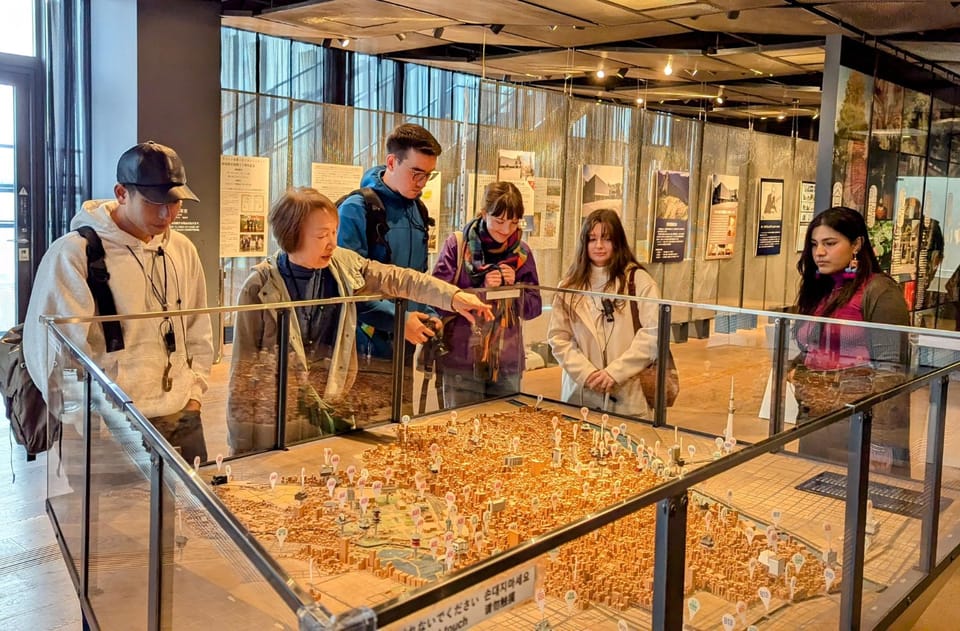
Then you head to the Asakusa Culture Tourist Information Center for about 30 minutes. This is where the tour’s pacing becomes friendly. You’re not only walking—you’re getting oriented, and you may get a view from a contemporary information building area. In the flow of the tour, it acts like a reset button before you step into the busiest temple zone.
This stop also supports the tour’s core idea: Japan’s identity isn’t one-dimensional. It’s layered, and Asakusa shows that layering in real space.
Kaminarimon to Nakamise: When Isolation History Shows Up in Symbols
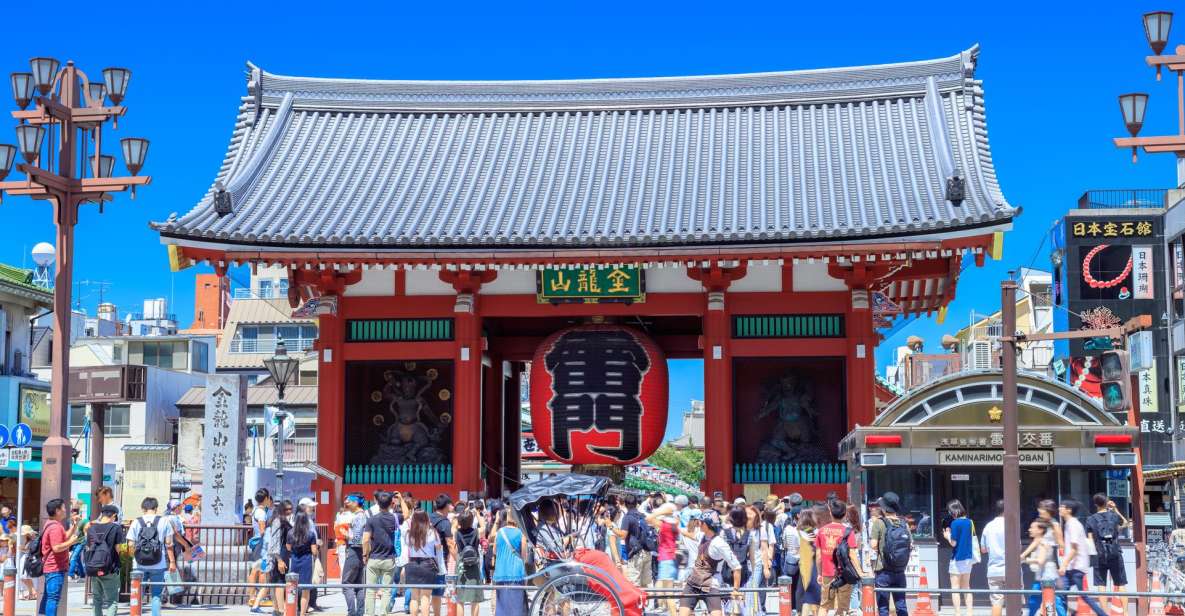
Next come the gates and the entry streets: Kaminarimon (about 15 minutes) and then Nakamise Shopping Street (about 30 minutes).
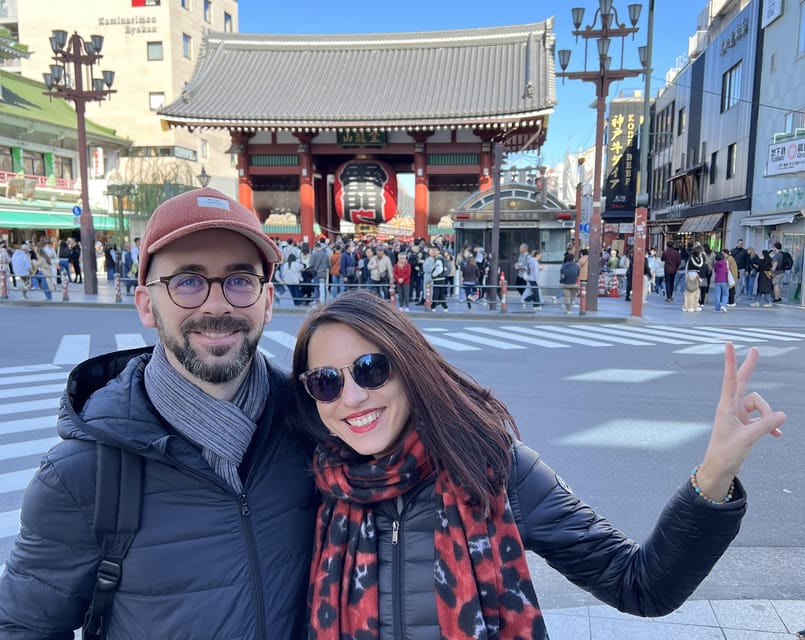
Kaminarimon works as a threshold. In this tour, your guide uses those thresholds to talk about bigger shifts—especially Japan’s story of closure and later opening. You’ll get context for why Japan closed itself, and you’ll learn why it chose the Netherlands as a key trading partner when it isolated itself.
You’ll also see a sign symbolizing the transition from isolation to opening. That moment is more meaningful than it sounds. Instead of memorizing dates, you connect the concept to a real visual cue in the neighborhood.
Then Nakamise takes over the senses. It’s a shopping street experience, but the tour doesn’t treat it like a snack-only detour. You’re walking through a famous flow of visitors and trade, while your guide keeps tying the area back to Japan’s mix of sacred and everyday life.
If you’re hoping for a strict “no shopping” vibe, you’re still going to pass storefronts. The good news is this is framed as a history walk, and the time isn’t structured like a sales route.
You can also read our reviews of more historical tours in Tokyo

Hōzōmon Gate to Sensō-ji: Understanding the Sacred Without the Confusion
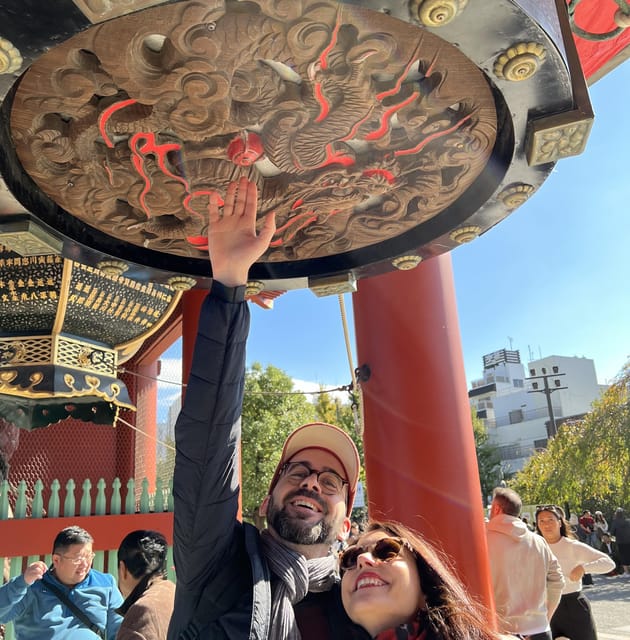
You move on to the Hōzōmon Gate (about 15 minutes) and then spend the most focused stretch at Sensō-ji Temple (about 45 minutes). This is the centerpiece, and the guide’s job here is not only to point things out—it’s to explain what those things mean in Japan’s belief system and cultural evolution.
The tour is built around one key belief theme you’ll revisit across multiple stops: Japan has had major religions for over a millennium, and Shinto and Buddhism can complement each other. You’ll hear how they coexisted peacefully while sharing the same worshipers, and how that shows up in daily life.
That’s a big deal because many visitors come in thinking religions operate like separate “camps.” This tour pushes you toward a more accurate mental model: overlapping practice, not constant conflict.
Also, the guide connects the sacred space to nearby entertainment energy. You’re learning that Japan doesn’t keep the sacred in one separate box. It sits next to the secular.
Asakusa Shrine and Yōgō-dō Pavilion: Two Religions in One Neighborhood Mood
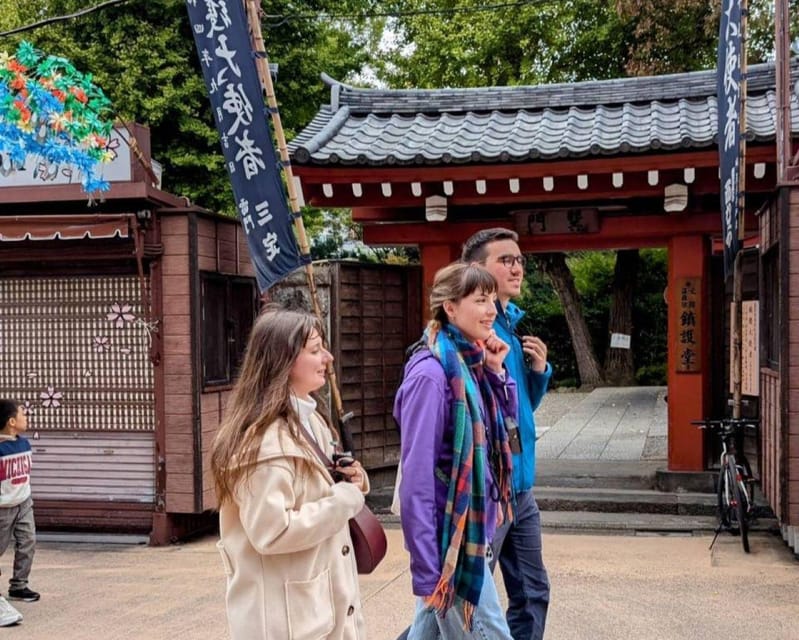
After the Sensō-ji temple time, you go to Asakusa Shrine (about 15 minutes) and then the Yōgō-dō Pavilion (about 15 minutes). These are shorter stops, but the tour’s structure makes them count.
At this stage, the goal is to cement the two-religion idea so it stops feeling abstract. You’ll connect what you learned earlier about Shinto and Buddhism’s coexistence to what you see now in a lived, neighborhood setting.
This is where the tour’s “people’s daily lives” angle starts to click. Even if you don’t consider yourself religious, you’ll understand that these sites are part of a broader rhythm—prayer, tradition, festivals, and community identity all mixed together.
And because the guide keeps bringing up the sacred-versus-secular swing of human nature, you’ll also notice the neighborhood’s dual personality: reverence in one direction, entertainment energy not far away.
Nishi-sandō Shopping Street: Edo-Era Nostalgia on Foot
Next is Asakusa Nishi-sandō Shopping Street (about 15 minutes). This is where the tour shifts from big themes to atmosphere, and it’s an important shift.
You’re encouraged to slow down because the tour wants you to feel the past, not just understand it. You’ll be asked to rewind mentally to Edo-period Japan—described as stepping into a quiet, nostalgic, old-movie-set kind of scene.
This is the part that tends to make the tour memorable, especially if you like texture: old lanes, smaller storefront rhythms, and the sense that places have been evolving for centuries rather than being “built for tourists.”
A small caution: shopping streets can get crowded. Wear shoes that handle uneven pavement, and don’t plan to take long breaks if you have tight timing later in the day.
Mokubakan to Hoppy Street: Postwar Working-Class Energy Next to the Temple District
The final stretch includes Asakusa Mokubakan (about 15 minutes) and then Hoppy Street (about 15 minutes).
Even with these being relatively short, they fit the tour’s central argument: human life keeps switching between sacred and secular. Your guide explores the area right next to the temple that used to be a big entertainment zone before places like Shinjuku and Shibuya became famous for that role.
At Hoppy Street in particular, you’ll get the “old-style Japanese pubs” vibe—working-class postwar vigor and resilience in street form. It’s not just about drinks and food. It’s a cultural snapshot: how people once spent evenings, how performance and everyday social life coexisted with religious identity nearby.
The early-20th-century entertainment angle comes up too, including references to cinemas, vaudeville theaters, and performance halls. Even if you don’t know those genres deeply, the guide ties them back to what the neighborhood became over time.
If you like practical on-the-ground guidance, this section is also where the guide’s crowd handling tends to show. Some guides are praised for steering around bottlenecks and even pointing out restrooms before an urgent moment—exactly the kind of calm competence you’ll appreciate when the street gets packed.
How the Guide Makes It Work: Small Group, Headsets, and Flex for Real People
This is a small group walk, max 8. That doesn’t just mean fewer people—it changes the interaction. Your guide can adjust to how your group moves and what you care about.
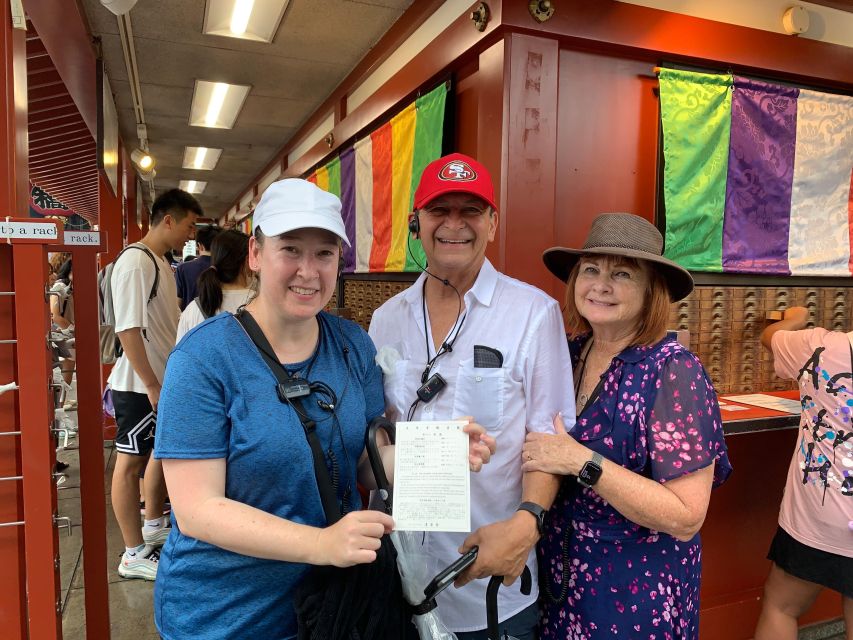
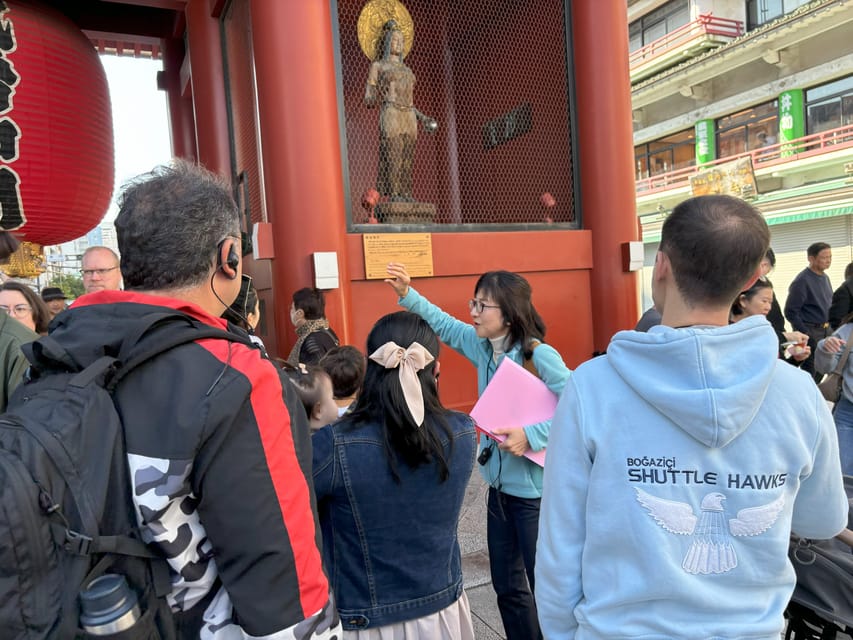
Your tour includes English-speaking certified guides, plus headsets to hear clearly for groups of 3 or more. If you’ve ever tried to listen to history in Tokyo crowds, you know this is not a luxury. It directly improves the value of every stop because you actually catch the details.
In real operation, guides have been singled out for things beyond facts: caring when the weather turns cold and rainy, pacing the group thoughtfully, and giving attention to photo spots and less-obvious corners.
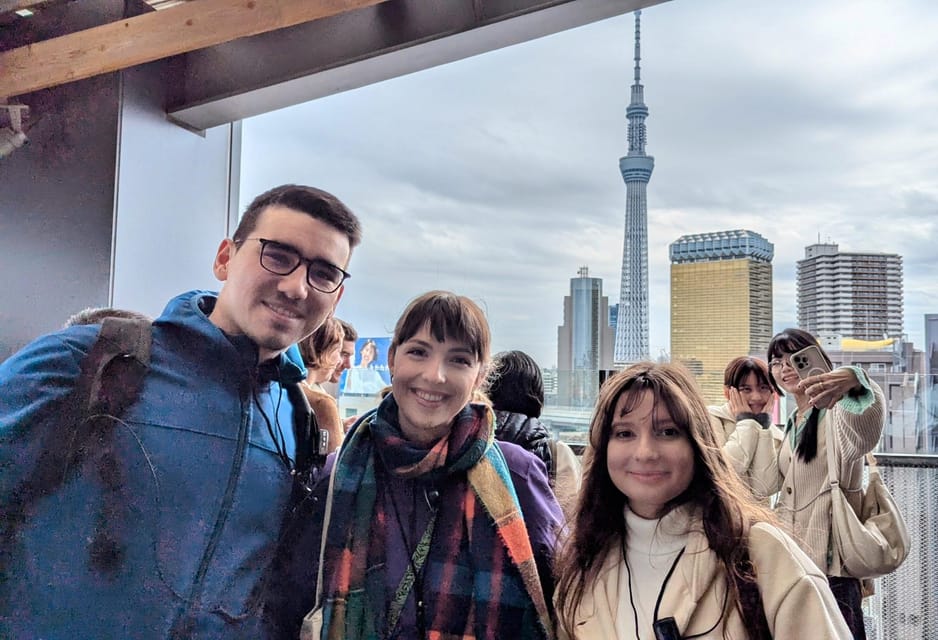
You might also get small cultural extras during the storytelling. One example shared by a prior group involved a quick wordplay-style explanation around Tokyo Skytree’s height reading as roku-san-yon. Even if you never visit Skytree on this tour, that kind of detail helps you notice how language and culture connect in daily life.
Timing, Walking, and Weather: Planning Your Half Day
The tour is structured to run in all weather conditions, so dress accordingly. That’s not a throwaway line. Tokyo street walking can go from pleasant to miserable fast when rain starts.
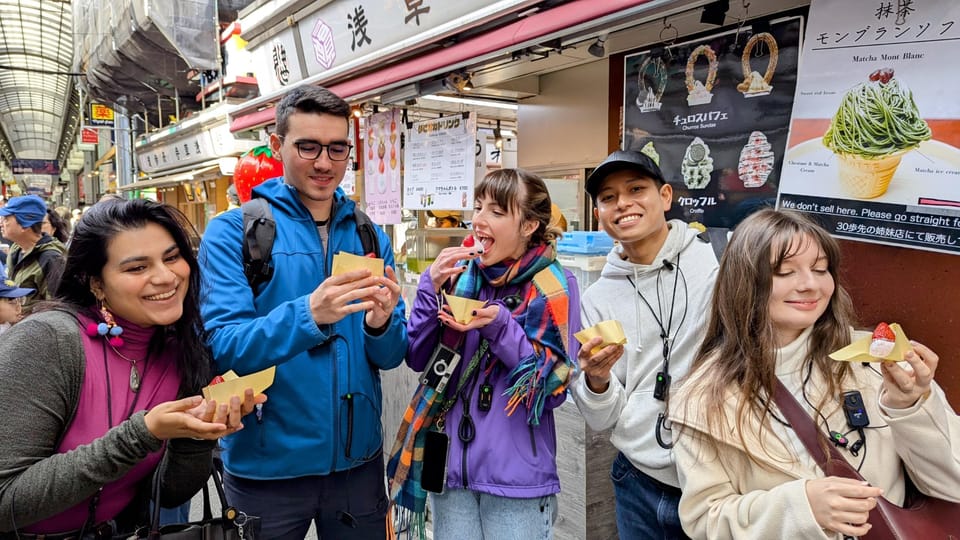
Because it’s a moderate-walking experience, you’ll be happier if you treat it as a half-day commitment: comfy shoes, water ready, and a simple snack mindset. You’ll also get a selection of traditional sweets and snacks during the walk, so you won’t feel like you’re stuck waiting for dinner.
If you’re traveling with kids, note that children younger than 6 can join for free. It’s recommended for adults due to the history focus, but families are welcome.
Who Should Book This Asakusa History Walk
You’ll get the most out of this tour if you:
- Want big-picture context for Japanese history, not only a photo route
- Are curious about how Shinto and Buddhism function together in real life
- Like cultural comparisons, including Japan and the West connections
- Enjoy sacred sites but also love the “street life” side of Japan—pubs, lanes, entertainment history
- Prefer a small group and clear communication (headsets help a lot)
Skip it if:
- You need step-free or mobility-friendly routing, since it’s marked not suitable for mobility impairments
- You want a purely relaxed walk with zero history content
- You’re only interested in quick temple sightlines and don’t care about the why
Should You Book This 3.5-Hour Big-Picture History Walk?
If your goal is to leave Asakusa understanding Japan—closure and reopening, religious coexistence, and how sacred and secular share the same streets—this is a strong pick. The small group size, English guide, headsets, and the inclusion of snacks make it feel practical, not like a “pay for a lecture” experience.
Book it if you want a guided story that helps you read the neighborhood like a map. Skip it if walking is a problem for you or if you’d rather spend the time doing independent sightseeing at your own pace.
FAQ
How long is the Asakusa history walk?
The tour lasts 210 minutes (about 3.5 hours).
How big is the group?
The maximum group size is 8 participants.
Where do I meet the tour?
Meet in front of Burger King next to Exit 4 of Asakusa subway station (Ginza line, G19). Step outside when you reach Exit 4.
Is the tour in English?
Yes. The tour includes an English-speaking certified guide, and English audio support is also included.
Is the tour offered in bad weather?
It operates in all weather conditions, so dress appropriately for rain or cold.
What’s included in the price?
Included are headsets to hear the guide clearly for groups of 3 or more, a selection of freshly made Japanese traditional snacks and sweets, and an English-speaking certified guide (with English audio support included).
Do I need to bring anything?
Bring comfortable shoes and water. Bottled water is recommended, and vending machines are available.
Is the tour suitable for people with mobility impairments?
No. It is marked not suitable for people with mobility impairments.