REVIEW · TOKYO
Shibuya: Ramen Dojo Tokyo | Make All 3 (Tonkotsu/Shoyu/Miso)
Book on GetYourGuide →Operated by Viyago Japan · Bookable on GetYourGuide
Ramen-making sounds fancy until you’re kneading dough and cutting noodles yourself. In Shibuya, this workshop turns Tokyo street-food obsession into a do-it-yourself skill, centered on three ramen styles and fresh noodle making with a pro machine. I love that the class stays beginner-friendly in English while still feeling hands-on, and I also like that you don’t just taste one bowl—you line up tonkotsu, shoyu, and miso side by side. One consideration: the studio is stairs only, and it uses ingredients with common allergens like wheat, egg, soy, chicken, and pork.
The session runs close to Shibuya Station (about a 10-minute walk), so it fits nicely between shopping and dinner plans. You’ll work through a timed flow—no lingering, no waiting around—then end by eating what you made, with photo time built in.
In This Review
- Key things I think you’ll care about
- Where Ramen Dojo Tokyo fits in your Shibuya day
- What you actually make: tonkotsu, shoyu, miso (and why that’s smart)
- The 90-minute flow: what happens when
- 1) Check-in and briefing (10 minutes)
- 2) Chicken chashu prep (5 minutes)
- 3) Noodle making (20 minutes)
- 4) Chicken chashu finishing (10 minutes)
- 5) Boiling noodles and soup preparation (10 minutes)
- 6) Plating (5 minutes)
- 7) Tasting and photo time (30 minutes)
- The instructors and the vibe (Shibuya, but make it calm and focused)
- Price and value: does $64 make sense for 90 minutes?
- What to wear, what to bring (and what not to stress about)
- Dietary reality check: who this works for, and who should plan differently
- How beginner-friendly is it, really?
- Tips to get the best outcome (so you leave happy, not rushed)
- Should you book Ramen Dojo Tokyo in Shibuya?
- FAQ
- How far is the studio from Shibuya Station?
- How long is the class?
- What size is the group?
- Is the workshop taught in English?
- What ramen styles will I make and taste?
- Do I get to eat what I cook?
- What’s included in the price?
- Are there dietary restrictions?
- What should I wear?
- Is it okay to bring a camera or take photos?
- Can everyone access the studio?
Key things I think you’ll care about
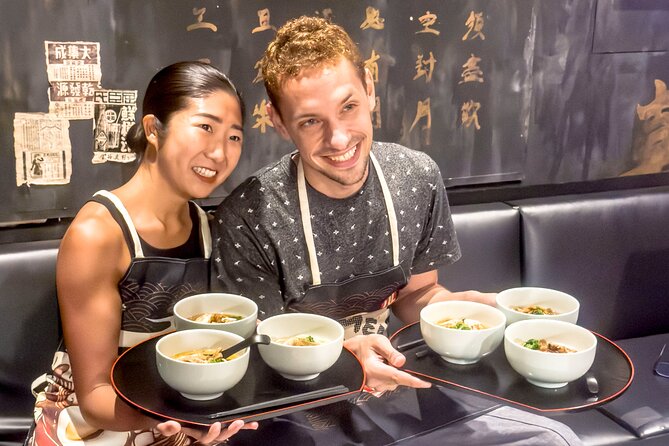
- Three ramen styles in one session: tonkotsu, shoyu, and miso, tasting as a trio
- Fresh noodles from scratch: knead, roll, and cut using a professional noodle machine
- Real flavor control: adjust soup base strength and build mini bowls with toppings
- Small group max 8: enough attention for beginners without feeling crowded
- English instruction with hands-on support: instructors like Kazuki, Kensei, Arata, and Ivy are repeatedly praised
- Good value for time: 90 minutes that ends in a satisfying meal plus a digital recipe
Where Ramen Dojo Tokyo fits in your Shibuya day
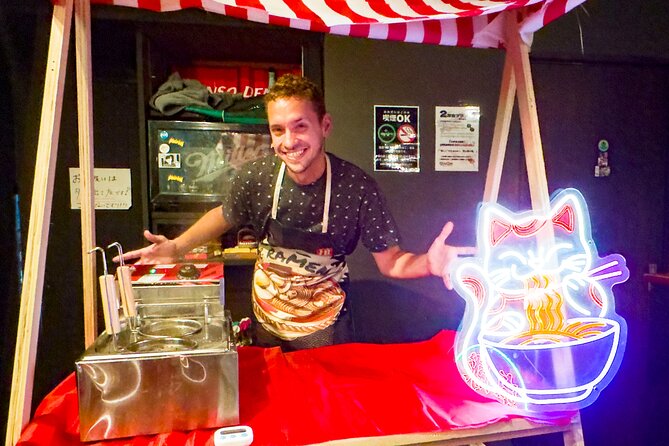
Ramen Dojo Tokyo is in Meguro-ku, with the studio described as a short walk from Shibuya Station. That matters because ramen classes in Tokyo can sometimes eat up your whole afternoon with train transfers. Here, you can realistically do this workshop right before dinner or after a Shibuya wander and still keep your evening flexible.
The class is also designed to start and end at the same studio. That’s helpful if you don’t want a “show up, travel, then return” day. You’ll check in, get briefed, cook together, then sit down for tasting and photos, and walk out ready to keep exploring Shibuya.
You’re looking at 90 minutes total, for a maximum group size of 8. For me, that combo is the sweet spot: long enough to learn real steps, short enough that it doesn’t feel like homework.
You can also read our reviews of more tours and experiences in Tokyo.



What you actually make: tonkotsu, shoyu, miso (and why that’s smart)
Most ramen experiences focus on eating. This one focuses on understanding. You’re not just tasting differences between broths—you’re participating in the parts that create those differences: noodle texture and soup intensity.
The three styles in this workshop are:
- Tonkotsu: rich, pork-based style
- Shoyu: soy-sauce based style
- Miso: fermented flavor style with extra depth
You make mini bowls that let you compare side by side. That comparison is the payoff. If you’ve ever wondered why one ramen tastes “thicker” or “brighter,” this format gives you a practical answer: it’s not magic; it’s ingredients and strength.
And a detail worth knowing: one review mentions that the long-cook parts of the broths are handled so you can still participate without a 10-hour stock project. In other words, you’re not doing everything from raw bones at home-day pace. You’re doing the parts that teach you how to recreate the result.
The 90-minute flow: what happens when
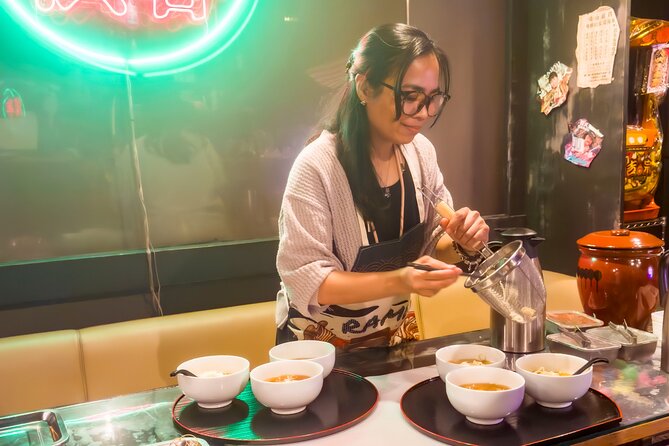
This class is tight, with a schedule that keeps things moving. Here’s how your time breaks down, and what it feels like in practice:
1) Check-in and briefing (10 minutes)
You’ll arrive, get oriented, and get a clear explanation of the steps. This matters because ramen has a lot of little rules—dough texture, cutting thickness, how soup gets adjusted—so the briefing is how you avoid guesswork.
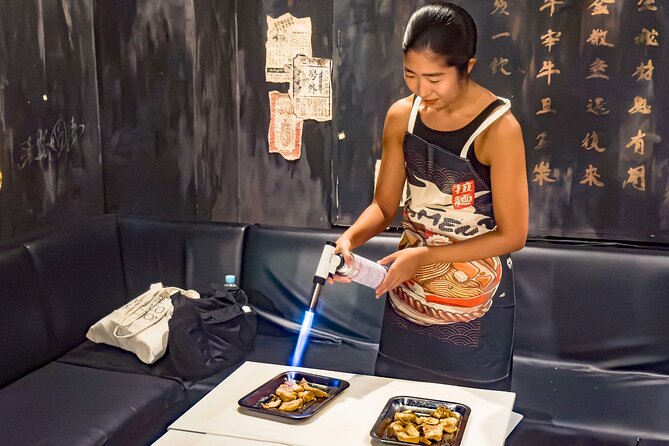
2) Chicken chashu prep (5 minutes)
You’ll start on the chicken chashu. Even though it’s chicken, you’re learning the same concept as classic ramen toppings: the meat component adds contrast and richness, so the goal is to make it flavorful and easy to slice into the bowl.






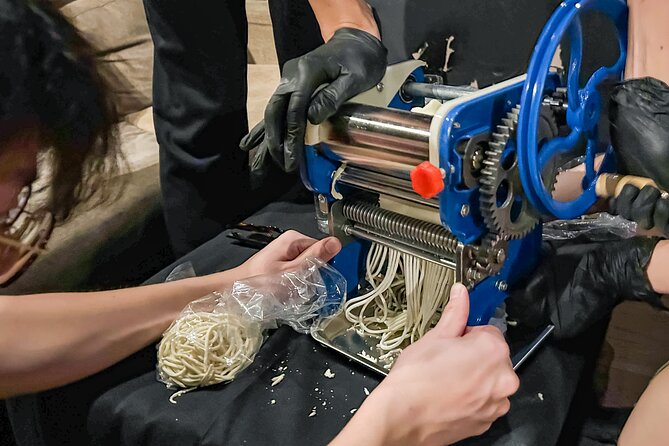
3) Noodle making (20 minutes)
This is the hands-on highlight. You’ll:
- knead the dough
- roll it
- cut it with the noodle cutter using the professional machine
The real learning here is physical. Dough changes as you work it, and noodles depend on consistency. One review emphasizes learning noodle technique that you can repeat at home, and another notes that instructors often guide you toward hand technique rather than relying only on machinery. So you’ll likely come away with a better feel for what to do when you recreate it later.
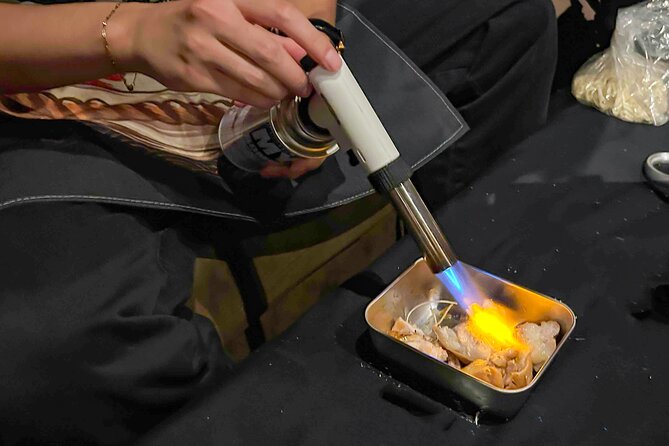
4) Chicken chashu finishing (10 minutes)
You’ll finish the chashu so it’s ready for the bowls. This is the part that turns your ingredient prep into something ramen-shop ready.
5) Boiling noodles and soup preparation (10 minutes)
This is where timing matters. You’ll handle boiling and prep so everything lines up for plating. Expect instruction on how the soup bases are prepared and how you’ll make them match your taste preferences.
6) Plating (5 minutes)
This part is faster than you might think. You’ll assemble your ramen mini bowls with noodles, soup, chashu, and toppings. The short plating window keeps the tasting session fun and prevents the class from dragging.
7) Tasting and photo time (30 minutes)
Finally, you eat. You’ll taste the three styles you made as a trio, and you’ll have a window for photos. Photography is welcome, and the studio even asks you to use #RamenDojoTokyo if you post.
The instructors and the vibe (Shibuya, but make it calm and focused)
The class is small-group, English-led, and guided by staff members who show up repeatedly in positive feedback—names like Kazuki, Kensei, Arata, Atari, Kuzuki, Ivy, Onodera, and Rin-san show up across recent sessions.
What I like about the way this experience is run is that you’re not left to “figure it out.” In many workshops, the instructor gives a demonstration and then steps back. Here, the best comments point to step-by-step guidance and quick answers when you ask questions.
You’ll also notice something else: the vibe feels like a shared workshop, not a performance. People describe the atmosphere as fun, relaxed, and supportive, and that matters when you’re standing over dough and trying not to turn your apron into a flour snow globe.
Price and value: does $64 make sense for 90 minutes?
At $64 per person for 90 minutes, you’re paying for three things at once:
1) a hands-on cooking class (not just tasting),
2) ingredients and equipment use,
3) the meal: three mini bowls plus tasting time.
That adds up fast because you’re getting both skill and food. If you’ve been spending your Tokyo budget mostly on meals, this is a shift: it’s closer to paying for a dinner that also teaches you what to do next time.
It also helps that the class is capped at 8. Small group instruction is usually where value shows up in the real world. If you’re one of many people at a big station, you spend time waiting. Here, the structure is built to keep you involved.
What to wear, what to bring (and what not to stress about)
You’ll get an apron loan. That’s important because the class explicitly says you may get flour on your clothes during noodle making. Wear something you’re happy to spot. If you’re doing this between activities, plan on a quick wipe-down and accept that you might smell a little ramen afterward—like, in a good way.
Also, wear shoes that are comfortable for a kitchen setting. The studio has stairs only, so don’t assume you can skip them.
You don’t need special gear. The class provides the kitchen equipment, and you’ll get a digital recipe after the class, which is one of those small but practical touches—so you can recreate your results instead of forgetting them after jet lag.
Dietary reality check: who this works for, and who should plan differently

This workshop uses ingredients that include wheat (gluten), egg, soy, chicken, and pork. The information also notes that they cannot guarantee complete prevention of cross-contamination.
So if you have:
- severe wheat/gluten allergy or celiac disease
- severe egg or soy allergy
- severe airborne flour sensitivity
…then this isn’t suitable based on the provided info.
For dietary needs, partial accommodation may be possible for no chicken/pork, vegetarian, and vegan, but you need to inquire in advance. That’s a good thing to do early, not the day-of. If you’re trying to follow a strict vegan or religious diet, the data says strict compliance may not be possible.
How beginner-friendly is it, really?
Beginner-friendly here doesn’t mean “no work.” It means you get instructions in English with attentive support in a small group. You still knead, roll, and cut noodles, and you still build three bowls. But you’re not doing it blindly.
If you’re nervous about cooking, this is the kind of class where nerves make sense and then get handled quickly: the instructor leads the process step by step, and you can ask questions while you’re actively working.
One repeated theme in the feedback is how the method is understandable enough to do back home. That’s what you want from a ramen class. A lot of cooking experiences end with photos and vague memories. Here, you’re building a repeatable process.
Tips to get the best outcome (so you leave happy, not rushed)
A few practical moves that make a difference:
- Go hungry. The class ends with three mini bowls, and people mention it can be filling.
- Don’t schedule a heavy meal right before. If you’re stuffed, you’ll miss the whole point of comparing broths and textures.
- Arrive on time, not early. Doors open 10 minutes before, and you’re asked not to arrive earlier than that because there’s no waiting area. Late arrivals (5+ minutes) may need to join in progress or could be refused for safety and class flow.
- Use the recipe after. You’ll get a digital recipe after class. Save it immediately on your phone so you can cook later while the steps still make sense.
Should you book Ramen Dojo Tokyo in Shibuya?
Book this if you want a Tokyo food experience that teaches a real skill, not just a meal. It’s especially good for:
- couples or friends who want a fun shared activity
- beginners who need English guidance and step-by-step support
- anyone who loves comparing ramen styles and wants to understand why they taste different
- people who want to take home a digital recipe and actually cook again
I’d skip it if you need strict dietary compliance, have severe allergy concerns tied to wheat/egg/soy, or you can’t use stairs.
If you’re doing Shibuya and you want something that feels both practical and memorable, this is a solid pick. You’ll leave with noodles you made, bowls you can compare, and a recipe you can use long after the lights of Shibuya fade.
FAQ
How far is the studio from Shibuya Station?
The studio is described as about a 10-minute walk from Shibuya Station.
How long is the class?
The duration is 90 minutes.
What size is the group?
The group is limited to a small group with a maximum of 8 guests.
Is the workshop taught in English?
Yes. The class is conducted in English (and Japanese instructors are listed).
What ramen styles will I make and taste?
You’ll make and taste three ramen styles: tonkotsu, shoyu, and miso.
Do I get to eat what I cook?
Yes. You’ll sit down at the end and enjoy the ramen you made, with tasting and photo time included.
What’s included in the price?
Included are the English-speaking instructor, all ingredients and use of kitchen equipment, tasting of three mini bowls, apron loan, and a digital recipe provided after the class.
Are there dietary restrictions?
The class isn’t suitable for severe wheat/gluten, egg, or soy allergies, celiac disease, severe airborne flour sensitivity, or guests needing strict dietary compliance. Partial accommodations may be possible for no chicken/pork, vegetarian, and vegan with advance inquiry.
What should I wear?
You’ll receive an apron, but you may get flour on your clothes during noodle making, so dress accordingly.
Is it okay to bring a camera or take photos?
Photography is welcome, and the studio asks you to use #RamenDojoTokyo if you post.
Can everyone access the studio?
The accessibility note says the studio has stairs only, so it may not work for guests who can’t use stairs.