REVIEW · TOKYO
Samurai Training in Tokyo: Swords, Bushido & Mental Discipline
Book on Viator →Operated by INTERNATIONAL GOSHIN-BUDO ASSOCIATION · Bookable on Viator
Samurai training without the museum vibes? That is the appeal here. You get a private, English-friendly lesson in a Tokyo dojo, built around etiquette, meditation, and hands-on weapon drills. I also love the practical payoff: you leave with a personalized scroll-style certificate that spells out what you learned.
Two other strong points: the pace is beginner-friendly (so you are not just watching), and the instructors keep it welcoming enough that questions are encouraged. One possible drawback: this is a real training format. If you expect pure history sightseeing, you might find it more physical and focused than you planned.
In This Review
- Samurai Training in Kojimachi: What Makes This Private Class Different
- Key Highlights You Should Care About
- A Dojo Lesson That Starts With Etiquette, Not Flash
- Breathing and Meditation: Why the Calm Part Isn’t Optional
- The Training Build: Wooden Sword Drills, Heavy Stick Strength, and Silent Walking
- Real Combat Sword Techniques and Learning One Authentic Kata
- One-on-One Sparring: Guided Practice Instead of Performing
- Matcha Green Tea and Traditional Snacks: A Real Break
- Dress-Up Moment, Commemorative Photo, and Your Name on the Scroll
- Price and Logistics: Is It Good Value at $85.66 for a Private Lesson?
- Who This Is Best For (and Who Might Want Something Else)
- Should You Book This Samurai Training in Tokyo?
- FAQ
- FAQ
- How long is the samurai training session in Tokyo?
- Is the experience private?
- Is the training offered in English?
- What training equipment or clothing is included?
- Do you practice sword techniques or only watch a demonstration?
- What do you receive at the end of the experience?
- Is matcha and food included?
- Where does the experience start?
- What transportation is included?
- What is the cancellation window?
Samurai Training in Kojimachi: What Makes This Private Class Different
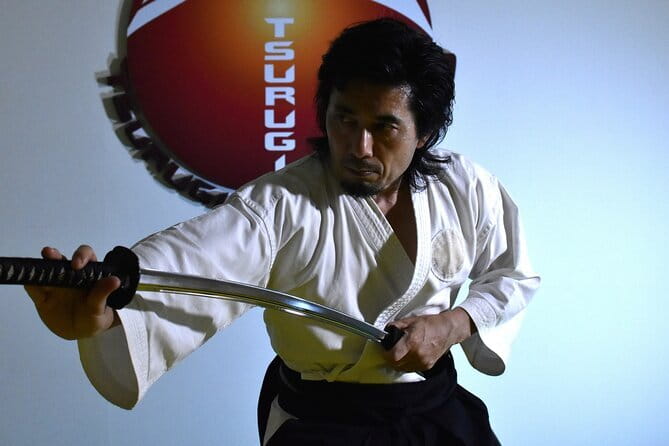
This is set up like training first, storytelling second. The session takes place in the Kojimachi district at a dojo connected to the inner grounds of Edo Castle, so the setting feels like more than a backdrop. You start with samurai etiquette and the spirit of Bushido, then move into breathing and meditation to settle your mind before any blade work.
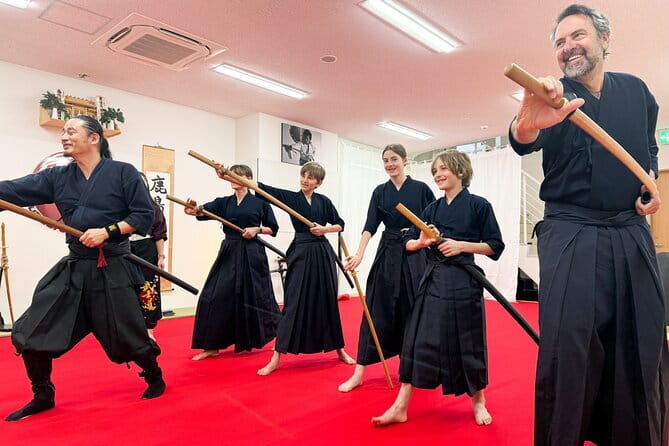
And then you actually work. You use a wooden sword for drills, practice posture with silent walking, and build strength with a heavy stick. Later, you learn one combat kata and apply what you practiced in one-on-one sparring with an instructor. It is structured enough to be safe and beginner-accessible, but it still feels like you are doing the thing, not just learning about the thing.
The reviews’ vibe matches what the format promises: people repeatedly call it a dedicated lesson with real instruction, not a quick photo stop. A common theme is warmth from the instructors and translators, including names like Sensei Oedo and Yukiji being mentioned in supportive, welcoming ways.
Key Highlights You Should Care About
- Private Q&A time so you can ask follow-ups instead of guessing from a crowd
- Bushido + meditation before sword work, so the mindset comes first
- Hands-on drills with a wooden sword, plus strength work using a heavy stick
- Silent walking and posture focus that tests your control, not just your arms
- One kata and one-on-one sparring so you practice under guidance
- Certificate scroll with your name plus a commemorative photo in traditional attire
You can also read our reviews of more tours and experiences in Tokyo.



A Dojo Lesson That Starts With Etiquette, Not Flash
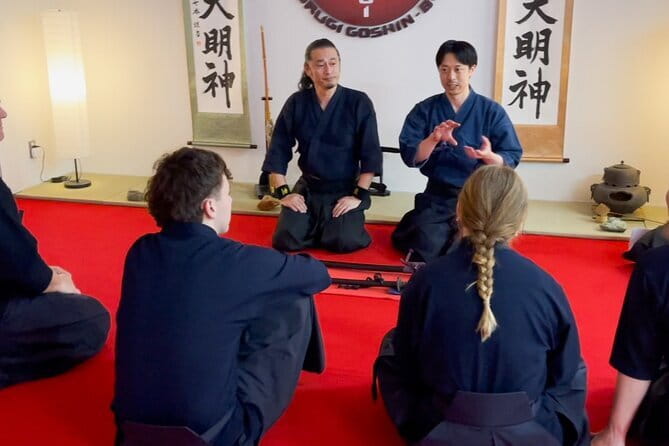
You will begin at the dojo in Kojimachi, where the class starts by teaching the basics of samurai etiquette and the philosophy behind Bushido. This matters because it changes how the training feels. Even if you do not know Japanese terms, you get the idea: training is about respect, control, and discipline—before speed or drama.
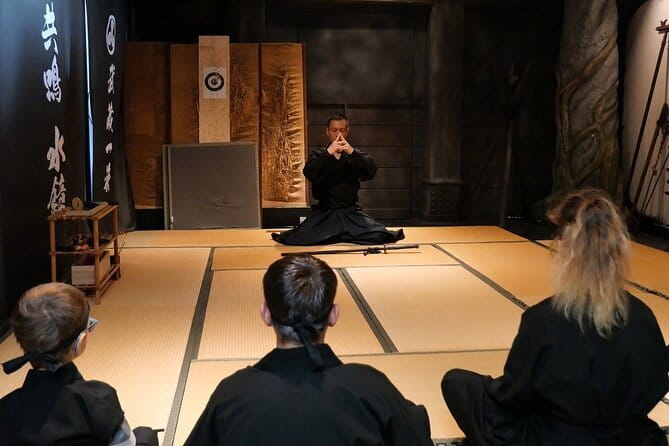
Next comes breathing and meditation exercises. Expect quiet focus. This part is not just a calm-down interlude. It sets up the rest of the session, because breathing and mental steadiness are linked to posture and timing in movement. If you tend to rush when learning something new, you will likely feel the difference when you slow down here.
A good sign: the experience is described as beginner-friendly, and the whole session is in English. That combination helps you follow instructions without feeling lost.
Breathing and Meditation: Why the Calm Part Isn’t Optional
Many sword experiences skip the mental side. This one does not. You will learn breathing techniques and do meditation exercises before you touch the wooden sword drills. The goal is to calm the mind so you can actually receive instruction—then perform with intention.
In practical terms, this is a relief for first-timers. You do not need to already know how to hold a sword correctly. You start with how to control yourself: breath, attention, and posture. It is also where questions can make a difference. If you are unsure about what Bushido means beyond the slogan version, this is when you can ask and get context in real time.
The Training Build: Wooden Sword Drills, Heavy Stick Strength, and Silent Walking
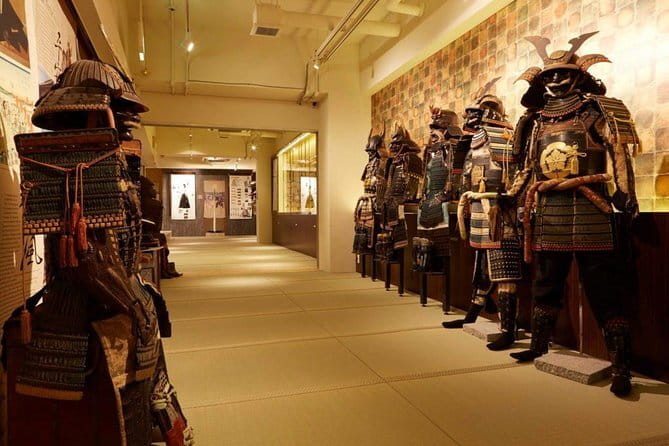
After the mindset portion, the session transitions into physical training blocks.
First up: wooden sword drills. Using wood instead of a blade keeps the focus on form, distance, and movement mechanics. You learn the shapes and transitions needed for later combat techniques without turning the class into a risky free-for-all.
Then comes strength training with a heavy stick. Again, this is about control. It is not only about arm strength; it supports the kind of stable, grounded movement that shows up in good sword technique.
And then the silent walking exercises. Yes, it sounds almost too simple. The point is posture and focus. You are testing whether you can move with discipline even when nobody is counting your strikes. If you enjoy training your body and attention together, this part usually lands well.
This whole middle section is where the class earns its reputation as a real lesson. You do not just try a move once. You practice enough to feel yourself improve during the session.
Real Combat Sword Techniques and Learning One Authentic Kata
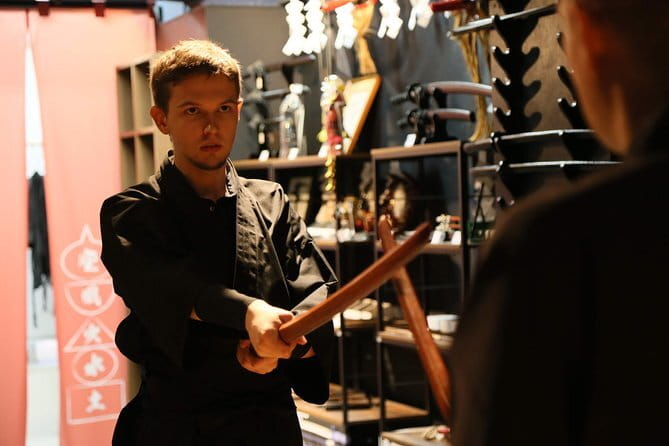
Next you move into real combat sword techniques. This is the part where people often expect a quick demo and a single practice attempt. Instead, you learn an authentic combat kata—one complete sequence—designed to be practiced as a unit rather than random moves.
A kata is valuable because it gives you a structure. It also gives you something to remember later. You are not leaving with a blur of gestures. You are leaving with one set of technique steps that makes sense as a form.
The experience stays beginner-friendly, but it still aims for authenticity. You also get instructor guidance for how the techniques should feel and how they should be performed. That is why the format works well for first-time learners: you can follow clear cues, build muscle memory, and ask questions along the way.





One-on-One Sparring: Guided Practice Instead of Performing
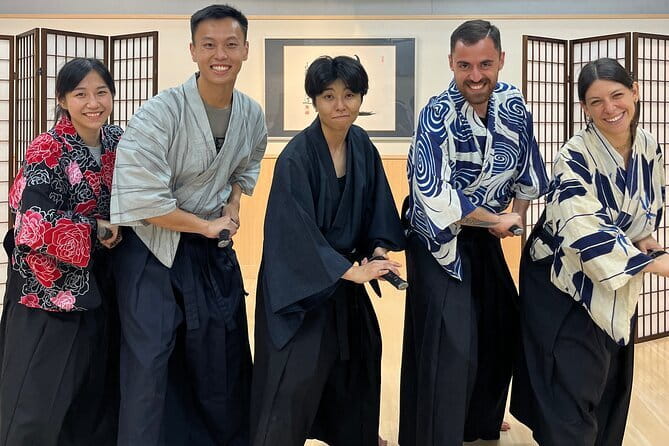
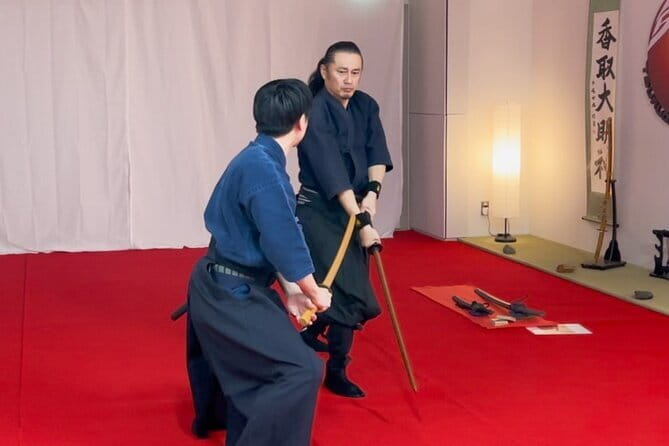
The session ends the way many training programs should: with application. You apply your learned techniques in one-on-one sparring with an instructor.
This is not described as a free-for-all. It is framed as practicing under guidance. For you, that means you get feedback while you move, rather than guessing whether your form is correct. You can also learn where you are over-committing or where your stance needs adjustment.
This is also where the Bushido mindset shows up in real time. When someone is watching your discipline and posture closely, you tend to pay attention. That is the hidden value of the 2-hour format: it forces focus, then reinforces it with feedback.
Matcha Green Tea and Traditional Snacks: A Real Break
Midway through, you get a break with matcha green tea and traditional Japanese sweets. This matters more than you might think. After posture work, sword drills, and breathing exercises, your brain needs a reset.
In a quiet cultural setting, you can recover and ask questions without feeling like the training clock is swallowing every second. Also, if you came for cultural immersion, this is a straightforward, tangible piece of it—simple, traditional, and tied to the experience’s tone.
Toilet access is available in the building, which helps keep your focus on training rather than logistics.
Dress-Up Moment, Commemorative Photo, and Your Name on the Scroll
At the end, you receive a personalized certificate in a scroll-style format. It includes your name and the techniques you learned. That kind of souvenir is practical because it gives you a record of the session, not just a pretty paper memory.
You also wear traditional samurai attire and take a commemorative photo. This is a fun capstone, and it is also useful: you have a moment where the training becomes a personal experience you can actually take home.
If you care about authenticity, the combo of certificate + photo is a smart pairing. The certificate keeps it grounded in what you practiced; the photo gives you the keepsake side.
Price and Logistics: Is It Good Value at $85.66 for a Private Lesson?
At $85.66 per person for about 2 hours, you are paying for something most sightseeing tours cannot provide: coaching. This is a private experience with instruction in English and direct interaction with an instructor, plus a uniform rental, training support, a matcha break, and the certificate.
Two details affect value in a big way:
- Private format means your time is not split across a large group.
- Included training items and instructor-led drills mean you are not buying extra rentals or paying for a separate guide just to understand what you are doing.
It also helps that the experience is booked on average about 37 days in advance. That is a hint that spots may fill. If you want a specific time window, booking earlier is wise.
Location-wise, it is near public transportation, and you meet at Samurai Sword Tokyo at 4-chōme-2-1 Kōjimachi, Chiyoda City. The activity ends back at the meeting point. It runs with a mobile ticket, so plan to have your ticket ready on your phone.
One note: private transportation and an air-conditioned vehicle are not included. If you are coming from farther out, build in normal Tokyo transit time and weather planning.
Who This Is Best For (and Who Might Want Something Else)
This fits best if you want more than a history lecture. You get Bushido philosophy, meditation exercises, and structured practice with a wooden sword and authentic kata. It is especially good if you like doing a skill with feedback—posture, timing, and technique.
It is also a strong pick for beginners because the session is described as beginner-friendly and runs in English. People can participate, and the class includes support through an English guide on sword skills, Bushido, and samurai history.
You might consider a different type of experience if your ideal Tokyo day is mostly passive: parks, viewpoints, and long guided walks. This is training time. You should expect effort and focus, not just watching.
Should You Book This Samurai Training in Tokyo?
I think you should book it if you want a hands-on, private skill session that actually teaches you technique, not just lore. The biggest reason is the combination: etiquette + meditation + drills + one kata + guided sparring, topped with matcha and a certificate you can keep.
If you are curious about samurai culture but want a light-touch experience with minimal physical activity, this one may feel too structured. But if you are willing to learn and take direction, it is one of those rare experiences where the souvenir is connected to real effort you did with your own body.
FAQ
FAQ
How long is the samurai training session in Tokyo?
The experience runs for about 2 hours.
Is the experience private?
Yes. It is a private activity, meaning only your group participates. A minimum of 2 participants is required.
Is the training offered in English?
Yes. The experience is in English and described as beginner-friendly.
What training equipment or clothing is included?
You get samurai uniform rental included. You will also do wooden sword drills as part of the training.
Do you practice sword techniques or only watch a demonstration?
You learn sword skills as part of the session. The included program also mentions a live sword demonstration by the instructor, plus practice that includes one combat kata and one-on-one sparring.
What do you receive at the end of the experience?
You get a personalized scroll-style certificate with your name and the techniques you learned, plus a commemorative photo. You also wear traditional samurai attire for the photo moment.
Is matcha and food included?
Yes. You get authentic matcha green tea and Japanese sweets during the break.
Where does the experience start?
The meeting point is Samurai Sword Tokyo, 4-chōme-2-1 Kōjimachi, Chiyoda City, Tokyo 102-0083, Japan. The activity ends back at the meeting point.
What transportation is included?
No private transportation is included. The description notes that an air-conditioned vehicle is not included, so you will rely on public transit to get there.
What is the cancellation window?
Cancellation is free up to 24 hours in advance for a full refund. If you cancel less than 24 hours before the start time, the amount paid will not be refunded.