REVIEW · TOKYO
Private Tokyo’s Famed Tsukiji Fish Market Tour
Book on Viator →Operated by GuruGuruTour Tokyo · Bookable on Viator
You can skip the Tsukiji guesswork. This private tour strings together the Tsukiji market area with three meaningful stops, so you’re not just wandering and hoping you’re doing it right. I like how it pairs market-time with culture (temple + shrine), and I really like the practical pacing: snacks are included so you don’t crash mid-walk. One thing to keep in mind is that the market segment doesn’t include admission, so you’ll want to be ready for stalls and street-style browsing rather than a single ticketed “museum” experience.
In particular, I love that the guide focus is on what visitors usually miss: etiquette, what to look for, and how not to step on local routines. The tour also runs on a private setup, so you’re not queued behind strangers when questions pop up (like what you’re seeing and how to behave around vendors). The main drawback is simple: it’s short—about 2 to 3 hours—so you’ll get the highlights, not a slow, full-day market immersion.
Stops are arranged for flow: start with the Tsukiji Hongwanji Temple area, then head into Tsukiji Jogai Market for browsing and snack sampling, and finish at Namiyoke Inari Shrine where you can learn the proper way to visit. If you want a smooth, first-time-friendly Tsukiji experience with a local voice (like Mr. Guru-San’s vibe from past groups), this format tends to hit the mark.
In This Review
- Key things that make this tour worth your time
- Tsukiji in 2–3 hours: why this tour’s format works
- Start at Tsukiji Hongwanji Temple (and why it’s a good opener)
- Tsukiji Jogai Market: etiquette, street bites, and not getting lost
- Namiyoke Inari Shrine: the short stop that adds meaning (and photos)
- What you actually get for the money ($84.54 per person)
- Logistics that matter: timing, tickets, and how long it lasts
- Who this tour suits best (and who might want something else)
- About the guide: the big difference is tone, not just facts
- Should you book this Private Tokyo Tsukiji Fish Market Tour?
- FAQ
- FAQ
- How long is the Tsukiji fish market tour?
- What is the price per person?
- Does the tour include snacks?
- Is this a private tour?
- What stops are included in the itinerary?
- Where is the meeting point?
- Do I need admission tickets for each stop?
- Is lunch included?
Key things that make this tour worth your time
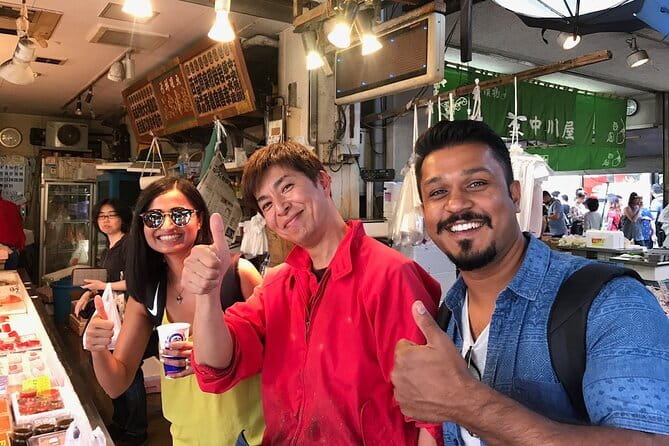
- Private, guide-led navigation: less language friction, fewer awkward moments around vendors and customs
- Insider etiquette help: you’ll know what’s appropriate before you’re standing there
- Snacks included: a real energy saver while you walk the market lanes
- Culture stops that make the area make sense: Tsukiji Hongwanji Temple and Namiyoke Inari Shrine add context
- Short and efficient timing: a good fit if you want Tsukiji without burning half a day
Tsukiji in 2–3 hours: why this tour’s format works
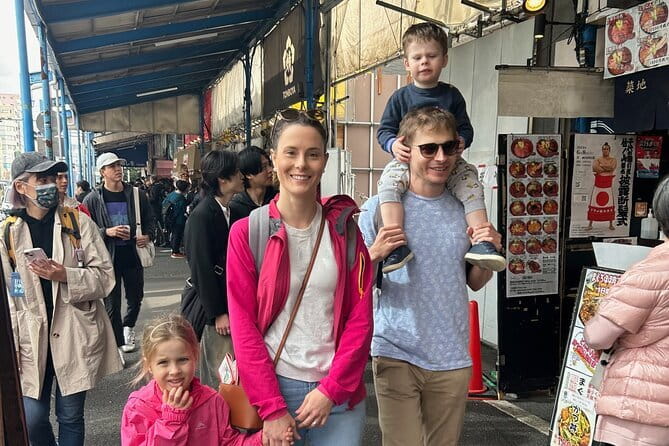
Tsukiji is famous enough that it can feel confusing. You’ll see carts, vendors, and people moving with purpose, but visitors often get stuck on two problems: not knowing where to go next and not knowing how to behave. This private tour solves both by giving you a guide’s shortcut through Tsukiji Hongwanji Temple, the Tsukiji Jogai Market area, and Namiyoke Inari Shrine—so you’re not relying on luck or guesswork.
The timing is also smart. At roughly 2 to 3 hours, you can fit it into a Tokyo morning without losing the rest of your day. That matters if you’re planning a multi-stop trip across the city. Also, the tour includes snacks, which sounds small until you’re half-way through a market walk and suddenly realize you’re running on caffeine and optimism.
The private setup is the other big piece. The tour is designed for just your group, so questions don’t get swallowed by a crowd. If you want someone to explain what you’re looking at—especially when language is a barrier—this is a practical way to get it without turning your day into a scavenger hunt.
You can also read our reviews of more private tours in Tokyo



Start at Tsukiji Hongwanji Temple (and why it’s a good opener)
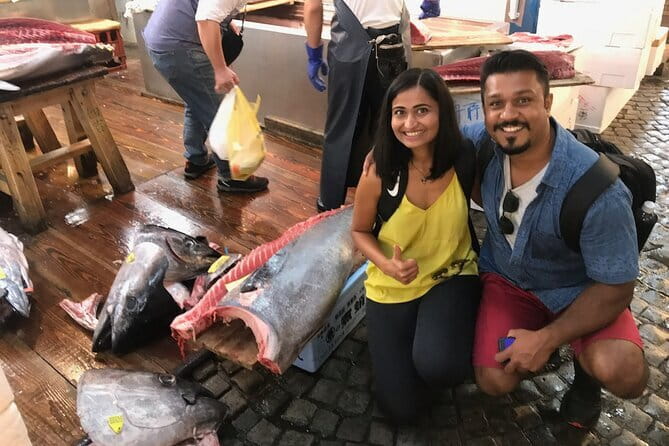
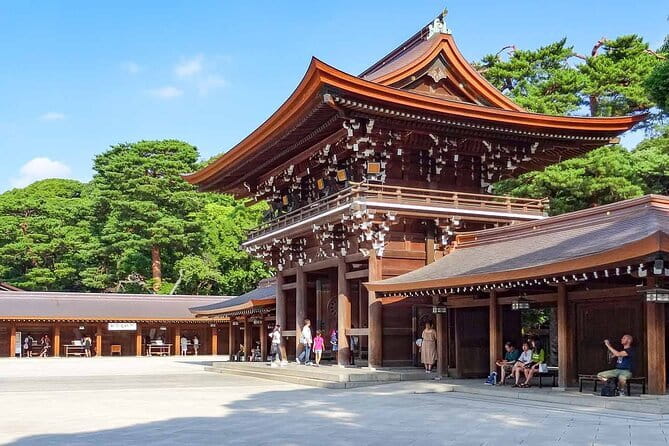
The tour begins at Eni Kaita Mochi Tsukiji Store, then you head to Stop 1: Tsukiji Hongwanji Temple. This is scheduled for about 20 minutes, and it’s more than a quick photo stop. The temple visit gives you a calmer “reset” before you step into the more intense market environment.
Here’s what you can expect during that short window:
- You can take photos and enjoy the setting
- You can pick up small gifts (when available)
- You’ll learn some history tied to the area
- There’s also mention of a café you can use if you want to slow down a bit
Why does that matter? Because Tsukiji can feel like information overload. A temple stop early on gives you context and helps you understand that this is a neighborhood with layered culture—not just a seafood showroom.
A small, practical note: since this part includes free admission, it’s low-pressure. Even if you’re not a big temple person, it’s still a friendly way to get your bearings and ease into the area.
Tsukiji Jogai Market: etiquette, street bites, and not getting lost
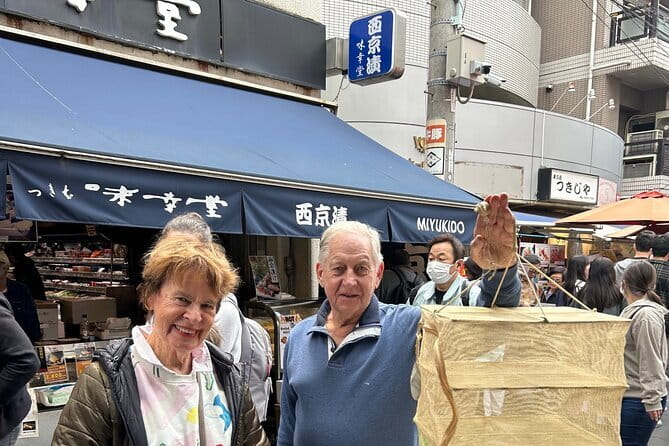
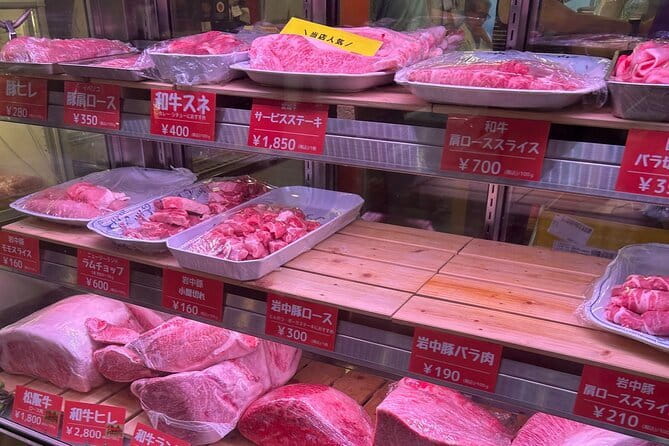
Stop 2 is the heart of the tour: Tsukiji Jogai Market, about 2 hours on the schedule. This is where you’ll “look around” and put the etiquette advice into action. The tour focuses on helping you navigate what to do and how to do it without accidentally causing problems.
What makes this section especially useful is that you’re not left to figure it out alone. You get:
- Clear Japanese etiquette guidance and insights behind the food and food culture
- Time to snack on Japanese street food and sweets you’re unlikely to find by pure wandering
- Guidance that helps you spot higher-quality options rather than just grabbing the first thing you see
A market like this can go two ways for visitors. Either you end up standing still because you’re overwhelmed, or you move too fast and miss the best parts. Having a guide’s pacing matters. You’re also getting snacks included, which keeps things enjoyable instead of turning into a “walk until you’re tired” situation.
One consideration: this stop is described as an “admission ticket not included” experience. In plain terms, you should think of this as exploring market streets and vendor areas, not one controlled, ticketed attraction. It’s still worthwhile—just know what kind of experience you’re signing up for.
Namiyoke Inari Shrine: the short stop that adds meaning (and photos)
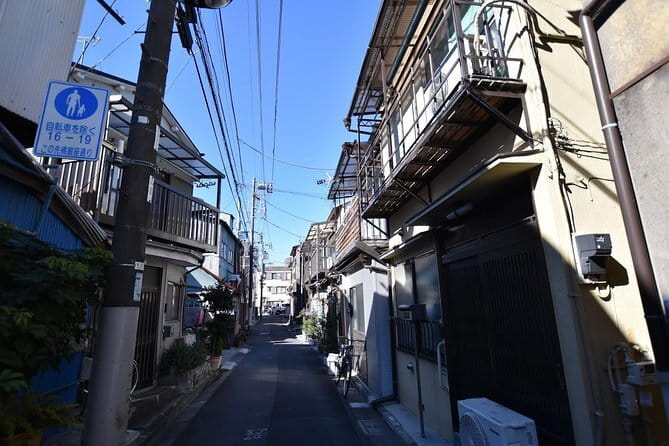
Stop 3 is Namiyoke Inari Shrine, scheduled around 10 minutes. It’s one of those quick add-ons that makes the whole tour feel more complete. You’ll learn how to visit the shrine properly, you’ll hear some history, and yes—you’ll likely take a photo with the big lion.
Why end here? Inari shrines tie into protection and local belief, which helps explain why this area has so much character beyond food. Also, a shrine stop at the end gives you a gentle decompression moment after the more hectic market lanes.
Admission for this stop is free, so it’s another no-stress piece of the itinerary. Expect it to be short, but guided enough that you’ll understand what you’re seeing rather than just collecting pictures.
What you actually get for the money ($84.54 per person)
At $84.54 per person, this tour isn’t a “cheap bite and walk.” But it can still be good value because it packages three things that normally cost time and effort when you do them yourself: local guidance, snack pacing, and a structured route across multiple stops.
Here’s the value breakdown in practical terms:
- You’re buying a guide’s shortcut through an area that can be tricky for visitors
- Snacks are included, which reduces the need to keep spending small amounts all morning
- You get a private experience, so you’re not competing with a group for attention and explanations
- The route includes two free cultural stops (temple + shrine), which adds depth without adding cost
If your goal is just to taste a couple things and wander, you might spend less on your own. But if you want a smoother experience—especially if language is a challenge—this price starts to look more reasonable fast.
One practical note: the tour is listed as something many people book about 7 days in advance on average, so if you’re traveling in a busy season, don’t wait until the last minute.
You can also read our reviews of more shopping tours in Tokyo



Logistics that matter: timing, tickets, and how long it lasts
This is designed to run 2 to 3 hours. You’ll receive a mobile ticket, and the meeting point is at Eni Kaita Mochi Tsukiji Store in the Tsukiji area.
The opening hours listed are for specific seasonal windows, with a morning block from 8:00 AM to 12:00 PM (Monday–Saturday) during the dates shown. If you’re planning a trip, treat this as a clue that the tour is best aligned with a morning schedule. Tsukiji areas feel most productive earlier in the day, and the itinerary is built around that rhythm.
Also included: restroom on board and mention of a nursing room. That’s not something you want to think about until you need it, so it’s a nice reassurance.
Who this tour suits best (and who might want something else)
This tour is a strong fit if:
- You want a first-timer-friendly Tsukiji experience
- You care about etiquette and local food culture, not just photos
- You don’t want to fight through language barriers or figure out “where to stand”
- You’d enjoy a morning that mixes food with temple and shrine context
It may be less ideal if:
- You’re looking for a long, no-rush market day
- You prefer to fully self-navigate without a set route
- You’re expecting a single, ticketed attraction rather than an area walk
For most people who want Tsukiji without the stress, the private structure and snack pacing make it a smart choice.
About the guide: the big difference is tone, not just facts
The reviews attached to this tour highlight something important: the best guides don’t just recite facts—they make the whole place feel easier to understand. In past experiences with Mr. Guru-San, groups described it like having a friendly Tokyo connection who shares culture and passion for food.
That style shows up in the kind of answers you’ll get during the walk: what you’re looking at, how you should approach it, and why certain customs exist. That’s exactly what you want in Tsukiji, where local rhythms can be hard to read if you don’t speak the language.
The tour also includes restroom support on board, which sounds minor until you’re juggling timing and tasting.
Should you book this Private Tokyo Tsukiji Fish Market Tour?
Book it if you want an efficient Tsukiji morning with a guide who helps you behave well and taste smart, plus the added bonus of a temple and shrine stop. This isn’t just a photo safari. It’s set up so you leave feeling like you understood more than you bought.
Don’t book it if you’re the type who loves going completely on your own, or if you want a full-day deep dive into every corner. This tour is short by design, with structured highlights.
If you’re deciding between “wander and hope” versus “get a shortcut with snacks and culture,” this one leans clearly toward the second option.
FAQ
FAQ
How long is the Tsukiji fish market tour?
The tour runs about 2 to 3 hours.
What is the price per person?
It’s $84.54 per person.
Does the tour include snacks?
Yes. Snacks are included.
Is this a private tour?
Yes. It’s a private experience, and only your group participates.
What stops are included in the itinerary?
You’ll visit Tsukiji Hongwanji Temple, Tsukiji Jogai Market, and Namiyoke Inari Shrine.
Where is the meeting point?
The start point is Eni Kaita Mochi Tsukiji Store, Japan, 104-0045 Tokyo, Chuo City, Tsukiji, 4-chōme 75 築地Kyビル 1F.
Do I need admission tickets for each stop?
Tsukiji Hongwanji Temple is listed as free admission, Namiyoke Inari Shrine is free admission, and Tsukiji Jogai Market is listed as admission ticket not included.
Is lunch included?
No. Lunch is not included.