REVIEW · TOKYO
Private Japanese Calligraphy Class in Shibuya Tokyo
Book on Viator →Operated by KOKA Calligraphy Workshop · Bookable on Viator
Learning calligraphy feels like translation.
This private Japanese calligraphy lesson in Shibuya (starting near Hatagaya Station) turns abstract culture into something you can hold, because you’ll learn basic Shodo technique and end by creating your own work. I especially like that you write your name in Japanese plus a kanji or word you choose, so the results feel personal. One thing to consider: the session starts at 9:00am, so you’ll want to plan your morning commute.
What makes the class easy to recommend is the teaching style. Koka is warm and patient, and the class rhythm works well even if you’re a beginner, including families. You’ll also get a tea-and-matcha moment after the lesson if you’d like, which makes it feel less like a quick workshop and more like a small cultural visit, not just a craft stop.
In This Review
- Key Highlights at a Glance
- Shibuya Calligraphy, Right Where You Can Get to It Fast
- Meet Koka and Get a Lesson That Matches Your Brain
- The Core Skill: Basic Shodo Technique You Can Use
- Writing Your Name in Japanese: The Personal Souvenir Factor
- Picking a Kanji or Phrase Without Stress
- The Matcha Moment: Small Ritual, Real Cultural Signal
- How the Class Flows (So You Know What to Expect)
- Price and Value: Why $95 Can Make Sense
- Who This Private Calligraphy Class Is Best For
- Small Practical Tips Before You Go
- Should You Book This Private Japanese Calligraphy Class?
- FAQ
- Where is the class meeting point in Tokyo?
- What time does the class start?
- How long is the calligraphy lesson?
- Is this a private experience?
- What will I learn in the class?
- Can I write my name and choose my own character or words?
- Is matcha included?
- Is it near public transportation?
- Is there free cancellation?
- Is it suitable for children?
Key Highlights at a Glance
- Private Shodo lesson for only your group, so feedback is direct and your word choices matter
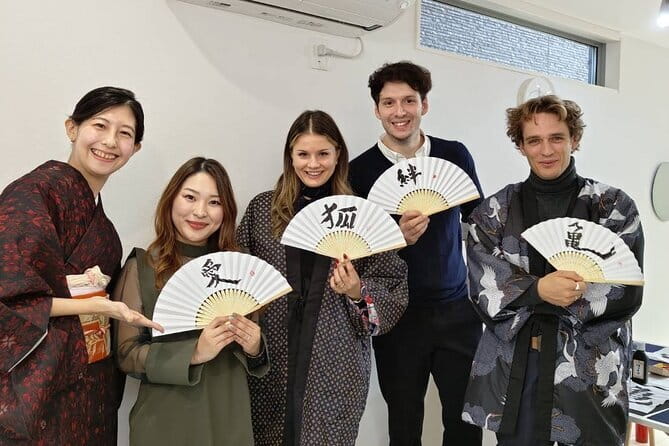
- Write your name in Japanese and practice a chosen kanji or Japanese phrase
- Koka’s patient, kind teaching helps beginners feel comfortable at the brush
- Tea and optional matcha after class adds a genuine pause for culture
- Takes about 1.5 to 2 hours and ends back at the meeting point, so it’s easy to plug into your day
Shibuya Calligraphy, Right Where You Can Get to It Fast
This class meets at Hatagaya Station in Shibuya, Tokyo. The address is 2-chōme 13, 東京都渋谷区幡ケ谷1丁目21, and the good news is it’s near public transportation, so you’re not spending your whole morning trapped in transit.
The start time is 9:00am, and that detail matters more than you might think. A fast, early start helps you finish without stress, especially since the lesson runs about 1 hour 30 minutes to 2 hours and returns you back to the meeting point at the end. If you’re the type who likes to see real Tokyo in the daylight, this timing is a plus: you’ll still have plenty of time to explore afterward.
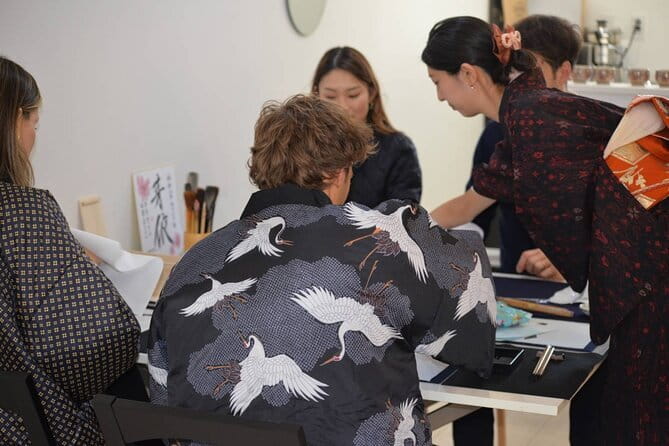
The class is also private, meaning only your group participates. That changes the feel immediately. Instead of watching from the sidelines, you’re practicing and getting guidance while the brush meets the paper.
You can also read our reviews of more private tours in Tokyo



Meet Koka and Get a Lesson That Matches Your Brain
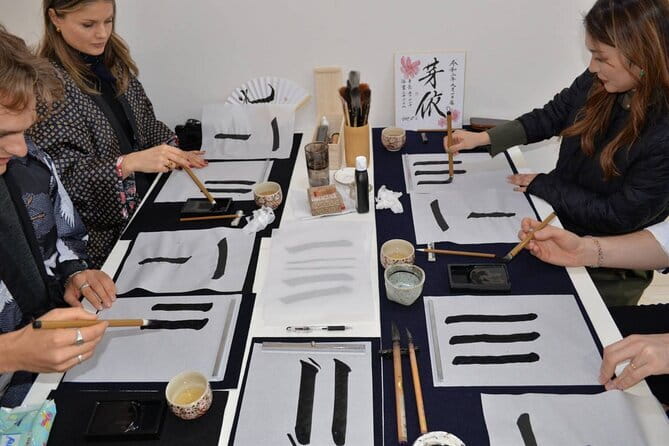
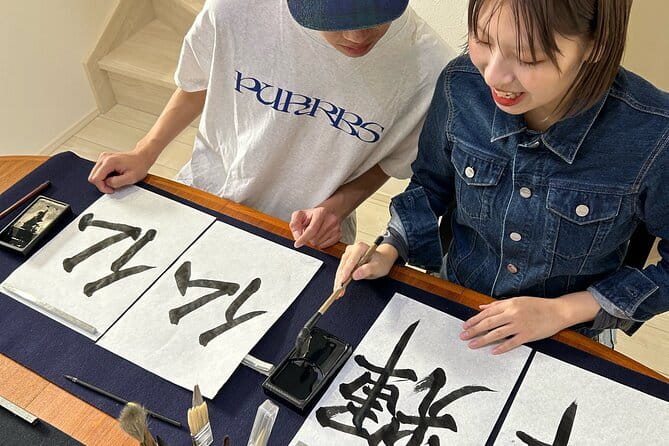
You’re learning Shodo 書道, Japanese calligraphy, with Koka, a certified Japanese calligrapher. The goal is simple: learn the basic technique, then create your own calligraphy piece by the end.
Here’s what I like about the way the class is set up. You’re not just tracing shapes until something looks acceptable. You’re learning technique and applying it to something you actually care about. Koka teaches you how to write your name in Japanese, plus you can pick your favorite kanji or choose any words in Japanese you’d like to practice.
That choice is practical. A lot of language or culture activities end up feeling generic. This one gives you a reason to pay attention from minute one, because you’re shaping something meaningful: your own name, your own message, your own kanji.
The Core Skill: Basic Shodo Technique You Can Use
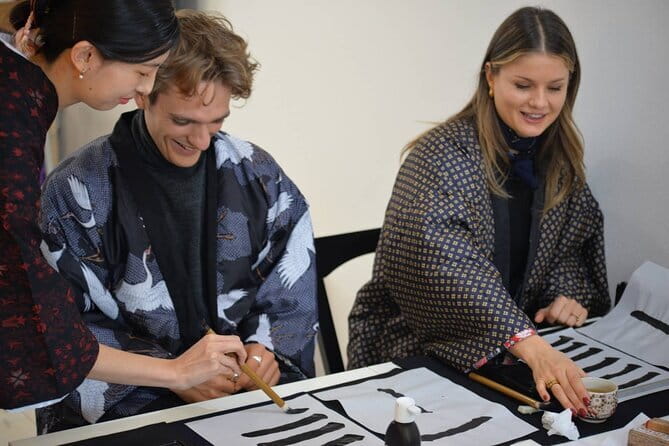
The class covers basic calligraphy technique, which is the right place to start. You’ll get enough structure to understand what you’re doing—where your pressure goes, how the strokes flow, and how to think about writing as a process rather than a random series of marks.
Even if your Japanese is limited, you can still participate fully. Koka’s teaching style is built for beginners, and the lessons are designed so your chosen character or phrase becomes the focus. That means your practice isn’t stuck at the level of copy-and-repeat. It becomes closer to problem-solving: you adjust your strokes to get the result you want.
If you’re traveling with family, this is also a good fit. The workshop welcomes children, and the private format helps everyone keep up. Kids can get the feel of writing without getting lost in a large group.
Writing Your Name in Japanese: The Personal Souvenir Factor
The highlight for many people is the moment you write your name in Japanese. That’s not just fun, it’s useful. You get a tangible version of your name that exists in Japanese script, something you can show people back home or keep as a reference for future travel.
And it’s not one-size-fits-all. Because Koka teaches you to write your name in Japanese, you’ll be working from your specific letters and adapting them into the way Japanese writing handles them. It turns the class into a small identity project, which is why it sticks in memory long after you’re done.
On top of that, you can choose your favorite kanji or words. This is the other reason the class feels special: your calligraphy can be about you. A single character can represent a theme, a memory, or a value you like. A short phrase can be a message you’d want to read later.
Picking a Kanji or Phrase Without Stress
You don’t need to arrive with a complicated plan. The class setup is designed for you to choose what you want to write. Koka will guide the process based on your selection, so you aren’t left alone trying to translate ideas into strokes on your own.
If you’re stuck on what to choose, pick something with a clear meaning for you. A kanji that represents a goal or a word that connects to a trip theme works well. The simplest choices tend to produce the most satisfying results, because you can focus on technique rather than scrambling for the perfect phrase.
Also, remember that the goal here is creating your own calligraphy work by the end, not writing perfect calligraphy for a lifetime. That mindset makes the whole experience more relaxing.
You can also read our reviews of more tours and experiences in Tokyo




The Matcha Moment: Small Ritual, Real Cultural Signal
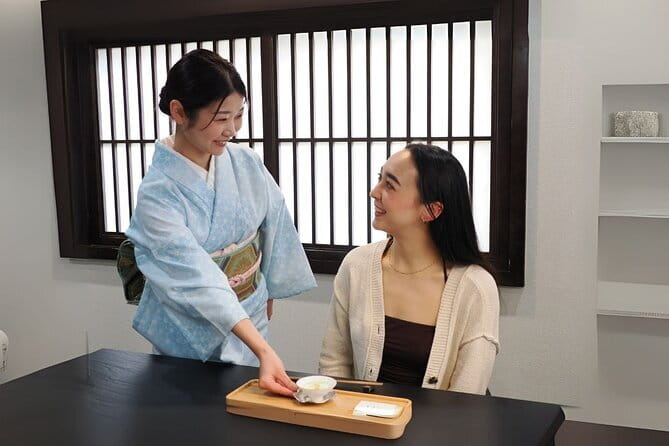
After the lesson, you can enjoy matcha if you’d like, along with tea. This is one of those travel details that people sometimes skip, but it’s exactly what helps a workshop feel human instead of transactional.
The matcha is optional, so you can keep it light if you’d rather not. But if you do take it, you’ll get a calm pause right after you’ve been focusing intensely on strokes and character forms. It’s a nice reset and a gentle cultural cue: in Japan, craft and hospitality often go together.
The way it’s described matters too. The class includes welcoming hospitality from Koka, and the tea and matcha feel like part of the experience, not a random add-on.
How the Class Flows (So You Know What to Expect)
The session runs about 1.5 to 2 hours. While there’s no public step-by-step minute schedule listed, the structure is clear:
- You meet near Hatagaya Station at 9:00am.
- Koka teaches basic Shodo technique so you know how to form the strokes.
- You practice your chosen writing—your name in Japanese, plus kanji or Japanese words you select.
- You create your own calligraphy work by the end.
- If you want, you finish with tea and matcha.
- The experience ends back at the meeting point.
Because it’s private, you’re not waiting your turn behind a crowd. The lesson pacing tends to be more comfortable, especially for beginners.
Price and Value: Why $95 Can Make Sense

The price is $95.00 per person. That may sound steep if you’re comparing it to a quick group craft. But think about what you’re buying: a certified teacher, a private setting for your group, and a personalized output—your name in Japanese and a chosen kanji or phrase.
In travel terms, this workshop has a strong value trick: it’s not just a demonstration. You leave with something made by your hand, shaped for you. That’s harder to get with many low-cost activities, which often hand you a souvenir that’s basically the same as everyone else’s.
Also, the lesson runs about 1.5 to 2 hours, so you’re paying for focused instruction time, not a “drop in, watch, and leave” format. If you’re traveling in a group, the private setup can feel even more worthwhile because the teaching stays centered on your group’s choices.
One practical note: it’s booked about 25 days in advance on average, so if this is a must-do, don’t wait until the last minute.
Who This Private Calligraphy Class Is Best For
This is the kind of activity that fits well when you want more than photos.
You’ll probably love it if:
- You like hands-on cultural experiences you can take home.
- You want something personal, like your name written in Japanese.
- You’re traveling with family and want a calm, beginner-friendly activity.
- You want a short class that doesn’t hijack your whole day.
You might choose a different option if:
- You want a long, multi-session course. This is a one-time workshop experience.
- You’d rather do sightseeing only and skip quiet, focused craft time.
The private format helps a lot. It makes the class feel like a conversation, not an assembly line.
Small Practical Tips Before You Go
A few things will help you get the most from the lesson:
- Arrive a little early for Hatagaya Station. Morning starts are easier when you’re not rushing.
- Think about one kanji or one short Japanese word you’d like, even if you’re flexible.
- Wear something comfortable. You’ll be concentrating and practicing strokes.
- If you’re sensitive to caffeine or you simply prefer not to, you can skip matcha since it’s optional.
Also, you’ll get a mobile ticket, which is handy while you’re moving around Tokyo. And you’ll receive confirmation at the time of booking, which removes a lot of uncertainty.
Should You Book This Private Japanese Calligraphy Class?
If you want a souvenir with meaning, book it. The personal angle—your name in Japanese plus a kanji or word you choose—makes the experience more than a generic workshop. Add in Koka’s patient, kind teaching style and the tea and optional matcha after class, and you get a lesson that feels thoughtful, not rushed.
I’d especially recommend it for first-timers who worry they won’t be good at calligraphy. You don’t need previous skill. You need curiosity and a willingness to practice strokes one by one.
If you’re planning your Tokyo schedule, set aside time to enjoy the class fully. Then use the rest of your day to explore Shibuya at a slower pace, since you’ll already have done something uniquely Japanese in a very human way.
FAQ
Where is the class meeting point in Tokyo?
The class starts at Hatagaya Station in Shibuya, Tokyo, at 2-chōme 13, 東京都渋谷区幡ケ谷1丁目21.
What time does the class start?
The start time is 9:00am.
How long is the calligraphy lesson?
It runs about 1 hour 30 minutes to 2 hours.
Is this a private experience?
Yes. It’s private, and only your group will participate.
What will I learn in the class?
You’ll learn the basic technique of Shodo 書道 and create your own calligraphy work at the end.
Can I write my name and choose my own character or words?
Yes. You’ll learn how to write your name in Japanese, and you can also write a favorite kanji or words in Japanese.
Is matcha included?
Matcha is available after the lesson if you would like it. Tea is also mentioned as part of the experience.
Is it near public transportation?
Yes, the meeting point is near public transportation.
Is there free cancellation?
Yes. You can cancel up to 24 hours in advance for a full refund, based on the experience’s local time.
Is it suitable for children?
Children are welcomed.