REVIEW · TOKYO
Private 2-Day Tour: Mt Fuji Hakone & Kamakura + Onsen Ryokan
Book on GetYourGuide →Operated by Miramar Co,.Ltd. · Bookable on GetYourGuide
Fuji sightings feel like a daily magic trick. This private 2-day loop from Tokyo strings together the big-name spots—Mount Fuji viewpoints, Hakone’s volcanic drama, and Kamakura’s Great Buddha—without forcing you to self-navigate buses and trains. I like that you get a driver who can keep things moving and handle the day-to-day reality of timing.
Two things I especially like: the tour builds in Fuji views from multiple angles (Lake Kawaguchi, Arakura Sengen Shrine, Oshino Hakkai, and even Owakudani when skies cooperate). You also get an onsen stay with a proper kaiseki dinner at a traditional ryokan, so the trip has a real Japanese night, not just sightseeing stamps. One drawback to plan for: weather can affect visibility, and the route may shift if Fuji isn’t playing nice.
In This Review
- Key highlights at a glance
- How the Private 2-Day Route Works from Tokyo
- Fuji Views: Lake Kawaguchi, Arakura Sengen, and Kitaguchi-Hongu
- Oshino Hakkai: The Fuji-Spring Stop That Feels Like a Break
- Hakone Ryokan Overnight: Tounosawa Ichinoyu Honkan and Onsen Time
- Lake Ashi Cruise to Owakudani: Water Views and Sulfur Heat
- Odawara Castle and Kamakura Daibutsu: Samurai-Era Calm to Big-Bronze Awe
- Price and Logistics: Is $838 a Good Value?
- The Little Things That Matter: Getting the Most from Each Stop
- Weather Around Fuji: What You Can Actually Do
- Who This Tour Fits Best (and Who Might Want Something Different)
- Final Call: Should You Book This Mt. Fuji, Hakone & Kamakura Tour?
- FAQ
- What’s included in the tour price?
- Do I need to pay for entrances at each stop?
- How long is the Lake Ashi boat ride?
- Is lunch included on both days?
- What happens if Mt. Fuji is not clearly visible?
- What should I bring and wear?
Key highlights at a glance
- Private pickup and flexible pacing inside Tokyo’s 23 wards with an English/Chinese driver
- Fuji photo stops at Lake Kawaguchi, Arakura Sengen Shrine, and Oshino Hakkai
- Lake Ashi cruise (about 45 minutes) with morning timing around a 9:30 AM departure
- Owakudani volcanic valley with sulfur vents and the famous black eggs
- Hakone ryokan onsen + kaiseki dinner for an overnight that feels like part of the experience
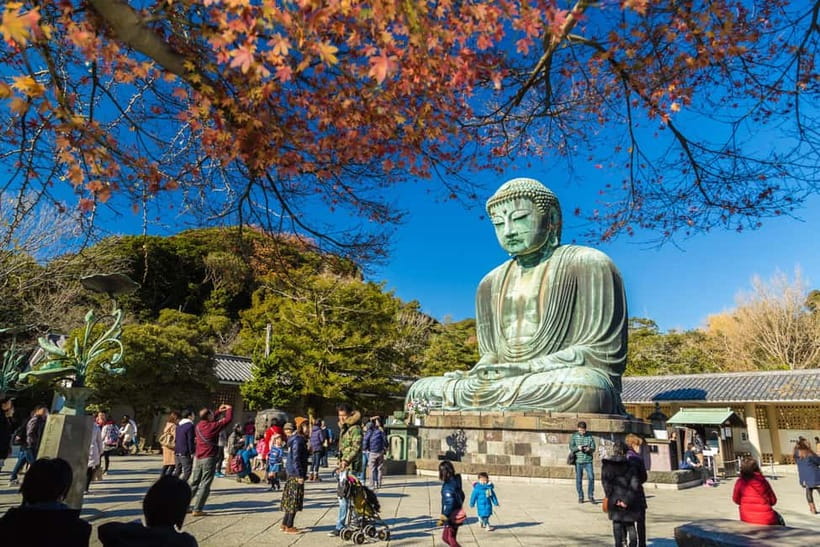
- Kamakura Daibutsu (over 13 meters tall) plus optional Yokohama Chinatown if time allows
How the Private 2-Day Route Works from Tokyo
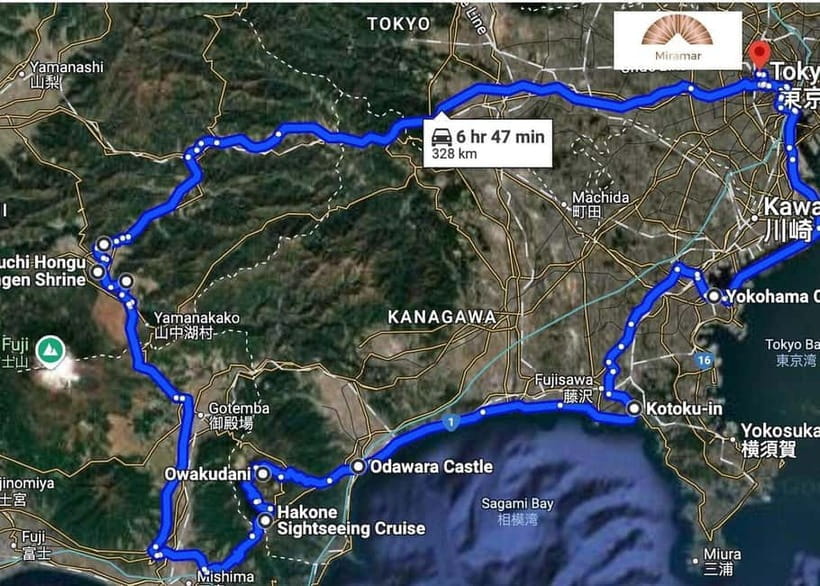
This is a private vehicle tour built around one simple idea: spend less energy figuring out connections and more time at the places you actually came for. You’ll start with pickup at your hotel (inside Tokyo 23 wards), then ride in a comfortable Toyota Alphard or Hiace. Your driver meets you directly and you’ll want to be ready about 10 minutes early.
Because it’s private, you can treat the itinerary like a plan with room to breathe. You still move through a lot in two days, but you’re not trapped in a crowded group schedule. That matters when you’re jumping between mountain areas, shrines, and coastal landmarks where traffic and weather can change your timing fast.
You can also read our reviews of more private tours in Tokyo

Fuji Views: Lake Kawaguchi, Arakura Sengen, and Kitaguchi-Hongu
Day 1 is basically the Fuji chapter, and it’s set up like a photo route with different “depth” to the views.
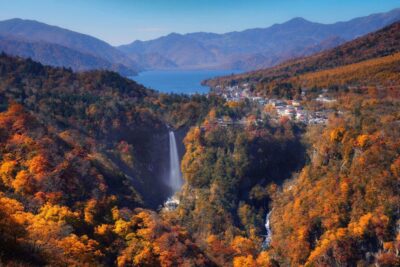
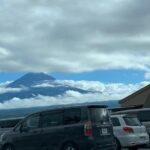
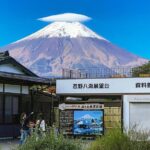
Start with Lake Kawaguchi at Oishi Park for a quick photo stop plus about 30 minutes to stroll. This is one of the easiest places to understand why Mt. Fuji is such a magnet: you’re looking across water with the mountain sitting in the background, and the light changes the whole mood even in a short window.
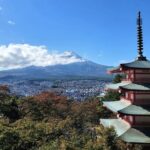
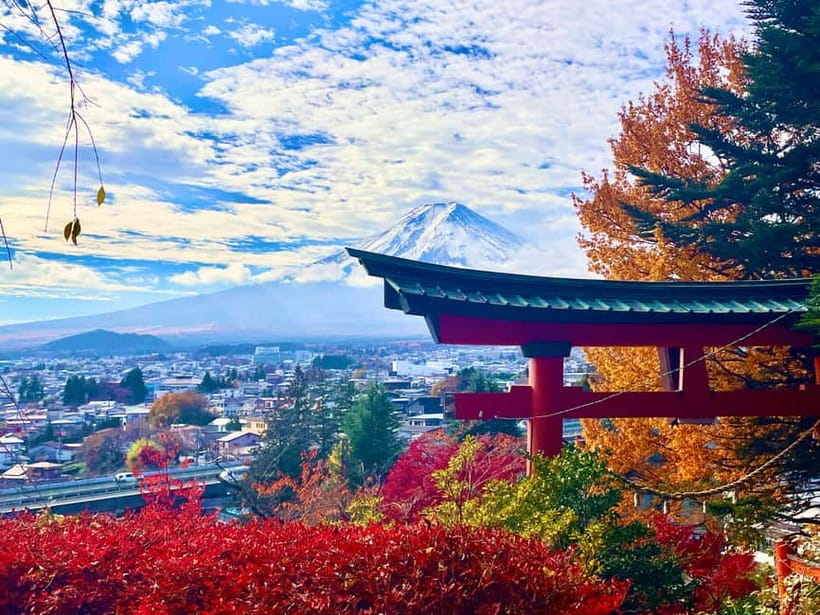
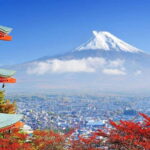
Then you’ll head to Arakura Sengen Shrine. This is the spot with the iconic five-story pagoda, with Fuji towering behind it when visibility is good. The walk is short, but it’s a classic “stand here, look up, then adjust your angle” kind of stop. If the air is clear, it’s one of the most satisfying photos you’ll take all trip.
Next comes Kitaguchi-Hongu Fuji Sengen Shrine, historically tied to pilgrimage routes to Fuji-san. This isn’t just another photo point. It’s a calmer, more shrine-focused stop where the vibe shifts from postcard views to cultural context. You’ll have about 30 minutes, enough to look around without feeling rushed.
If Fuji is obscured, don’t panic. The tour notes you may get alternative scenic stops based on visibility, and it runs rain or shine unless conditions are extreme. In other words: clouds are annoying, but you’re not stuck doing nothing.
Oshino Hakkai: The Fuji-Spring Stop That Feels Like a Break
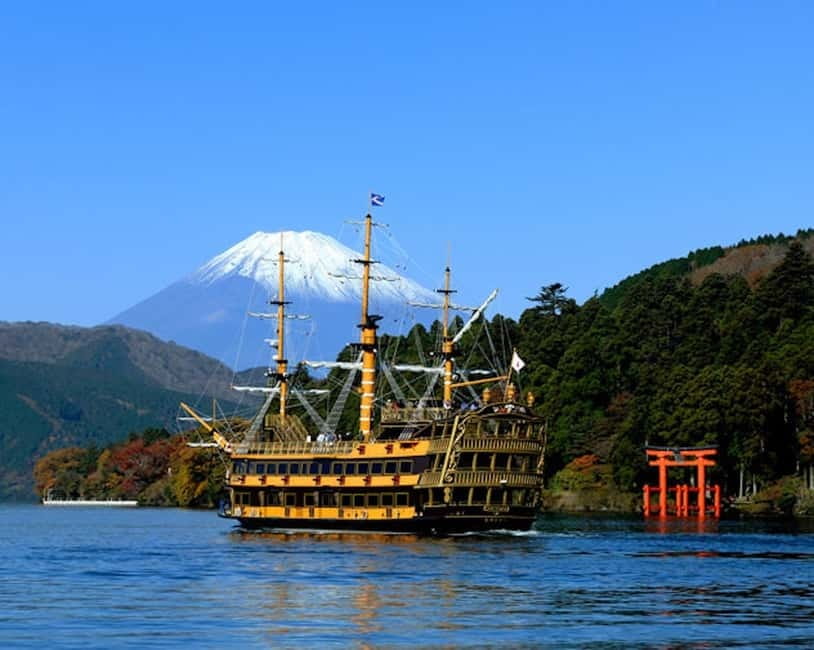
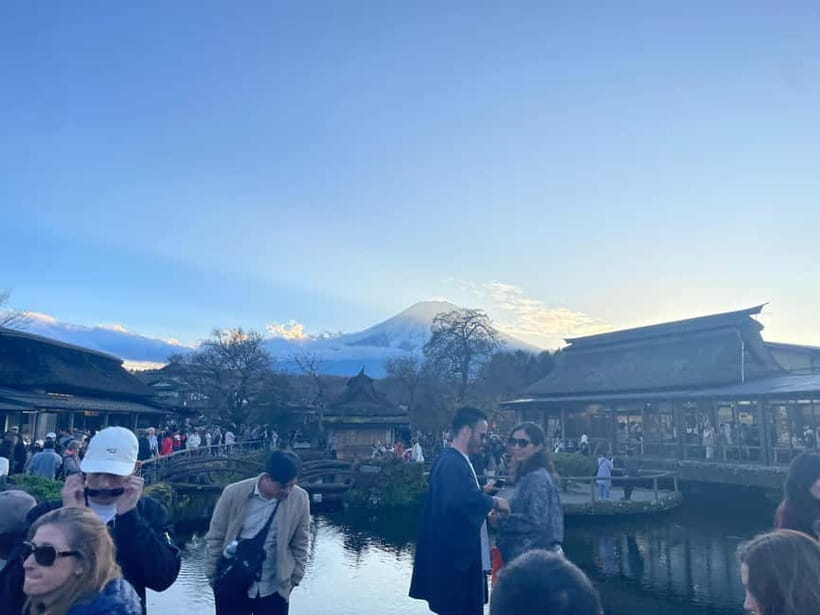
After the shrine circuit, you’ll move toward Oshino Hakkai. This is a series of springs and ponds fed by Fuji’s water, and the setting makes a nice change from the heavier crowds that often cluster around the biggest viewpoints.
You’ll have about an hour here for walking, sightseeing, and shopping. The mix of easy strolls and small shopping areas makes it easy to adjust your energy level. If you want a calmer moment before the ryokan check-in, this is a good one to choose.
It’s also a great place for practical photos. Instead of only trying to frame Fuji in the distance, you get water textures up close—useful if the mountain isn’t fully clear.
Hakone Ryokan Overnight: Tounosawa Ichinoyu Honkan and Onsen Time
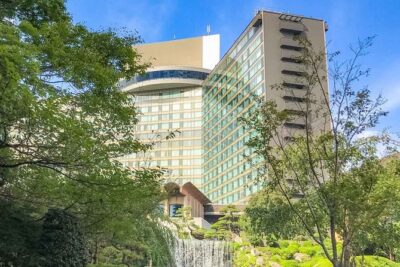
The overnight is where this tour stops being only a sightseeing package and starts feeling like a real Japanese trip. You’ll arrive in Hakone and check into the ryokan: Tōnosawa Ichinoyu Honkan.
Dinner is kaiseki, a multi-course meal built around seasonal ingredients. The tour info specifically calls out fresh seafood, and that’s a big part of why staying overnight is worth it. Day trips can be efficient, but they can also feel a little “through-and-out.” Here, the meal and the timing are designed to slow you down.
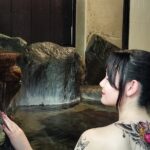
Then there’s the onsen. You’ll have an onsen experience for a few hours after checking in. That means you’re not rushing through the most relaxing part of the day. You can stagger your comfort: warm up first, then return to enjoy the rest of the evening.
Breakfast the next morning is also included, described as fresh fish, rice, pickles, and miso soup. It’s a satisfying fuel-up for another sightseeing-heavy day.
Lake Ashi Cruise to Owakudani: Water Views and Sulfur Heat
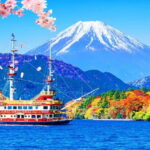
Day 2 jumps back into big scenery. First up: a boat ride on Lake Ashi, departing at 9:30 AM. The ride is about 45 minutes, and it’s timed for views of Mt. Fuji, the surrounding hills, and the lake’s clear waters.
This is where you get “moving scenery.” On land, you’re constantly repositioning. On the water, the horizon stays stable, and you can just sit back and watch the mountain angle relative to the shoreline.
After the cruise, you’ll head to Owakudani Valley, the volcanic area with sulfur vents and the famous black eggs. The eggs are boiled in the sulfuric hot springs, and even if you don’t go out of your way to try them, the area is still worth seeing for the raw geology. The heat and fumes create a different atmosphere than the lakes and shrines.
You’ll have about 45 minutes here for photos, walking, and shopping. This is a stop where comfortable shoes matter. The ground can be uneven, and you’ll likely be moving around to get the best views.
You can also read our reviews of more tours and experiences in Tokyo
Odawara Castle and Kamakura Daibutsu: Samurai-Era Calm to Big-Bronze Awe
From volcanic valley to history, then to one of Japan’s most famous statues—this is a strong pivot.
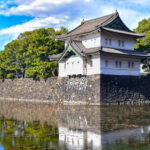
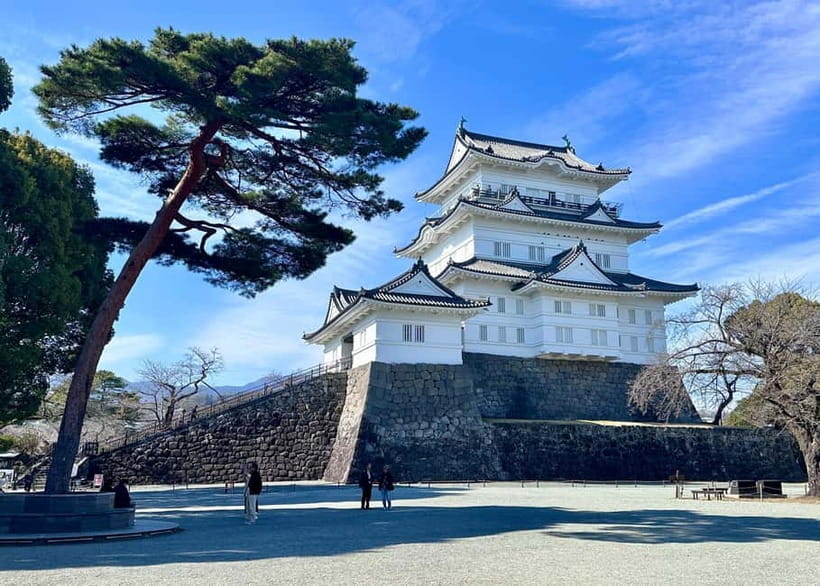
At Odawara Castle, you’ll have about 45 minutes for a self-guided visit. The castle grounds and museum cover samurai history, and the gardens add a softer feel. If you make it to the top viewpoints, you’ll get panoramic surroundings, which helps connect the day’s scenery from mountain back toward the sea.
Then it’s on to Kamakura Daibutsu, the Great Buddha. The tour info notes it stands over 13 meters tall, and that scale is what hits you first. This isn’t a “look and move on” stop. You’ll want a few minutes just to take in how massive it is and how the space around it makes you slow down.
The pace at Kamakura is about 30 minutes, plus walking and sightseeing. It’s enough time to see the landmark, but it’s also clear this is part of a bigger circuit. If you want deeper time in Kamakura’s side streets, you might treat this stop as the highlight and add extra hours on another day.
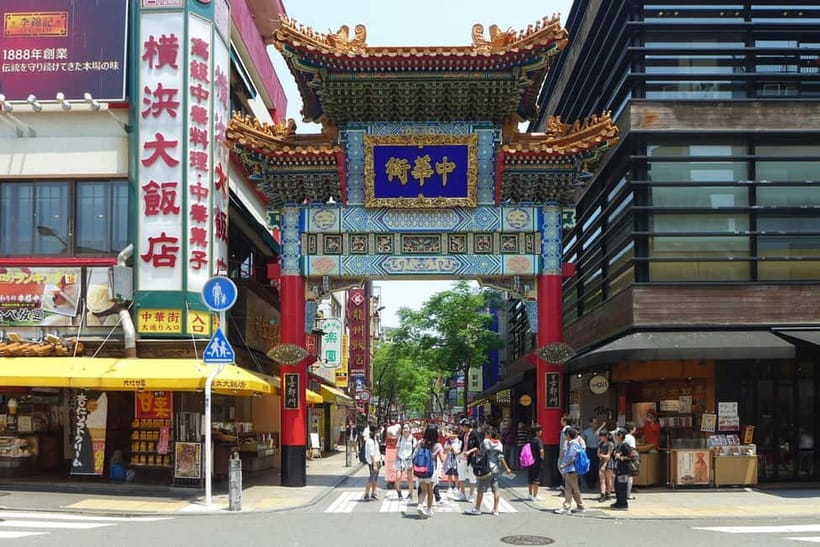
If time allows, you can make a quick stop in Yokohama Chinatown. The tour frames it as optional, but if you’re the kind of traveler who likes dumplings and lively street energy, this is where you’d fit that payoff.
Price and Logistics: Is $838 a Good Value?
At $838 per person for a private two-day tour, you’re paying for three things: private transport, entrance fees, and an overnight with dinner and breakfast.
Here’s what’s included that helps the value make sense:
- Private transportation in a Toyota Alphard or Hiace
- Hotel pickup and drop-off within Tokyo’s 23 wards
- Entrance fees to all mentioned sites
- Day 1 lunch: houtou (Yamanashi’s traditional noodle dish)
- Ryokan kaiseki dinner, plus traditional breakfast
- Lake Ashi boat ride
- English/Chinese-speaking driver
Also, the itinerary is heavy—about 10 hours per day of guided logistics—so you’re buying convenience and time. If you tried to assemble this route on your own, you’d likely spend real effort syncing local transportation, dealing with ticket timing, and losing flexibility when Fuji visibility drops.
The one cost risk to keep in mind: lunch on day 2 isn’t included, and personal expenses are not included. That’s normal for Japan day tours, but it’s worth budgeting so you’re not making last-minute choices while tired.
The Little Things That Matter: Getting the Most from Each Stop
This tour hits a lot of “big hit” places, so the secret is how you use your short windows.
For the Fuji viewpoints, go in with the right mindset. If the mountain is clear, great—use those minutes to get angles and not just one quick shot. If it’s hazy, focus on what you can still control: shoreline composition at Lake Kawaguchi and the shrine settings that frame the landscape.
For Owakudani, plan for contrast. You’re leaving calm lakes behind for volcanic heat and sulfur. Dress for comfort. Warm layers make sense, and comfortable walking shoes are a must.
And for the ryokan evening, don’t rush dinner and onsen. The whole point is that after two full days of moving, you get to reset properly in a traditional setting.
Weather Around Fuji: What You Can Actually Do
Mt. Fuji and Hakone are weather-dependent in a very real way. The tour explicitly notes the itinerary may adjust based on weather, especially Mt. Fuji visibility, and alternative scenic spots may be offered if visibility is poor. It runs rain or shine except in extreme conditions.
That means you should pack like a realist:
- Warm clothing (mountain air can feel colder than Tokyo)
- Change of clothes
- Comfortable walking shoes for shrine paths and valley walking
Also, bring patience. On a private tour you’re still going to see a lot, but the “perfect Fuji view” depends on skies. The good news is you’re not only relying on one single viewpoint to make the trip worthwhile.
Who This Tour Fits Best (and Who Might Want Something Different)
This is a great match if you want a high-efficiency two-day circuit with minimal stress. It’s especially appealing for first-timers to this region who want Fuji, Hakone, and Kamakura all in one go, plus an onsen ryokan night.
It’s also a strong option for travelers who prefer comfort and quiet over constant crowd-management. A private vehicle and a driver who speaks English and Chinese keeps things smoother, even when the schedule is full.
You might want to consider another style of trip if you’re the type who wants lots of “time to wander” in just one area. This itinerary is packed: you’ll see Odawara, you’ll see Daibutsu, you might stop in Chinatown. But it’s not set up for deep exploration in any one neighborhood.
Final Call: Should You Book This Mt. Fuji, Hakone & Kamakura Tour?
I’d book it if your priority is a balanced highlights tour with real downtime built in—onsen and kaiseki included—plus multiple Fuji viewpoints that keep your odds of a memorable view better than any single stop. The private logistics and included entrances make it feel like a smart way to buy time.
I’d think twice if you’re going to be disappointed by clouds. The tour can adapt, and you still get the shrines, springs, volcanic valley, and major landmarks—but the famous mountain backdrop is weather’s boss.
If you want Fuji and Hakone done the convenient way, with a proper Japanese night at a ryokan, this hits the mark.
FAQ
What’s included in the tour price?
The tour includes private transportation (Toyota Alphard or Hiace), hotel pickup and drop-off within Tokyo’s 23 wards, entrance fees for the listed sites, Day 1 lunch (houtou), ryokan dinner (kaiseki), traditional breakfast, and the Lake Ashi boat ride.
Do I need to pay for entrances at each stop?
No. Entrance fees to the mentioned sites are included.
How long is the Lake Ashi boat ride?
The boat ride on Lake Ashi is about 45 minutes and departs at 9:30 AM.
Is lunch included on both days?
Lunch is included on the first day. Lunch on the second day is not included.
What happens if Mt. Fuji is not clearly visible?
The itinerary may be adjusted depending on weather and Mt. Fuji visibility, and alternative scenic spots may be offered if visibility is poor.
What should I bring and wear?
Bring passport or ID, warm clothing, and a change of clothes. Wear comfortable walking shoes, since you’ll do walking at several stops and weather can change quickly around Fuji and Hakone.