REVIEW · TOKYO
Private Hakone Tour – View of Mt. Fuji, Nature and Culture
Book on Viator →Operated by Hello! Tokyo Tours · Bookable on Viator
Hakone without the herd of strangers feels like a cheat code, and this private day trip is built for that. You get round-trip bullet train from Tokyo to Odawara, plus timed Hakone transport and entry fees, so your day runs on rails instead of guesswork.
What I like most is the combo of classic Hakone views and hands-on nature stops. You’ll do a Lake Ashi cruise where Mt. Fuji can show up from the water, then work your way up and into the volcano area around Owakudani.
One thing to think about first: it’s a long walking day with stairs and uneven ground. The route is doable, but you’ll want solid shoes and a realistic pace for 9 to 12 km over roughly 11 hours.
In This Review
- Key things that make this Hakone day work
- What you’re really buying: a controlled Hakone day from Tokyo
- Pickup, stations, and the morning flow out of Tokyo
- Odawara to Hakone-Yumoto: setting the tone with hot-spring town energy
- Hakone Shrine and its water torii: calm first, then big views
- Lake Ashi cruise: the Mt. Fuji payoff, when weather cooperates
- Hakone Ropeway and Owakudani: sulfur fumes and volcanic drama
- Gora access: Hakonetozan cable car brings you through the mountains
- Hakone Open Air Museum or onsen: pick your kind of downtime
- If you pick the Open Air Museum
- If you pick the onsen
- The final stretch: Hakone-Yumoto stroll and return to Tokyo
- What the walking requirement means for you
- Value check: is $867 per person actually fair?
- Booking timing and the weather reality
- Should you book this Hakone private tour?
- FAQ
- What’s the tour duration?
- Where does the tour start?
- Is the bullet train included?
- What Hakone activities are included?
- Is Mt. Fuji guaranteed on this tour?
- How much walking is involved?
- What happens if the weather is poor?
Key things that make this Hakone day work
- Private, no-crowd pacing: you’re the only group, with time for questions instead of rushing.
- Weather-dependent Mt. Fuji stops: cruise and ropeway are planned around visibility, not promises.
- Volcano experience with included black eggs: Owakudani is built into the route with “valley of hell” sulfur fumes and legendary eggs.
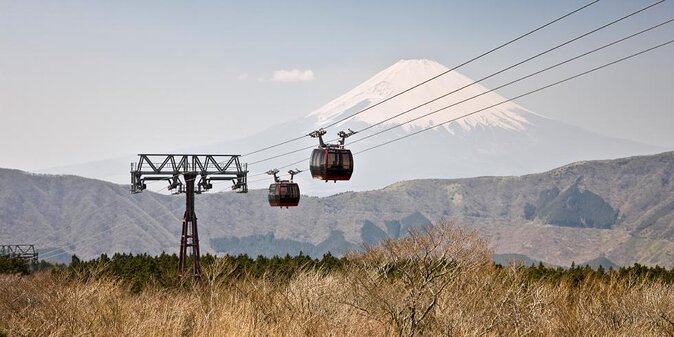
- Hakone Ropeway + Hakonetozan Cable Car: you’ll ride up and through the mountains using multiple transport styles.
- Museum-or-onsen choice: you pick between the Hakone Open Air Art Museum or a traditional onsen stop.
- Hotel meet-up plus return help: your guide meets you in your lobby and helps you get back to transit or a taxi at the end.
What you’re really buying: a controlled Hakone day from Tokyo
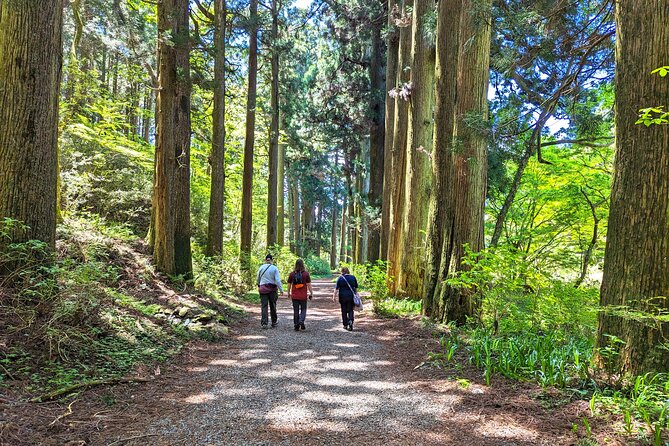
This is a private Hakone itinerary designed to remove the hardest part of planning: the logistics. Hakone can be a puzzle of trains, cable cars, ropeways, and boat rides. Here, you’re carried through that maze with a guide and included transportation, so your focus stays on the sights.
The price is steep at $867 per person, so it only makes sense if you value convenience and time. Where this tour justifies the cost is in the “all-in” structure: bullet train, major Hakone transit, key attraction fees, and guided routing are bundled together. If you’ve ever spent a full vacation day figuring out how to get from one Hakone station to another, you’ll understand why private pricing exists.
It’s also a good fit for people who don’t want to gamble on timing. The day starts early (pickup around 7:30–8:30, depending on where your hotel is), and it’s scheduled to hit the most famous areas in a sensible order.
You can also read our reviews of more private tours in Tokyo

Pickup, stations, and the morning flow out of Tokyo
The day begins with a meet-and-greet in your hotel lobby between 7:30 AM and 8:30 AM (varies by hotel location). Your guide then gets you to either Shinagawa or Tokyo Station so you can board the Shinkansen toward Odawara.
If you prefer, you can travel to the station by subway or taxi. The important part is that you’re not on your own juggling transit directions at an early hour. You’re simply moving with your guide and the plan.
After you reach Odawara by bullet train, the rest of the day continues in a tight sequence: local rail into Hakone, then shrine, cruise, ropeway, volcano, mountain rail/cable car connection, and finally your museum-or-onsen choice.
Practical tip: because you’re leaving the city early, plan to have a quick breakfast before pickup. You’ll likely want energy for a day with stairs and a lot of walking.
Odawara to Hakone-Yumoto: setting the tone with hot-spring town energy
From Odawara, you transfer by local train to Hakone-Yumoto, the hot-spring town gateway to the Hakone sightseeing loop.
This part matters because it transitions you from Tokyo’s pace to a slower, more traditional tourist rhythm. Hakone-Yumoto is where you’ll feel the “vacation mode” shift—shops, souvenir streets, and the overall onsen atmosphere.
You’ll also spend a short amount of time looking around at the end of the day in Yumoto for souvenir browsing, so you’re not completely “train-to-train” the whole time.
Hakone Shrine and its water torii: calm first, then big views
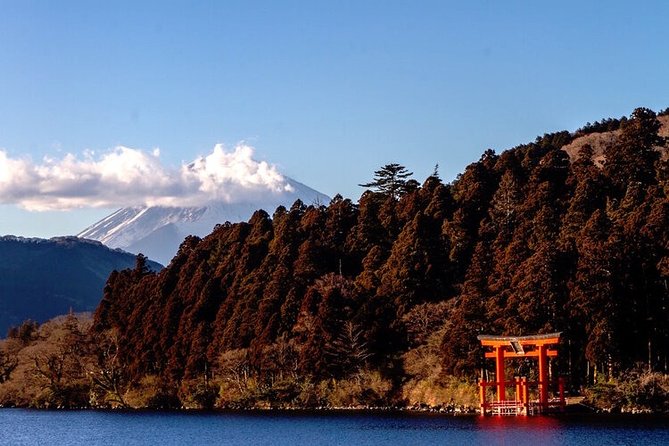
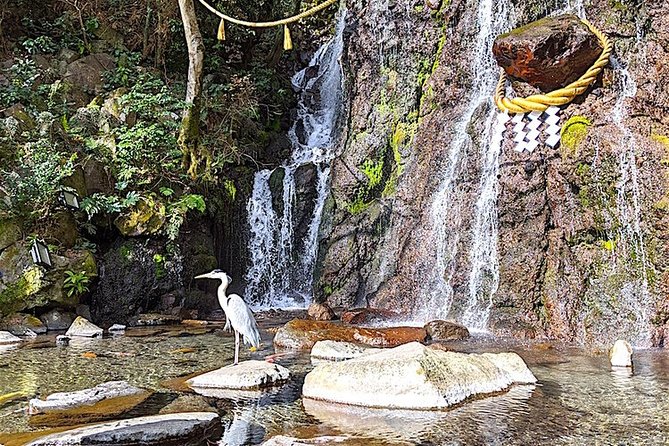
Next up is Hakone Shrine, a site dating back to 1667. It’s well known for its torii gate in the water, and that single detail gives you a clear visual hook right away. You’ll learn about the shrine’s connection to Shintoism, which helps you understand why the site matters beyond just photos.
This is a good stop to do before you get too tired. You’ll be walking through well-kept areas, and the shrine atmosphere is quieter than the later, more transport-heavy parts of the route.
Practical tip: wear shoes you trust. The day includes uneven ground and stairs later, and Hakone Shrine is part of that “gentle-but-real” terrain.
Lake Ashi cruise: the Mt. Fuji payoff, when weather cooperates
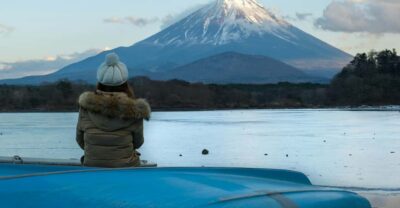
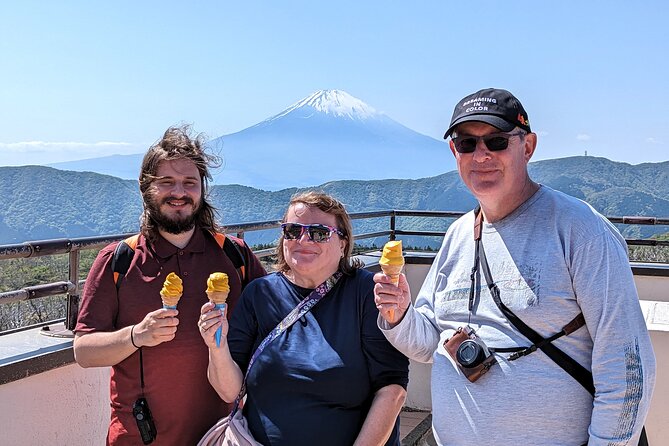
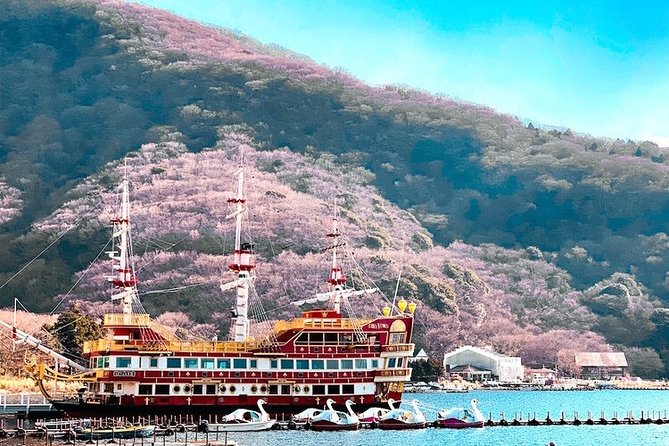
Then comes one of the highlights: a sightseeing cruise across Lake Ashi. This is where you have a chance to see Mt. Fuji from the water, but it’s explicitly weather-dependent. If the sky is clear, it can be spectacular. If visibility isn’t ideal, you’ll still get a solid dose of lake views and the sense of being in the Hakone caldera region.
The cruise is short—about 25 minutes—but it’s timed as a visual break. After shrine walking, it’s a nice reset.
What to expect:
- You’ll be on a boat with wide-open views.
- Your best photo windows depend on weather and light.
- You can’t force the mountain into view, but you’re positioned for the attempt.
If you’re traveling at a time when clouds are common, keep expectations flexible. The tour’s structure acknowledges that: the cruise and later ropeway point toward Mt. Fuji sightings, not guaranteed sightings.






Hakone Ropeway and Owakudani: sulfur fumes and volcanic drama
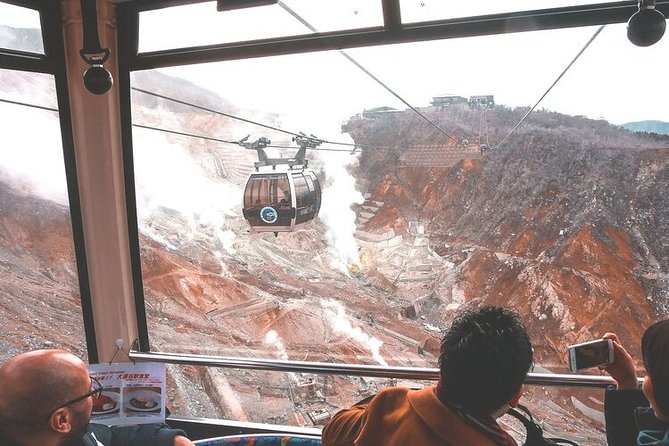
After the lake, you ride Hakone Ropeway. Like the cruise, Mt. Fuji views here are weather dependent. The upside is that ropeway angles can offer a different perspective than the shoreline cruise.
Then you move into Owakudani Valley, the part that gives this day trip its personality. This area is known for sulfurous fumes from an active volcano. The tone is dramatic—people call it the valley of hell—but the important detail is that it’s treated as safe for visitors.
At Owakudani, you’ll:
- Spend about 1.5 hours
- See the volcanic activity area and feel the environment shift
- Try the included legendary black eggs, cooked in the hot springs
Those black eggs are more than a gimmick here because they’re specifically included in the tour. They also give you a hands-on souvenir-food moment that breaks up the walking and riding.
Practical tip: sulfur air can be strong. If you’re sensitive, keep a light scarf or mask handy. Also, dress in layers. Mountain temps around Hakone can swing.
Gora access: Hakonetozan cable car brings you through the mountains
From Owakudani, the route continues toward Gora Station with a transfer sequence that includes ropeway connections and the Hakonetozan cable car. This is a distinctive transit experience because the line runs into the mountains, so you’re not just moving—you’re riding through the terrain.
This short segment (about 10 minutes noted in the outline) helps you transition from volcanic valley energy to calmer gallery/onsen territory.
If you like transit design and mountain views, this part can feel like the connective tissue that makes the loop satisfying instead of repetitive.
Hakone Open Air Museum or onsen: pick your kind of downtime
Your penultimate stop is your choice: the Hakone Open Air Art Museum or a traditional onsen experience. Either way, this is where the day stops trying to do everything at once and lets you settle into something slower.
If you pick the Open Air Museum
The museum pairs art and nature. That means you’ll walk through open-air spaces where sculptures and installations sit in outdoor settings. It’s a break from transport and volcano drama, and it’s easier on your brain during a long day.
If you pick the onsen
An onsen stop is the classic Hakone reset. You’re finishing a walking-heavy route, so soaking is a practical way to recover. The tour includes the entrance, so you’re not stuck searching for the right facility on the fly.
Either choice works because you’re already warmed up by the day’s pace. If you’re traveling with someone who loves art, museum time can be the best payoff. If your group prefers relaxation, the onsen option usually feels like the most logical end-of-day treat.
The final stretch: Hakone-Yumoto stroll and return to Tokyo
After your choice at Gora, the tour wraps with a short look around Hakone Yumoto—about 30 minutes, including souvenir shop time. It’s not meant to be an all-day market stop, just enough time to pick up small gifts and enjoy the hot-spring-town vibe one more time.
Then you head back:
- Local train from Hakone-Yumoto to Odawara
- Bullet train back to Tokyo, ending at Shinagawa or Tokyo Station
- Your guide helps you with the final step—taxi or subway back to your hotel
This is one of the practical wins of a private tour. When you finish tired, you still need to get home. Here, someone helps you land the last connection.
What the walking requirement means for you
This tour isn’t “sit on everything” tourism. You should plan for:
- About 9 to 12 km of walking
- Uneven ground and slopes
- Stairs and walking during the shrine area and around stations
- The need to get on and off buses during the day
If you have moderate mobility issues, the day may still work, but you need to be confident you can walk unaided and handle stairs. If you want a Hakone day with minimal steps, look for a different itinerary style.
The good news: you’re not wandering alone. A guide can keep the route sensible and help you stay on track.
Value check: is $867 per person actually fair?
For many people, the biggest question is money. At $867 per person, this isn’t a budget tour. But you are paying for several cost-heavy items that add up fast if you plan it yourself:
- Shinkansen to Odawara and back
- Major Hakone transit (including ropeway and cable car components)
- Lake cruise entry/fees
- Open Air Museum or onsen entrance
- Owakudani black eggs and related fees
- Attraction entry and taxes/fees coverage
You’re also buying something less tangible: time savings and stress reduction. In Hakone, “one wrong turn” can cost you an hour. This tour keeps you moving with a plan.
Who should consider it most:
- Couples or small groups who want private pacing without planning headaches
- People who value Mt. Fuji photo attempts and want the day structured to maximize chances
- Travelers who would rather pay for smooth routing than spend vacation time mapping transit
Who might want to skip:
- If you’re on a strict budget
- If you hate early mornings and want a shorter, easier day
- If weather is likely poor and you’re the type who needs guaranteed views (the itinerary is designed with weather dependency in mind)
Booking timing and the weather reality
Hakone is weather sensitive, especially for Mt. Fuji visibility. The experience requires good weather; if it’s canceled due to poor weather, you’ll be offered a different date or a full refund.
Also note that this tour tends to get booked ahead, with an average booking window around 88 days. If you’re traveling during peak seasons, you’ll want to plan earlier rather than waiting.
Should you book this Hakone private tour?
Book it if you want Hakone that feels organized from the minute you leave your hotel—private pacing, included fees, and a route that actually connects the dots between shrine, lake, volcano, and either art or onsen. The value is strongest when you compare the cost of bullet train tickets, multiple attractions, and transit headaches added together.
Skip it if your priority is pure bargain travel or if walking 9 to 12 km (with stairs and uneven ground) is not realistic for you. Also, if Mt. Fuji is your one-and-only goal and you can’t handle weather uncertainty, this kind of “best-effort view planning” may not match your expectations.
FAQ
What’s the tour duration?
It runs for about 11 hours.
Where does the tour start?
Your guide meets you in your hotel lobby between 7:30 AM and 8:30 AM, depending on your hotel location, and then you head to Shinagawa or Tokyo Station for the Shinkansen.
Is the bullet train included?
Yes. Round-trip bullet train transport between Tokyo and Odawara is included.
What Hakone activities are included?
Included stops/experiences include a Lake Ashi sightseeing cruise, Hakone Ropeway, Owakudani Valley (including the black eggs), and the Hakonetozan cable car. You also choose between the Hakone Open Air Museum or a traditional onsen entrance.
Is Mt. Fuji guaranteed on this tour?
No. The Lake Ashi cruise and Hakone Ropeway Mt. Fuji views are weather dependent.
How much walking is involved?
You should expect about 9 to 12 km of walking over the day, including stairs and uneven ground.
What happens if the weather is poor?
If the experience is canceled due to poor weather, you’ll be offered a different date or a full refund.