REVIEW · TOKYO
Kyoto Early Bird Tour Tokyo Round or One Way Shinkansen
Book on Viator →Operated by GuideMe Japan · Bookable on Viator
Kyoto, minus the planning stress. This early-bird Kyoto day trip uses the Shinkansen to get you from Tokyo to three of Kyoto’s best-known sights with an English-speaking guide and a mobile ticket. I like how the tour feels structured but not rigid, so you can enjoy the views without wrestling tickets, transfers, and timing all day.
Two standout things: first, the group stays small (max 8), which makes it easier to follow along and ask questions. Second, the guide’s storytelling is a big part of the value; names like Rin, Kai, Aya, and Genki Fukushima show up in praise, with guests calling out clear history and culture explanations at each stop. One caution: it’s a long, active day with plenty of walking (including hot weather warnings in summer), so bring stamina and plan for direct sun for stretches.
In This Review
- Key things to know before you go
- Kyoto Highlights in One Day: Why This Early Start Works
- Shinkansen Value: One-Way vs Round-Trip to Tokyo Station
- Small Group Comfort (Max 8) and What the Guide Adds
- Stop 1: Arashiyama Bamboo Grove, Quiet Photos, Real Timing
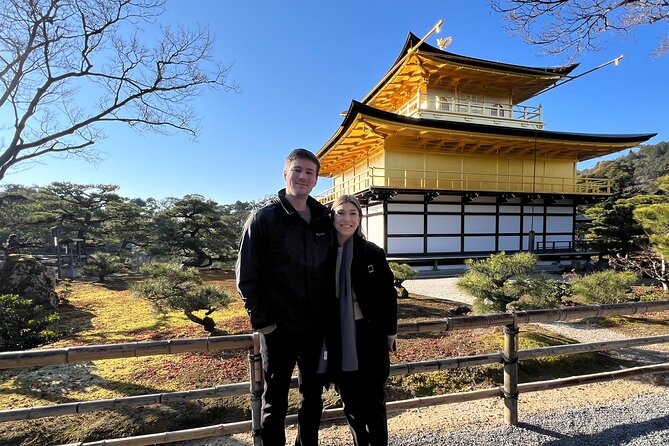
- Stop 2: Kinkaku-ji Golden Pavilion and the Admissions Included
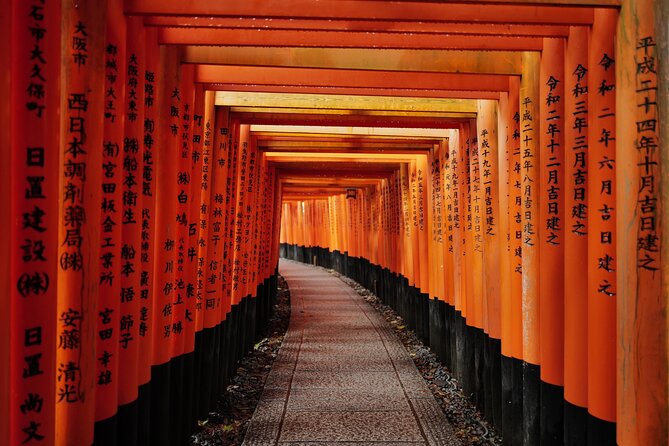
- Stop 3: Fushimi Inari-taisha Red Gates in a Managed Route
- The Walking, Heat, and Pace Reality Check
- Tickets, Meeting Point, and How Mobile Entry Helps
- Price and Logistics: Is $423.49 Worth It?
- Who This Kyoto Day Trip Suits Best (and Who Should Skip)
- Should You Book This Tour? My Decision Guide
- FAQ
- FAQ
- How long is the Kyoto day trip from Tokyo?
- Is the Shinkansen ticket included?
- Can I choose one-way or round-trip?
- Do I need to buy tickets for Kinkaku-ji?
- Are there early morning tour options?
- How big is the group?
- What language is the guide?
- Where do we meet in Tokyo?
- Are food and drinks included?
- What is the cancellation policy?
Key things to know before you go
- Max 8 per group means you move together without the zoo effect.
- Shinkansen ticket included (one-way or round-trip) removes the biggest logistics headache.
- Kinkaku-ji admission included so you only worry about enjoying the Golden Pavilion.
- Fushimi Inari-taisha + thousands of red gates is a must, and the route keeps it manageable.
- Expect a lot of walking and plan your heat strategy, especially in July.
Kyoto Highlights in One Day: Why This Early Start Works
This is the kind of day trip that’s built for travelers who hate guesswork. You choose among early morning options, then you’re off—comfortable rail travel, a guide waiting for you, and a route that hits Kyoto’s headline attractions in a single day.
The big win is pacing. Kyoto is famous for being beautiful, but also easy to over-plan. Here, the order makes sense: Arashiyama Bamboo Grove for atmosphere first, then Kinkaku-ji for a jaw-dropping temple moment, then Fushimi Inari-taisha when you’re ready for that iconic sea of red gates. You’re not left wandering, checking maps every five minutes.
I also like that the tour gives you choices at the end. You can go back to Tokyo Station, or you may choose to stay in Kyoto. That flexibility can help if you want a Kyoto night after a Tokyo stay.
You can also read our reviews of more tours and experiences in Tokyo.



Shinkansen Value: One-Way vs Round-Trip to Tokyo Station
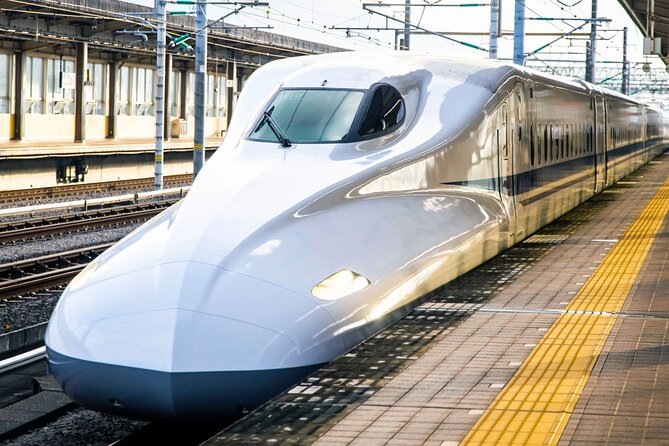
This tour includes Shinkansen ticket fees, and that matters for the value. Kyoto is far enough that rail pricing and timing can easily turn into a DIY project. Here, you’re paying for the ride as part of the package, not piecemeal.
You can choose either a one-way or round-trip option from Tokyo, and the price changes accordingly. If you’re doing a multi-city trip, one-way can be the smart move—less backtracking, less hassle. If you’re trying to keep the trip simple and return the same day, the round-trip option brings you back to Tokyo.
One extra detail worth knowing: on a clear day, you might catch views of Mount Fuji from the train. That’s not guaranteed, but it’s a real perk of Shinkansen travel, and it’s been mentioned in the tour’s feedback.
Small Group Comfort (Max 8) and What the Guide Adds
A max of 8 people per group changes the feel of the day. You’re still walking and transferring, but you’re not fighting for space around landmarks. It also makes the guide’s job easier—so you get better answers, faster. When you have questions (how to find something, what to prioritize, what to look for), small groups tend to get real interaction instead of a shouted pep talk.
The guide experience is one of the most praised parts. People talk about guides like Rin, Kai, Aya, and Genki Fukushima explaining history and culture clearly at each stop, plus helping the group stay on track for the return to Tokyo. That last point sounds small, but on a tight day it’s huge. You’re more likely to feel calm when you don’t have to solve the route problem at the exact moment you’re tired.
Also, the tour is English-speaking. That matters for temples and shrine context, where a few cultural clues can turn a quick photo stop into something more meaningful—without you needing to research ahead of time.
Stop 1: Arashiyama Bamboo Grove, Quiet Photos, Real Timing
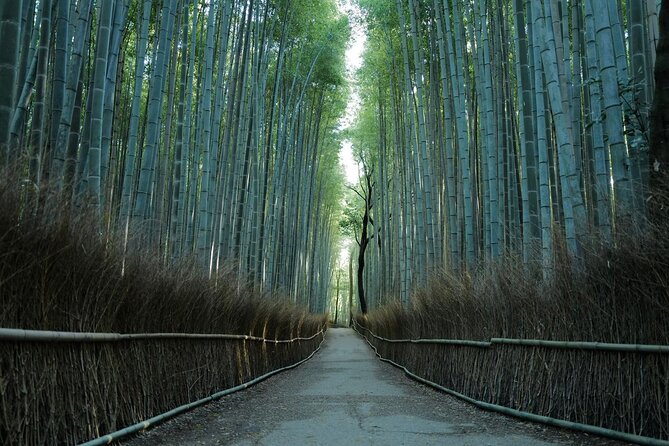
Arashiyama Bamboo Grove is the starting point, and I think that’s a smart choice. It’s atmospheric right away, and it sets the tone for the rest of the day. You get about 1 hour here, and admission is free, so you spend your time on the experience instead of ticket logistics.
What you’ll like: the bamboo creates that instantly recognizable calm visual. Tall stalks, a shaded walkway feel, and that slightly “removed from the city” mood. It’s also a good place to take your time with photos, because it’s easier to frame shots when the area is focused around one main attraction.
What to watch: it’s still a popular Kyoto hotspot. Even with a managed schedule, you may feel some crowding. And because this is early in the day, you’ll want to be ready to hit the ground walking and moving.
Practical move: wear shoes you can trust. Bamboo-grove paths can be uneven, and you’ll be doing multiple legs of transit and walking later.
Stop 2: Kinkaku-ji Golden Pavilion and the Admissions Included
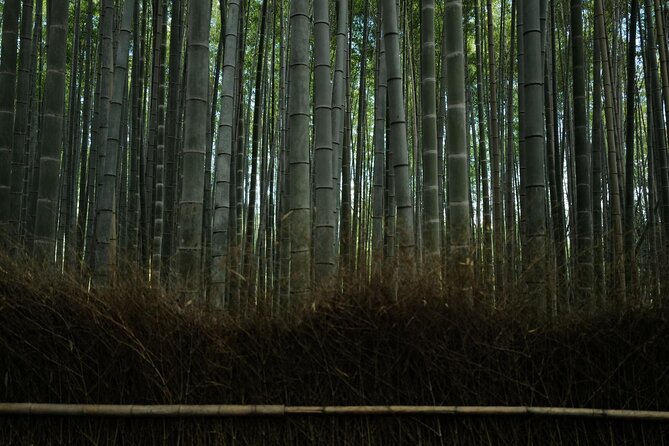
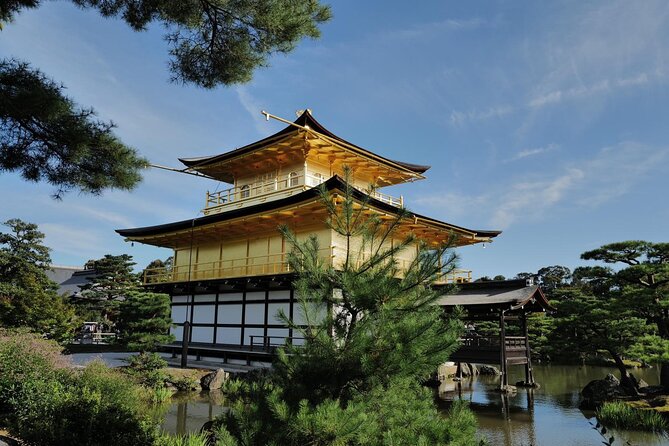
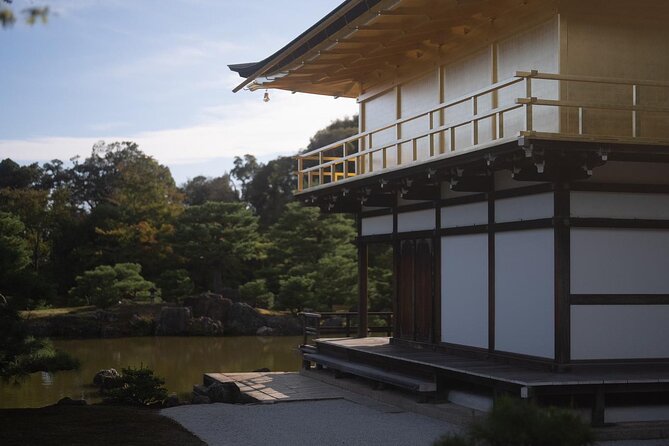
Kinkaku-ji—better known as the Golden Pavilion—is the second stop, and it’s the one most first-timers recognize instantly. You’ll have about 1 hour 30 minutes here, and the admission fee is included.
That inclusion is a real value perk. Temple and site entry fees can be easy to forget when you compare DIY costs. Here, you don’t have to mentally budget for it mid-trip. It also avoids a common stress moment: when you’re already moving fast, you don’t want to stop to figure out what to pay and where to go next.
Why this stop works in a one-day itinerary: Kinkaku-ji is visually dramatic in a way that doesn’t require much explanation to appreciate. Still, the guide’s cultural context can add depth—especially when you’re seeing what makes the pavilion iconic.
Possible drawback: it’s a set-piece attraction, so you may have to share the view space with other visitors. This is where a small-group structure helps. You’ll likely have an easier time spotting where to stand, when to move on, and how to keep the day flowing.






Stop 3: Fushimi Inari-taisha Red Gates in a Managed Route
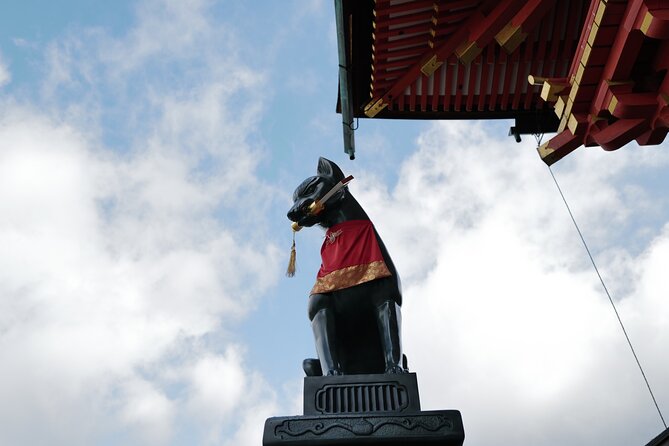
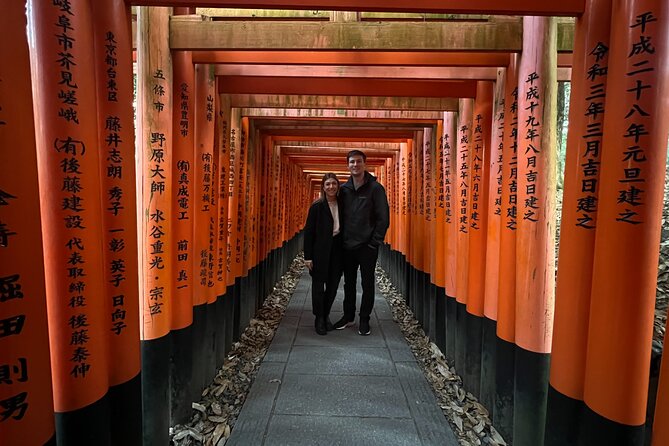
Fushimi Inari-taisha is next, with about 1 hour 30 minutes. Admission is free, and that’s another reason it fits a value-focused day trip. You’re not paying to enter, but you’re paying for a guide to get you there smoothly and keep the route organized.
What makes this shrine special is right in the basics: thousands of striking red gates. The visual impact is immediate, and it creates that classic Kyoto moment even if you’ve seen photos before. The route through the gates is also a great change from temple architecture—more color, more rhythm, more movement.
What you should consider: Fushimi Inari can mean more walking than you expect, even when you stay within a planned timing window. You’ll want to pace yourself and use breaks when the group stops.
Tip: bring water even though food and drinks aren’t included. For a shrine walk, hydration helps you keep the day enjoyable rather than just tolerable.
The Walking, Heat, and Pace Reality Check
This is a 7 to 8 hour day trip, and it’s not just sitting and sightseeing. The tour includes transit between Tokyo and Kyoto via Shinkansen, plus transportation within Kyoto, plus walking at three major sites.
One piece of feedback stands out: the tour can be tough for a one-day excursion. Another notes that in July it was extremely hot and much of the route was in direct sunlight, with about 4.5 miles of walking mentioned. That’s a useful warning, even if your season is different.
So here’s how I’d plan for it:
- Bring breathable layers and sun protection if you’re going in summer.
- Expect that you’ll need breaks that don’t involve leaving the group.
- Wear comfortable shoes from the first minute, not the second.
The moderate physical fitness note in the tour info also supports this. If you’re comfortable with day-long walking, you’ll be fine. If you’re not, this might feel like a push.
Tickets, Meeting Point, and How Mobile Entry Helps
The tour starts at Tully’s Coffee & Tea KITTE Marunouchi in Tokyo, specifically at the KITTE building (1F, around the address listed for 2-chōme, Chiyoda City). You’re near public transportation, which helps on meeting-day nerves.
The ticket method is mobile. That matters because Japan travel can involve apps, QR codes, and station navigation. Mobile tickets reduce the chance you arrive with the wrong paper or miss the correct gate instructions.
The tour ends in a different location. You’ll see exact details after booking, and your end plan depends on whether you’re returning to Tokyo or staying in Kyoto. This is one reason I’d treat the itinerary as a single “guided day unit” rather than a pick-and-choose set of stops.
Price and Logistics: Is $423.49 Worth It?
At $423.49 per person, this is not a budget day trip. But you should judge it by what’s included, not by the headline number.
Here’s what you get built in:
- Shinkansen ticket fees (one-way or round-trip option)
- English-speaking tour guide
- Admission to Kinkaku-ji
- Transportation fee in Kyoto
- Mobile ticket
Food and drinks are not included. That’s common for tours, and it’s manageable as long as you plan for lunch.
When I do value math like this, I ask: what would I pay and how much time would I spend figuring it out? The shinkansen + admissions + guided coordination is exactly the kind of bundle that can cost more (and feel messier) when you do it solo. You’re paying for speed, structure, and cultural context.
And the satisfaction signals are strong: the experience is rated 5 stars across the provided feedback, with people highlighting organization, friendly knowledgeable guiding, and guides who explain history and culture at each venue. Multiple comments also call it worth every penny—often after initially thinking the price looked high.
Who This Kyoto Day Trip Suits Best (and Who Should Skip)
This tour is a great fit if you:
- Want Kyoto’s top sights in a single day without building a route from scratch.
- Prefer small-group dynamics (max 8) over large bus chaos.
- Like having an English guide explain what you’re seeing, not just when to stand for photos.
- Are comfortable with moderate walking and transfers for 7 to 8 hours.
It may be less ideal if you:
- Have limited stamina or mobility needs.
- Travel during very hot months without strong sun-protection habits.
- Want long, slow time at one place rather than a highlights mix.
If you’re the type who loves Kyoto but only has one day, this tour can be a smart way to “get your bearings fast.” Then you can return later for slower exploring, maybe on a separate Kyoto-focused day.
Should You Book This Tour? My Decision Guide
Book it if you want a guided, organized one-day hit of Kyoto’s biggest icons—Arashiyama Bamboo Grove, Kinkaku-ji, and Fushimi Inari-taisha—without juggling trains, admissions, and timing.
I’d especially lean toward booking if you like the idea of:
- Early morning options (less time lost waiting)
- Small group size (max 8)
- Included costs that usually trip up DIY travelers (Shinkansen and Kinkaku-ji admission)
Skip or reconsider if you hate walking days, travel with mobility limits, or expect this to feel like a relaxed half-day. This one is a full day workout dressed as a cultural tour.
FAQ
FAQ
How long is the Kyoto day trip from Tokyo?
It runs about 7 to 8 hours.
Is the Shinkansen ticket included?
Yes. The tour price includes the Shinkansen ticket fee, either one-way or round-trip depending on your option.
Can I choose one-way or round-trip?
Yes. You can choose one-way or round-trip from Tokyo, and the price will differ based on the option.
Do I need to buy tickets for Kinkaku-ji?
No. Admission to Kinkaku-ji is included. Admission for Arashiyama Bamboo Grove and Fushimi Inari-taisha is free.
Are there early morning tour options?
Yes. You can choose from multiple early AM tour options for flexibility.
How big is the group?
The tour has a maximum of 8 travelers.
What language is the guide?
The guide is English-speaking.
Where do we meet in Tokyo?
Meet at Tully’s Coffee & Tea KITTE Marunouchi at KITTE Marunouchi in Tokyo (KITTE building, 1F, near public transportation).
Are food and drinks included?
No. Food and drinks are not included.
What is the cancellation policy?
The experience is non-refundable and cannot be changed for any reason.
If you want, tell me your travel month and whether you prefer returning to Tokyo or staying in Kyoto, and I’ll help you decide which option fits your energy level.