REVIEW · TOKYO
Tokyo: Original Street Kart Experience from Akihabara
Book on GetYourGuide →Operated by Reservation Center · Bookable on GetYourGuide
Tokyo screams when you drive a go-kart.
This is street go-karting in the Akihabara and Tokyo Station area, powered by a custom kart and topped with anime and game costumes. I like the instant adrenaline rush of real-city driving, and I love how strangers wave, smile, and snap photos when you roll by in costume. One big thing to plan for: you’ll need the right driving documents before you go, or you won’t be allowed to drive (guides like Johnny and Mads are big on keeping everyone safe and legal).
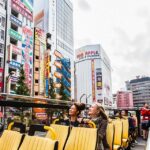
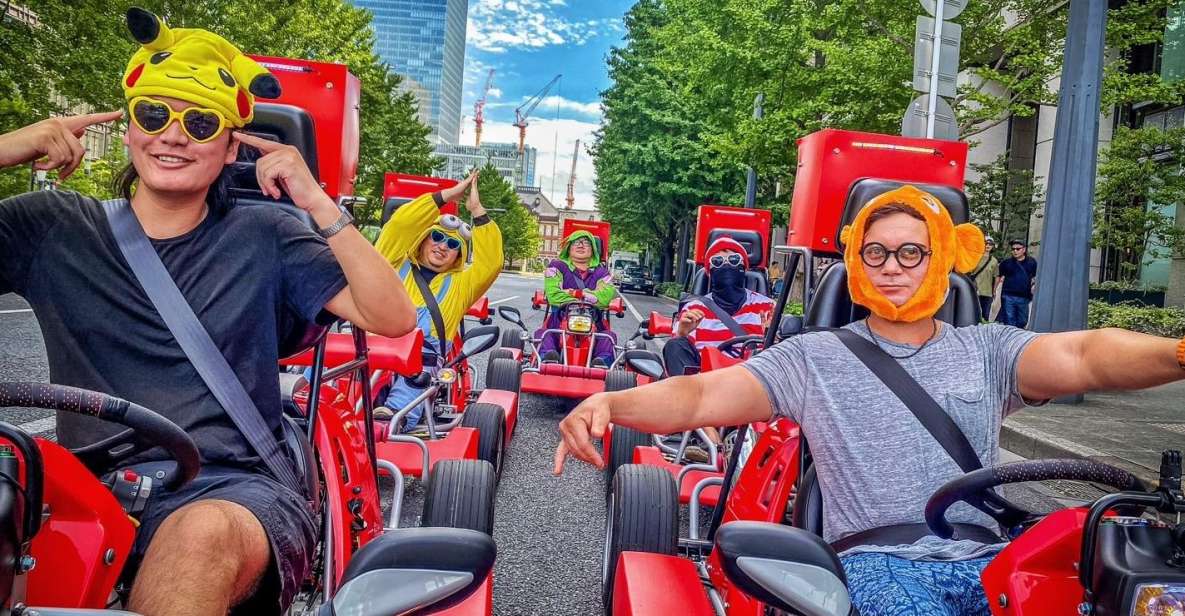
You’ll meet Street Kart Akihabara 1 at the go-karts in the building with glass doors, pick your costume, then follow your English-speaking guide in a small group (up to 6). The route typically takes you through areas like Marunouchi (with a peek at the Imperial Palace area in the background), then past the Tokyo Station hub with its 28 platforms, and on toward Ginza—ending back through the Akihabara pull of games and anime. Photo data comes after the ride, so you’re not stuck hoping your own shaky shots will come out.
In This Review
- Quick Hits You’ll Care About
- The One-Hour Route That Feels Like a Tokyo Highlights Circuit
- Costumes Turn Heads, Then Make the Photos Easier
- Driving in Real Tokyo Streets: Fast Fun With Clear Safety Control
- Where the Ride Goes: Marunouchi, Tokyo Station, Ginza, and the Akihabara Pop
- Meeting Point at Street Kart Akihabara 1 (and the Rules That Catch People)
- Price and Value: What $51 Actually Covers
- Night Ride Adds Extra Spark
- Who Should Book This—and Who Should Skip It
- Should You Book Street Kart Akihabara?
- FAQ
- How long is the Street Kart experience?
- Where exactly is the meeting point?
- Is the guide available in English?
- How big is the group?
- What’s included in the price?
- What do I need to drive in Japan?
- What items are not allowed during the ride?
- Is it okay to bring an action camera?
- Is there free cancellation?
Quick Hits You’ll Care About
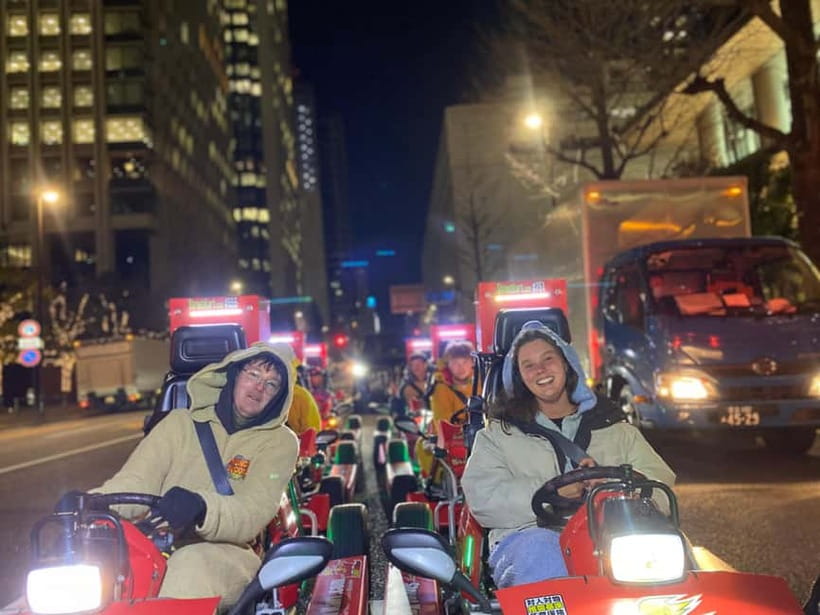
- Custom-made kart + guided formation driving: you’re not just going fast; you’re doing it with structure.
- Costumes are part of the fun: pick a character from games, anime, and animation themes.
- Real Tokyo landmarks on a one-hour loop: Marunouchi, Tokyo Station area, Ginza, then Akihabara energy.
- Photo data is included: you’ll leave with files to share, not just memories in your head.
- Your documents matter more than your outfit: plan your IDP and passport early for Japan driving rules.
The One-Hour Route That Feels Like a Tokyo Highlights Circuit
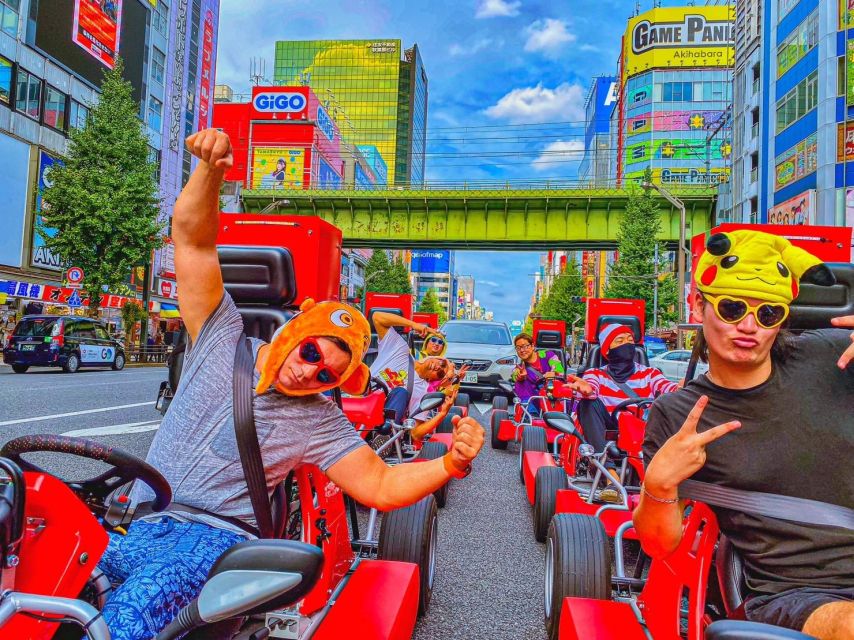
This experience is only 1 hour, so it’s built for a tight, high-energy loop. The idea is simple: you get moving on actual city streets quickly, then your guide routes you through the Tokyo you came to see—without turning your evening into a long commute.
Expect the ride to connect big focal points: you’ll move through the Marunouchi business district (with a sense of scale as you pass the Imperial Palace area in the background) and you’ll get your moment with Tokyo Station—that grand hub with 28 train platforms. Then it’s on toward Ginza, where the vibe shifts into shopping-gloss city life. And finally, you loop back into Akihabara, the place where your costume choice suddenly makes total sense when you’re surrounded by anime and gaming culture.
The practical upside of a shorter tour is that it’s easy to fit into a Tokyo itinerary. The trade-off is that you won’t have time for deep sightseeing stops or long photo walks. You’re driving, viewing from the kart, and moving on.
You can also read our reviews of more tours and experiences in Tokyo.



Costumes Turn Heads, Then Make the Photos Easier
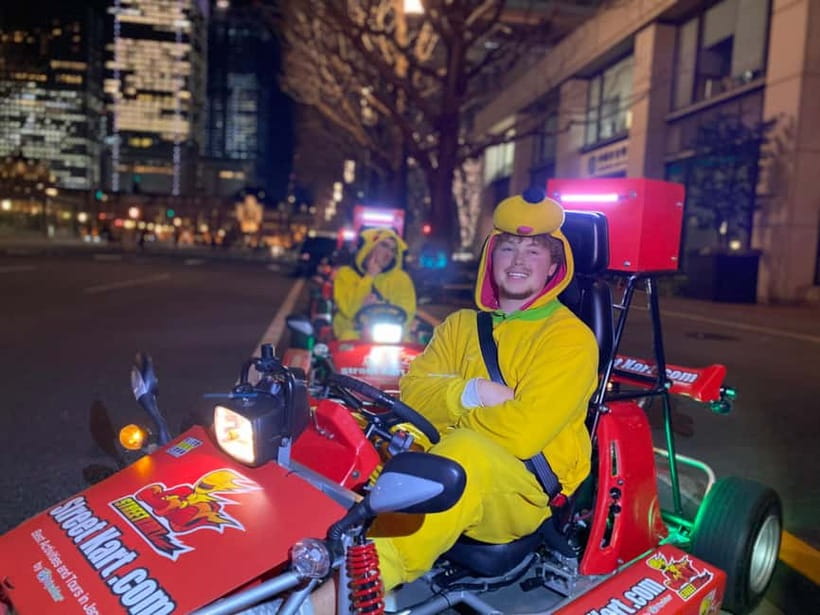
I love when an activity gives you a built-in social moment—and this one does. You’ll rent a costume tied to characters from games and anime/animation, then wear it while you ride. The result is more than cosplay for fun. It’s a magnet.
People wave. People smile. People take pictures. And it’s not only because you’re driving a go-kart—it’s because your costume gives strangers a reason to react in a friendly, natural way. Several riders also called out how much the guide helped with photos and captured moments as you roll through city scenes like Tokyo Station.
There’s also a subtle benefit for you: the costume makes it easier to remember the ride later. When you look at your photo data afterward, it’s not just a blur of street lights—it’s you as a recognizable character in recognizable neighborhoods.
One thing to keep in mind: you still have to follow the practical rules. No high heels, no sandals or flip-flops, no slippers, and you can’t bring a cellphone during the ride. So choose a costume you can wear comfortably with proper shoes.
Driving in Real Tokyo Streets: Fast Fun With Clear Safety Control
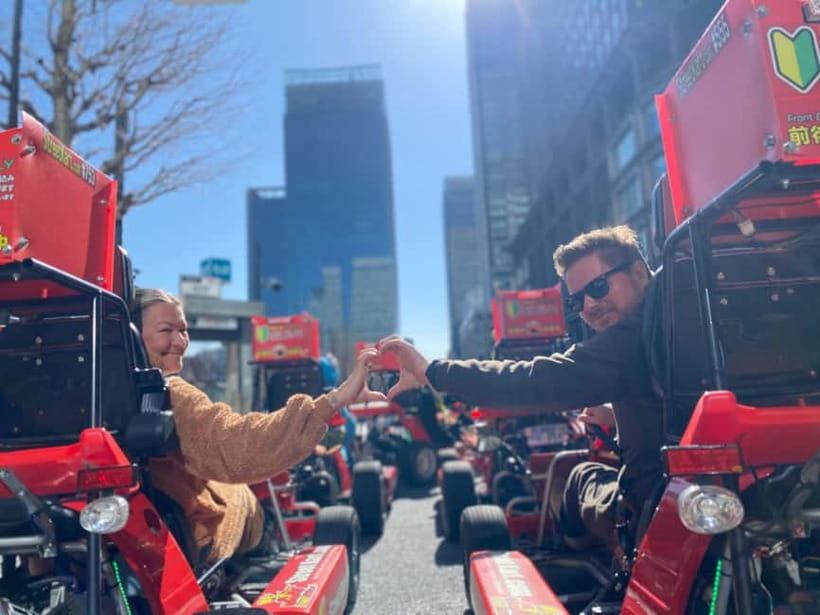
This isn’t bumper cars in a parking lot. You’ll drive among taller cars on real roads, following your guide’s lead. The group format matters: you’ll ride as a small team and stay together by using the guide’s traffic-aware signals.
What I like about how they run it is that riders consistently mention thorough safety briefing and clear communication. Many also point out the guide uses hand signals for safety, and that the lead driver handles most of the guiding while everyone else follows in formation.
You’ll feel the adrenaline, especially at speed on open stretches. At the same time, the guide pacing reduces the common fear factor of driving in a brand-new country. One rider said they were nervous at first but still felt safe because the rules were clearly explained and enforced.
If you’re the kind of person who gets stressed by cars nearby, this is where your comfort level matters. You don’t need to be a race driver, but you should be able to stay calm while surrounded by Tokyo traffic.
Where the Ride Goes: Marunouchi, Tokyo Station, Ginza, and the Akihabara Pop
The route focus is classic Tokyo contrasts—business power, transport scale, shopping sheen, and creative chaos. Here’s what that means while you’re moving at go-kart speed:
- Marunouchi business district: you get the feeling of Tokyo’s official, corporate face. The big moment is the background sightlines, including the Imperial Palace area from the route.
- Tokyo Station area: this is the skyline-worthy anchor. You’re not just hearing about Tokyo Station—you’re rolling past it and clocking how massive the transport hub is with its 28-platform footprint.
- Ginza shopping district: the vibe changes toward polished storefronts and nightlife sparkle. If you’re doing a night slot, Ginza tends to feel extra cinematic with lights on.
- Akihabara: you end up back where the culture is loud and obvious. Your costume choice lands harder here because the streets actually match your character theme.
A fair consideration: because this is a drive-through format, you’re seeing landmarks from the kart, not stopping for museum-style time. If what you want most is lingering views, you may feel like you want more street time in the brightest areas. Still, for many people, it’s the perfect mix of speed and iconic backdrops.
Meeting Point at Street Kart Akihabara 1 (and the Rules That Catch People)
You’ll find Street Kart Akihabara 1’s karts at the meeting location by the glass doors of the building. Arrive with enough time to get checked in, pick your costume, and get fitted before you head out.
Now the non-negotiables, straight up:
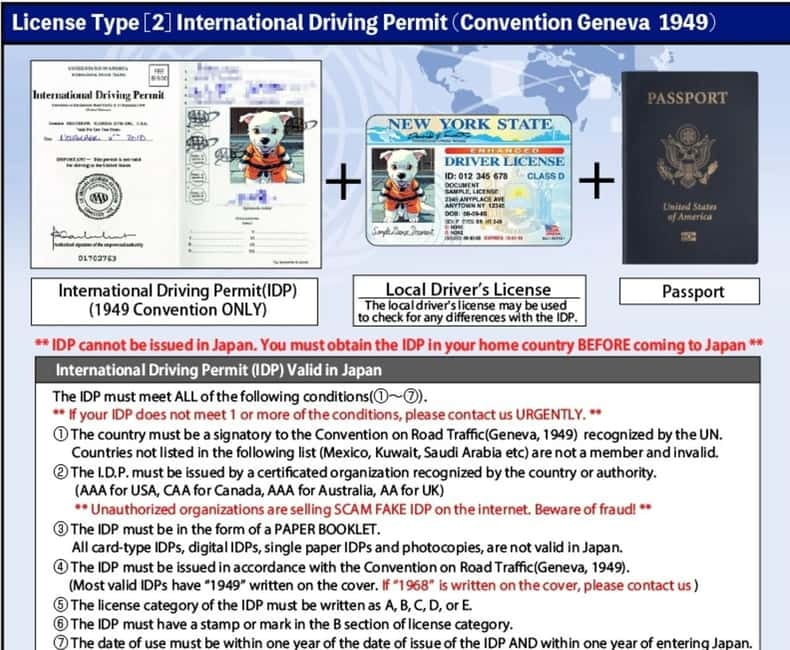
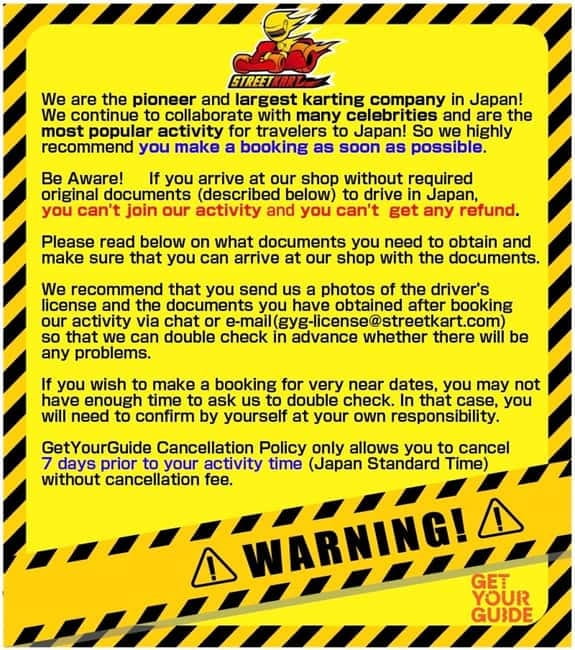
- You must follow Japan driving document rules. After booking, the provider emails guidance on required documents.
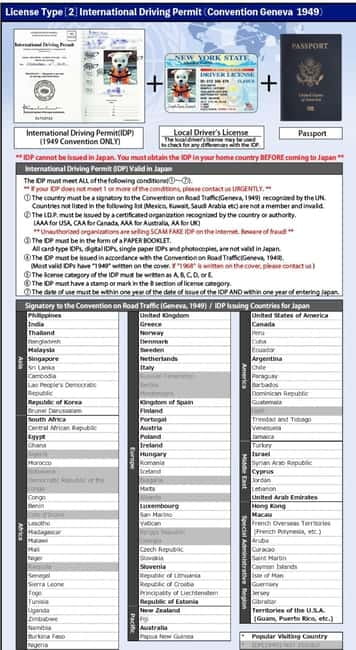
- Most countries require an International Driving Permit (IDP) in the physical booklet format compliant with the 1949 Geneva Convention. You cannot get it online while traveling, and it must be issued by the same country that issued your domestic license.
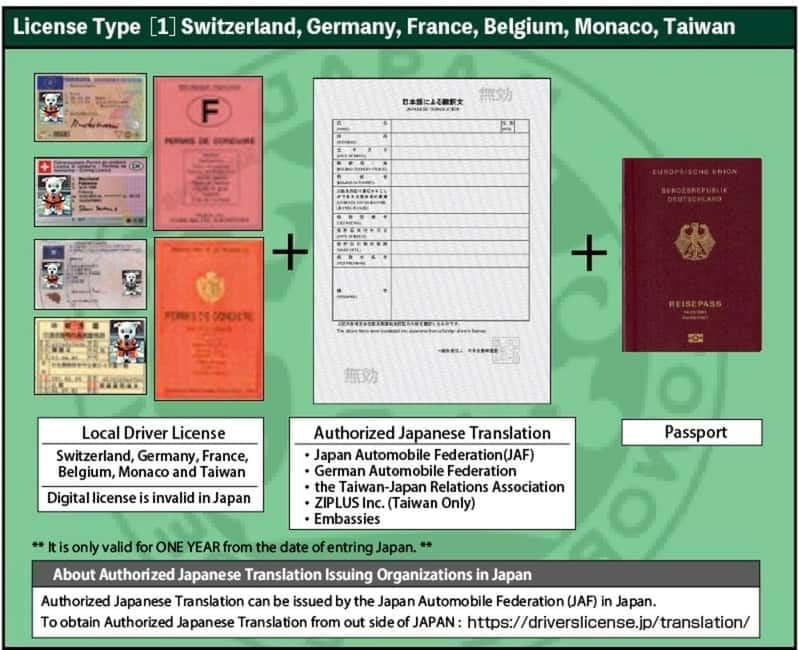
- Some license origin countries (Switzerland, Germany, France, Taiwan, Belgium, Monaco) require a Japanese translation from JAF rather than an IDP.
- If your license country isn’t covered by the 1949 Geneva Convention (examples provided include China, Indonesia, Mexico, Qatar, Saudi Arabia), driving is not permitted.
You also have to carry the physical IDP (or the domestic license plus the official translation in the exceptional cases) and your physical passport.
And during the ride:
- No cellphones
- No prohibited shoes: high heels, sandals/flip-flops, slippers
This is where a lot of people get tripped up. Not because the tour is hard—because Japan driving rules are strict. Treat the documents like the main assignment, and everything else becomes easier.




Price and Value: What $51 Actually Covers
At $51 per person for 1 hour, the value comes from what’s included, not just the dollar amount.
Included:
- Tour on a custom-made go-kart
- Guide (English-speaking)
- Costume rental
- Photo data afterward
Not included:
- Action camera rental fee, plus micro-SD purchase and camera mount rental if you want to attach it
- If you want extra video footage, you’ll need to budget those add-ons
One practical note from rider feedback: don’t assume you can bring and use your own action camera setup on the kart. If you want video, ask ahead about what’s supported.
Is it pricey for one hour? Some people do say the ride feels short. But if you compare it to the overall experience—real city streets, a professional guide, costume included, and photo data delivered after—it holds up well. You’re paying for access and safety control, not just a time slot.
Also, with a small group limited to 6, the experience feels more personal than big group activities. You get attention while learning the kart and staying aligned.
Night Ride Adds Extra Spark
Several riders explicitly recommended doing it at night. The logic is easy: Tokyo’s lighting gives your costume moments extra punch, and Ginza and Tokyo Station tend to look better after sunset.
If your schedule allows it, I’d prioritize an evening slot. You’ll still cover the same major streets, but the feeling shifts from sightseeing to light-show energy.
Who Should Book This—and Who Should Skip It
This is best for:
- People who want adrenaline without giving up structure
- Anyone comfortable following a guide’s instructions while driving among cars
- Fans of anime, games, and character dressing up
- Couples, friends, and solo riders who like small-group activities
This is not a good match for:
- Children under 18
- Pregnant women
- People with back problems
- People with mobility impairments, including wheelchair users
- Visually impaired or hearing-impaired participants
If you fall into any of those categories, it’s better to skip and choose something more suitable. The kart and the driving experience are physical, time-bound, and safety-focused.
Should You Book Street Kart Akihabara?
Book it if you want a Tokyo memory that’s not just photos of streets, but a story you can feel—costume-on, adrenaline-on, with a guide keeping you safe and together.
Don’t book it if your driving documents are uncertain. Japan driving rules are strict here, and you’ll need the right physical IDP or translation paperwork plus your passport. Also skip it if you’re not comfortable with driving in traffic-adjacent conditions, even with a guide.
If you can handle the documents and you’re excited by the idea of driving past Tokyo Station and Ginza while dressed as a game or anime character, this is one of those rare Tokyo activities that turns a regular evening into something you’ll talk about for years.
FAQ
How long is the Street Kart experience?
The tour lasts 1 hour. You’ll see available starting times when you check availability.
Where exactly is the meeting point?
Meet Street Kart Akihabara 1 at the go-karts, located through the glass doors of the building.
Is the guide available in English?
Yes. The tour offers a live English-speaking guide.
How big is the group?
It’s a small group, limited to 6 participants.
What’s included in the price?
The price includes the custom-made go-kart ride, the guide, costume rental, and photo data after the tour.
What do I need to drive in Japan?
You’ll need the right driving documents. For most countries, that means a physical International Driving Permit (IDP) (1949 Geneva Convention booklet format) plus your physical passport. Some countries require a Japanese translation from JAF instead of an IDP.
What items are not allowed during the ride?
You can’t bring cellphones. Also, you’re not allowed high-heeled shoes, sandals or flip-flops, or slippers.
Is it okay to bring an action camera?
Action cameras are not included. If you want one, you’ll need the action camera rental fee, plus micro-SD purchase and a camera mount rental fee.
Is there free cancellation?
Yes. You can cancel up to 7 days in advance for a full refund.
If you want, tell me your country of license and whether you’re aiming for day or night, and I’ll help you sanity-check the IDP/translation angle and pick the smartest time slot.
![[Seasonal Limited] Mt. Fuji 5th Station &Hot Spring Day Tour - Your day on the road: pickup, drive time, and what to expect from the guide](https://e.thetokyoexplorer.com/wp-content/uploads/seasonal-limited-mt-fuji-5th-station-hot-spring-day-tour-400x225.jpg)