REVIEW · TOKYO
Kid-Friendly Sushi Making Class in Tokyo (English-Led)
Book on Viator →Operated by Tokyo Sushi-Making Tour · Bookable on Viator
Tokyo is famous for sushi, but this class gives you the hands-on version. You get a laid-back, small-group workshop where you’ll learn sushi history, etiquette, and Japanese phrases while making and eating your own rolls and nigiri. It is designed for kids 8+ and for adults who want practical skills, not just a demo.
What I like most is the small-group feel (max 8) paired with hands-on guidance from the English-speaking class leader. In the reviews, instructors like Nat and Morris are specifically praised for clear English, patience, and keeping the class fun without rushing anyone.
One thing to consider: the class typically uses raw salmon and tuna, and you’ll need to request the non-raw fish, vegetarian, or gluten-free options ahead of time if that matters for your family.
In This Review
- Key things to know before you go
- Tokyo Sushi Skills, 2.5 Hours, and an English-Led Small Group
- Getting to the Class at Kita-Senju Station (East Exit)
- The Warm-Up: Sushi Etiquette, Trivia, and Japanese Phrase Practice
- Making Vinegared Sushi Rice: Where Most of the Skill Happens
- Four Sushi Styles You’ll Make (Plus What Each Teaches)
- Decorative Sushi Roll
- California Roll
- Nigiri-Sushi
- Battleship Roll
- Raw Fish Plans, Non-Raw Options, and Dietary Requests You Can Actually Manage
- Small-Group Pacing and Why It Works for Kids (8+)
- Price and Value: What $68.97 Buys You in Tokyo
- What Your Morning Feels Like: A Practical Timeline
- Who Should Book This Class—and Who Might Skip It
- Should You Book? My Bottom Line
- FAQ
- What is the duration of the Kid-Friendly Sushi Making Class in Tokyo?
- What age is this class suitable for?
- Is the class taught in English?
- What sushi will we learn to make?
- Are dietary restrictions and allergies accommodated?
- Where do we meet for the class?
- How large is the group?
Key things to know before you go
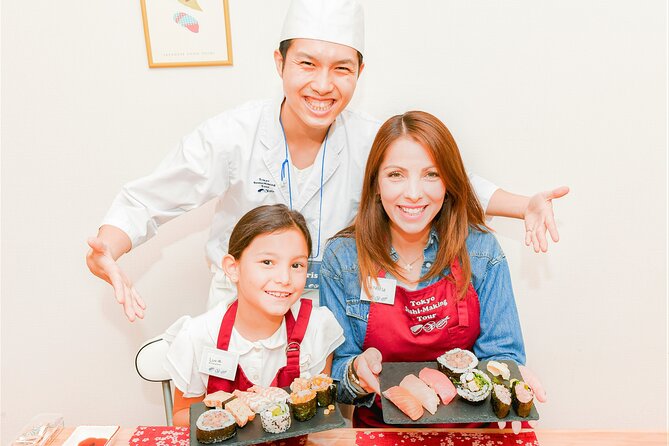
- Max 8 people means you get more attention while you’re rolling and shaping.
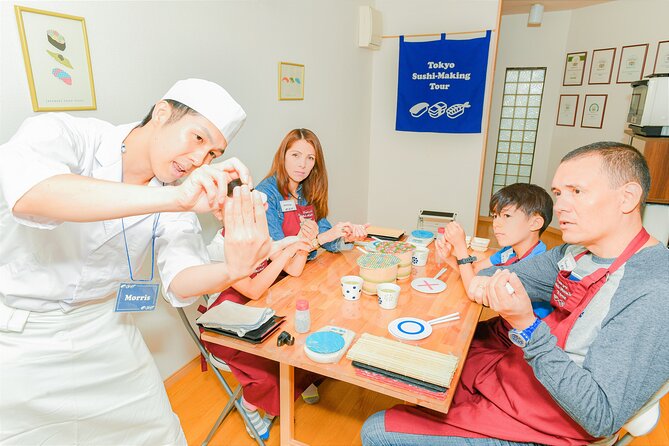
- English-led instruction includes sushi history, etiquette, and a fun pop quiz.
- You’ll make four sushi styles, not just one basic roll.
- Vinegared sushi rice is the foundation, and that’s where most of the skill lives.
- Dietary options exist (non-raw fish, vegetarian, gluten-free) if you inform them in advance.
- You eat your creations right after making them.
Tokyo Sushi Skills, 2.5 Hours, and an English-Led Small Group
A sushi class in Tokyo can be either stiff and showy or casual and actually useful. This one leans casual, with a pace that works for families and first-timers. You spend about 2 hours 30 minutes learning the why and then doing the how.
The English-led format is a big deal. You’ll hear sushi history, etiquette tips, and travel-friendly Japanese phrases as part of the lesson, not as a separate lecture. Based on what’s been shared by prior families, the instructor leadership style matters here, and names like Nat and Morris come up often for being patient, friendly, and easy to follow in English.
The class is also heavily structured around creating food you can be proud of. You do more than assemble ingredients. You learn the rice, shape sushi in multiple styles, and then sit down with what you made.
You can also read our reviews of more tours and experiences in Tokyo



Getting to the Class at Kita-Senju Station (East Exit)
You’ll meet at the East exit of Kita-Senju Station, with the start time listed as 10:30 AM. Then you’ll head to the cooking venue together. That matters because getting to the exact meeting spot in Tokyo can be half the battle, especially with kids.
Kita-Senju is convenient if you’re already moving around Tokyo’s east side. The class also notes accessibility from areas like Asakusa, Akihabara, Ueno, and Ginza, which is helpful when planning the rest of your day. If you’re doing the classic tourist route, this location is usually easier than tacking on a far-flung neighborhood.
If you want the smoothest experience, give yourself a little extra time to find the East exit and get settled. Once you’re at the meeting point, the rest feels organized and straightforward.
The Warm-Up: Sushi Etiquette, Trivia, and Japanese Phrase Practice
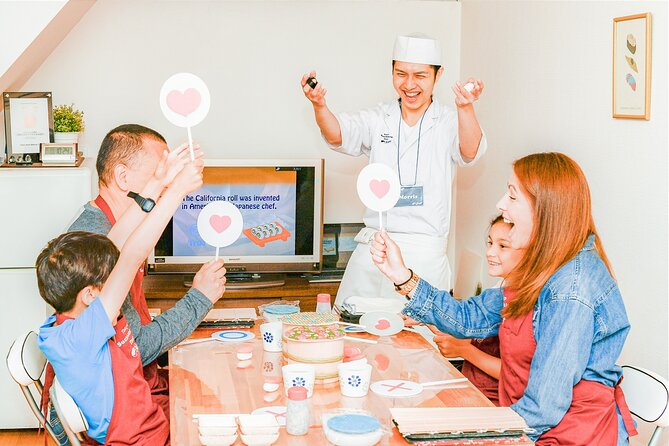
Before anyone touches rice, you start with a quiz and a quick education on sushi basics. Expect sushi etiquette and trivia through an entertaining format, plus Japanese phrases and travel tips as you go.
This is one of the clever parts of the class. People can feel intimidated by sushi culture when they don’t know the rules. A short pop quiz cuts that tension fast. It also helps kids focus because the class starts with something interactive rather than standing around.
You’ll also learn the etiquette in a practical way—what you do and how to think about the experience at a sushi bar. It is the kind of lesson that makes eating sushi later feel less like guesswork.
Making Vinegared Sushi Rice: Where Most of the Skill Happens
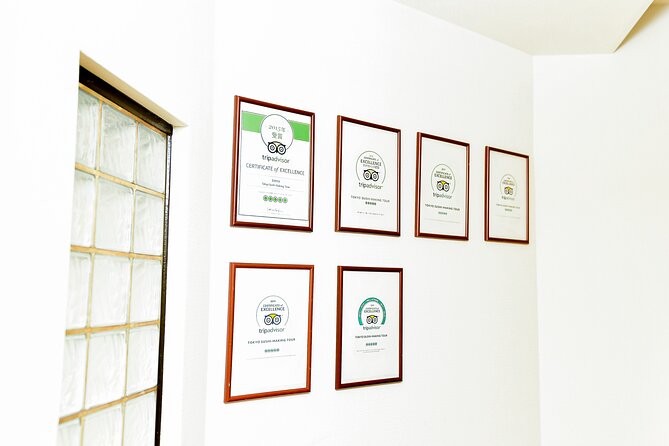
Most sushi success comes down to rice. Here, you’ll craft vinegared rice and learn the key steps needed to get it right.
Even if you have never cooked before, this part tends to be manageable because the instructor can correct problems in real time: how the rice is mixed, how it cools, and how you handle it while it is still warm enough to work. Sushi rice can turn from perfect to messy quickly, so the value of guided practice is huge.
I also like that this class treats rice as a skill, not a throw-in. When you understand rice texture and seasoning, you’re more likely to recreate sushi at home. And for kids, the rice-making steps are tactile and satisfying, which helps them stay engaged.
Four Sushi Styles You’ll Make (Plus What Each Teaches)
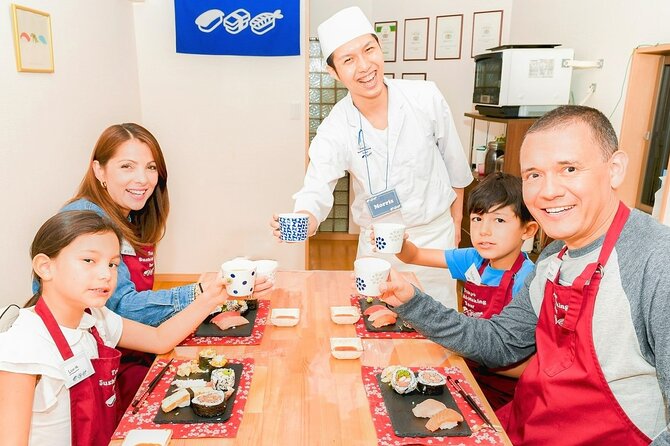
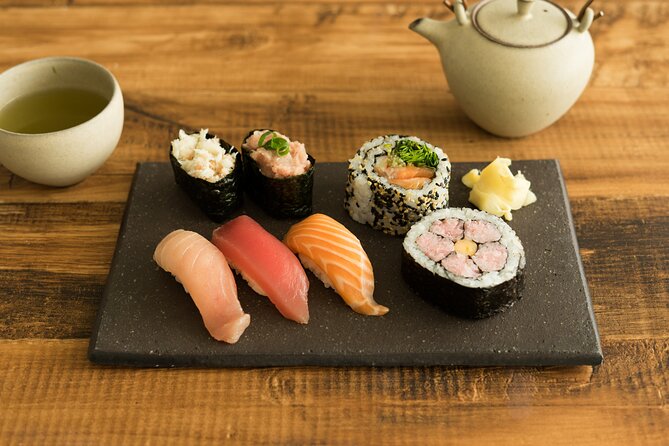
You’ll make four varieties during the class. The lineup includes:






Decorative Sushi Roll
You’ll create a decorative sushi roll, which is perfect for kids and for adults who like food that looks like art. From the feedback shared in past experiences, the fun moment is seeing the patterns come together as you roll and shape.
The hidden lesson: decorative rolls teach you consistency. If you spread ingredients unevenly, the look suffers. If your roll is too tight or too loose, the shape changes. So it is not just pretty—it is practice for control.
California Roll
Next is the California Roll, a familiar style that helps you anchor the skills you learned earlier. You’ll work through rolling and assembly in a way you can later repeat at home.
For families, this is a relief because it feels achievable. You can compare your roll to what you’ve seen in restaurants and quickly spot what improved between batches.
Nigiri-Sushi
Then you’ll move to Nigiri-Sushi. This is where things shift from rolling to shaping, and it teaches a different kind of finesse. Nigiri is less forgiving if the rice mass is off or if the topping placement is sloppy, so having an instructor nearby makes a big difference.
This is a great section for adults who want to impress at home later. Once you learn basic nigiri handling, you’ll understand why real sushi chefs pay attention to touch and timing.
Battleship Roll
Finally, you’ll craft a Battleship Roll—also described as shaped sushi—and this is where the class shows it has a sense of humor. It is a playful concept, but it still trains technique: shaping, compacting, and slicing-ready structure.
The practical takeaway: if you can shape a “battleship” style roll, you’ve basically learned how to control form. That skill translates to other roll types too, even if you experiment later on your own.
Raw Fish Plans, Non-Raw Options, and Dietary Requests You Can Actually Manage
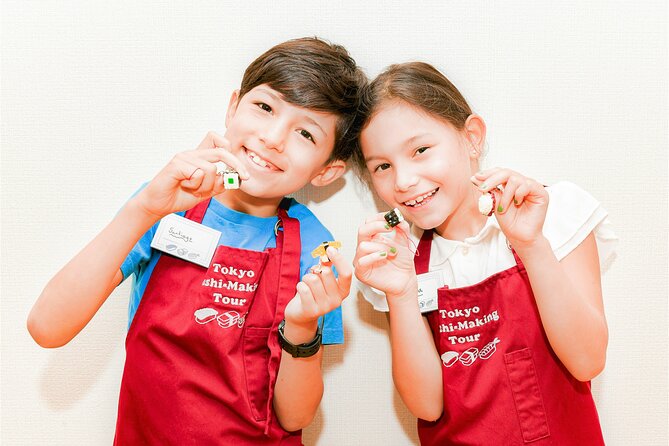
The class notes that the ingredients typically include raw salmon and tuna, but they also say they can accommodate dietary preferences and restrictions with menus such as:
- Non-Raw Fish Menu
- Vegetarian Menu
- Gluten-Free Menu
The important part is the timing: you need to inform them in advance. That means don’t leave dietary requests to the last minute, especially if you’re traveling with kids who are picky or have allergies.
If you’re not doing raw fish, you can still expect the class to focus on technique. You’ll still craft rice, shape sushi styles, and eat what you make. The flavor profile changes, but the core learning stays.
This is a big value point because sushi-making classes often assume everyone eats everything. Here, the structure explicitly supports adjustments.
Small-Group Pacing and Why It Works for Kids (8+)
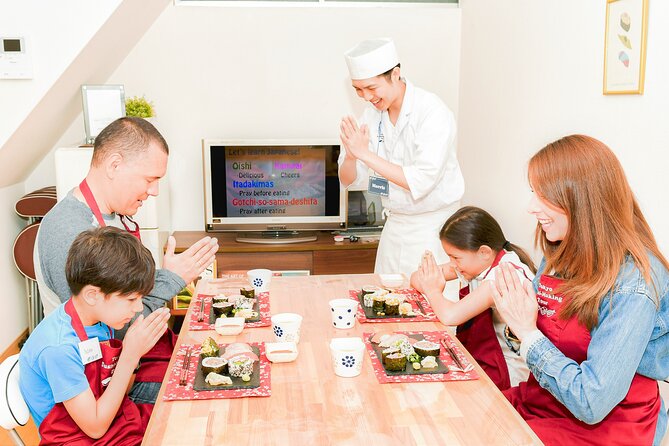
This class is designed for children aged eight and above, and it caps at 8 travelers. In practice, that combination keeps the energy manageable. Kids don’t disappear into the back row, and the instructor can circulate to catch small mistakes early.
The pacing also matters. Based on how families describe the experience, the flow feels well-organized—history and etiquette at the start, rice-building in the middle, and multiple sushi builds with time to eat at the end. That helps kids stay curious rather than bored.
If you’re an adult riding along with kids, you still get a real class. You’re not reduced to a spectator. The instructor style highlighted in reviews—English clarity, patience, and answering questions—suggests the teaching stays practical even when there are young chefs in the room.
Price and Value: What $68.97 Buys You in Tokyo
At $68.97 per person, this isn’t a bargain-basement activity. But when you look at what’s included, it starts to make sense.
You’re paying for:
- A 2.5-hour guided workshop with English instruction
- Hands-on coaching for multiple sushi types (not just a single roll)
- Sushi etiquette, trivia, and some Japanese phrase practice
- Ingredients and the ability to eat what you make
- A small group size that supports personal attention
Food classes can be expensive anywhere, but Tokyo pricing can sting. Here, the class earns its cost because the learning is structured around repeatable skills: rice handling and shaping techniques that you can use later.
If you compare it to paying for sushi experience after sushi experience, this class gives you a tangible skill you can bring home—and the meal is part of the package, not an add-on.
What Your Morning Feels Like: A Practical Timeline
Here’s how the class typically unfolds, based on the described activities:
- Meet at Kita-Senju East Exit at 10:30 AM, then transfer to the venue.
- Start with etiquette and trivia via a pop quiz format.
- Learn sushi history and pick up travel-friendly Japanese phrases as part of the teaching.
- Make vinegared sushi rice, the base for everything else.
- Create four sushi varieties: decorative roll, California roll, nigiri, and battleship roll.
- Eat your sushi together at the end.
The main benefit of this flow is momentum. You’re never stuck for long. Each segment feeds into the next, and you build confidence because you finish with a plate of food that matches your effort.
Who Should Book This Class—and Who Might Skip It
This class is a strong fit if you want sushi skills that are:
- Family-friendly for kids 8+
- English-led, with instruction you can follow closely
- Hands-on with multiple styles, including nigiri and decorative rolls
- Flexible with dietary options if requested in advance
You might skip it if you’re looking for a long, high-level chef workshop with deeper culinary theory. The structure is educational and practical, but it’s not presented as a professional masterclass. It’s more of a fun-to-learn, techniques-first experience.
If you like interactive food experiences and you want something more memorable than another meal, this is the kind of Tokyo activity that turns into a story you’ll tell later.
Should You Book? My Bottom Line
Yes, I’d book it if your goal is to leave Tokyo with skills you can actually use. The combo of English instruction, small-group personal attention, and four sushi styles is exactly what makes a sushi class feel worth the time and money. Add in the emphasis on etiquette and the pop quiz warm-up, and it becomes more than just cooking.
Just plan one thing carefully: if you need non-raw fish, vegetarian, or gluten-free, tell them in advance so you get the right menu.
If that’s handled, this is a fun morning that teaches real technique—and feeds you what you make.
FAQ
What is the duration of the Kid-Friendly Sushi Making Class in Tokyo?
It runs for about 2 hours 30 minutes.
What age is this class suitable for?
It is suitable for children aged eight and above.
Is the class taught in English?
Yes. The class is described as English-led with English-speaking instructors.
What sushi will we learn to make?
You’ll make four varieties: Decorative Sushi Roll, California Roll, Nigiri-Sushi, and Battleship Roll.
Are dietary restrictions and allergies accommodated?
Yes. The class offers options like Non-Raw Fish, Vegetarian, and Gluten-Free menus, but you need to inform them in advance.
Where do we meet for the class?
The meeting point is at the East exit of Kita-Senju Station (with the start time listed as 10:30 AM).
How large is the group?
The maximum group size is 8 travelers.