REVIEW · TOKYO
The Best Family-Friendly Tokyo Tour with Government Licensed Guide
Book on Viator →Operated by Japan Guide Agency · Bookable on Viator
Tokyo feels less chaotic with a guide. This 6-hour, family-friendly private tour pairs a licensed local English-speaking guide with an easy choose-your-own route, so you can pick 3–4 favorites like Senso-ji, Tsukiji, Edo–Tokyo Museum, and Ueno Park. You’re walking and using public transport without the stress of figuring it out mid-day.
I love the way the guides adapt to kids. Seizo paced things with flexible breaks for cooling off and snacks when my group had two young daughters, which is exactly what makes a “sightseeing day” work with little legs. I also like the practical food help—Kei helped a family with dietary restrictions find ramen everyone could eat.
Here’s the one catch to plan for: this is a walking tour, and not everything is free once you choose your stops. Transport (or taxis) and museum/zoo entrances like Edo–Tokyo Museum and many Ueno Park attractions are extra, so you’ll want to budget and bring some cash/change.
In This Review
- Key highlights worth circling first
- A family-first Tokyo day built around 3–4 stops you actually want
- Meeting your licensed guide and how you move around
- Senso-ji and Asakusa: the temple stop that works for kids
- Kappabashi Street (kitchen tools) and Ameyoko (market energy)
- Kappabashi Street for real-world souvenirs
- Ameyoko for snacks and shopping chaos (the managed kind)
- Tsukiji Outer Market: food watching without the wholesale hassle
- Edo–Tokyo Museum and Ueno Park: pick one culture stop, not two stressors
- Edo–Tokyo Museum (admission not included)
- Ueno Park (admission not included for certain attractions)
- Price and logistics: what you’re really paying for at $154.84
- Who this tour fits best (and who might want a different plan)
- Should you book this family-friendly Tokyo tour?
- FAQ
- How long is the tour?
- How many places will we visit?
- Is this a walking tour?
- What’s included in the price?
- Are entrance fees included?
- What costs extra besides the tour price?
- Is free cancellation available?
Key highlights worth circling first
- Licensed local English-speaking guide who can steer the day and explain what you’re seeing
- Customizable private tour with 3–4 stops chosen from classic family-friendly zones
- Asakusa anchor point at Senso-ji with free admission and big visual payoff for kids
- Kappabashi + Ameyoko for hands-on shopping energy, from kitchen tools to market snacks
- Tsukiji Outer Market time for food watching and eating options without wholesale-market chaos
- Flexible pacing for families, including time for breaks and snack stops
A family-first Tokyo day built around 3–4 stops you actually want
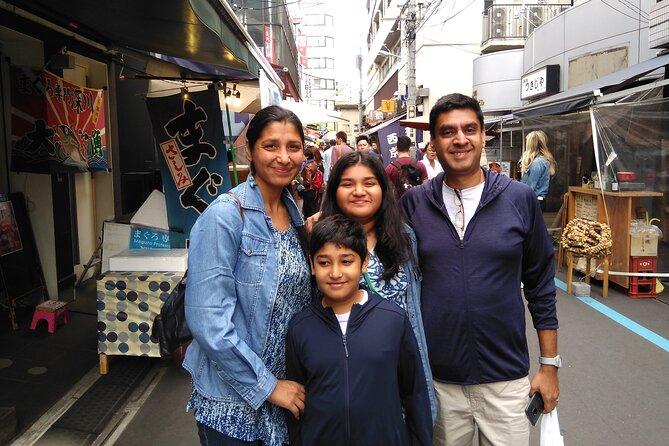
Tokyo can overwhelm families fast. There’s a lot to see, and the city rewards those who plan. This tour’s smart move is keeping the day focused: you select 3–4 places from a set of strong options, instead of dragging everyone through a packed checklist.
That design matters with kids because it protects attention. When your itinerary has room for curiosity—cool street shops, looking at temple details, tasting one snack and moving on—the day feels like a guided adventure, not a forced march. It also means you can shape the route around ages and energy levels. An 8-year-old and a 6-year-old don’t need the same tempo as adults, and the guides know it.
Also, the tour is set up as private. That’s a big value shift. You’re not negotiating for space with other families at kid speed, and you can ask questions without waiting your turn. In past days, guides like Seizo and Kei were praised for being patient and adjusting in real time—exactly the kind of flexibility you want when your group includes kids with moods.
You can also read our reviews of more guided tours in Tokyo

Meeting your licensed guide and how you move around
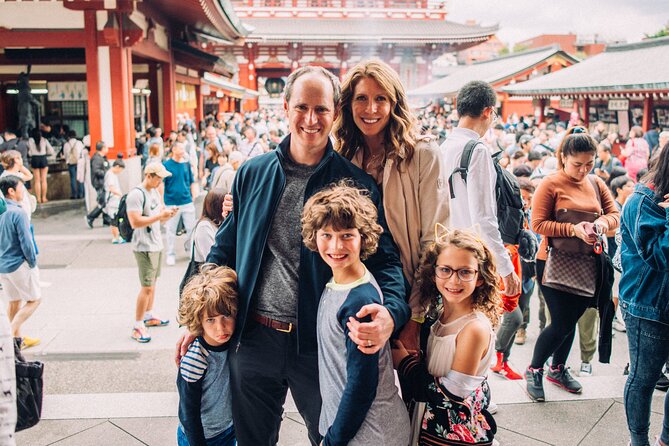
This experience runs on a walking meet-up within a designated area. The plan is simple: you connect with your guide on foot near where you’re staying, then head out from there. Some families have reported meeting at the hotel on time, which is helpful if your mornings start with coffee and then “where do we go now?”
Once you’re moving, the tour uses public transport or walking (and taxis are an option). Just be aware of the wording here: transportation fees are extra, so bring some change and plan for metro/bus costs if you go beyond pure walking. The tour duration is about 6 hours, which includes time moving between stops. That’s a lot of time—but it’s also enough to hit a temple, one market area, and either a museum or a park without turning everything into a blur.
How do I recommend you think about it? Treat it like a guided “loop of neighborhoods,” not a museum circuit. Your guide’s job isn’t to rush you to 10 checkboxes. It’s to get you to the right places efficiently and keep the day coherent for kids and adults.
Senso-ji and Asakusa: the temple stop that works for kids
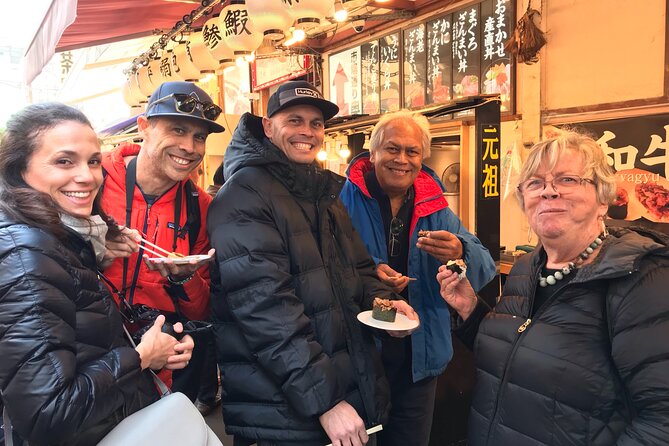
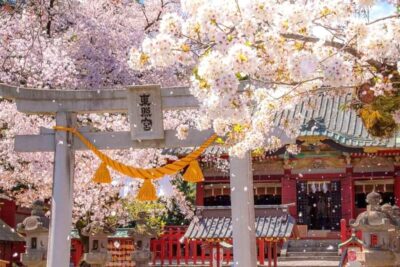
Senso-ji is the kind of place where kids instantly get it. It’s colorful, busy in a fun way, and full of visuals that don’t require a lecture to enjoy. The tour starts you at Senso-ji (Asakusa Kannon Temple), which is free and lasts about 30 minutes in the typical flow.
What makes this stop work in a family itinerary is its “choose your own curiosity” layout. You can point out details, talk about what temples are for, and then let kids linger—without feeling like you’re wasting paid time. If your kids like big crowds, they’ll love it. If they get overstimulated, you still have enough open space around the area to regroup.
I’d also plan this as your first emotional win. Seizo was specifically praised for navigating the day so the family left loving Tokyo, and starting with a landmark like Senso-ji helps you get that early confidence boost. You arrive, you see something iconic, and suddenly the rest of the day feels achievable.
Kappabashi Street (kitchen tools) and Ameyoko (market energy)
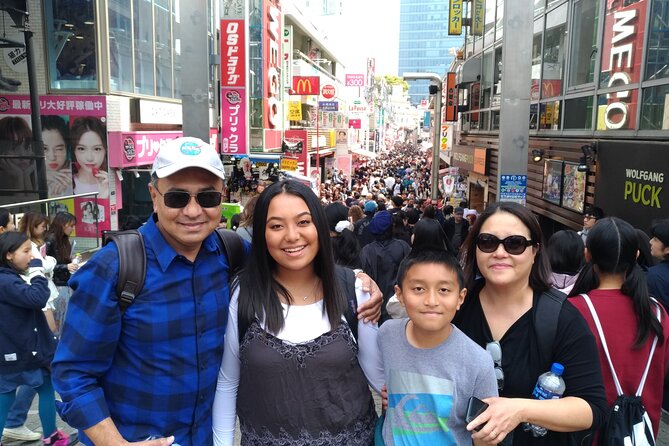
After Asakusa, the route often turns into shopping streets, and that’s where this tour shines for families who want more than just photos.
Kappabashi Street for real-world souvenirs
Kappabashi Dōgugai is famous for kitchen tools and restaurant supplies. Think cookware, food prep gadgets, and shopfronts that are fun even if you don’t plan to buy anything. The tour typically allots about 30 minutes here, with free admission.
This stop hits a sweet spot: it’s not a “tourist trap” mall. It’s a working-style shopping street vibe. Kids can enjoy the novelty, and adults can spot practical items—things you’d actually use after the trip.






Ameyoko for snacks and shopping chaos (the managed kind)
Ameyoko Shopping Street is a busy market area along the Yamanote Line tracks between Okachimachi and Ueno. The name comes from Ameya Yokocho, and the street is known for candies and lots of food stalls and shops.
Expect a lively atmosphere. That’s good on a family tour because it feels like exploration rather than museum time. But this kind of neighborhood can overwhelm if you try to navigate on your own. Having a guide helps you move through it efficiently and still stop for the right snacks at the right time.
If your group has dietary restrictions, pay attention. Kei was praised for helping his family find ramen that fit everyone’s needs. That’s the kind of practical guidance that can turn market browsing from stressful to fun.
Tsukiji Outer Market: food watching without the wholesale hassle
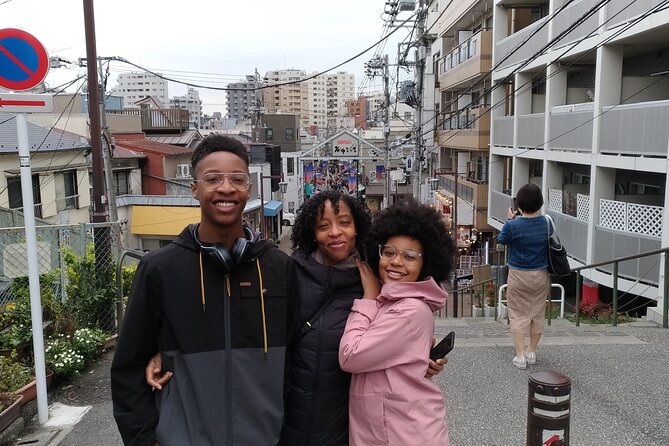
Tsukiji Outer Market is one of Tokyo’s best “arrive hungry” zones. The tour includes time at the Outer Market area (not the wholesale-only inner operations), which is free to enter and typically planned for about 30 minutes.
This is a short window, and that’s intentional. You’ll get the atmosphere and a chance to try something without spending hours under decision pressure. For many families, this becomes the mid-day highlight—especially kids who want to snack immediately when they see food.
What I like about the way Tsukiji fits here is pacing. You already started with Asakusa’s cultural vibe, then you move through shopping streets, then you hit Tsukiji for food pay-off. That rhythm keeps energy steady for both kids and adults.
Tip from how guides describe outcomes: plan one “must-try” and let the rest be optional. When you don’t overload the schedule, even picky eaters can participate. The guide’s role is to point you to places that work for your group, including simple options that don’t turn into a long wait.
Edo–Tokyo Museum and Ueno Park: pick one culture stop, not two stressors
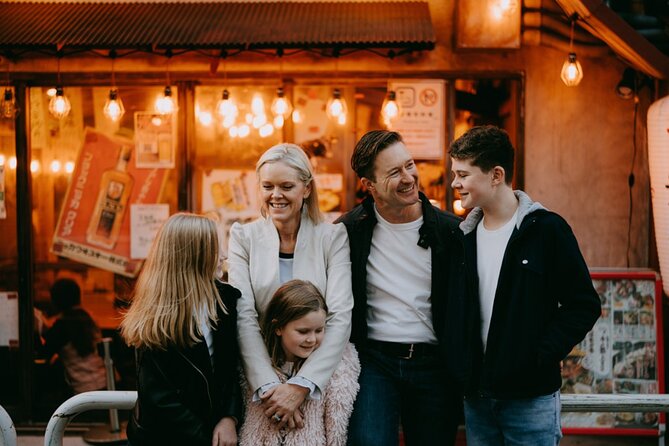
You’ll choose between culture and chill depending on your kids and your interests. Two classic options appear in the route: the Edo–Tokyo Museum and Ueno Park.
Edo–Tokyo Museum (admission not included)
The Edo–Tokyo Museum is housed in a distinctive building in the Ryogoku district. The permanent exhibits focus on Tokyo’s past—historical storytelling in a museum setting. The tour includes a stop here, but museum admission isn’t included.
This can work especially well for older kids who like learning. It also works for adults who want context beyond “look, temple, market, snack.” Just don’t treat it as an all-day museum. In a 6-hour family tour, you’re getting an “anchor lesson” rather than a full deep museum program.
Ueno Park (admission not included for certain attractions)
Ueno Park is the bigger playground option. It has several museums, a zoo, a Toshogu Shrine, and Shinobazu Pond among other attractions. The park stop itself is short in the tour flow (about 10 minutes), and admission for specific attractions is not included.
For families, Ueno Park is valuable because it gives you a breather. After market and walking, parks help reset everyone. Kids can run, adults can rest, and the day doesn’t end in a sprint.
In practice, the “right” choice between Edo–Tokyo Museum and Ueno Park depends on how your kids handle indoor time. If they’re museum-tolerant, go Edo–Tokyo Museum. If they’re done with sitting after markets, choose Ueno Park and use the time to recharge.
Price and logistics: what you’re really paying for at $154.84
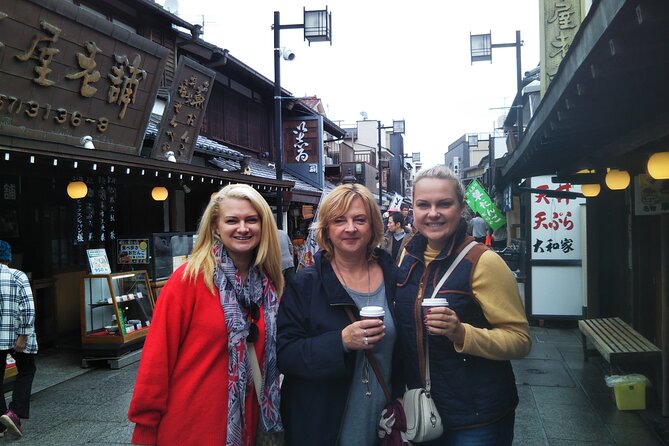
At $154.84 per person for about 6 hours, this tour isn’t the cheapest way to see Tokyo. So what do you get that makes it worth it?
1) Government-licensed, local guidance (English-speaking) for a high-friction day. Families struggle most with navigation, timing, and knowing what to prioritize. A guide reduces that friction.
2) Private, customizable pacing with 3–4 stops. You’re not paying for a rigid script that ignores your kids’ needs.
3) Efficiency without the got-lost penalty. Even if you’re comfortable using transit, kids add uncertainty. The guide’s route planning helps keep momentum.
What’s not included is just as important. Transportation, entrance fees, lunch, and other personal expenses are extra. That means you should treat the price as paying for the guide and the core guided experience, while your group covers the out-of-pocket costs related to food and paid attractions.
One more practical note: public transport or taxi fees are extra, so budgeting ahead prevents mid-day math stress. Also, the tour is a walking tour, so comfortable shoes are non-negotiable.
Who this tour fits best (and who might want a different plan)
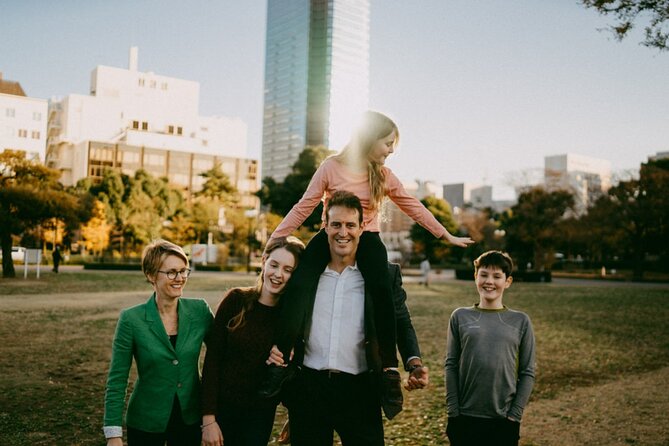
This is a strong fit for families who want structure without losing flexibility. It works well when you want an efficient “Tokyo sampler” with recognizable stops—Senso-ji, shopping streets, Tsukiji—and at least one culture or park option.
It’s also a good match for first-time visitors who feel anxious about navigation. Multiple guides were praised for planning around kids, including one who was thoughtful with teenagers and a younger child on a long walking day. If you’re traveling with mixed ages, that flexibility can save the day.
Where it may be less ideal is if your family wants lots of scheduled indoor time or has limited tolerance for walking. The tour is designed around neighborhoods and movement. If you’re planning a very relaxed vacation with minimal steps, you might find the walking component tiring.
Should you book this family-friendly Tokyo tour?
Book it if you want a guided, family-friendly Tokyo introduction that’s not a rigid “big day” script. The combination of a licensed English-speaking guide, private customization (3–4 stops), and neighborhood-level navigation tends to deliver the kind of day families remember: iconic sights, real shopping energy, and food stops that feel manageable.
Skip it or rethink if you strongly prefer fully self-guided exploring, or if your group needs lots of taxi-only movement and minimal walking. Also check your plan for entrance fees. Edo–Tokyo Museum and many Ueno Park attractions cost extra, so decide ahead of time which one you truly want.
If your family’s goal is to get oriented fast and have a day that doesn’t unravel, this tour is a solid choice.
FAQ
How long is the tour?
The tour lasts about 6 hours.
How many places will we visit?
The tour is described as a customizable private tour of 3 to 4 places of your choice.
Is this a walking tour?
Yes. This is a walking tour, and pickup is on foot. You meet the guide within a designated area in Tokyo.
What’s included in the price?
Included are a licensed local English-speaking guide, a customizable private tour for 3–4 stops, and meeting the guide on foot within a designated area of Tokyo.
Are entrance fees included?
Some are free (for example Senso-ji and the market/shopping street stops). Entrance for places like Edo–Tokyo Museum and attractions within Ueno Park are not included.
What costs extra besides the tour price?
Transportation fees, entrance fees (where applicable), lunch, and other personal expenses are not included.
Is free cancellation available?
Yes. You can cancel up to 24 hours in advance for a full refund.