REVIEW · TOKYO
Kaisendon and Sashimi Cutting Workshop
Book on Viator →Operated by 割烹道 · Bookable on Viator
A sharp knife lesson in Tokyo? That’s what you get, with hands-on sashimi cutting and a homemade kaisendon meal as the payoff. In this workshop, you practice with guidance from instructor Naoya Kumagai, then slice sashimi and lay it over vinegared rice to build your own seafood bowl.
Two things I really like about this experience are the small group setup (maximum 4 people) and the fact that you don’t just watch. You get a lecture and demonstration, then you cut, assemble, and eat what you make, with miso soup and sake included for a full meal.
One thing to consider: this is focused and time-boxed. You’re learning enough to cut properly during the session, not spending hours on advanced theory or long-form knife training.
In This Review
- Key highlights you’ll actually feel in your hands
- Knife skills that end in something you can eat
- Where the class happens: Kappodo in Nishiazabu
- The 90-minute flow: how the workshop moves
- 1) Greeting and intro
- 2) Lecture on sashimi knives
- 3) Demonstration: knife technique in motion
- 4) Practice with flour dumplings (warm-up)
- 5) Practice cutting sashimi for each person
- 6) Make your kaisendon
- 7) Tasting time with miso soup and sake
- Tools, instructor support, and why the class feels warm
- Cutting technique: what you’re really learning
- 1) Blade angle and control
- 2) Motion, not force
- 3) Translating cuts into plating
- Kaisendon assembly: turning practice into a bowl
- Value for $160: what you’re paying for
- Who should book this class
- Should you book Kaisendon and Sashimi Cutting Workshop?
- FAQ
- What happens in the Kaisendon and Sashimi Cutting Workshop?
- How long is the workshop?
- What is included in the price?
- Is transportation included?
- How many people can join the workshop?
- What’s the cancellation policy?
Key highlights you’ll actually feel in your hands
- Small group (max 4) keeps the pace calm and the instructor close.
- Real sashimi cutting practice after a warm-up using flour dumplings.
- Knife technique lecture and demo from Naoya Kumagai to make the hands-on part click.
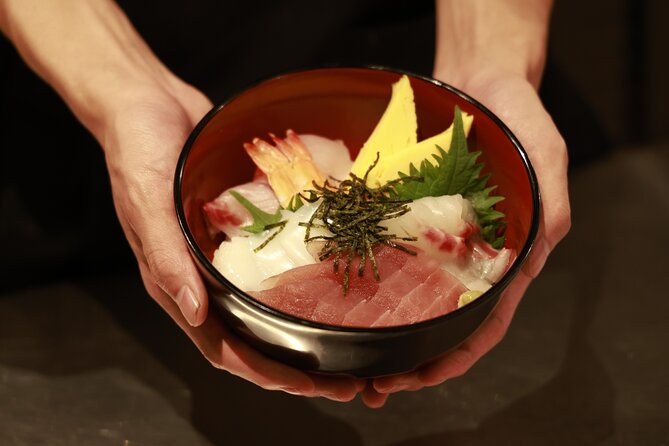
- Your own kaisendon assembly: sashimi over vinegared rice, then you eat it.
- Miso soup and sake tasting turn the workshop into a complete meal.
- Participation certificate + same-day shop discount (10%) add extra value.
Knife skills that end in something you can eat
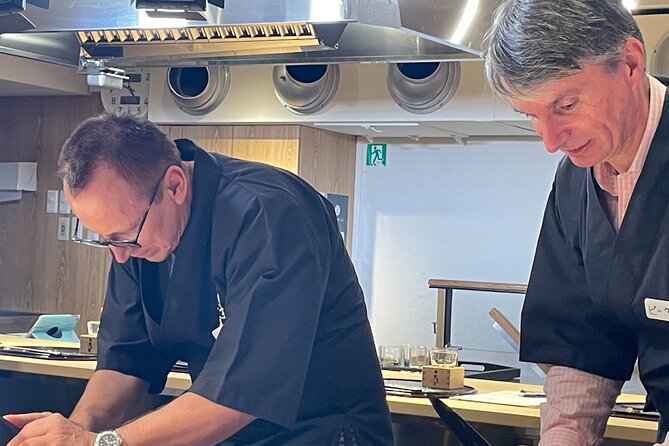
Tokyo has plenty of cooking classes. This one works differently because the core skill is not cooking in the usual sense. It’s control: grip, angle, and motion—so the fish is cut cleanly enough to sit nicely over rice.
You start with a short lecture and demonstration, then you move into practice. The lesson is built around a simple idea that makes sense for beginners and returners: you learn knife technique best by doing it repeatedly, in a setting where someone can correct your form.
And then comes the part that makes it memorable. You build a kaisen-don (seafood bowl) by placing your sliced sashimi on top of vinegared rice, and you eat it right there, warm and fresh. That link between skill and result is rare in short classes.
You can also read our reviews of more tours and experiences in Tokyo

Where the class happens: Kappodo in Nishiazabu
Your workshop meeting point is at Kappodo HQ / Tokyo D Kitchen Studio in Nishiazabu, Minato City (DKビル). The session is designed so you can step in, get oriented, and start cutting without fuss.
You’ll check in shortly before the action begins. The class runs in set blocks, with registration around 10:45/12:45 and the main session starting around 11:00/13:00 depending on which time slot you book. The tour summary also lists a start time of 1:00 pm, so plan to arrive early enough to settle in.
This matters more than it sounds. When you’re learning a knife skill, you want a calm start. If you’re rushing, your hands tend to tense up, and that makes technique harder to pick up.
Also, the workshop uses a mobile ticket, and you’ll receive confirmation at booking. So it’s straightforward to plan around, and you don’t have to worry about printed vouchers.
The 90-minute flow: how the workshop moves
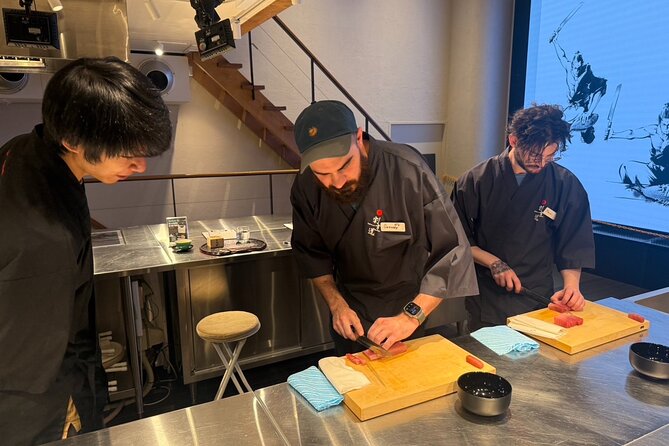
This is a short workshop, roughly 1 hour 30 minutes. The good news is it’s paced like a lesson, not like a performance.
Here’s what to expect in order:
1) Greeting and intro
You’ll begin with a greeting and introduction around the start of class. Expect a quick orientation to the tools and the key goal: you’ll cut sashimi yourself, then assemble a bowl.
2) Lecture on sashimi knives
Instructor Naoya Kumagai provides a lecture focused on sashimi knives. The point isn’t to overload you with terminology. It’s to explain what makes this type of knife different and what you should pay attention to while cutting.






3) Demonstration: knife technique in motion
Next is a demonstration of how to use Japanese knives. This is where you should watch carefully, because your hands will try to copy what you see. The aim is to translate “how it should move” into something you can try without overthinking.
4) Practice with flour dumplings (warm-up)
Before you handle real fish, you’ll do a practice phase using flour dumplings. This warm-up matters. It gives you a low-stakes way to learn how the blade behaves and how your motion affects the final cut shape.
5) Practice cutting sashimi for each person
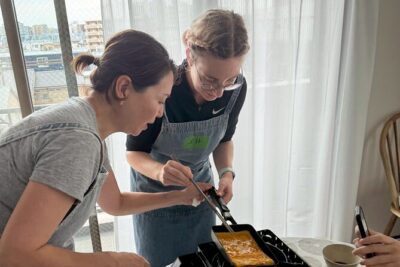
Then comes the main event: each participant practices cutting sashimi using a sashimi knife. You’re not standing in a corner while someone else works. The structure is built so everyone gets to cut.
This is also where having a small group helps. Maximum 4 travelers means more time to correct your angle and grip, rather than watching a demo and hoping for the best.
6) Make your kaisendon
After cutting, you make your kaisendon. The workshop’s signature idea is simple: place your sliced sashimi on top of vinegared rice. You’re essentially doing the final plating yourself, which makes it feel like your meal, not a random tasting plate.
7) Tasting time with miso soup and sake
Finally, you eat. Your bowl is the lunch, and the class is designed to feel complete with miso soup and sake tasting available.
In a lot of classes, the meal is filler. Here it’s the point. You’ll get a chance to evaluate your own cutting style in a real, edible context.
Tools, instructor support, and why the class feels warm
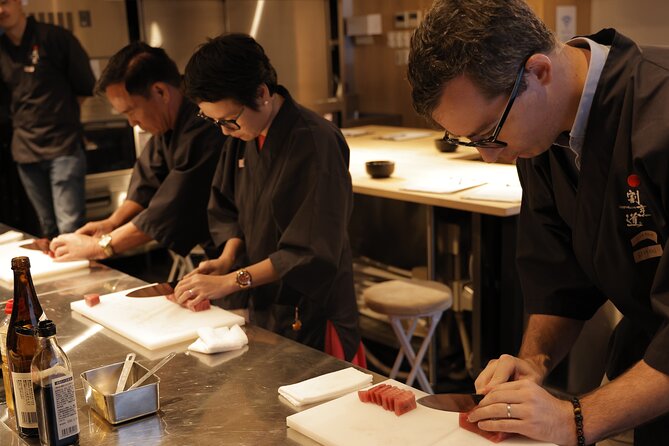
One of the most praised parts of this workshop is the way the team supports you while you’re learning. Instructor Naoya is paired with an interpreter/guide who helps bridge language and keep the lesson flowing smoothly.
That support shows up in two ways:
- You get explanations you can actually use while your hands are moving.
- You can ask questions without the awkward pause that sometimes happens in international classes.
The workshop is also built with the right ratio in mind: small group size and a clear step-by-step format. With only up to 4 people, you spend less time waiting and more time practicing.
And yes, the vibe is social. People tend to leave feeling like they had laughs while learning something real. That matters because knife skills require calm focus. A friendly room helps you relax enough to learn faster.
Cutting technique: what you’re really learning
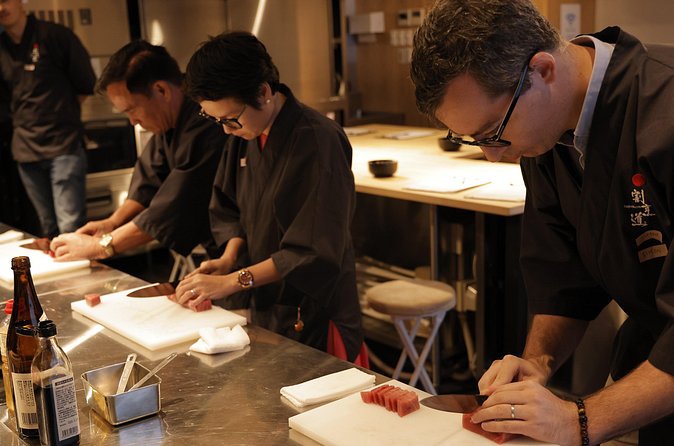
Even if you’re a complete beginner, this class is structured around core knife skills that transfer to other food prep.
You can think of it as three layers:
1) Blade angle and control
Sashimi cutting is about getting a clean surface and consistent slices. The knife lecture and demo are meant to teach you what to watch for—so you’re not blindly imitating.
2) Motion, not force
The practice phases (flour dumplings first, sashimi second) guide you toward a motion that works. If you push too hard, you’ll fight the blade. If you tense up, your cut will wobble.
3) Translating cuts into plating
Once you place the sashimi on vinegared rice, you’ll see immediately whether your cuts lay well. That feedback loop is why the workshop feels like more than a one-time show.
If you’re considering buying a Japanese knife later, this workshop gives you a better way to think about what the knife can do and how technique changes the result. It also helps you understand why “cheap cutting” is a problem that isn’t solved by buying a sharper-looking tool alone.
Kaisendon assembly: turning practice into a bowl
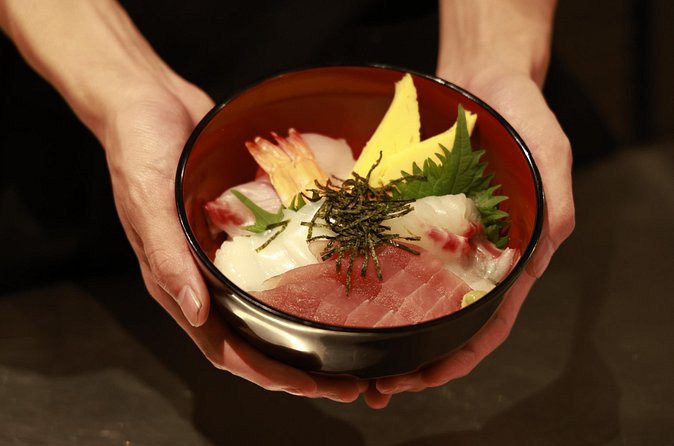
The workshop’s signature meal is a kaisendon made from what you cut. That’s more than an end-of-class reward. It’s the final step of the learning process.
Here’s why it works:
- Your cuts have to be sized and shaped well enough to stack or fan on rice.
- You learn how sashimi sits on vinegared rice, which changes the experience from just eating fish by itself.
- You get to taste the result immediately, so technique has a direct consequence.
Your bowl comes with miso soup as part of the meal structure. Alcohol is also part of the experience, with sake tasting offered during tasting time, and alcoholic beverages included overall.
The combination makes the workshop feel like lunch with a purpose: you learn, then you eat like you just got invited into someone’s kitchen routine.
Value for $160: what you’re paying for
Price is where this workshop starts to make sense.
At $160, you’re paying for:
- Hands-on instruction from a named instructor (Naoya Kumagai) plus interpretation support.
- All tools used in lessons (so you’re not bringing equipment or improvising).
- A complete meal: the seafood bowl you made, plus miso soup and sake tasting.
- A very small group size (maximum 4), which is a big deal for skill coaching.
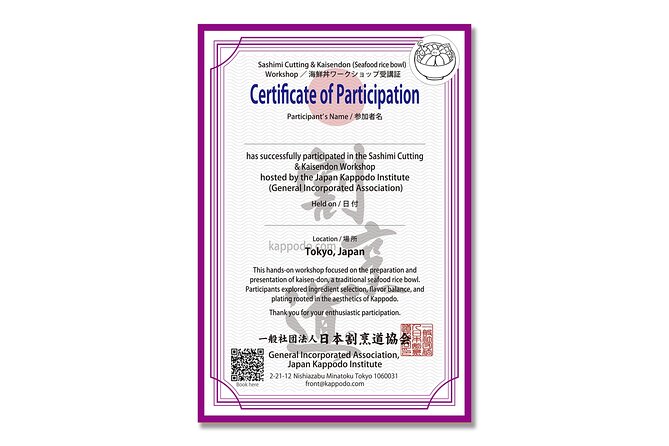
- A participation certificate and a 10% discount on items at the 1F shop on the same day.
Also note what isn’t included: private transportation. That’s normal for Tokyo experiences, but it means you should plan to reach the meeting point under your own steam via public transit.
If you want a class that ends with real food and real skill improvement, the value is pretty strong. If you’re just looking for a quick bite and photos, it might feel intense for the time you spend.
Who should book this class
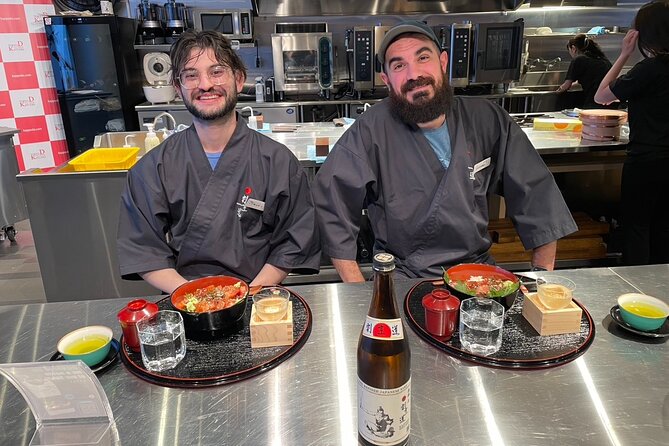
I’d especially recommend this workshop if:
- You want a practical Japanese skill you can repeat at home (even if your first attempts are simpler).
- You like cooking experiences where you control the final dish, not just the seasoning.
- You travel with a partner or small group and prefer personal attention.
It can also be a good choice if you’re curious about Japanese knives but don’t want to commit to a longer or more technical program. This class gives you enough structure to understand what good technique looks like, and why it matters for sashimi presentation.
If you’re extremely sensitive to sharp tools or worried about cutting lessons, you may feel nervous at the beginning. But the warm-up with flour dumplings and the small-group coaching are there to reduce that stress.
Should you book Kaisendon and Sashimi Cutting Workshop?
If you want a Tokyo experience that feels both cultural and hands-on, I think it’s a solid choice.
Book it if you’re excited by the idea of:
- learning sashimi cutting with a real sashimi knife
- practicing in a calm setting with maximum 4 people
- making kaisen-don and eating it with miso soup and sake
Skip it if:
- you’re expecting a long deep technical knife masterclass
- you only want a casual food tasting with minimal instruction
For most people, the sweet spot is exactly what this workshop is built for: a focused, friendly session where you leave with a meal you made—and a clearer understanding of what Japanese knife technique actually means.
FAQ
What happens in the Kaisendon and Sashimi Cutting Workshop?
You’ll receive a lecture and demonstration on Japanese sashimi knives, practice cutting with flour dumplings, then cut sashimi yourself. You’ll place the sashimi on vinegared rice to make your own kaisendon, then eat it with miso soup and sake tasting available.
How long is the workshop?
The workshop is about 1 hour 30 minutes.
What is included in the price?
Tools used in the lessons, a tour guide, alcoholic beverages, and lunch (the seafood bowl you made) are included. You also receive a certificate of participation, plus you can get 10% off items at the 1F shop on the same day.
Is transportation included?
No, private transportation is not included.
How many people can join the workshop?
The group size has a maximum of 4 travelers.
What’s the cancellation policy?
You can cancel for a full refund if you cancel at least 24 hours in advance. If you cancel less than 24 hours before the experience starts, the amount you paid is not refunded.