REVIEW · TOKYO
Imperial Palace to Tokyo Station Historical Walking Tour
Book on Viator →Operated by Reelu inc · Bookable on Viator
Tokyo history, with good shoes. This guided stroll strings together Imperial Palace East Gardens sights and Edo Castle remnants, then lands at Tokyo Station’s red-brick main hall. It’s a smart way to see how old power and modern Tokyo share the same space. I particularly like the route because it keeps you outside, moving, and making sense of the city in one clean loop.
What I like even more is the human touch: the guides (for example Naoki, Ms. Futami, Masa-san, and Mitsuko Shirai) answer questions patiently and connect architecture to real history. The main catch is also simple: you do not get Inner Palace access, since that area isn’t open to the public—so your experience is about the gardens, gates, ruins, and views around the palace perimeter.
In This Review
- Why This Walk Works: Edo Castle to Tokyo Station in One Shot
- Good Shoes and Calm Starts: Meeting at Wadakura Fountain Park
- Entering the Imperial Palace Area Without the Inner Courtyard
- Kokyo Otemon Gate: A Grand Doorway to Edo Access
- Ote-San’no Gate Ruins: Defense, Not Decoration
- Hyakunin Bansho Guardhouse: The Hundred-Samurai Idea
- Ninomaru Garden and Suwa-no-chaya: When Calm Tells You Things
- Ninomaru Garden: Seasonality and the Art of a Walk
- Suwa-no-chaya: A Tea Tease Inside the History
- Plum Tree Hill Views and Edo Castle Remains
- Bairinzaka (Plum Tree Hill): Blooming Season Adds a Big Layer
- Edo Castle Takehashi Gomon Ruins: Main Keep Territory, Lost Structure
- Fujimi-yagura: A Watchtower That Explains the Castle’s Purpose
- The Scale Model That Makes It All Click
- Edo Castle Keep Restoration Model: See the Shape of What’s Missing
- Honmaru (Main Hall): The Center of Tokugawa Power
- Kokyo Gaien National Garden: Nijubashi Views and Photo-Friendly Space
- Marunouchi and Tokyo Station: Modern Power Meets the Old City Core
- Tokyo Station: Red-Brick Finale and a Practical Place to Finish
- What You Pay For: Value at About $39
- Who Should Book This Tour (and Who Might Skip It)
- Should You Book This Imperial Palace to Tokyo Station Walk?
- FAQ
- How long is the Imperial Palace to Tokyo Station Historical Walking Tour?
- What does the tour cost?
- Where do I meet for the tour?
- Where does the tour end?
- Is lunch included?
- Do I get access to the Inner Palace?
- Do I need to buy tickets for the stops?
- How big is the group?
- Can I cancel for a full refund?
- Are service animals allowed?
Why This Walk Works: Edo Castle to Tokyo Station in One Shot
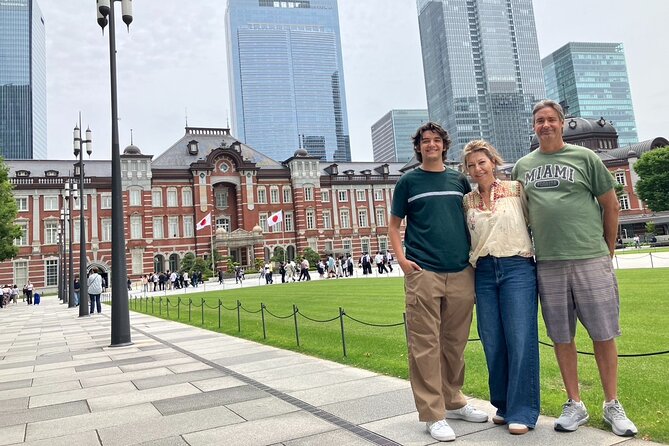
If you only have a half day, this is a good bet. The tour is about 2 hours 30 minutes, it’s a small group capped at 12, and most of what you see is free to enter on site. That matters because you’re paying mainly for time with a guide who can explain what you’re looking at, not for a pile of expensive museum admissions.
You’ll also like the pacing. The stops are short, and each one sets up the next scene: a park near the palace, a major gate, defensive ruins, then landscaped garden calm, and finally Tokyo’s high-powered business district and transit hub. By the time you reach Marunouchi and Tokyo Station, the place feels like it’s telling a timeline instead of showing random highlights.
Good Shoes and Calm Starts: Meeting at Wadakura Fountain Park
You’ll meet at Starbucks Coffee by Kokyo Gaien Wadakura Fountain Park. It’s a practical anchor point in a part of central Tokyo where your sense of direction can get weird fast if you’re tired or jet-lagged. Starting near water and open space helps you settle in before you hit the palace grounds.
Wadakura Fountain Park is also a gentle warm-up. You’ll see the fountain area and learn it was established in 1961 to commemorate Emperor Akihito’s marriage. It’s not “Edo Castle” history, but it frames the palace area as something that keeps meaning through different eras of Japan.
Practical tip: This tour is mostly outdoors on a walking route. Dress for the weather you’ll actually face that day, not the forecast you hope for.
You can also read our reviews of more walking tours in Tokyo


Entering the Imperial Palace Area Without the Inner Courtyard
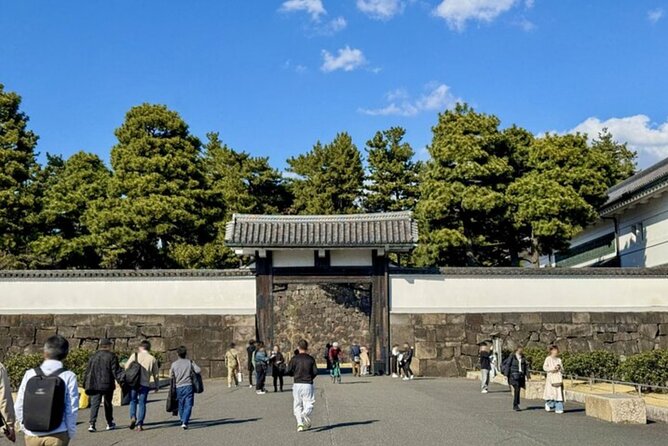
The tour focuses on the Imperial Palace East Gardens—mainly the areas you can access publicly. The big storytelling begins right away with the main entrance gate.
Kokyo Otemon Gate: A Grand Doorway to Edo Access
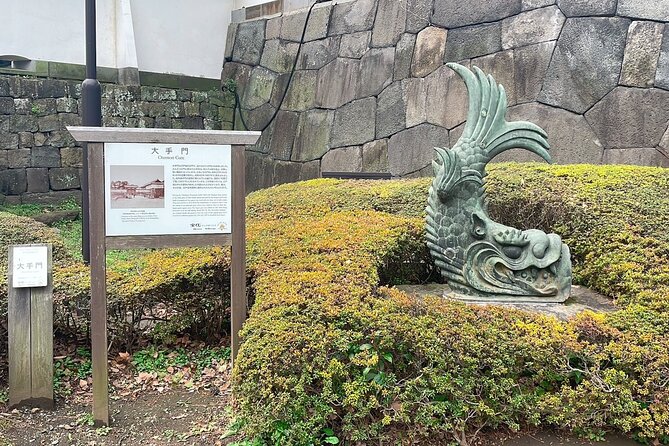
Next comes the Kokyo Otemon Gate, the main gate to the East Gardens. The key idea here is that it once served as a primary access point to Edo Castle. So when you stand in front of it, you’re not just looking at a pretty structure—you’re looking at how people entered the power center.
This is where your guide earns their fee. The best value in this tour is the explanations that help you read the scene: what a gate is for, why it matters, and how architecture used to control movement and authority.
Ote-San’no Gate Ruins: Defense, Not Decoration
Close by, you’ll see the remnants of the Ote-San’no Gate. Ruins are always a little spooky, in a good way. Here, the point is defensive design—how the Edo-period castle prepared for trouble. It’s the “how a place worked” side of history, not just the “what it looked like.”
This is a stop that’s brief, but it changes how you view the rest of the palace grounds.
Hyakunin Bansho Guardhouse: The Hundred-Samurai Idea
Then you’ll visit the Hyakunin Bansho Guardhouse. The name points to a concept: a hundred samurai who were responsible for security in the innermost sections. Even if you take the number as symbolic, the takeaway is clear—strict layers of control.
If you like systems—who guarded what, when, and why—this stop hits your interests fast.
You can also read our reviews of more historical tours in Tokyo




Ninomaru Garden and Suwa-no-chaya: When Calm Tells You Things
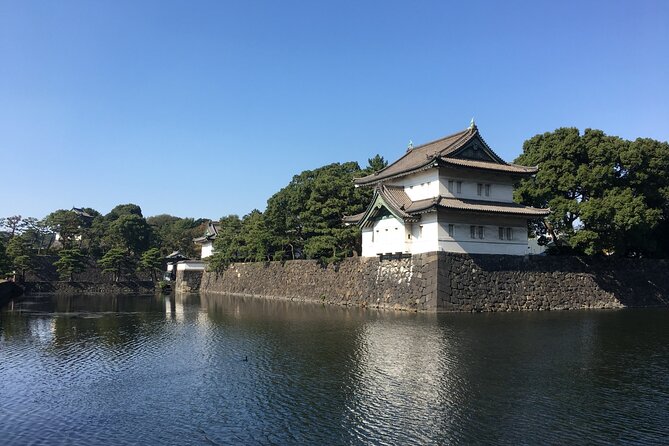
After the defensive structures, the tour shifts into a quieter rhythm.
Ninomaru Garden: Seasonality and the Art of a Walk
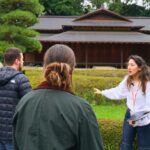
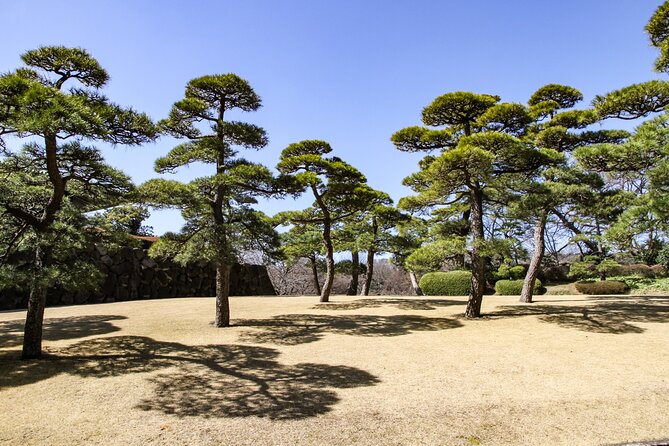
You’ll stroll through Ninomaru Garden, a classic Japanese garden with seasonal plants, winding paths, and water features. The value here is learning how garden layout isn’t random. It’s built to guide your movement, slow your pace, and frame views like living paintings.
If you’re used to parks being for running, this will feel different. It’s more about observation and timing.
Suwa-no-chaya: A Tea Tease Inside the History
Next is Suwa-no-chaya, a historic teahouse located within the gardens. The teahouse itself isn’t operational, but its presence adds atmosphere. Tea in Japan has always been about more than a drink. It’s a culture of hosting, ceremony, and respect—so seeing where that would have happened gives the garden a deeper meaning.
This is also a nice photo stop, as long as you don’t block foot traffic while you frame your shot.
Plum Tree Hill Views and Edo Castle Remains
Now the walk starts to climb a bit, both literally and historically.
Bairinzaka (Plum Tree Hill): Blooming Season Adds a Big Layer
At Bairinzaka, also known as Plum Tree Hill, you’ll look up toward views and an area lined with plum trees. In season, the bloom period makes this spot especially fragrant and scenic. Even outside bloom time, the idea of the hill as a seasonal landmark is useful—Japan often builds identity around the calendar.
Edo Castle Takehashi Gomon Ruins: Main Keep Territory, Lost Structure
Then you’ll explore ruins tied to the Edo Castle’s main keep area—Edo Castle Takehashi Gomon ruins. The original building is gone, but stone foundations and walls communicate the scale. This stop is about size and power. You can’t fully reconstruct the past in ruins, but you can still grasp how large and serious the castle was.
Fujimi-yagura: A Watchtower That Explains the Castle’s Purpose
You’ll also visit Fujimi-yagura, one of the remaining watchtowers. This is a defense-focused stop, but it’s also a perspective stop. From a watchtower, you think in lines of sight and approach routes, not in decorative details.
If you’ve ever watched films where a castle “feels safe,” this will correct that. It’s all about surveillance and defense.
The Scale Model That Makes It All Click
One of the most practical features of this tour is that it gives you a visual anchor.
Edo Castle Keep Restoration Model: See the Shape of What’s Missing
Inside the East Gardens you’ll find a detailed scale model of the Edo Castle main keep (the Tenshukaku). The original structure is lost, but the model reconstructs it based on historical records and drawings.
This is exactly the kind of add-on that improves your experience. Without it, you might look at ruins and think you’re missing the point. With it, the ruins become parts of a larger machine—big, intentional, and organized around control.
Honmaru (Main Hall): The Center of Tokugawa Power
From there you’ll reach Honmaru, the main hall area within the East Gardens, once the central compound of Edo Castle and the political headquarters of the Tokugawa shogunate. You’ll learn the function of the space, not just the scenery.
This is a great stop for history buffs. It also works for casual visitors because it clarifies what the castle was doing day to day: governing, receiving, and projecting authority.
Kokyo Gaien National Garden: Nijubashi Views and Photo-Friendly Space
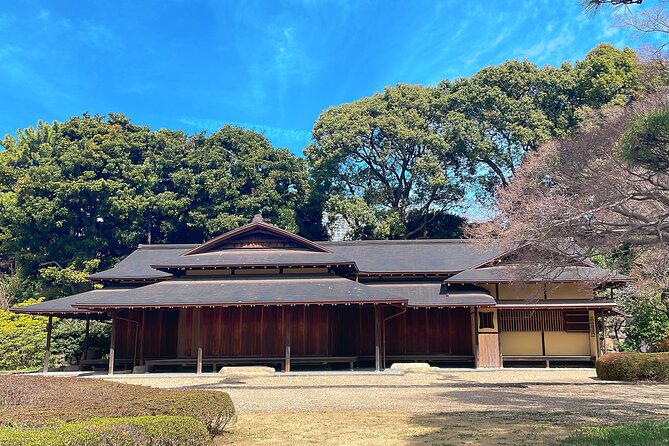
After the East Gardens, the walk exits into Kokyo Gaien National Garden. This part of the route opens up—big plaza feel, easier photos, and better views of outer palace structures.
One key highlight is the sightline toward Nijubashi Bridge. You can often get a strong view here without needing special angles or long detours. It’s a good place to pause, reset your feet, and let the earlier ruins and gardens land in your head as one story.
Marunouchi and Tokyo Station: Modern Power Meets the Old City Core
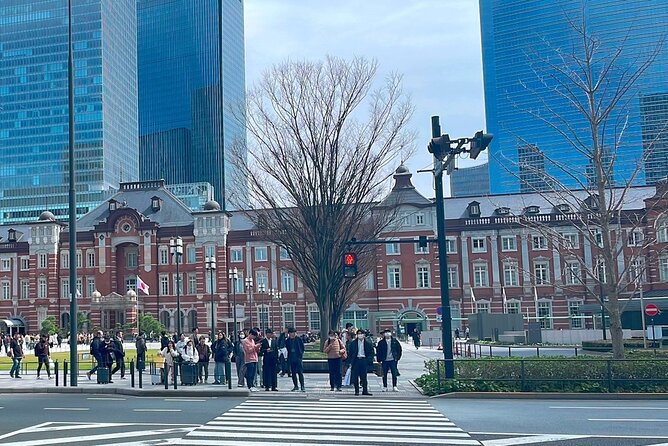
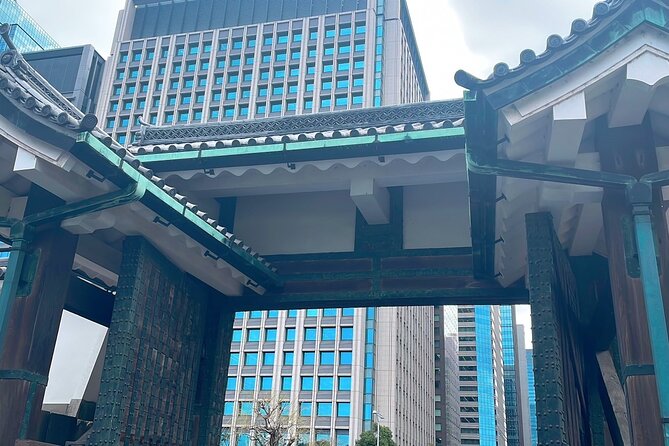
Now you head into Marunouchi, Tokyo’s prestigious business hub. This is where the tour becomes less about monuments and more about contrast. You’ll see modern skyscrapers alongside historic architecture in the same corridor of the city.
This matters because Tokyo isn’t frozen in time. The whole point of ending here is understanding that the palace zone anchors the city both historically and now—through transit, commerce, and daily movement.
Tokyo Station: Red-Brick Finale and a Practical Place to Finish
Finally, you reach Tokyo Station, famous for its red-brick facade restored to its 1914 glory. Inside, it’s a bustling nexus of travel, shopping, and dining, with plenty of stops for a late snack or a low-key meal.
As a tour ending, Tokyo Station is about convenience. You can leave in any direction fast, shop for gifts, or reconnect with your next plan without wrestling with transfers at the last minute.
What You Pay For: Value at About $39
At $39.09 per person, you’re buying a short guided history walk that strings together a lot of major sights in one go. What makes the value feel solid is that many of the stops are free to access while you’re there—so your money mostly supports the guide’s time, storytelling, and the route planning that saves you from figuring out the logic of the area by yourself.
You also get a mobile ticket. That’s not glamorous, but it’s a real time-saver in Japan where entry points can be strict and lines can be unpredictable.
One more value point: because the group is small (up to 12), your questions are more likely to land and get answered in a way you can actually use.
Who Should Book This Tour (and Who Might Skip It)
This tour is ideal if you want a clean, guided path through central Tokyo that mixes palace grounds, Edo Castle leftovers, and city contrast.
It also fits families and younger travelers better than you might think. One guide experience you can take seriously is that guides like Masa-san can keep the material engaging for teenagers, which is often the hardest audience in history tours.
You might skip this if:
- You want to spend most of your time inside museums or large indoor sites (this is mostly a walking-and-looking experience).
- You’re counting on Inner Palace access. That area isn’t open to the public, so you’ll only be seeing what’s accessible around the East Gardens and palace perimeter.
Should You Book This Imperial Palace to Tokyo Station Walk?
Yes—if you want a high-value history route that finishes in a place you can immediately use for onward travel. It’s also a good choice when you want Tokyo context fast: how the Tokugawa-era power layout turns into today’s palace gardens, business district, and rail hub.
Book it if you’re the type who enjoys reading buildings like clues. The guides, including Naoki, Ms. Futami, Masa-san, and Mitsuko Shirai, shine when you ask questions and want the story behind gates, ruins, watchtowers, and that scale model that makes the lost keep feel real.
FAQ
How long is the Imperial Palace to Tokyo Station Historical Walking Tour?
It runs for about 2 hours 30 minutes.
What does the tour cost?
The price is listed as $39.09 per person.
Where do I meet for the tour?
You meet at Starbucks Coffee near Kokyo Gaien Wadakura Fountain Park, at 3-1 Kōkyogaien, Chiyoda City, Tokyo 100-0002.
Where does the tour end?
The tour ends at Tokyo Station, at 1 Chome-9 Marunouchi, Chiyoda City, Tokyo 100-0005.
Is lunch included?
No. Food and drinks are not included, and you should purchase them individually.
Do I get access to the Inner Palace?
No. Access to the Inner Palace is not included because it is not open to the public.
Do I need to buy tickets for the stops?
Most admissions at the listed stops are free, and the tour provides a local guide. You’ll need to use the mobile ticket provided for the tour.
How big is the group?
The maximum group size is 12 travelers.
Can I cancel for a full refund?
Yes, you can cancel for a full refund up to 24 hours before the experience start time.
Are service animals allowed?
Yes, service animals are allowed.