REVIEW · TOKYO
Japanaese tradtional Tsugaru Shamisen music lesson in Tokyo
Book on Viator →Operated by True Japan Tour · Bookable on Viator
Tokyo’s Tsugaru shamisen lesson hits hard.
This is a hands-on session in Shinjuku where you start with a professional Tsugaru shamisen performance and then move straight into playing. I love that the performer has won a Tsugaru Shamisen World Tournament group championship, so you get the real deal tone right away, not a demo that stays theoretical. You’ll also learn the basics in an orderly way: how to hold the instrument, how to use the pick (bachi), and how to turn that into an actual song you can play.
The second thing I like is the gentle, patient instruction style—perfect if you’re a true beginner. You’ll even practice simple fundamentals and then get a taste of more advanced techniques, plus you’ll play together with your teacher. The only real drawback to consider is time: you’re in and out in about 1 hour, so it’s not a long study course—also transportation to the venue isn’t included.
In This Review
- Key highlights worth centering your plans around
- Tsugaru shamisen 101: what makes this style so addictive
- The Shinjuku setting: why the location works for most plans
- The 1-hour flow: from bachi pick to a song you can play
- 1) Listen first, so you know what to aim for
- 2) How to hold the shamisen (and why posture matters)
- 3) Use the pick (bachi): your first technique
- 4) Learn an easy song, then build confidence
- 5) Structure and the “why” behind the sound
- 6) Play together with your teacher
- 7) Photo/video time
- Who you’ll learn from: attention from a professional musician
- What you actually take home: a skill, not just a memory
- Price and value: is $77.26 fair for a 1-hour workshop?
- Best-fit moments: who should book this
- What to know before you go (so it feels smooth)
- Should you book the Tsugaru shamisen lesson in Tokyo?
- FAQ
- How long is the Tsugaru shamisen music lesson workshop?
- Where does the experience take place?
- Is shamisen rental included?
- What languages are available for instruction?
- Can beginners participate?
- What’s the cancellation policy?
Key highlights worth centering your plans around
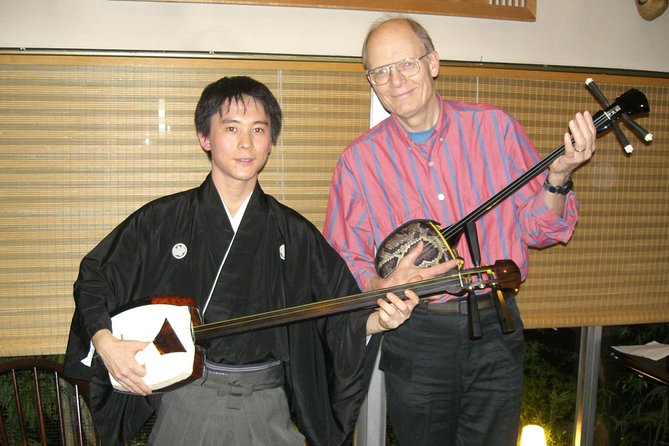
- World tournament champion energy: you listen first to set your ear for what the Tsugaru shamisen should sound like
- You play, not just watch: holding the shamisen, using the bachi, then an easy song by yourself
- Short-bites learning flow: hold → pick technique → song practice → structure explanation → group play together
- Photos and video time: you can capture your performance and share it
- Language support on request: English licensed instruction, with French/Spanish available upon request
Tsugaru shamisen 101: what makes this style so addictive
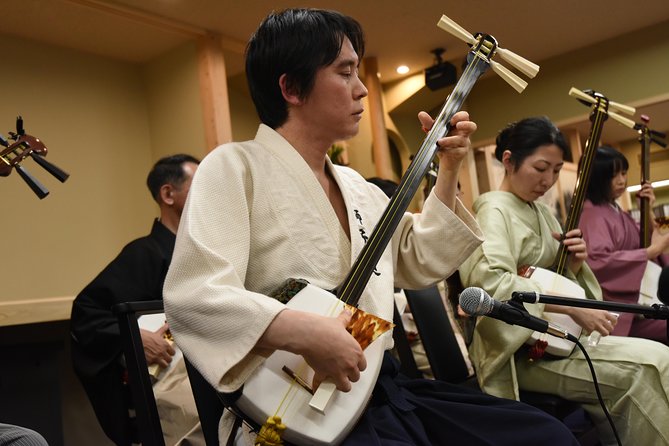
If you’ve never heard Tsugaru shamisen, think of the instrument as a three-stringed banjo cousin with a deep, direct punch. The sound is powerful, and that matters here because this workshop doesn’t start with background trivia—it starts with you hearing it performed by someone who knows how to make those tones land.
This is the Tsugaru shamisen, described as the most famous and powerful-sounding of the shamisen instruments. That label is easy to toss around, but in practice it means you’ll spend your time on techniques and listening that match this style’s edge. You’ll learn what the instrument’s structure is and how it connects to the sound you heard at the start.
And yes, you’ll get hands-on. The lesson is built so you don’t just admire the instrument—you get your hands on it and make it ring.
You can also read our reviews of more tours and experiences in Tokyo



The Shinjuku setting: why the location works for most plans
The meeting point is at 14-28 Yochōmachi, Shinjuku City, Tokyo 162-0055, Japan, and the activity ends back at the meeting point. It’s in Shinjuku City and you’re near Shinjuku, so it’s a good fit if you’re already spending time in that part of Tokyo for food, shopping, or easy transit.
Transport note: the tour doesn’t include getting you to and from the venue. That’s not a dealbreaker, but you should plan your route ahead of time. The good news is it’s near public transportation, so you shouldn’t be stuck with complicated logistics.
Because it’s a private activity for your group, you’re not fighting for space in a crowd. You’ll have the attention rhythm that group classes often can’t provide.
The 1-hour flow: from bachi pick to a song you can play
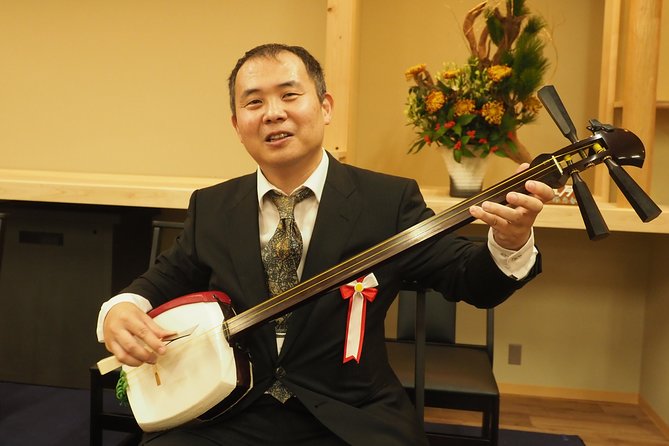
The program has a clear order, and that’s a big part of why it works for beginners. Here’s the structure you can expect, in the exact sequence the lesson is designed to follow.
1) Listen first, so you know what to aim for
You begin with a Tsugaru shamisen performance by a professional player. The performer is tied to a Tsugaru Shamisen World Tournament group championship, so you’re not just hearing any music—you’re hearing a level of playing that sets a target.
This matters because the Tsugaru sound has personality. Once you’ve heard it, your later practice makes more sense. You’re not counting strings and hoping it sounds right; you’re trying to reproduce the sound you just heard.
2) How to hold the shamisen (and why posture matters)
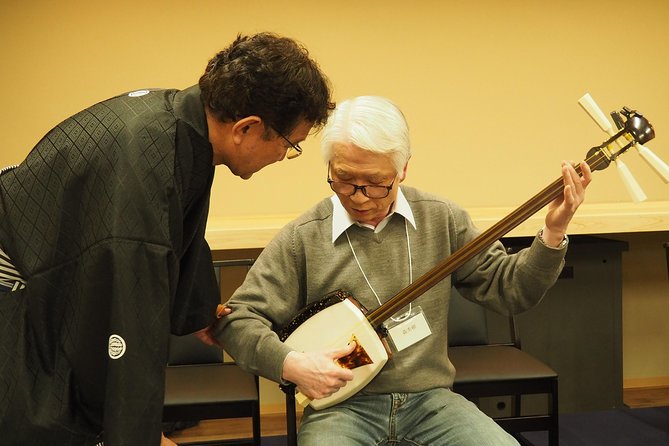
Next comes the practical part: how to hold the shamisen. You’ll get guidance on positioning, so you can play with less fighting. Good posture here isn’t about looking elegant—it’s about controlling the instrument so your hands can do the work.






3) Use the pick (bachi): your first technique
Then you learn how to play using a pick called bachi. For many first-timers, this is the breakthrough moment. Once you know the basic motion, the sound becomes easier to produce consistently.
You’ll also get gentle instruction, which is a recurring theme. That means you’re not thrown into complicated patterns immediately.
4) Learn an easy song, then build confidence
After the basics, you learn an easy song. This is the part that turns curiosity into satisfaction. In a short lesson like this, getting to a recognizable song is what makes the whole experience feel real.
And then the program adds pressure in a friendly way: it includes an introduction to more advanced techniques. You may not master them fully in one hour, but you’ll understand what people mean when they talk about Tsugaru flair.
5) Structure and the “why” behind the sound
You’ll also get an explanation of the shamisen’s structure. This helps you connect what you’re doing with what you’re hearing, so the instrument doesn’t feel like a black box.
A simple example: when you understand the instrument’s parts and how they relate to sound, you can focus your practice instead of guessing.
6) Play together with your teacher
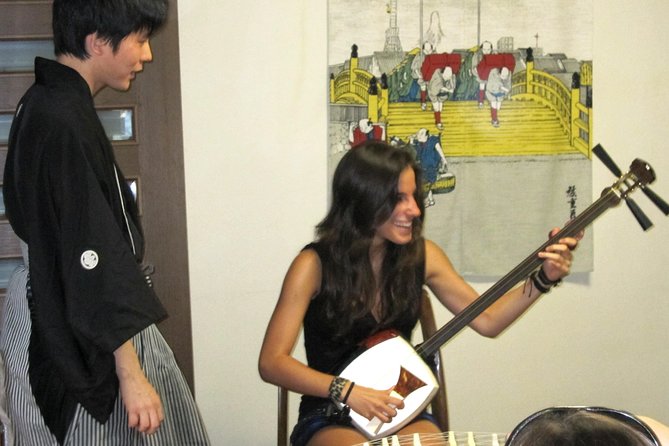
Near the end, you play one song together with the teacher. This is where the lesson earns its value. You’re not alone with your learning curve; the instructor can guide timing and technique so you end with a finished result.
7) Photo/video time
Finally, there’s a photo/video time slot during or after your performance. This is one of those small details that makes the experience shareable, especially if you’re bringing family or documenting a new skill.
Who you’ll learn from: attention from a professional musician
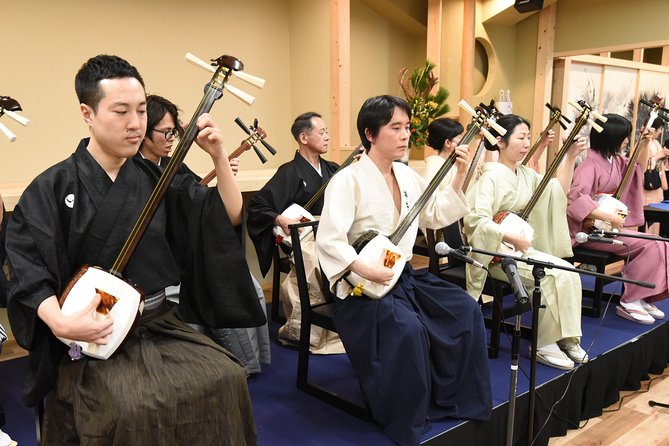
Instruction is led by a professional instructor, and the program notes licensed instructors are available in English and other languages. English is standard, with French and Spanish available upon request.
The key detail from the experience itself: you get personal attention. The lessons aren’t described as rushed or generic. They’re designed for beginners, and the tone is patient.
That patient approach matters because shamisen technique can feel awkward at first. If you’re trying to coordinate instrument position plus pick motion plus timing, you’ll appreciate having someone slow things down and correct you without stress.
What you actually take home: a skill, not just a memory
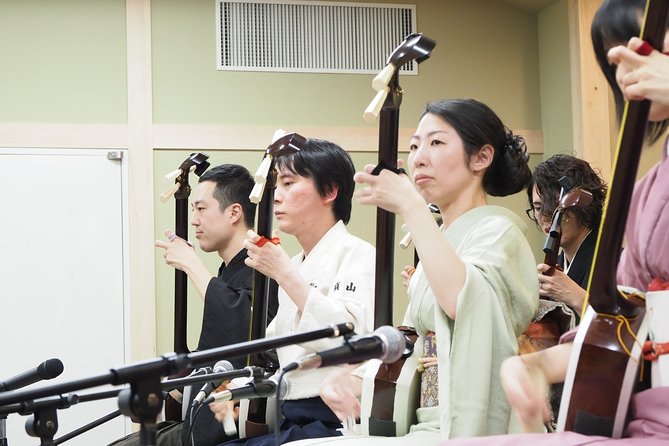
One of the best ways to judge a hands-on music class is to ask: will I walk away doing something I couldn’t do before?
Here, the answer is yes. You’ll learn:
- how to hold the Tsugaru shamisen
- how to use the bachi pick
- how to play an easy song
- how the instrument’s structure relates to the sound
- how to perform together with the teacher
In other words, you’re not leaving Tokyo with a photo alone. You’re leaving with the basic mechanics and a first song under your fingers.
And if you’re doing this as a family activity, the payoff is even clearer: kids and adults can both participate, and the experience includes time to play, not just watch.
Price and value: is $77.26 fair for a 1-hour workshop?
At $77.26 per person, this isn’t a budgetless impulse buy, but it also doesn’t feel overpriced for what you receive.
Here’s what you’re getting:
- a shamisen rental included
- playing instruction
- a nationally accredited tour guide-interpreter
- an award-level performance component
- a guided, structured learning flow that ends with group playing
- photos and video time
One hour goes fast, so think of the cost as paying for “guided access” to a specific tradition plus instrument rental plus direct coaching—not as buying a long-term music course.
You can also spot the value in the way it’s set up: group discounts are available, and the format is private for your group. If you’ve got 2–4 people and you’re splitting the experience, it can feel like a focused cultural session rather than a one-off tourist stop.
Best-fit moments: who should book this
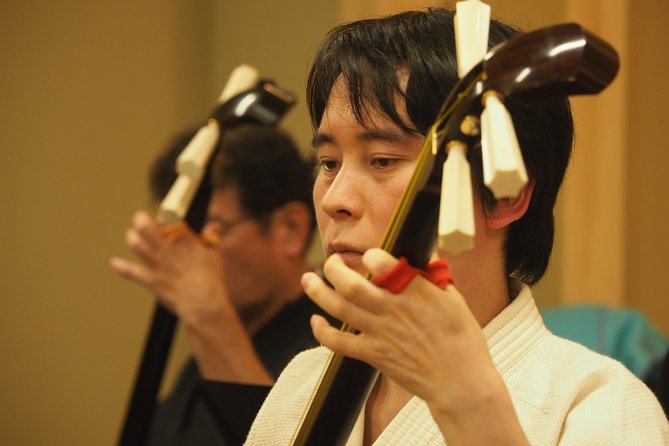
This workshop is a good match if:
- you’re a beginner and want gentle instruction
- you love hands-on cultural experiences more than museum-style visits
- you want a short, structured activity that actually ends with you playing
- you’re traveling with family or mixed-age participants
- you need a cultural program for educational or group settings (the experience is described as suitable for schools, corporate training, language programs, and academic institutions)
It’s also ideal if your Tokyo schedule is tight. The duration is about 1 hour, and it’s in a transit-friendly area.
What to know before you go (so it feels smooth)
A few practical points will help you show up ready.
- Bring your main expectations: learning basics fast, then playing an easy piece
- Expect instruction in English, with French/Spanish on request
- Transportation isn’t included, so plan how you’ll reach the Shinjuku area
- You’ll want to take advantage of the photo/video time while you’re in performance mode
- Children and families are welcome, and the program is described as beginner-friendly
If you’re the type who likes to understand the “how” behind the “wow,” you’ll appreciate that you’re taught both playing technique and instrument structure.
Should you book the Tsugaru shamisen lesson in Tokyo?
I think you should book it if you want a real cultural skill you can leave with. This works because it’s built around listening first, then technique, then song—so it doesn’t feel like a performance that happens to you. You get to make the sound yourself, with guidance, in about an hour.
Skip it only if you’re looking for a long, step-by-step music course. This is a fast, focused introduction. If you want deep mastery, you’ll likely use this as your starting point and then practice later on your own or find follow-up lessons.
If you’re in Tokyo and you want an experience that’s both authentic and hands-on, this is one of the more satisfying “new skill” activities you can slot into a visit.
FAQ
How long is the Tsugaru shamisen music lesson workshop?
The duration is about 1 hour.
Where does the experience take place?
The meeting point is in Shinjuku City at 14-28 Yochōmachi, Tokyo 162-0055, and the activity ends back at the meeting point.
Is shamisen rental included?
Yes. Shamisen rental is included in the experience.
What languages are available for instruction?
Licensed instructors provide instruction in English. French and Spanish are available upon request.
Can beginners participate?
Yes. The instruction is gentle and the program is suitable for beginners.
What’s the cancellation policy?
Free cancellation is available. You can cancel up to 24 hours in advance for a full refund.