REVIEW · TOKYO
Sumo Training Watching Experience in Tokyo
Book on Viator →Operated by NicoTour Japan · Bookable on Viator
This is sumo breathing distance. In Tokyo, you’ll watch real, active wrestlers run through serious training in a stable—closer than match day ever lets you get. It’s a sacred national sport, and the sound, heat, and focus are part of the point.
I really like the small group size and how close you get to the training area. One key thing to consider: you sit on the floor on cushions, so knees, back, and long stillness matter.
In This Review
- Key Highlights You’ll Care About
- Ryogoku Meeting Point and the 10–15 Minute Walk
- What the Training Looks Like: Stretching to Match-Style
- Arrival time affects how much you see
- Sumo Stable Etiquette: Silence, No Food, and Floor Seating
- Floor seating is non-negotiable
- Kids and stillness
- Live Commentary and Why the Small Group Feels Different
- What you’ll notice once you understand the flow
- Photos With Wrestlers: What’s Allowed and What to Prepare
- Clothing and camera behavior matter
- Price and Value: Is $84.70 Worth It?
- Logistics in Real Life: Timing, Walking, and Getting There
- A simple planning strategy
- Who Should Book This Sumo Training Visit?
- Should You Book This Sumo Training Experience?
- FAQ
- What is the duration of the sumo training watching experience?
- Where do I meet for the tour?
- How far is the walk from the meeting point to the stable?
- Is this a real sumo training session or a staged show?
- Can I eat or drink inside the stable?
- Are photos allowed?
- What age is required for children?
- What happens if I’m late?
- What if I need to cancel?
Key Highlights You’ll Care About
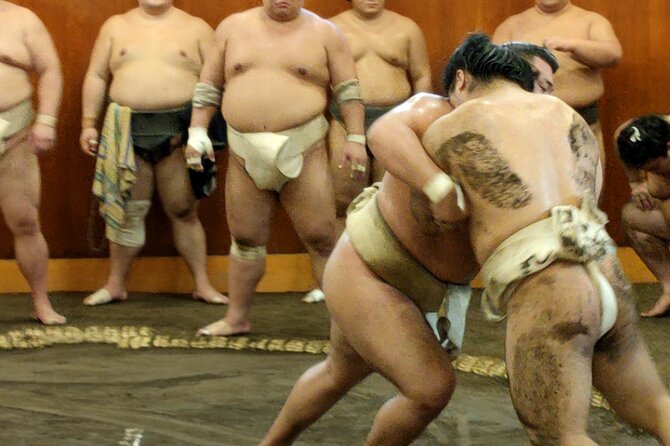
- Real training, not a staged comedy show: you’re seeing active wrestlers work, not actors doing skits
- Small group (max 8 people): you’re near enough to feel the pace of practice
- A clear program flow: stretching/strength, basic work, match-style training, then photos
- Strict stable rules: silence expectations, no food or drink, and phone set to silent
- Photo logistics are practical: silent photo mode is required, and photos with wrestlers may happen after practice
- Timing changes with arrival time: arrive earlier and you’re more likely to see the full sequence
Ryogoku Meeting Point and the 10–15 Minute Walk
This experience starts at Ryogoku Station—specifically Ryogoku Sta. 1-chōme-4-29 Yokoami, Sumida City. Even though Ryogoku is the sumo neighborhood, the meeting pin isn’t just a generic JR station entrance. The stable itself is also not right next to the Kokugikan arena, so plan for a 10–15 minute walk once you meet up.
Bring comfy walking shoes. You’ll be on your feet briefly before you settle in for practice. Also, because they leave on time, it’s worth arriving early enough to find the right spot without stress. This isn’t the kind of tour where you can drift in late and expect to catch up.
You can also read our reviews of more tours and experiences in Tokyo.



What the Training Looks Like: Stretching to Match-Style
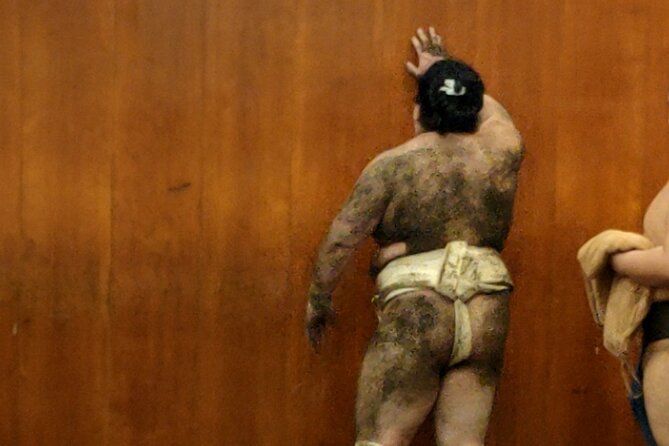
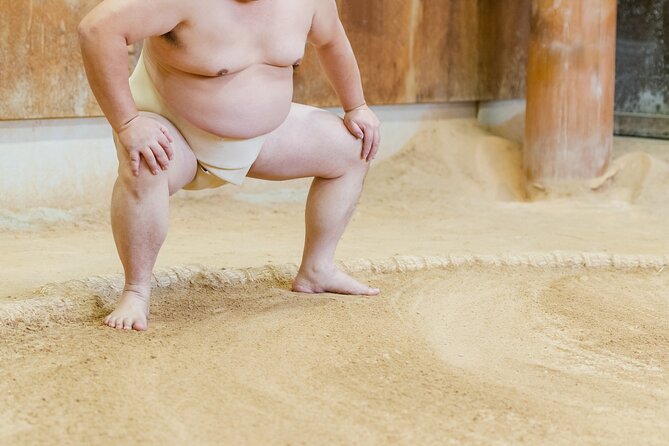
The real magic here is that you’re watching training, not spectacle. The stable session is structured, so you’ll see how wrestlers build themselves for bouts—body control first, then technique, then pressure in match-style drills.
Here’s the program flow you can expect:
1) Stretching and strength training
They start with the prep work: loosening up, building power, and getting the body ready for effort. It’s the part you might miss if you only attend tournaments out in the ring, because match days don’t slow things down like this.
2) Basic training
Next comes the fundamentals. This is where you’ll notice repetition and details—stance, footwork, grip patterns, and how they reset. Even if you don’t know sumo inside-out, the rhythm becomes obvious as the session continues.
3) Match-style training
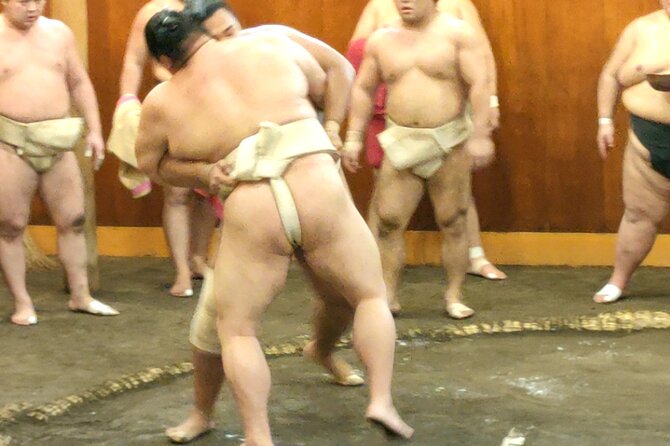
Then the pace ramps up. You’ll see rounds that look more like what you’d recognize from the ring, where wrestlers push, react, and adjust in real time. This is the section where the stable atmosphere hits hardest—sound is louder, breathing is closer, and everything feels physical rather than distant.
4) Photos with wrestlers
At the end, there’s a chance to take photos with the wrestlers. The exact timing can depend on how the session runs, but it’s built into the experience as a final step.
Arrival time affects how much you see
You’re told that if you arrive earlier (around 7:45), you’ll experience the entire program. If you arrive later (around 8:20), it’s more likely you’ll start with the basic training segment and miss some of the earlier warmup. The overall tour window is roughly 60–120 minutes, depending on the start sequence.
Sumo Stable Etiquette: Silence, No Food, and Floor Seating
This is where you’ll get the smoothest experience if you prep your expectations. A sumo stable runs on rules because it’s a serious training environment and the sport is treated with respect.
The biggest practical points:
- No eating or drinking in the stable
Plan to eat beforehand. You’ll be inside in a tight space while practice runs. If you want a snack, do it before you meet.
- We basically don’t talk during the tour
Don’t expect a chatty sightseeing vibe. The goal is to watch and learn without disrupting training.
- Phone silent mode is required
Put your cell on silent. The tour also specifically suggests using a silent camera setup on your smartphone so you’re not making noise during photo moments.
- Take care with clothing
You should avoid revealing clothing. This is part of showing respect in a space that’s not set up for tourists in casual wear.
- Quiet behavior if you’re asked to step out
If stable rules aren’t followed, you may be temporarily asked to go outside. It’s a reminder that the stable comes first.
Floor seating is non-negotiable
You sit directly on cushions on the floor, not chairs. This matters if you have bad knees, back issues, or mobility limits. The tour also flags pregnancy as something to consider carefully due to the sitting style and the requirement to stay put.
If you know you can’t comfortably sit on the floor for an extended stretch, this is the clearest reason to choose something else in Tokyo.




Kids and stillness
Children must be 6 years old or older to participate. Also, even older kids who can’t sit still aren’t allowed. That’s not a “maybe”—it’s a real operational rule. If you’re bringing kids, choose this only if they can follow quiet instructions and remain seated.
Live Commentary and Why the Small Group Feels Different
One of the best reasons to book this specific kind of training visit is that it’s paired with live commentary. They describe using their own materials to explain what you’re seeing, so you’re not just staring at motion.
A consistent theme in the guidance is clarity. One guide associated with this experience, NicoTour Japan’s Alisa, is noted for adding easy explanations with diagrams, which helps if you don’t already understand sumo structure or technique.
The small group size—up to 8 people—also changes the vibe. You’re not lost in a crowd, and your view doesn’t get blocked by too many bodies. In practical terms, it’s easier to watch footwork, timing, and the way wrestlers reset between drills.
What you’ll notice once you understand the flow
Even without deep sumo knowledge, training makes more sense when you know what segment you’re in. Stretching feels like preparation and discipline. Basic drills show mechanics. Match-style work shows pressure. That mental map is what turns a simple watch into a memorable education.
Photos With Wrestlers: What’s Allowed and What to Prepare
Photos are part of the experience, but they’re handled in a respectful, controlled way.
Here’s what you can plan for:
- You can take photos during the session, as long as your phone is set up to avoid noise. The experience suggests installing a silent camera mode for your smartphone.
- Photos with wrestlers after training may be possible. This is framed as a likely option rather than a guaranteed free-for-all, so keep your expectations polite and flexible.
- Avoid disruptive behavior while photographing. Since the stable isn’t built like a tourist hall, your goal is to capture moments without pulling attention away from practice.
Clothing and camera behavior matter
Because revealing clothing is discouraged and silence rules exist, you should choose something simple and comfortable. Also, keep your camera use quick and calm. The whole idea is to respect training time.
If you’re aiming for photos, arrive early enough that you’re not rushed when the end segment hits.
Price and Value: Is $84.70 Worth It?
At $84.70 per person, the price is not a bargain in Tokyo terms. But it can be good value if what you want is closeness and real training.
What you’re paying for:
- Active, real wrestlers training in a stable (not a performance with costumed stand-ins)
- Proximity—you’re close enough to feel the intensity, not just watch from far away
- A structured practice view—stretching, basics, match-style drills, then photos
- Small group size—you’re not squeezed into an anonymous pack
What could lower the value for you:
- If you need a seated-chair format, an on-the-go snack stop, or a chatty tour style, this won’t match your preferences.
- If you arrive later and miss early segments, your time with the full program may shrink.
In other words: this tour tends to be worth it when you show up ready for rules and ready for quiet observation.
Logistics in Real Life: Timing, Walking, and Getting There
This is a 2 hours 20 minutes (approx.) experience on paper, but you should think in ranges because the actual sequence depends on when you arrive. The session duration is described as roughly 60–120 minutes, and the shorter pattern is tied to later arrival (starting closer to the basic training segment).
Also remember:
- Date requests are not accepted
- They leave on time and can’t wait for late guests
- Confirmation is received within 48 hours, subject to availability
- The meeting and end point return you back to the start location
A simple planning strategy
1) Arrive early at Ryogoku.
2) Walk to the meeting address carefully—don’t assume it’s the Kokugikan area.
3) Expect quiet, floor seating, and no food in the stable.
4) Bring a phone set to silent and ready for photo moments.
Who Should Book This Sumo Training Visit?
This is a strong pick for you if:
- You love sports and want to see how athletes train, not just compete
- You like cultural etiquette and can follow instructions without making noise
- You want a small-group Tokyo experience with real access
- You’re curious about sumo as a sacred national sport and want to observe from inside the world
Skip it if:
- Floor seating will be painful (bad knees/back, or you’re pregnant and worried about comfort)
- You need breaks for eating/drinking during the activity
- Your group includes children who can’t sit still through a quiet session
Should You Book This Sumo Training Experience?
Book it if your goal is serious, real sumo practice in a close-up setting, with calm rules that keep training focused. The best reason to choose it is the combination of small group access and a structured viewing of training—from prep to match-style work—plus the chance for photos afterward.
Don’t book it if you want a casual, seated-by-default sightseeing tour. The floor setup and silence rules aren’t small details here—they’re the core of how you experience the stable.
If you’re comfortable with that, this is one of the more memorable sports experiences you can add to a Tokyo trip.
FAQ
What is the duration of the sumo training watching experience?
The activity is listed at about 2 hours 20 minutes (approx.), and the tour time is described as roughly 60–120 minutes depending on which parts you start with.
Where do I meet for the tour?
The meeting point is Ryogoku Sta. 1-chōme-4-29 Yokoami, Sumida City, Tokyo 130-0015, Japan.
How far is the walk from the meeting point to the stable?
You arrive at the sumo stable in about 10 minutes on foot.
Is this a real sumo training session or a staged show?
It’s described as a passionate training session by real, active sumo wrestlers, not a comedy show with fake wrestlers.
Can I eat or drink inside the stable?
No. You cannot eat or drink in the stable.
Are photos allowed?
You can take photos, but the tour asks you to set your cell phone to silent mode and to install a silent camera on your smartphone. You also might be able to take a photo with the wrestlers after the event.
What age is required for children?
Children must be 6 years old or older to participate.
What happens if I’m late?
They state that they leave on time and can’t wait for late guests, so arriving early helps you see the full program.
What if I need to cancel?
You can cancel for a full refund if you cancel at least 24 hours before the experience’s start time.