REVIEW · TOKYO
Exclusive Sumo Morning Practice in Tokyo with Photo Opportunity
Book on Viator →Operated by MagicalTrip Inc. · Bookable on Viator
Sumo practice is better than a big show. You meet near Oshiage Station at 8:00am and get access to a Tokyo stable morning session most people never see. You also get a photo opportunity with the wrestlers and—if the schedule allows—time for pictures with the whole stable.
I love two things most: the chance to watch real warm-ups and sparring up close, and the way the guide turns what you’re seeing into something you understand. Names that come up in the experience include Hana, Kentake, and Yuki, and the explanations are clear enough that you’ll know what is happening and why it matters.
One heads-up: stable seating is first come first served, and you can end up a few rows back if you arrive late. Also, only the tatami (straw flooring) areas are open to you—everything else is off-limits.
In This Review
- Key points you’ll care about
- Oshiage Station at 8:00am: where your sumo morning starts
- Visiting a Tokyo sumo stable near Skytree (and what you actually get)
- The morning practice: warm-ups, sparring, and serious concentration
- Photo opportunity rules: what you can shoot and where you’ll stand
- Guide time: turning what you see into something you can explain
- Seating and timing: how to avoid ending up a few rows back
- Weather prep: hot, humid Tokyo mornings and what to bring
- Price and value: is $99.10 worth it?
- Who this tour suits best (and who should think twice)
- Should you book this exclusive sumo morning practice?
- FAQ
- What time does the tour start, and how long is it?
- Where do I meet the guide?
- Can I take photos during the sumo practice?
- How many people are in the group?
- Are there restrictions inside the sumo stable?
- What should I bring for a summer Tokyo visit?
Key points you’ll care about
- Early start, fast value: 8:00am start, about 2 hours total, and you’re done before the city fully heats up.
- Small group size: capped at 10 travelers, so you get real attention instead of being “one of many.”
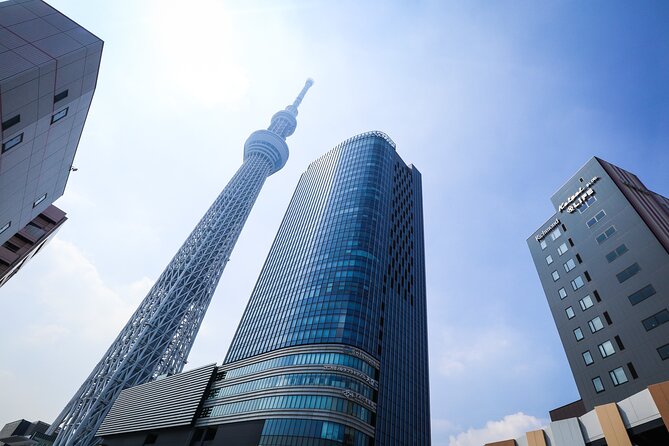
- Near Tokyo Skytree: the stable visit is in the Skytree area, so your morning has a clear geographic hook.
- Guides who explain the culture: Hana, Kentake, and Yuki are mentioned for making sumo make sense, not just look impressive.
- Photos are part of the deal: you can photograph the wrestlers and pose for pictures, plus group-photo moments.
- Tatami-only access: only certain areas are open, and you’ll stay in the permitted spaces.
Oshiage Station at 8:00am: where your sumo morning starts
This tour is built around a simple idea: catch sumo life early, when the stable is in full practice mode. You meet at Oshiage Station, at the taxi stand inside the station rotary. It starts at 8:00am, and the tour ends back at the same meeting spot.
Two practical benefits come with this setup. First, it’s easy to anchor your day in a real transit hub, not a vague street corner. Second, you’re not waiting around for hours—this is a short morning experience designed to fit a busy Tokyo itinerary.
One more detail that helps: you get a mobile ticket, so you’re not hunting for printouts or scrambling through apps right at the meeting point.
You can also read our reviews of more tours and experiences in Tokyo



Visiting a Tokyo sumo stable near Skytree (and what you actually get)
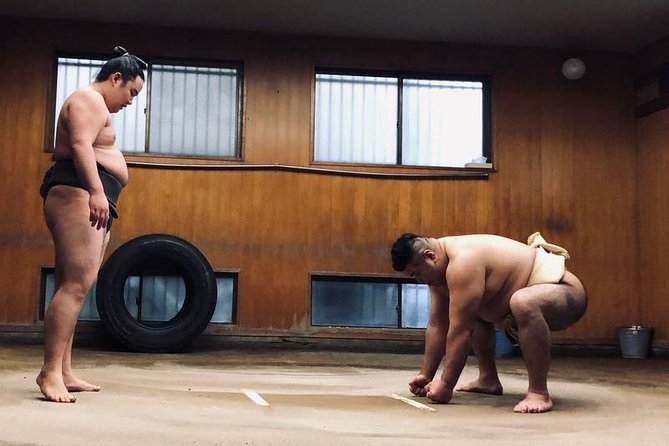
Instead of a museum-style presentation, you’re visiting a working stable in the Tokyo area near Tokyo Skytree. That matters because a stable visit isn’t just about entertainment. You’re watching training in the place where daily discipline happens, with the rhythms that come with morning practice.
This tour says you’ll visit one of the sumo stables around Tokyo Skytree. While you won’t control which stable you get, you can control your attitude: come ready for a real training environment. The training itself is typically intense and focused, not a performance made for tourists.
Group size is part of the value here: the tour runs with a maximum of 10 travelers. That keeps the experience calmer, and it also makes it easier to follow instructions about where you can go and where you can’t.
The morning practice: warm-ups, sparring, and serious concentration
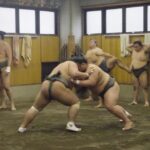
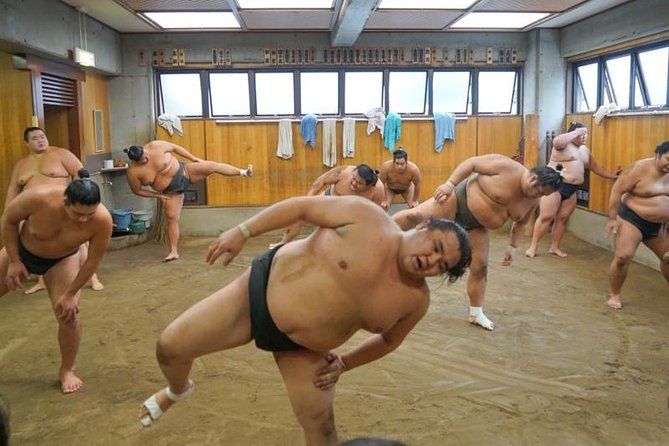
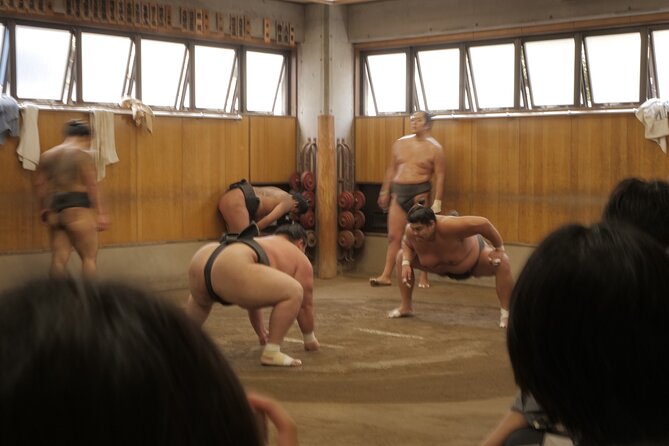
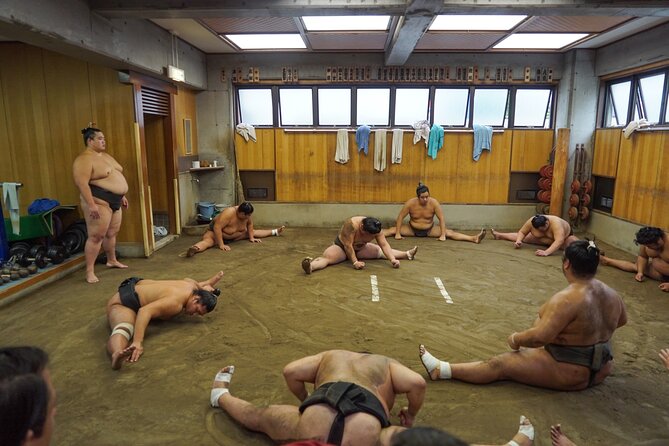
During the visit, you watch the wrestlers warm up and spar with each other during morning practice. This is one of those moments where sumo stops being “big guys in robes” and becomes a sport with tempo, timing, and technique.
A couple of themes show up repeatedly in how people describe the practice:
- The intensity feels real. You’re not watching a staged script; you’re watching athletes doing serious work.
- The energy is concentrated. The wrestlers look focused, and the actions feel purposeful rather than performative.
That may be why some guests say this is the next best thing if they can’t catch a tournament. A stable morning isn’t a championship match, but it’s closer to the core of what makes sumo demanding: the training mindset and the physical grind.
One useful expectation-setting point: the tour is about 2 hours total. Some guests feel that the training portion is more than enough within that window, and that the session can feel a bit repetitive as it cycles through drills. In other words, if you prefer nonstop variety, this might not be your thing. But if you want the real atmosphere of a stable morning, the repetition is part of the point.
Photo opportunity rules: what you can shoot and where you’ll stand
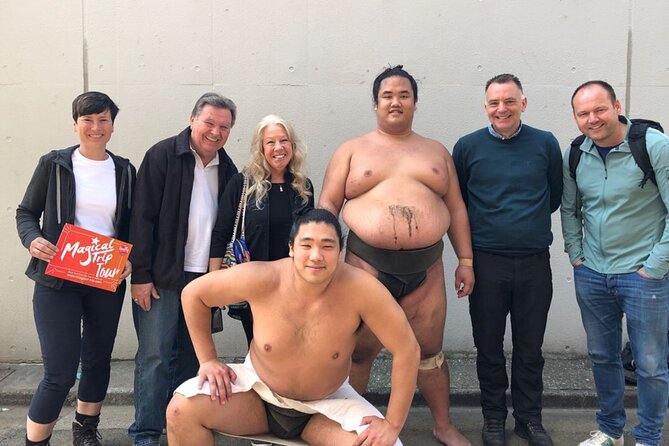
Photography is one of the headline features: you get the chance to photograph the wrestlers and to pose for pictures with them. People also describe an end-of-visit group photo moment, including a picture with the whole stable and the sensei.
Now for the important part: your access is limited. You can only enter permitted spaces, and all areas in the sumo stable are off-limits except for the tatami (straw flooring) areas. That means your best photos will come from staying where you’re allowed, not trying to edge into restricted parts.
Practical tip: treat the guide’s directions as photo directions, too. If your photo angle feels tight, it’s usually because you’re in the correct place—not because you’re doing something wrong. In a stable environment, the goal is respect and safety, not squeezing for a better shot.
Guide time: turning what you see into something you can explain
A huge part of the satisfaction with this experience is the guide. You get personalized attention in a small group, and the guide’s job is to connect the training you see to the cultural meaning of sumo.
Several English-speaking guides are specifically named in feedback, including Hana, Kentake, and Yuki. People highlight that explanations are clear and useful, and that you learn history and context rather than just watching motion.
This is where the experience becomes more than a photo stop. If you understand basics like how wrestlers approach practice, the discipline behind what you’re seeing, and the tradition that frames it, your photos will mean more later. You’ll also know what to watch for during sparring and transitions between drills.




Seating and timing: how to avoid ending up a few rows back
Here’s a logistics detail that can directly affect your view: seating is first come first served. If you arrive late, you may be seated 2–3 rows from the front.
Given that the meeting time is 8:00am, you should plan to be early—early in Japanese transit terms, not early in vague tourist terms. Being on time here isn’t just courtesy. It’s how you protect your best photo angles and your closest viewing position on the tatami.
Also keep in mind that you’re moving and settling in a working stable space. If you’re the type who likes to chat and browse before activities start, this is a moment to switch gears and get set fast.
Weather prep: hot, humid Tokyo mornings and what to bring
This is Tokyo, and the tour notes a seasonal reality: summer can be very hot and humid. The simple recommendation is bring water and wear a hat to help prevent heat stroke.
This matters even if you think you’re just “standing and watching.” You’ll likely be in one place for long moments, and that’s exactly when heat hits hardest. Hydrate before the session, then keep sipping as you can.
If you’re visiting outside summer, you might be fine without a hat—but if you’re traveling in the hotter months, treat the hat as part of your sumo gear.
Price and value: is $99.10 worth it?
At $99.10 per person, this isn’t the cheapest morning activity in Tokyo. But the value isn’t just the duration—it’s the access.
You’re paying for:
- entry to a sumo stable practice (not a public museum-style show),
- small-group attention (max 10 travelers),
- the chance to photograph and pose with wrestlers,
- and a guide who explains what you’re watching in a way that makes it stick.
If you compare it to the typical alternatives—paying for a spectacle, doing a long day tour, or paying for a “taste of culture” with minimal access—this is a direct hit at what sports fans want: real practice, up close, early in the day.
The main reason you’d feel disappointed is if you wanted nonstop variety or freedom to wander the stable. But if you want an authentic window into sumo training, the price-to-experience ratio is strong.
Who this tour suits best (and who should think twice)
This works especially well if you’re:
- a sports fan who likes technique and training environments,
- curious about Japanese tradition and how sports culture is practiced daily,
- the kind of traveler who enjoys learning while seeing something unusual.
It may not fit as well if you:
- hate rules about where you can stand (tatami-only access is real here),
- want lots of different settings in one day (this is one stable, one practice flow),
- struggle with early mornings or early arrivals (you’ll want to show up on time for best seating).
Should you book this exclusive sumo morning practice?
I’d book it if your goal is to see sumo training as a living discipline, not as a one-time tourist performance. The combination of small-group access, serious practice up close, and photo opportunities makes this a standout morning activity for Tokyo.
Book with two expectations set in your favor: arrive early for seating, and follow the tatami-only boundaries. If you do that, you’ll spend two hours exactly where you should be—inside the mindset of sumo, with context from guides like Hana, Kentake, or Yuki, and photos that capture the day without turning it into a free-for-all.
FAQ
What time does the tour start, and how long is it?
The tour starts at 8:00am and runs for about 2 hours. It meets at Oshiage Station and ends back at the meeting point.
Where do I meet the guide?
You meet at the taxi stand inside the Oshiage Station rotary (Oshiage, Sumida City).
Can I take photos during the sumo practice?
Yes. The experience includes a photo opportunity, and you also have a chance to pose for pictures with the wrestlers.
How many people are in the group?
The tour has a maximum of 10 travelers.
Are there restrictions inside the sumo stable?
Yes. All areas are off-limits except the tatami (straw flooring) areas.
What should I bring for a summer Tokyo visit?
The tour recommends bringing water and wearing a hat due to heat and humidity in summer.