REVIEW · TOKYO
Mount Fuji Full Day Sightseeing Tour from Tokyo
Book on Viator →Operated by GORYO CO. LTD. · Bookable on Viator
Mount Fuji is easier when someone else handles the logistics. This full-day group tour from Tokyo is built around multiple viewpoints for better odds of seeing the cone clearly, plus timed stops at Oishi Park, Arakurayama Sengen Park, Mt. Fuji 5th Station, and Oshino Hakkai. I especially like the efficient route that replaces complicated train transfers with one bus day, and I like that you get a real mix of scenery, from lake views to mountain-side walking. One possible drawback: the day is tightly scheduled, so you have to move quickly at each stop—great for photos, less great if you want long lingering.
You’ll ride an air-conditioned vehicle with on-board WiFi (sometimes it works as advertised, sometimes it doesn’t, based on real-world reports). Guides can be excellent—people have highlighted Justin, Sophie, and Zoe for strong pacing and helpful local tips. This is a moderate-fitness day, mainly because Arakurayama involves a 398-step climb to the observation deck.
In This Review
- Key things I’d zero in on before you go
- Why this Mount Fuji day trip works better than DIY
- Price and what you actually get for around $66
- Tokyo pickup, group size, and the 8:00 am pressure
- On the bus: WiFi, comfort, and how to handle a long ride
- Stop 1: Oishi Park and the Lake Kawaguchi photo frame
- Stop 2: Arakurayama Sengen Park, 398 steps, and Fujiyoshida views
- Stop 3: Mt. Fuji 5th Station (around 2,300m) and the reality of altitude
- Stop 4: Oshino Hakkai and the eight-pond reset
- Lunch, timing, toilets, and keeping the day from feeling stressful
- Guides, commentary, and how to get more out of short stops
- Weather and the Mount Fuji visibility factor
- Should you book the Mount Fuji Full Day Sightseeing Tour?
- FAQ
- What time does the Mount Fuji tour start?
- How long is the tour?
- Where does the tour begin and end?
- What are the main stops during the day?
- Is lunch included?
- Is WiFi included on the bus?
- Are admission fees included for the stops?
- How many people are on the tour?
- What kind of physical fitness is needed?
- What happens if the weather is too poor for Mount Fuji?
Key things I’d zero in on before you go
- Four major stops designed to maximize Mount Fuji photo chances, not just one quick look
- Oishi Park + Lake Kawaguchi views paired with easy walking on a lakeside promenade
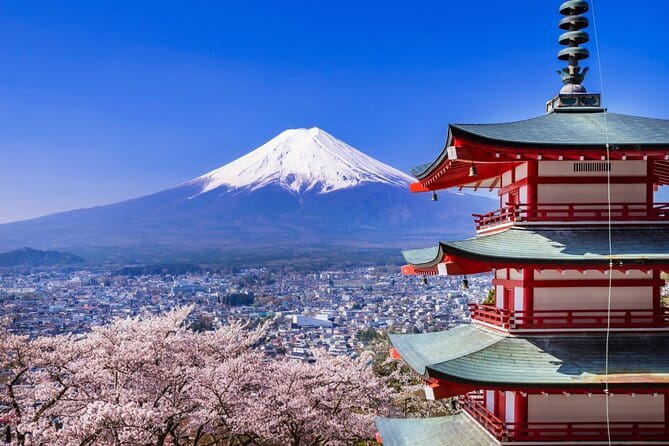
- Arakurayama Sengen Park’s 398 stairs for Fujiyoshida city views from an observation deck
- Mt. Fuji 5th Station at about 2,300m gives you altitude and a stronger sense of the mountain
- Oshino Hakkai’s eight ponds offer a calmer, nature-and-culture break from the busy viewpoints
Why this Mount Fuji day trip works better than DIY
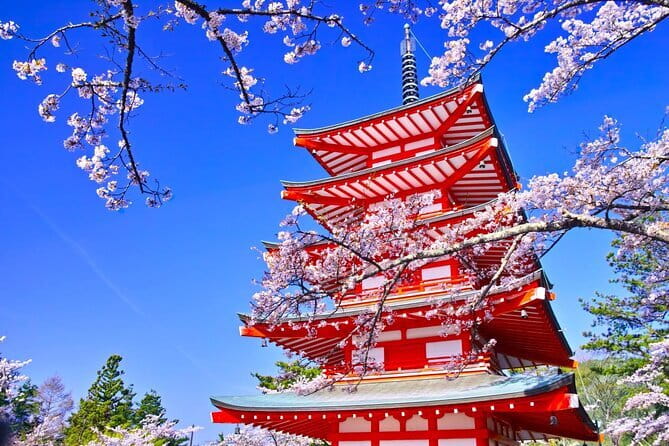
If you’ve ever tried planning a Mount Fuji day from Tokyo on your own, you know the pain: multiple transit legs, timetable stress, and the nagging question of whether you’ll make it back before the last train. This tour removes most of that by bundling the driving and scheduling for you, so you can focus on the sights.
The route is also thoughtfully “Fuji-shaped.” You start with lake-and-flower scenery, then climb for a wider city view, then hit the 5th Station for the mountain experience, and finish with Oshino Hakkai’s pond village feel. In plain terms: it’s not just a bus to one viewpoint. It’s a sequence.
That matters because Fuji visibility changes fast. One cloudy patch can ruin a single-stop plan, but multiple stops spread your luck around.
You can also read our reviews of more tours and experiences in Tokyo

Price and what you actually get for around $66
At $66.05 per person for an approximately 10-hour day, this isn’t trying to be fancy. It’s trying to be practical. You’re paying for transportation, a guided schedule, and the ability to see four different Mount Fuji-area highlights without renting a car or solving transit puzzles.
Also, most of the listed sights are free admissions on the tour’s plan, including Oishi Park, Arakurayama Sengen Park, Mt. Fuji 5th Station, and Oshino Hakkai. The big “cost” you’re paying is time and energy, not entry fees.
So the value makes sense if you want one organized day trip and you’re okay with short stop windows. It’s less ideal if you’re the type who wants to spend hours in one place or you hate stairs.
Tokyo pickup, group size, and the 8:00 am pressure
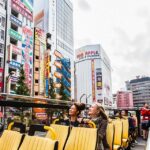
The tour departs at 8:00 am. That early start is the whole trick: you’re racing daylight and traffic, and you’re trying to arrive before the busiest waves at the lakes and viewpoints.
The group is capped at 40 travelers, which is big enough to feel like a real group tour, but small enough that it doesn’t always turn into a stampede. Still, the experience depends on your timing. Several reports mention that being late can cause issues, and meeting-point directions sometimes need extra attention.
Here’s the practical move: plan to arrive early and re-check the meeting spot details the day before. If the instructions mention a complicated location, don’t assume you’ll intuit it. One helpful guide-level detail from a report: Zoe guided someone who had trouble finding the meeting point, including being there with the guide flag. But your goal is to avoid needing that kind of scramble at the start of your day.
On the bus: WiFi, comfort, and how to handle a long ride

You’re promised WiFi on board, and an air-conditioned vehicle is included. Those are real pluses for a 10-hour day where much of your time is simply getting between places.
That said, reports are mixed. Some people said the WiFi worked; one noted there was no internet available. In other words: treat WiFi as a bonus, not a guarantee. Download what you need before you leave your hotel.
Comfort is another factor. One review complained about a bus that felt cramped and more like a smaller vehicle than a full coach. If you’re tall, you might want to pack expectations carefully. Bring a layer for cool AC and keep snacks handy because lunch isn’t included.
Stop 1: Oishi Park and the Lake Kawaguchi photo frame

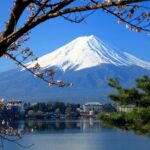
Oishi Park sits on the north shore of Kawaguchiko (Lake Kawaguchi), with the kind of view people come for: water in the foreground, Mount Fuji framed in the distance, and seasonal flowers along the lakeside promenade. Your stop is about 30 minutes, and admission is free.
What makes this stop work is that it’s relatively easy to scan for angles quickly. Even if the weather shifts, you can find a useful photo spot without committing to a long walk.
The drawback is obvious: 30 minutes goes fast. You’re not going to “wander for an hour and still be relaxed.” You’ll want to decide your priority right away—wide Fuji shots, flowers, or a calmer stroll for variety—and then commit. If the forecast looks questionable, use Oishi Park as your warm-up: get your first serious photos early while conditions still cooperate.




Stop 2: Arakurayama Sengen Park, 398 steps, and Fujiyoshida views
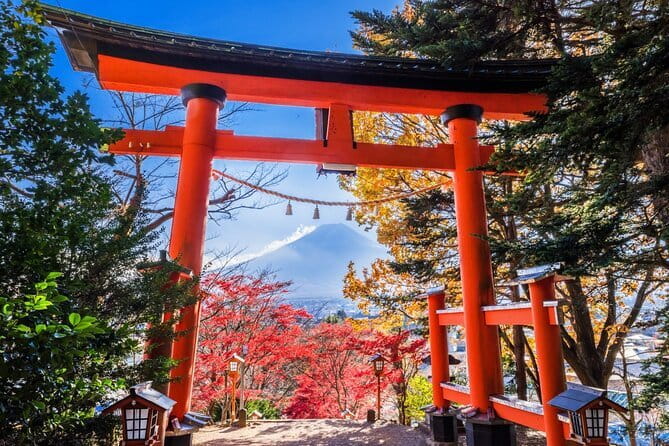
Next comes Arakurayama Sengen Park. This is where the tour earns its “full-day” status. The park stretches up the mountain, and the main viewpoint involves climbing up to an observation deck via 398 stairs.
Your stop here is about 1 hour, with free admission. That hour includes the walk up, the viewpoint time, and the descent. If you’re going for photos, be ready to move. The payoff is a higher perspective over Fujiyoshida City with Mount Fuji showing up when the day cooperates.
A caution from real-world feedback: the stair climb can feel long, and some people expected a shorter or easier photo moment. If you know stairs are an issue, wear grippy shoes and plan to take a slow pace on the way up. It’s not just about effort. It’s about saving time so you still get actual viewing.
Also, if you’re sensitive to guided commentary volume, note that some guides talk extensively while you’re approaching landmarks. That can be great if you like context; it can be annoying if you want quiet walking time. Either way, bring patience.
Stop 3: Mt. Fuji 5th Station (around 2,300m) and the reality of altitude
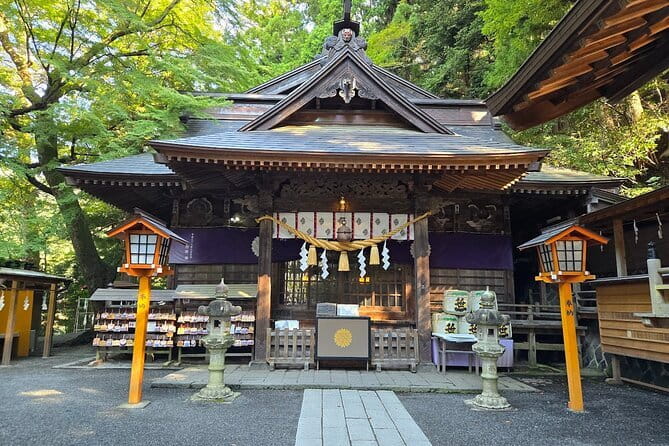
Then you reach Mt. Fuji’s 5th Station, listed at roughly 2,300m above sea level. Your stop time is about 1 hour 15 minutes, again free admission.
This is the emotional center of the day for a lot of people. Even without climbing higher, being at a mountain station gives you a stronger sense of scale and altitude than just watching from the lake. If Fuji is visible, it feels much more immediate up here.
But here’s the key reality check: visibility and clouds are everything. One common pattern in experiences like this is that you might see Fuji clearly early and then lose it later, or see it briefly near the time you’re rushing between points. So use this stop for what it’s meant to be: a chance to experience the mountain zone, not a guarantee of a perfect photo.
Also, the air can feel colder at altitude. One report advised bringing warm clothes, and that’s good common sense. Layers beat one bulky jacket because you can adjust when you move between bus and station.
Stop 4: Oshino Hakkai and the eight-pond reset
Oshino Hakkai is a small village in the Fuji Five Lake region known for its eight ponds, formed from water tied to a former sixth lake. It’s located between Lake Kawaguchiko and Lake Yamanakako, and the stop is about 45 minutes with free admission.
This is the decompression stop. Compared with steps and high-altitude station vibes, Oshino Hakkai is more about strolling, looking at pond reflections, and enjoying the cultural feel of the area.
Even though it’s touristy, it works well after the more intense viewpoint segments. It’s a chance to reset your legs and get some variety before the long drive back.
If you’re watching your time, don’t spend your whole 45 minutes chasing every shop. Pick a walking route first. You’ll enjoy it more when you don’t feel rushed every 30 seconds.
Lunch, timing, toilets, and keeping the day from feeling stressful
Lunch is not included. That means you’re responsible for finding food during the time allotted at stops. One detailed note in a report: at a lunch restaurant, cash-only payment was mentioned and vegetarian options may be limited. If you eat vegetarian or have specific dietary needs, it’s smart to plan ahead by checking what’s likely available near your chosen stop times—and bring backup snacks.
Toilets are another practical issue. One report said the bus toilet wasn’t available on the day they went, which can matter on a long drive. You can’t count on anything in a “maybe” situation, so treat hydration as something you manage actively: drink, but don’t wait until you’re desperate.
Finally, remember that most of the tour day is travel time. The itinerary includes time allotments for getting from place to place, and the remaining hours are mostly road. That means your “free time” is real but limited, so plan your energy the same way you’d plan your photos.
Guides, commentary, and how to get more out of short stops
One reason this tour tends to score well is the guide experience. Names that came up with praise include Justin, Sophie, and Zoe, with people highlighting friendly, organized guidance and useful local recommendations for what to do in each area.
That said, guide style can vary. Some people loved the extra context; others felt commentary went on too long or crowded the experience. If you want information, lean in. If you want quiet and photos, tune the commentary out and focus on what you came for.
Your best strategy: decide what you want from each stop before you arrive:
- Oishi Park = first photo series and a short lakeside walk
- Arakurayama = stair climb + observation deck time
- 5th Station = altitude experience and any Fuji visibility you get
- Oshino Hakkai = pond stroll and a final reset
When you frame it this way, short stop times feel less like a squeeze and more like a curated hit list.
Weather and the Mount Fuji visibility factor
This experience is weather-dependent. The tour specifically requires good weather, and if conditions are poor the operator offers an alternative date or a refund. That’s not small print—Fuji is famously stubborn about showing itself.
When the skies are clear, the whole day can feel like one long photo opportunity. When it’s drizzly or cloudy, you still get the towns, viewpoints, and station experience—you just won’t always get that iconic cone-in-the-distance view.
The smart expectation is this: even on an excellent day trip, you might miss perfect visibility at one of the stops. That’s why this itinerary stacks viewpoints in different locations. You’re spreading your chances.
Should you book the Mount Fuji Full Day Sightseeing Tour?
Book it if you want:
- a simple, guided day trip from Tokyo with transportation handled
- multiple Mount Fuji-area photo chances, not one quick stop
- short, efficient sightseeing that’s realistic within a 10-hour schedule
Skip it (or switch to a more flexible plan) if:
- you hate stairs and long walking spurts—Arakurayama’s 398 steps are the main challenge
- you need lots of time at one location to enjoy it slowly
- you can’t tolerate a “tight day” with limited lunch options and no included meal
My bottom line: for the price, this is one of the more practical ways to see the Mount Fuji region in a single day from Tokyo. Just treat it like a photo-and-sights sprint, not a leisurely countryside day, and pack layers plus a little extra patience.
FAQ
What time does the Mount Fuji tour start?
It starts at 8:00 am.
How long is the tour?
The duration is about 10 hours.
Where does the tour begin and end?
It starts from central Tokyo pickup points and ends back at the meeting point.
What are the main stops during the day?
The tour includes Oishi Park, Arakurayama Sengen Park, Mt. Fuji 5th Station, and Oshino Hakkai.
Is lunch included?
No, lunch is not included.
Is WiFi included on the bus?
WiFi on board is listed as included.
Are admission fees included for the stops?
The tour lists free admission for the stops, including Oishi Park, Arakurayama Sengen Park, Mt. Fuji 5th Station, and Oshino Hakkai.
How many people are on the tour?
The tour has a maximum of 40 travelers.
What kind of physical fitness is needed?
A moderate physical fitness level is recommended, especially due to walking and stairs.
What happens if the weather is too poor for Mount Fuji?
The experience requires good weather, and if it’s canceled due to poor weather you’ll be offered a different date or a full refund.