REVIEW · TOKYO
Mt. Fuji and Hakone Private Tour with English Speaking Guide
Book on Viator →Operated by Azu International Tours · Bookable on Viator
Mt. Fuji looks different from every stop. This private day trip strings together Fuji viewpoints and Hakone volcanic sights with door-to-door transport, so you’re not wrestling trains or tour-group schedules.
I especially like the freedom to shape the day around what you care about, and the way transport costs (parking, tolls, gas) are handled so you’re not surprised halfway through. One thing to keep in mind: weather really matters, and traffic can eat sightseeing time.
In This Review
- Key Things That Make This Private Fuji + Hakone Day Worth It
- Private Car From Tokyo to Fuji and Hakone: Less Stress, More Seeing
- Price and group size: what $579 buys you
- The big condition: visibility
- How the 10-Hour Day Actually Feels on the Ground
- Flexibility means you should steer it
- Stop 1: Arakurayama Sengen Park for Fuji + Pagoda Views
- What can disappoint here
- Stop 2: Lake Kawaguchiko and the Panoramic Ropeway Option
- Why Kawaguchiko works even with mixed weather
- Stop 3: Oishi Park Flowers and the 350-Meter Walking Path
- A practical note: activities at the Natural Living Center
- Stop 4: Hakone Shrine and the Red Torii Over the Water
- Why this stop is worth it
- Stop 5: Lake Ashinoko Cruise on a Pirate Ship
- The main reason people love this part
- Stop 6: Hakone Ropeway to Owakudani for the Hell Valley Feeling
- What to know before you go up
- Stop 7: Owakudani Valley for Volcanic Views and Black Eggs
- How to turn this stop into a memorable one
- What If You Can’t See Mt. Fuji Clearly?
- Included vs. Extra Costs: Where Surprise Money Can Happen
- Who This Tour Fits Best (and Who Should Rethink It)
- Should You Book This Mt. Fuji and Hakone Private Tour?
- FAQ
- What’s the group size for this private tour?
- How long is the Mt. Fuji and Hakone private tour?
- Is pickup from Tokyo offered?
- Are entrance fees included in the tour price?
- Do you get transport, tolls, and parking covered?
- Does the tour include the boat cruise and ropeway rides?
- What happens if weather is poor for Mt. Fuji viewing?
Key Things That Make This Private Fuji + Hakone Day Worth It
- Door-to-door private transport from Tokyo, without public-transport stress
- English-speaking driver/guide to explain what you’re seeing and keep your day running smoothly
- All transport fees included, including parking and highway/tolls (entrance tickets are extra)
- A flexible plan, so your guide can adjust timing and priorities when needed
- Iconic viewpoints packed in, from Mt. Fuji photo spots to Hakone’s Owakudani smoke valley
Private Car From Tokyo to Fuji and Hakone: Less Stress, More Seeing
This is the kind of day trip I like: one long loop outside the city, handled for you. You get an air-conditioned vehicle and a private driver/guide, so you can focus on photos, views, and short walks instead of routes, transfers, and crowds.
The real value is the combo of flexibility + private logistics. If Fuji is showing itself, you can spend a little more time where the angle is best. If clouds roll in, your guide can shift your emphasis to the shrines, the lake, and the volcanic side of Hakone—places that still feel worthwhile even when the mountain hides.
You can also read our reviews of more guided tours in Tokyo
Price and group size: what $579 buys you
The price is $579 per group for up to 3 people. In practice, that means you’re paying for comfort and time. If you’re traveling as two or three, the private car can start to make sense versus multiple train rides, taxis, and the “how long will this really take” guesswork.
If you’re just one person, it’s harder to justify because you’re still paying for the whole vehicle. For solo travelers, you’ll usually get better value using public transport or a smaller group tour—unless you strongly value a private pace and direct pickup.
The big condition: visibility
This experience requires good weather. Mt. Fuji is famous for being moody, and Hakone’s most dramatic moments often depend on what the sky is doing. Plan your expectations around that. Even so, the day doesn’t collapse if Fuji is faint; you’ll still see lakes, shrines, and the smoke at Owakudani.
How the 10-Hour Day Actually Feels on the Ground
The tour runs about 10 hours. That sounds tidy on paper. On the road, it becomes a rhythm: drive, stop, walk a bit, photo, move on.
The upside of a private setup is that you’re not stuck behind strangers arguing about pace or missing a train connection. The driver can also choose efficient routes and timing. The downside: no one controls weekend traffic, and Mt. Fuji area roads can be slow. If your day starts later than planned, your sightseeing window shrinks fast.
Flexibility means you should steer it
You’re told you can decide which attractions and activities you want with your driver/guide. That matters because this area has more than “one perfect stop.” You can build the day around your priorities, like:
- quick iconic photos vs. slower, scenery-chasing viewpoints
- more time for flowers at the lake vs. more time in Hakone’s volcanic core
- a stronger focus on lakeside views vs. shrine stops
In a few examples from real guide experiences, guides like Malik, Sakib, Hadi, and Nabeel were praised for making the day feel tailored—sometimes by adding a favorite local viewpoint or repeatedly helping with photo angles when weather wasn’t ideal.
You can also read our reviews of more private tours in Tokyo
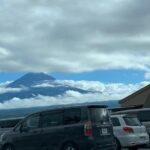

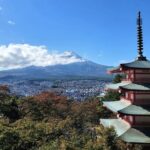
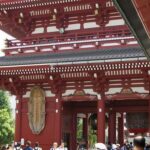
Stop 1: Arakurayama Sengen Park for Fuji + Pagoda Views
Your first stop is Arakurayama Sengen Park, known for Fuji views and the dramatic composition with a red pagoda. This is one of those places where you feel the geometry right away: Fuji in the background, buildings and pagoda in the foreground, and people aiming their cameras at the same angle for a reason.
You’ll have about 45 minutes, and entry is free. That’s enough time to grab the classic perspective and wander a little, but not enough to treat it like a long hike. If you’re chasing photos, go early in the day with clear light and quick instincts.
What can disappoint here
If Fuji is completely washed out by fog or thick cloud cover, the park becomes more of a scenic viewpoint than a mountain show. Still, the pagoda view is good even when Fuji is only partially visible.
Stop 2: Lake Kawaguchiko and the Panoramic Ropeway Option
Next comes Lake Kawaguchiko, one of the five lakes that frame Mt. Fuji. This area is built for one thing: watching the mountain reflect (or partially hide) across the water.
You’ll spend about 2 hours here. The Panoramic Ropeway is the big optional add-on, and the ropeway admission isn’t included. That means you should budget extra if you want the observation point views.
Why Kawaguchiko works even with mixed weather
Even when Fuji isn’t crystal clear, lakes give you variety. You might see:
- a partial silhouette across the water
- changing visibility as clouds drift
- photo angles that look different from shore to shore
Also, this part of the day tends to feel less rushed than the Hakone core, so it’s a good time to breathe and reset.
Stop 3: Oishi Park Flowers and the 350-Meter Walking Path
Oishi Park sits on the north shore of Lake Kawaguchiko and is especially loved for its flower seasons. You’ll get about 30 minutes and entry is free.
What makes it interesting is how the park changes with the months. In spring you can see moss phlox spreading like a pink carpet (roughly early April to late May). In early summer, lavender blooms (late June to late July). In autumn, you’ll often find the kokia shrubs turning red (mid to late October). There’s also a 350-meter walking path, so you can get movement without committing to a long hike.
A practical note: activities at the Natural Living Center
Oishi Park is tied to the Kawaguchiko Natural Living Center, where you can do things like fruit jam making and an all-you-can-pick course for cherries and blueberries, plus a café option (blueberry ice cream shows up here). The tour data doesn’t say those are included, so treat them as “nice if you want it,” not part of the base experience.
If you care about flowers more than souvenirs, keep your time here focused on the viewpoints and skip extra stops unless your guide recommends something efficient.
Stop 4: Hakone Shrine and the Red Torii Over the Water
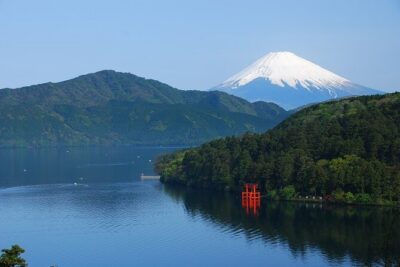
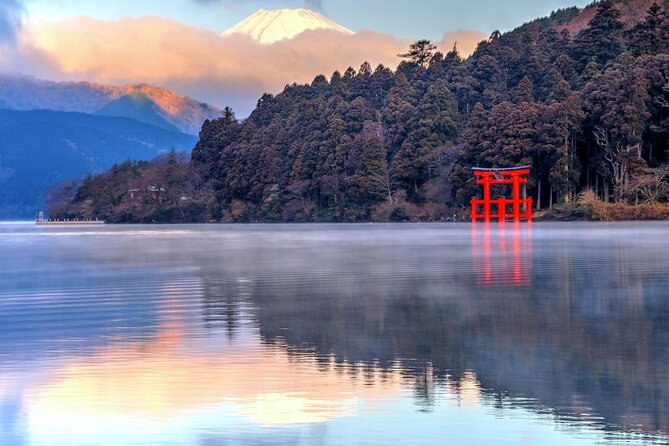
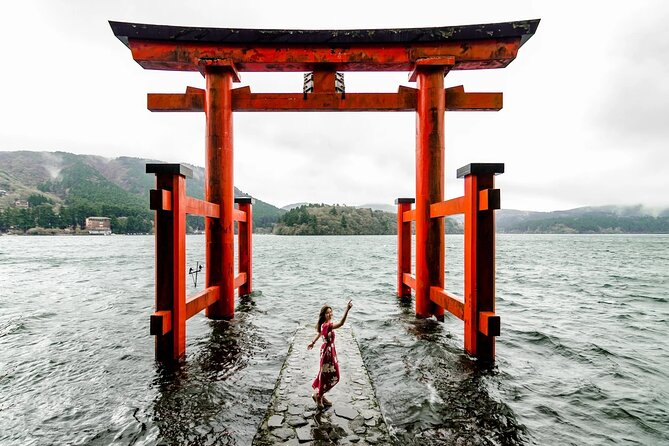
Now you shift from lakes of Fuji to the lakes of Hakone: Hakone Shrine (Hakone-jinja) area and specifically the heiwa no torii, the red gate of peace standing on Lake Ashi waters. This shrine dates back to 757, and it has that old-Japan feel that’s easy to appreciate even if you don’t speak Japanese.
You’ll have about 30 minutes, and admission is free.
Why this stop is worth it
It’s not just a photo. It’s a moment where you can connect the setting: shrine + water + mountains. Even if your day has been cloudy, the red torii gives you a strong visual anchor.
Also, the short time is helpful. You’re not stuck for hours in one place while the rest of the day stretches.
Stop 5: Lake Ashinoko Cruise on a Pirate Ship
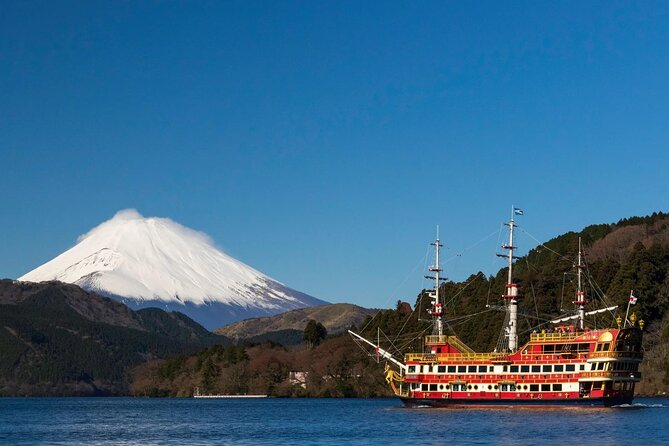
Then comes Lake Ashinoko with a sightseeing cruise (about 25–40 minutes in navigation time, with about 1 hour total for this segment). The cruise departs from Togendai-ko and heads toward Hakone-machi-ko / Moto-Hakone-ko.
The cruise isn’t included in admission, so plan for add-on costs if you want it. The fun twist: the ship is themed like a pirate ship, and at least three design versions exist. There are also pirate objects and 3D art elements onboard, which can make this feel more like a break than another check-in on your list.
The main reason people love this part
Lake Ashi gives you a different type of view. You’re not looking at Fuji directly from a viewpoint platform; you’re seeing the waterline and mountains from a moving angle, which changes what looks dramatic and what looks calm.
This cruise is often where the day starts to feel like Hakone, not just “another mountain trip.”
Stop 6: Hakone Ropeway to Owakudani for the Hell Valley Feeling
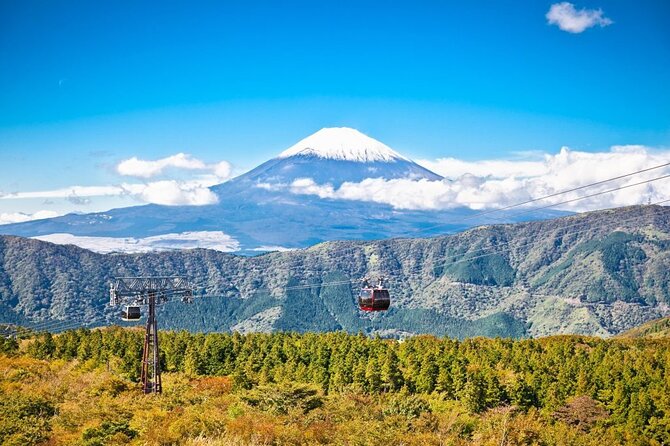
After the lake, you climb into the steam-and-rock zone with Hakone Ropeway. The ropeway segment takes about 1 hour total. Admission isn’t included.
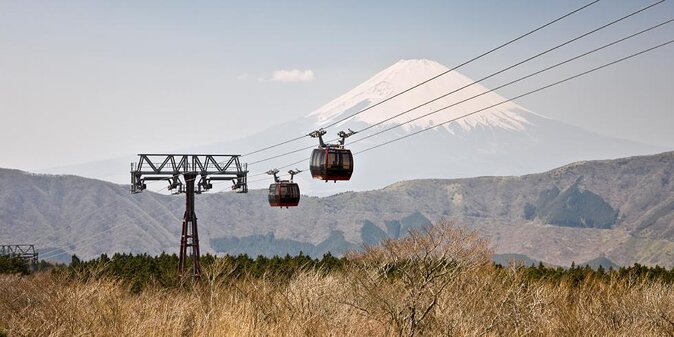
Ropeway rides are popular because they compress distance and give you layers of view. You’ll be looking over Owakudani, Hakone’s famous active volcanic area. The scenery here is often described as otherworldly: mountainside terrain with smoke plumes and that sulfur smell in the air.
What to know before you go up
You’ll want to dress for cool air at higher elevations, and be ready for wind. If Fuji is visible from the route, you can get a bonus view of Mt. Fuji and Lake Ashi from the ropeway journey, but don’t count on it.
This is also the part where your legs get some work. Even with ropeways, you’ll likely walk between stations and platforms. Moderate fitness is enough for most people, but take your pace seriously.
Stop 7: Owakudani Valley for Volcanic Views and Black Eggs
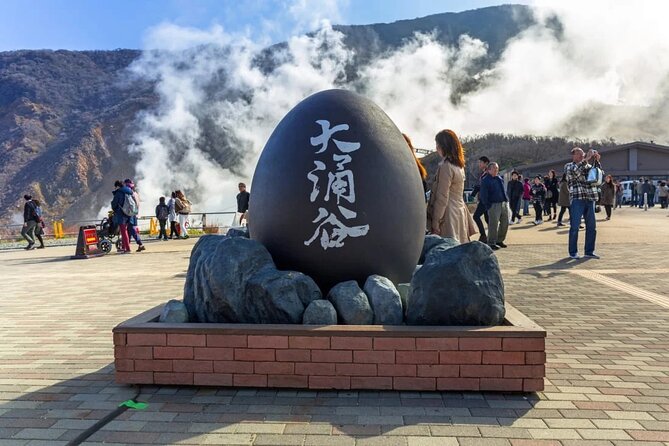
Finally, you get the star attraction of Hakone’s volcanic heart: Owakudani Valley. You’ll have about 1 hour here. Admission isn’t included.
Owakudani is known for intense volcanic activity you can observe up close. You’ll notice the sulfur smell, and you’ll see the “Hell Valley” reputation in action. This area is also associated with the local specialty called black eggs, which turn black due to a reaction with geothermal energy and volcanic gas.
How to turn this stop into a memorable one
If you enjoy sensory travel—steam, smell, unusual geology—this is the stop that delivers. If you’re mainly in it for photos, aim for the moments when smoke flow and light line up. Your guide can often help you find the best angle quickly, especially on days when visibility is changing.
What If You Can’t See Mt. Fuji Clearly?
This is the tricky part of planning around Mt. Fuji. The tour requires good weather, but even with decent weather, clouds can drift in and out.
Here’s what I’d do in your shoes:
- If Fuji shows itself at a stop, don’t delay. Take your photo, then decide fast if you want extra time there.
- If Fuji is hidden, shift your mental plan to Hakone’s experience: shrine, lake cruise, ropeway, and Owakudani steam.
- Use the guide’s flexibility. Ask for smart time tradeoffs, not extra shopping.
In some guide experiences, people appreciated how guides like Rafat and Nabeel handled the reality of clouds by making sure they still got excellent photo moments and key locations—so the day didn’t feel wasted even when Fuji refused to cooperate.
Included vs. Extra Costs: Where Surprise Money Can Happen
A lot of private tours fail on hidden costs. This one does better on the basics. Transport fees are included, including parking, gas/petrol, and highway/tolls. You also get an air-conditioned vehicle and an English speaking driver.
What’s not included:
- entrance passes or fees
- food and beverage
- admissions for parts like the Panoramic Ropeway, the Lake Ashinoko cruise, and the Hakone Ropeway
That means your budget should include add-ons depending on what you choose to ride. If you’re aiming to do everything in the plan, your day will cost more than the base price once you factor these fees.
Who This Tour Fits Best (and Who Should Rethink It)
This private tour fits best if you:
- want a stress-free day away from Tokyo transit
- value customization instead of sticking to a rigid group schedule
- travel as a couple or small group (up to 3) and want private comfort
- care about getting to classic Fuji and Hakone photo viewpoints without running between stations
It may not be the best choice if you:
- are solo and trying to keep costs low
- hate long drives (because traffic can swallow sightseeing time)
- expect Fuji every minute like it’s a guaranteed calendar photo
In a few experiences, the bigger disappointment wasn’t the destinations. It was time spent in traffic and the feeling that it didn’t match expectations for “time outside the vehicle.” This is the reality of the region on busy days—so choose your day wisely if you can.
Should You Book This Mt. Fuji and Hakone Private Tour?
I’d book this if you want a private, calm way to see Fuji views and Hakone’s volcanic core in one day. The biggest strengths are the private car, the English-speaking support, and the fact that transport costs are handled upfront.
You should hesitate if your trip depends on perfect Fuji visibility and you can’t tolerate a cloudy mountain day. The tour can still be fun without Fuji in full glory, but it won’t feel like a highlight reel every moment.
If you do book, set yourself up for success: tell your guide what matters most (flowers, lake angles, shrine photos, ropeway views, or a specific Fuji viewpoint if timing allows), and move fast when you get a clear break in the clouds.
FAQ
What’s the group size for this private tour?
It’s priced per group for up to 3 people.
How long is the Mt. Fuji and Hakone private tour?
The duration is about 10 hours.
Is pickup from Tokyo offered?
Yes, pickup is offered.
Are entrance fees included in the tour price?
No. Entrance passes or fees are not included.
Do you get transport, tolls, and parking covered?
Yes. The tour includes a private air-conditioned vehicle, parking fees, gas/petrol, and highway/tolls.
Does the tour include the boat cruise and ropeway rides?
The cruise and ropeway rides are part of the day, but their admissions are not included.
What happens if weather is poor for Mt. Fuji viewing?
The experience requires good weather. If it’s canceled due to poor weather, you’ll be offered a different date or a full refund.