REVIEW · TOKYO
Asakusa: 2-hour history exploration
Book on Viator →Operated by Arumachi · Bookable on Viator
Asakusa starts to make sense fast. This 2-hour guided walk connects the dots between the Sumida River, the gates, and the big religious sites like Senso-ji, so you’re not just collecting photos—you’re building context. You’ll keep moving at an easy pace through one of Tokyo’s most atmospheric old-town areas.
Two things I really like: the guide-led storytelling and the way the tour keeps you hearing clearly. Many people call out how well guides like Choco and Amy explain things in English, and headsets help even when the streets get crowded. You also get hands-on flavor stops, including traditional snacks along the Nakamise approach.
One thing to consider: this is short. With a lot of highlights packed into about 2 hours, it can feel brisk if you want long sits, lots of shopping time, or deep quiet at each doorway.
In This Review
- Key things to know before you go
- Why Asakusa Needs a Guide (Even If You Love Wandering)
- Price, Time, and Group Size: Is $64.55 Worth It?
- Getting Oriented: Meeting Point, Start Time, and What to Wear
- Stop-by-Stop: Sumida River to Asakusa Culture Center
- Stop 1: Sumida River (starter context, best views)
- Stop 2: Asakusa Culture Tourist Information Center (a preview in plain sight)
- Kaminarimon and Nakamise: How the Thunder Gate Sets the Tone
- Stop 3: Kaminarimon (Thunder Gate and the big lantern explained)
- Stop 4: Nakamise Shopping Street (souvenirs plus snack strategy)
- Hōzōmon and Senso-ji: Rituals You Can Do Correctly
- Stop 5: Hōzōmon (Treasure-House Gate details)
- Stop 6: Senso-ji Temple (the main event, with real “try it” moments)
- Asakusa Shrine: Where Shinto and Buddhism Share the Same Stage
- Stop 7: Asakusa Shrine (shared origins and everyday faith)
- The Extra Touches: Snacks, Headsets, and Possible Bonuses
- Who This Tour Fits Best
- Should You Book This Asakusa History Walk?
- FAQ
- How long is the Asakusa history tour?
- How much does the tour cost?
- Where do I meet the group?
- What time does the tour start?
- What major sights are included?
- Do I need hotel pickup?
- Is the tour in English?
- Are headsets provided?
- Is free cancellation available?
Key things to know before you go
- Headsets in a busy crowd so you can actually follow the guide
- Sumida River opening gives you the real geography behind Asakusa’s story
- Asakusa Culture Tourist Information Center terrace helps you preview what you’ll see next
- Senso-ji ritual stops like omikuji and incense-burner etiquette, explained step by step
- Nakamise snacks and souvenir tips so you spend money wisely instead of wandering aimlessly
Why Asakusa Needs a Guide (Even If You Love Wandering)
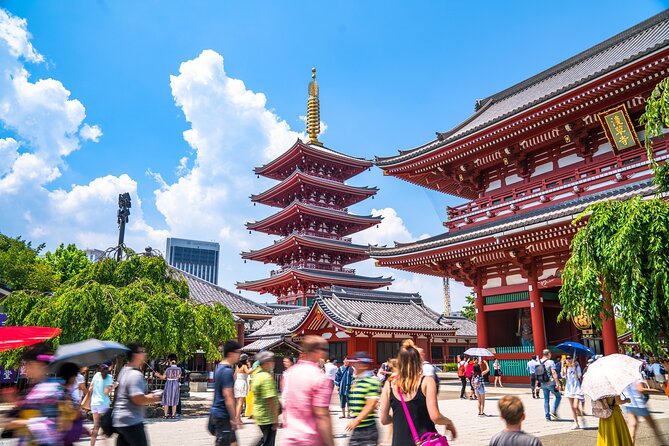
Asakusa is the kind of place where you can walk for hours and still miss the meaning. The streets are charming, yes, but the big landmarks have layers: why they’re where they are, what rituals look like, and how different parts of the neighborhood relate to each other.
This tour is built to help you read the area. You start with the river, then work inward toward the temple approach and gates. By the time you hit Senso-ji, you’ll know what you’re looking at—like why those gates matter, what the giant lantern signifies, and what people are doing around the incense burner. That changes the whole experience. The neighborhood becomes a story you can follow instead of a list of attractions.
You can also read our reviews of more historical tours in Tokyo


Price, Time, and Group Size: Is $64.55 Worth It?
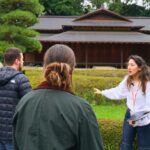
At $64.55 per person for about 2 hours, you’re paying for three key things: local guiding, a structured route, and the sound system (headsets) that makes the whole thing easier to enjoy.
Here’s why that price can be solid value. If you’re a first-time visitor, the route prevents “wrong turn” frustration. You also avoid spending your limited time trying to figure out what’s important. And because the guide is local and English-speaking, you can ask quick questions in the moment—something you don’t get from solo strolling.
The group is capped at 20 travelers, which is usually the sweet spot for a walking tour: big enough to feel social, small enough to keep the guide’s attention on the group. If you hate noisy chaos, headsets are a big plus here.
Getting Oriented: Meeting Point, Start Time, and What to Wear
You meet at Burger King Asakusa Azumabashi (Cross Bil Royal Palace, 2-chōme-20-6 Kaminarimon). The tour starts at 9:30 am. There’s no hotel pickup, so it’s on you to be at the start location on time.
The tour ends at Saryō Ichimatsu (1-chōme-15-1 Kaminarimon), at the restaurant where a geisha activity is held. That doesn’t mean you’re suddenly “doing” geisha—just that the tour wraps near that area, and you can choose what to do next.
Wear comfy shoes. Even if the pace is relaxed, you’ll be walking through gates and shopping streets, and you’ll want to enjoy the stops without thinking about foot pain.
Stop-by-Stop: Sumida River to Asakusa Culture Center
Stop 1: Sumida River (starter context, best views)
You begin at the Sumida River area, right by Azumabashi Bridge. This matters because Asakusa’s history is tied to the river. You’ll also get a quick “Tokyo skyline contrast” moment: across the water you’ll see Tokyo Skytree, plus the Asahi Breweries headquarters with its famous golden flame object.
Why this is a smart start: it frames the neighborhood. Instead of arriving straight at temple gates, you first understand the setting—waterways, access, and how the city grew around this spot.
Practical note: this first stop is short. Take a real look, not just a quick phone shot, because the tour moves on fast.
You can also read our reviews of more tours and experiences in Tokyo




Stop 2: Asakusa Culture Tourist Information Center (a preview in plain sight)
Next you stroll to the Asakusa Culture Tourist Information Center, a newer multi-story building with a striking stacked-wood look. It’s an 8-story structure, and the open terrace on the 8th floor gives you a preview of the tour landmarks ahead—things like Kaminarimon, Nakamise, and Senso-ji.
This is one of those stops that feels small on paper but helps a lot in real life. When you stand on that terrace, your later walks make sense in a “map in your head” way. You don’t feel like you’re guessing where you are.
Kaminarimon and Nakamise: How the Thunder Gate Sets the Tone
Stop 3: Kaminarimon (Thunder Gate and the big lantern explained)
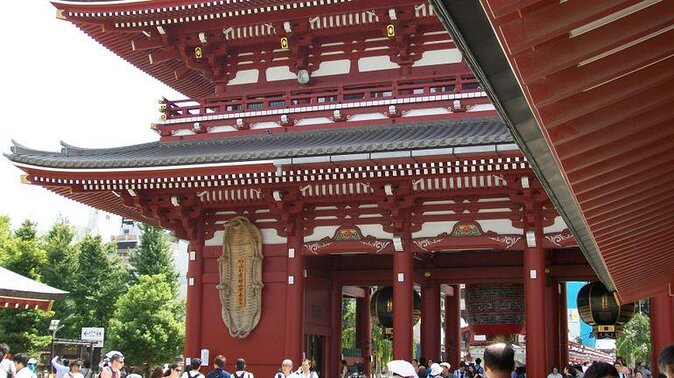
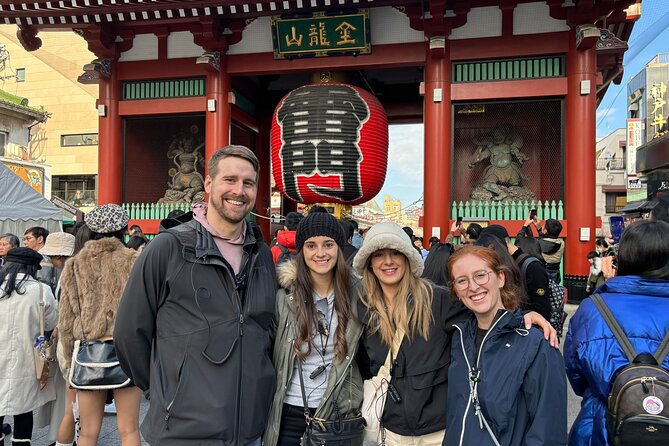
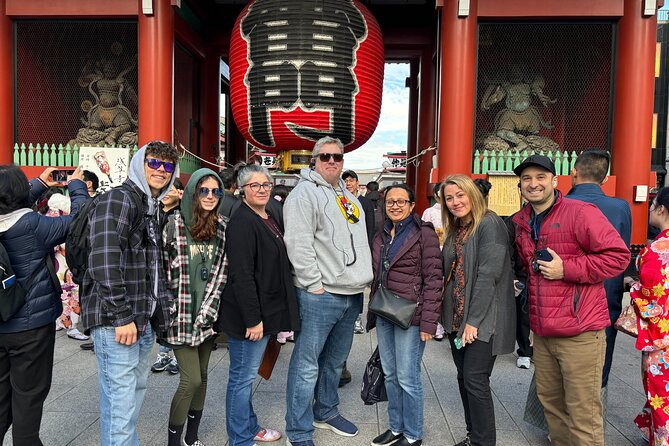
Kaminarimon is the outer gate leading toward Sensō-ji. The highlight is the huge red lantern and the statues around it. The guide’s job here is to demystify what you’re seeing so you don’t just treat it like a photo backdrop.
This is also where the tour’s tone clicks: you’re entering a space that has a purpose, not just visuals. When you know what the lantern and figures represent, the gate becomes a story beat.
Stop 4: Nakamise Shopping Street (souvenirs plus snack strategy)
Then comes Nakamise Shopping Street, a roughly 250 m approach connecting Kaminarimon to the temple’s main gate. It’s packed with souvenir shops and food stalls, which is exactly why a guide helps.
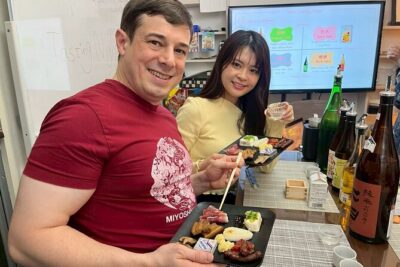
You’ll be shown where to buy souvenirs you’re interested in, and you’ll get traditional snack sampling along the way. The guide may tailor snacks to your preferences, and there are also history tablets along the street that explain how Asakusa developed around Senso-ji.
If you love shopping, this stop is your best window. If you’re trying not to over-spend, use the guide’s recommendations early, then decide what you actually want before you reach the denser crowd zones.
A small consideration: Nakamise is the kind of place where you can lose time. With only about 2 hours total, keep an eye on the group so you don’t get swept into one shop too long.
Hōzōmon and Senso-ji: Rituals You Can Do Correctly
Stop 5: Hōzōmon (Treasure-House Gate details)
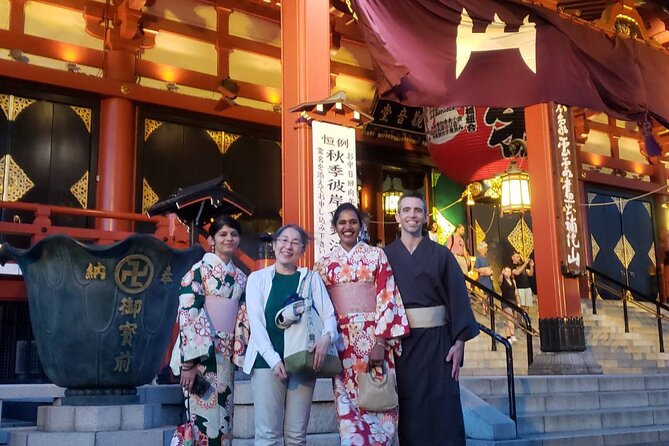
Inside the outer gate is Hōzōmon, the inner gate. It’s a two-story gate, with the second story holding many of Senso-ji’s treasures. You’ll also notice features in the first story like statues, lanterns, and large sandals.
This stop is short, but it helps you understand that the gates aren’t just decorative. They’re part of a layered temple layout—outer transition, inner meaning.
Stop 6: Senso-ji Temple (the main event, with real “try it” moments)
Before you go into the main hall, you’re guided through several major things you can observe or do:
1) Omikuji fortune paper
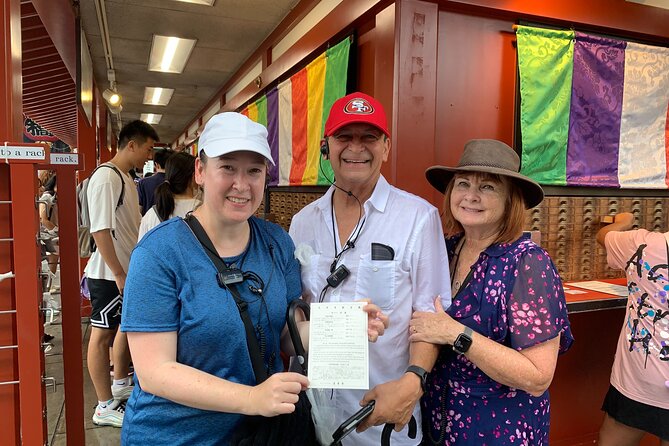
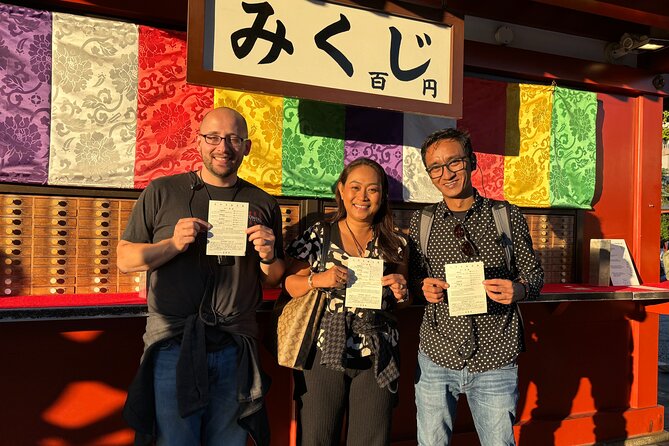
You can draw omikuji to predict your future. The value here is not the fortune itself—it’s that the ritual becomes understandable. You’re not just copying what others do; you know why it’s done.
2) Incense burner ritual
Most people pause at the huge bronze incense burner. The traditional idea is to bathe your hands and face in the smoke as a way to ward off illness before heading up to pray. The guide explains what’s going on so you can participate respectfully without confusion.
3) Water purification fountain
You can also use the purification fountain before prayers. This is another moment where the guide makes the cultural mechanics clear.
Along the way, you’ll see the five-storied pagoda, one of the taller pagodas in Japan at about 53 m. It’s noted here as the second highest pagoda in Japan and it holds Buddha’s ashes on its top floor given by the Sri Lankan government.
Why this matters for your experience: Senso-ji is famous, so it’s easy to feel like you’re seeing “the postcard version.” With this kind of stop-focused guidance, you get the behaviors, symbols, and temple flow that make the place feel alive.
Asakusa Shrine: Where Shinto and Buddhism Share the Same Stage
Stop 7: Asakusa Shrine (shared origins and everyday faith)
Asakusa Shrine is a fascinating change of pace from the temple-heavy flow. The tour points out something specific: it’s unusual to see Buddhist temple traditions and a Shinto shrine coexisting in the same premises, sharing origins and worshipers.
This stop becomes especially useful if you’re trying to understand Japanese religious life beyond stereotypes. The guide explains the connection between the two traditions and how this mix shows up in everyday practice.
If you like your Tokyo experiences grounded in how people actually live, this is the moment that tends to stick after you leave.
The Extra Touches: Snacks, Headsets, and Possible Bonuses
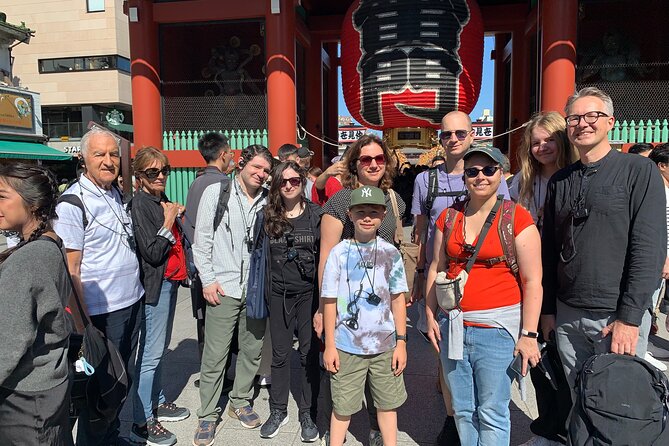
A highlight of this tour is how it handles the practical stuff that can ruin a walking day. Headsets are used so you can hear the guide clearly even in louder streets, and that’s a real quality-of-life upgrade.
You also get guided snack stops through Asakusa, which makes the route feel like a living neighborhood rather than a march between landmarks. Guides like Choco, Yasu, and Amy have been mentioned for explaining the area clearly in English and making the walk feel friendly.
There can also be bonus moments at the end, such as an origami lesson, and you might get a luck reading as part of the experience flow depending on what the guide includes that day. Treat these as nice extras, not the core of what you booked.
One caution from the overall feedback pattern: the tour structure can feel slightly tight for some people, and on rare occasions the narrative arc may not feel as organized as you’d hope. That’s not a reason to skip it—just a reminder that in only two hours, the guide has to balance facts, rituals, and pacing.
Who This Tour Fits Best
This is a great match for:
- First-time visitors who want Asakusa’s big meanings, not just photos
- People who enjoy walking but hate getting stuck translating signs alone
- Travelers who want cultural context for Senso-ji rituals like omikuji and incense practice
- Small groups that appreciate headsets and a clear plan
It’s also a good fit if you’re staying nearby and want a focused, half-morning “get your bearings fast” experience.
If you’re the kind of traveler who wants to linger for long periods inside buildings with no schedule pressure, you might find the timing a bit intense. In that case, you could still use this tour as a foundation, then return later on your own for more time at the places you liked best.
Should You Book This Asakusa History Walk?
I’d book it if you want Asakusa to feel understandable. The combination of the river start, the gates-to-temple progression, and the ritual explanations makes this more than sightseeing—it’s a guided way to read the neighborhood.
Skip it only if you prefer unguided wandering for hours and you don’t care about cultural background. Because in two hours, you’ll be moving. You won’t have time for deep rest stops or long shopping binges.
If you want the best value from the $64.55 price tag, come with comfy shoes, bring curiosity, and be ready to follow the guide’s timing. You’ll leave with a clearer sense of why Asakusa looks the way it does—and what people are doing there.
FAQ
How long is the Asakusa history tour?
It runs for about 2 hours.
How much does the tour cost?
The price is listed as $64.55 per person.
Where do I meet the group?
You meet at Burger King Asakusa Azumabashi (Cross Bil Royal Palace, 2-chōme-20-6 Kaminarimon, Taito City).
What time does the tour start?
The start time is 9:30 am.
What major sights are included?
The tour includes the Sumida River area, Asakusa Culture Tourist Information Center, Kaminarimon, Nakamise Shopping Street, Hōzōmon, Senso-ji Temple, and Asakusa Shrine.
Do I need hotel pickup?
No, hotel pickup is not included.
Is the tour in English?
Yes. It includes live guiding in English by a local certified expert guide.
Are headsets provided?
Headsets are provided so you can hear the guide clearly, and they apply for groups of 3 or more.
Is free cancellation available?
Free cancellation is available up to 24 hours in advance for a full refund.