REVIEW · TOKYO
Ultimate Sumo Tournament: Tokyo, Osaka, Nagoya, Fukuoka
Book on Viator →Operated by Japan Awaits · Bookable on Viator
Sumo is easier when someone decodes the rules. This tour gets you into the official basho with reserved seats and an English-speaking local sumo expert explaining what you’re seeing, from rituals to match flow. You also get an audio headset, so you’re not guessing over stadium noise.
I love the practical setup: reserved seating in the arena plus staff who handle the timing so you don’t waste the day figuring out where to stand and when to move. I also like the cultural layer, especially tools like the banzuke-hyo ranking chart and sumo info pamphlet, which help you follow wrestlers’ ranks instead of watching random matches.
One thing to consider: Standard seating is typically on the 2nd floor (B or C seats), so if your dream is ring-level action, you’ll want to pick the private option with closer S or A-class seats.
In This Review
- Key highlights to look for
- Why A Guided Basho Changes the Sumo Game
- Tokyo, Osaka, Nagoya, and Fukuoka: Picking the Right Tournament Month
- Seats, Sightlines, and Standard vs Private Options
- What Happens During Those 4 Hours in the Arena
- The City Stops: Ryogoku Kokugikan, EDION Arena Osaka, IG Arena, and Fukuoka Kokusai Center
- Chanko Nabe Dinner: The Wrestlers’ Stew You Can Actually Eat
- Off-Season Upgrade: Morning Sumo Stable Practice Near Warabi Station
- Price and Value: Why $184.38 Can Make Sense
- Who Should Book This Tour (and Who Might Not Love It)
- Should You Book Ultimate Sumo Tournament?
- FAQ
- What time does the tour start?
- Where do the reserved seats usually sit for the standard tour?
- If I choose a private tour, how do the seats differ?
- Is the chanko hot pot dinner included?
- Is outside food or drinks allowed in the arena?
- Do you provide an English-speaking guide and audio headset?
- What is the off-season sumo stable practice tour?
- Is this experience refundable if I cancel?
Key highlights to look for
- Reserved seats in the official arenas, with better odds than trying to buy on your own.
- Audio headset commentary that explains rituals and what to watch before each bout.
- Banzuke-hyo ranking chart and a sumo info pamphlet to connect names, ranks, and techniques.
- A real chanko nabe dinner option with a vegetarian option if you select it.
- Off-season sumo stable practice near Warabi Station, when there’s no tournament seating available.
- Small-group guidance for the join-in option (max 20 in the same seat area).
Why A Guided Basho Changes the Sumo Game
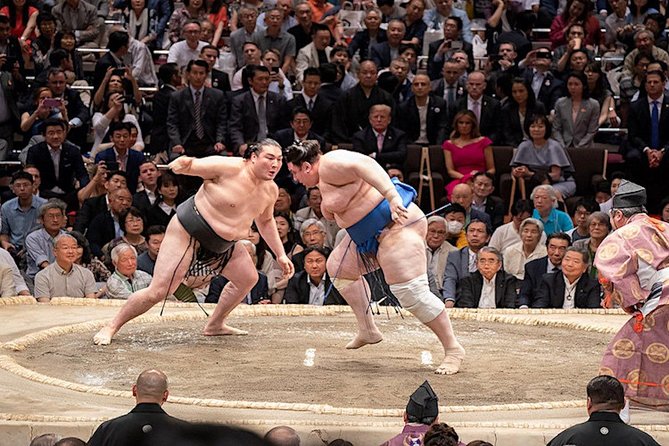
Sumo looks simple until you’re actually inside the arena. The ring is right there, but what makes the sport click is everything around it: rank, momentum, body positioning, and the formal steps wrestlers take before a throw. Without context, you can end up watching hard hits without understanding why a specific bout matters.
That’s where this tour earns its keep. You’re not just handed a ticket and pointed toward seats. You get a local sumo expert who explains the traditions and the structure of the matches. The audio headset helps you hear the explanation clearly while the crowd is doing what crowds do during a tournament. You also receive a banzuke-hyo ranking table, which is a handy way to connect each bout to what’s happening in the rankings.
If you’re the type who likes knowing what you’re seeing, this is the format that works. The experience is built for people who want to watch the wrestling and understand the logic behind it, without needing to study sumo for months first.
You can also read our reviews of more tours and experiences in Tokyo.



Tokyo, Osaka, Nagoya, and Fukuoka: Picking the Right Tournament Month
The tour runs in different cities depending on the season, timed to Japan’s yearly tournament schedule. The official basho happen six times a year, each lasting 15 days, with dates that always land on Sundays even though exact days vary.
Here’s the core rhythm:
- January: Tokyo
- March: Osaka
- May: Tokyo
- July: Nagoya
- September: Tokyo
- November: Fukuoka
This matters because sumo isn’t a year-round “come anytime” event. If you want the full basho experience, you need your dates to overlap a tournament month in the city you’re visiting. The tour gives you options across Tokyo, Osaka, Nagoya, and Fukuoka, so you can usually line it up with a meaningful stop on your itinerary.
Seats, Sightlines, and Standard vs Private Options
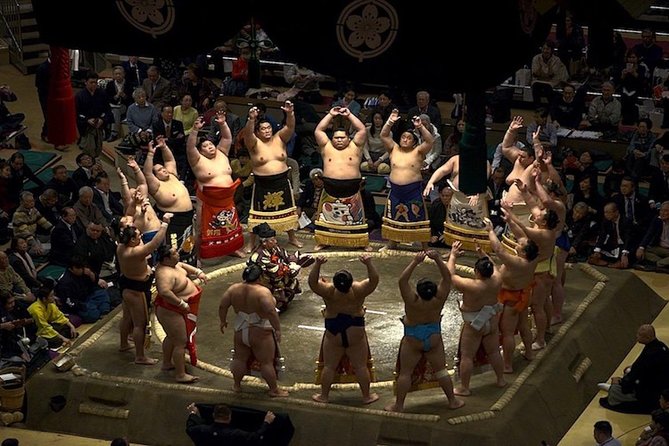
The seat class is the biggest “make or break” detail, so I’d treat it like a menu item. The standard join-in option typically places you in B chair or C chair seats on the second floor (rows 7 to 11). You’ll still see plenty—this is an official tournament hall, and the view from the stands is usually good for following bouts—but it won’t feel ring-close.
Private tours are the upgrade if your goal is being closer to the ring. Those private options use S-class or A-class seats, which are positioned closer to the action.
Group size is also worth noting. For the standard join-in experience, you’re seated in the same area with a maximum of 20 people, and the expert guide uses an audio headset so you’re not stuck waiting for someone to repeat themselves. In plain terms: it’s organized enough that you can focus on the matches instead of managing a crowd.
One more practical note: there can be a wait before seating. The arena entry may happen after matches conclude, and you may also face congestion around areas like the Sumo Museum. That doesn’t mean the tour is poorly run—it means the timing follows how the tournament day actually flows.
What Happens During Those 4 Hours in the Arena
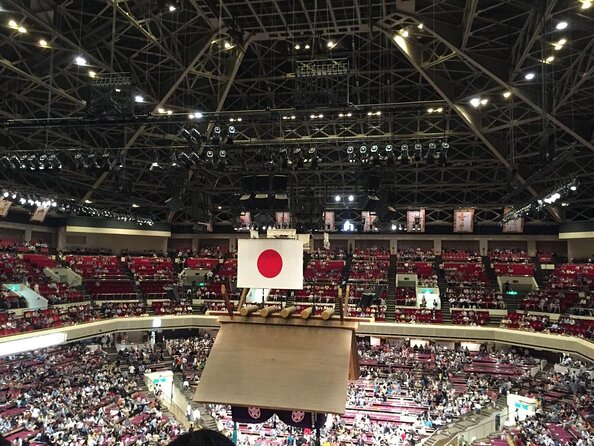
The tour starts at 2:00 pm, and it’s built around the reality that tournament days have a schedule you can’t speed up. Once you arrive at the arena, you’ll get a short guided orientation—enough to help you get your bearings fast—then you move to your seats once entry is allowed.
Inside the tournament, the guide’s role becomes match-specific. Before each bout, you’ll get context on who is wrestling and what to watch for, using the ranking information and the sport’s formal patterns. The headset is doing real work here. It lets you hear the guide clearly over announcements, chants, and general stadium noise.
You’ll also have time to enjoy the arena atmosphere. That includes shopping and grabbing drinks or food from vendors within the building. Just plan around the rules: no outside food or drinks are allowed inside the arena. So if you’re the type who likes bringing snacks as a backup, you’ll need to swap that habit for an in-arena plan.
Comfort tip: depending on the tournament location and conditions, the arena can feel warm. If you run hot, dress light so you’re not sweating through the main bouts. Also, the headset volume can be loud; an ear plug can help if you’re sensitive to sound.
The City Stops: Ryogoku Kokugikan, EDION Arena Osaka, IG Arena, and Fukuoka Kokusai Center
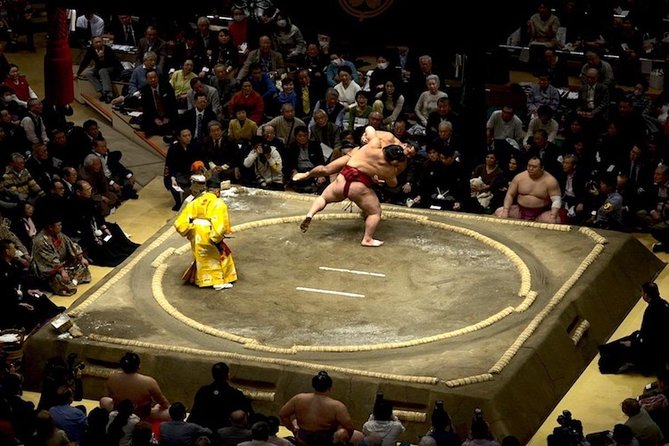
Even though the cities change, the tour rhythm stays consistent: you’re heading to the official sumo tournament location, guided by a local sumo expert with reserved seats and commentary.
- Tokyo: Ryogoku Kokugikan (Basho Experience)
This is the classic choice for sumo fans. The tour runs about 4 hours and includes admission, with standard seats usually in the second-floor B or C chair areas.
- Osaka: EDION Arena Osaka
Another official tournament stop, still structured as a 4-hour guided visit with reserved seating.
- Nagoya: IG Arena
This one comes in July. You’ll get the same guided approach and tournament access, designed for people who want to understand the action, not just see it.
- Fukuoka: Fukuoka Kokusai Center
This is the November option. The tour is still built for a guided basho day, with admission included as part of the experience.
What I like about this multi-city structure is that you don’t lose the “how to watch sumo” part when you switch cities. Whether you’re in Tokyo or down south, the tour is aiming for the same outcome: you leave understanding what happened, why it mattered, and how the traditions connect to the techniques.






Chanko Nabe Dinner: The Wrestlers’ Stew You Can Actually Eat
The optional dinner is one of the easiest “yes” choices if you want a more complete day. If you select it, you’ll be taken to a local chanko hot pot restaurant. Chanko nabe is the sumo stew that’s closely tied to the Ryogoku area and to how wrestlers fuel up during training.
The tour’s dinner option includes the chanko meal, and the default doesn’t include drinks. There’s a vegetarian option available, and the restaurant may substitute the broth depending on your needs. Traditional chanko broth is typically made with pork or chicken, so choosing vegetarian is important to communicate clearly.
A practical heads-up: dietary requests can’t be changed one week before the tour date. So if you have a special requirement beyond vegetarian, put it in early rather than hoping there’s a last-minute fix.
This dinner option is also where the day turns from sports to culture. You’re not eating a random Japanese hot pot—you’re eating a dish that’s part of the wrestlers’ rhythm: big-batch cooking, shared meals, and fueling up for training.
Off-Season Upgrade: Morning Sumo Stable Practice Near Warabi Station
If your timing doesn’t line up with a tournament, there’s an off-season option that still gives you real sumo life. It’s a morning sumo stable practice tour near Warabi Station, about 30 minutes from Tokyo Station.
Here’s the deal: during off-season, you do not get tournament seat tickets because no basho is happening that day. Instead, you watch training at an authentic stable, guided by an expert using audio headsets. The session runs 8:00 am to 12:00 pm, and it’s a join-in group format (8 to 16 people).
You’ll also have chanko lunch after the training session. This is a strong option if your goal is discipline, daily routine, and what sumo looks like before the public stage.
Price and Value: Why $184.38 Can Make Sense
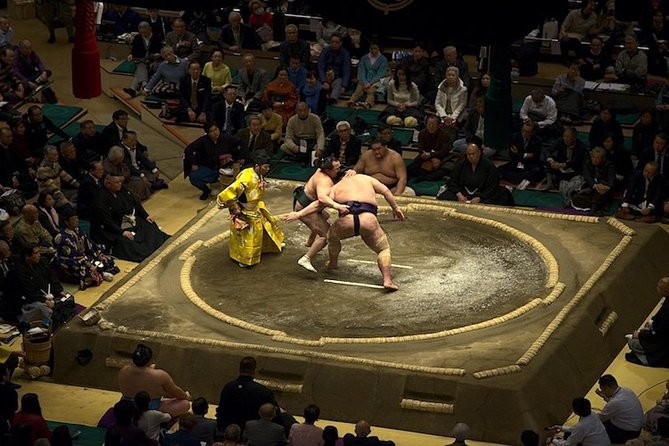
At $184.38 per person, this isn’t the cheapest way to see sumo. But the cost often reflects what’s hard to do on your own: get access to the right reserved seats and line up English guidance inside a busy, fast-moving venue.
What you’re paying for includes:
- Reserved seat ticket access (standard B/C or private S/A)
- English-speaking local sumo expert
- Audio headset
- A banzuke-hyo ranking chart and sumo info pamphlet
- Service fees for ticket arrangement and seating allocation
- Optional chanko nabe dinner if you choose it
Buying tournament tickets independently can be frustrating because availability can disappear quickly once they go live. The tour handles the seating allocation process and reduces the stress of watching for sales windows while you’re also trying to enjoy your trip.
Also keep this in mind: the standard seat area is typically second floor, but it’s still in the arena with tournament-level views. If you choose private seating, you’re paying for the closer experience.
Net: if sumo is a must-do for you, this is one of those situations where paying for organized access often buys you more enjoyment than trying to wing it.
Who Should Book This Tour (and Who Might Not Love It)
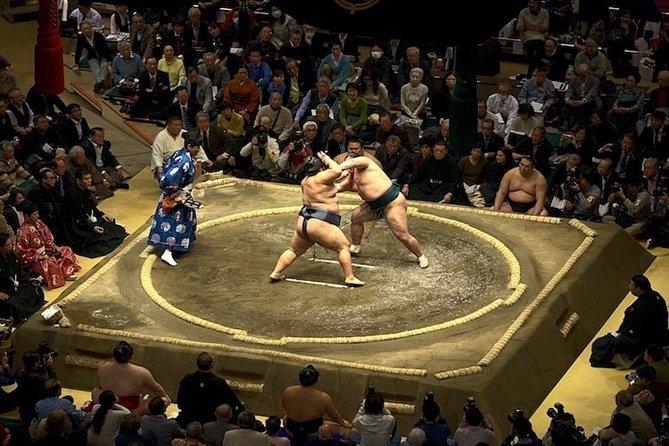
This tour fits best if:
- You’re going to sumo for the sport and the culture, not just the photos.
- You want explanations during the bouts so ranks and techniques make sense in real time.
- You prefer a clear plan with an expert guide and reserved seating.
It might feel less ideal if:
- You want ring-side closeness on a strict budget. Standard seating is second floor.
- You expect a private, fully custom experience even in the join-in format. It’s guided, but it’s still a group day.
- You don’t want to follow a set schedule. There can be a wait before seating, and the day is structured around tournament timing.
Should You Book Ultimate Sumo Tournament?
If you’re choosing one sumo experience for your trip, I’d lean toward booking this—especially if you don’t already know how to read the ranks and match rhythms. The reserved seats solve the biggest practical problem, and the headset commentary solves the biggest understanding problem.
Book sooner rather than later. Seats and restaurant reservations can depend on timing, and ticket availability is tied to how the Sumo Association releases tickets before each tour date. Also remember this experience is non-refundable and not changeable, so treat your date choice like it’s locked.
One last small advice list before you go:
- Wear comfortable layers; arena temperatures can run warm.
- Don’t plan on outside snacks or drinks inside the arena.
- If you’re sensitive to loud audio, bring an ear plug for the headset experience.
- If you care about closeness to the ring, choose the seat class that matches your expectations.
If your goal is to leave the arena able to say what you just watched—why it mattered and what the rituals meant—this is a very solid way to get there.
FAQ
What time does the tour start?
The tour starts at 2:00 pm.
Where do the reserved seats usually sit for the standard tour?
For the standard join-in option, seats are typically B chair or C chair seats on the second floor (from rows 7 to 11).
If I choose a private tour, how do the seats differ?
Private tours use S-class or A-class seats, which are closer to the ring.
Is the chanko hot pot dinner included?
Dinner is optional. If you select it at checkout, you’ll have a chanko nabe dinner (vegetarian option available).
Is outside food or drinks allowed in the arena?
No. Outside food and drinks are not allowed in the arena, but you can buy food and drinks from vendors inside.
Do you provide an English-speaking guide and audio headset?
Yes. The tour includes an English-speaking tour guide and an audio headset.
What is the off-season sumo stable practice tour?
During off-season only, you can join a morning sumo stable practice near Warabi Station with a guide and audio headset (8:00 am to 12:00 pm). It does not include tournament seat tickets because no tournament is happening.
Is this experience refundable if I cancel?
No. The experience is non-refundable and cannot be changed for any reason. If it’s canceled due to poor weather, you’ll be offered a different date or a full refund. If the minimum number of travelers isn’t met, you’ll be offered an alternative or a full refund.