REVIEW · TOKYO
2.5 Hour-Guided Cycle Tour in the Central Tokyo
Book on Viator →Operated by 東京下町自転車ツアー Tokyo Backstreets Bike Tour · Bookable on Viator
Tokyo feels calmer when you pedal. I love how this gentle small-group ride with guide Takeshi threads quiet temple and shrine stops into local backstreets, then lands you with real perspective on Skytree. One thing to consider: the rental is a compact folding bike, so height fit matters, especially if you’re over 180 cm.
This tour is interesting because it’s not just about “seeing Tokyo.” You cycle along the Suida River bank (famous for spring sakura), then mix in spiritual and everyday neighborhood scenes like Imado Shrine and Kyojima’s old-school shopping area. Plus, you’ll get helmet safety, plenty of time for photos, and the chance to grab street-stall snacks to keep energy up.
After about 2.5 hours, you’re done and the rest of your day is open. That’s a real value move in a city where every extra hour can turn into a detour and a crowd.
In This Review
- Key Things to Know Before You Ride
- Why Central Tokyo Looks Different From a Bike
- Meet-Up and Getting Set Up at the Start
- The 2.5-Hour Rhythm: How the Timing Actually Works
- Suida River Cycling: Sakura Energy Without the Big Crowd
- Honryuin Matsuchiyama Shoden: A Temple Stop You Can Feel
- Imado Shrine: A Power Spot for Love and Partnerships
- Senso-ji Temple: The Big Name, Done in a Manageable Way
- Asakusa Amezaiku Ameshin: Watching Artistic Candy Being Made
- Sumida River Bridge Crossing: Views Worth the Slow Moment
- Cycling Under Tokyo Skytree: The Photo Stop That Feels Like Local Travel
- Kyojima Minami Park: Old-Style Neighborhood Life Between Sights
- Price and Value: What You Pay For (and What You Don’t)
- Weather, Raincoats, and Staying Comfortable
- Who This Tour Fits Best
- Should You Book This Central Tokyo Bike Tour?
- FAQ
- How long is the guided cycle tour?
- Where do I meet the guide?
- Are helmets and bikes provided?
- Are there admission fees at the stops?
- What happens if the weather is bad?
- Can I request a tandem bike?
Key Things to Know Before You Ride
- Small group pace (max 6): easier conversation, more time at each stop, and less “rush-rush” energy.
- Helmet included: a simple safety win when you’re mixing with Tokyo traffic.
- Suida River + Sakura season vibes: an early start that feels more like a Tokyo neighborhood walk than a sightseeing checklist.
- Free temple/shrine admissions: many stops are free, so your money goes toward the experience, not entry fees.
- Skytree viewpoints from side streets: you see the tower without doing the same photo line everyone else does.
Why Central Tokyo Looks Different From a Bike
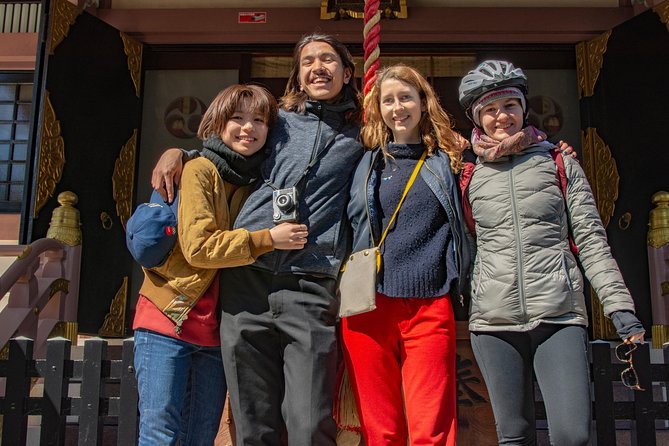
Central Tokyo can feel like a pinball machine. If you’re stuck on foot, you spend a lot of time dodging crowds, crossing streets at the wrong moment, and circling for the next stop.
This ride changes the rhythm. You’re not just moving faster—you’re moving through Tokyo’s texture. Backstreets have a calmer cadence. You notice small details: how storefronts sit along the sidewalk, how people step out from side lanes, and how temples and shrines appear like you’ve turned a corner into another world.
What I like most is the mix: you get spiritual stops that most first-time plans cover anyway (like Senso-ji), but you also get the quiet-feeling side roads and neighborhood spaces between them. That’s where the “like a local” feeling comes from—your legs are doing the work, but your guide is doing the translation.
You can also read our reviews of more cycling tours in Tokyo
Meet-Up and Getting Set Up at the Start
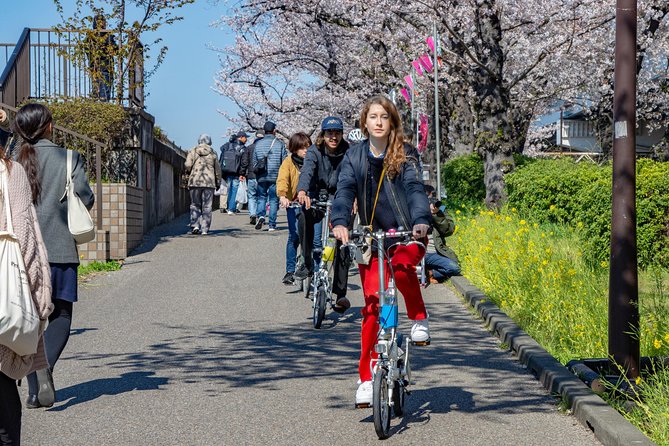
You’ll meet your guide near Hikifune Station, and the tour also lists a start point at Tokyo Backstreets Bike Tour inside the Synapse shared office in Higashimukōjima (Sumida City). Either way, your first job is simple: show up, confirm your group, and get your bike fitted.
The rental bikes are folding models with 14–20 inch tires, suited for people between 140 and 180 cm tall. If you’re over 180 cm, you should inform the company ahead of time so they can plan the right setup. If you want a tandem bike, you need to request it at least 3 days before booking.
This is one of those practical touches that matters more than it sounds. A bike that fits you well makes the ride feel relaxed instead of tense. And the ride is designed to be accessible—so correct sizing keeps it that way.
The 2.5-Hour Rhythm: How the Timing Actually Works
The tour clocks in at about 2 hours 30 minutes. That’s enough time to feel like you did something real, but short enough that your entire afternoon doesn’t disappear.
Expect a pattern like:
- some cycling through residential streets,
- short timed stops at temples/shrines or specific sights,
- quick transitions,
- then cycling again when the group is moving smoothly.
You also have a built-in “fuel plan.” You’ll be taken to street-stall areas where you can buy authentic Japanese foods. That’s not just a snack stop—it’s part of how the tour stays comfortable for longer than a typical walking loop.
If you’re the kind of traveler who likes photos but hates getting stuck for 30 minutes at every monument, this timing is a good compromise.
Suida River Cycling: Sakura Energy Without the Big Crowd
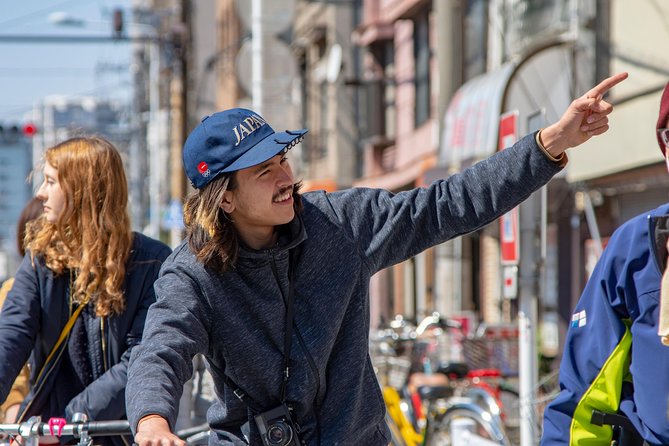
One of the first scenic parts is cycling along the bank of the Suida River. In spring, the area is famous for sakura (cherry blossoms). Even if you’re not there in peak bloom, riverbanks tend to feel like Tokyo with the volume turned down.
This section works for two reasons:
1) It gets your body warmed up on a calmer route.
2) It frames the trip as a ride through the city rather than a sequence of parking-and-walking.
If you’re visiting in autumn or another season, you’ll still get that long, linear riverside feeling—more space for views and less “stop-and-stare” density.
Honryuin Matsuchiyama Shoden: A Temple Stop You Can Feel
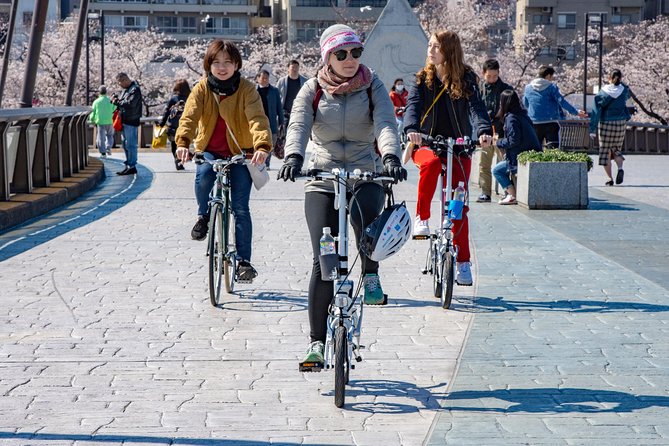
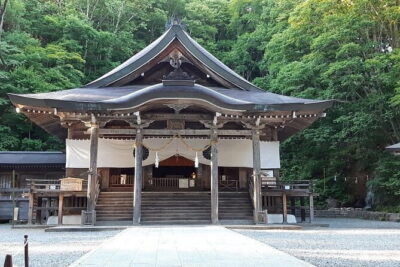
Next comes Honryuin Matsuchiyama Shoden, which is connected to Senso-ji. It was founded in 595, so you’re stepping into a place with deep roots. The memorable part here is the symbolism.
You’ll see many images of a daikon (Japanese radish) and a pouch. The daikon represents minds trapped in deep ignorance, emanating poiso… (the tour description cuts off, but the takeaway is clear: you’re looking at moral and spiritual symbolism, not random decoration). Your guide should help you connect the visuals to the meaning.
Why this stop is worth it: it’s a quieter entry point into the Senso-ji world. Instead of jumping straight into the busiest main temple vibe, you start with a more focused, readable spiritual message. That makes the later Senso-ji visit feel less overwhelming.
Time-wise, plan around 20 minutes here. It’s long enough to look around, but short enough that you don’t lose the momentum of cycling.
You can also read our reviews of more guided tours in Tokyo

Imado Shrine: A Power Spot for Love and Partnerships
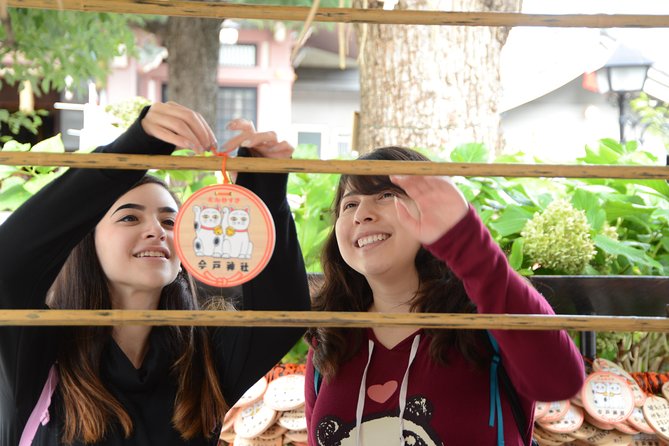
Imado Shrine is another fast, satisfying stop—about 15 minutes—with a very specific modern reputation. It was founded in 1063 and is now known as a power spot, popular with people seeking lovers or marriage partners.
If you like cultural context, this is a good one. You’ll see how Japanese sacred spaces operate in everyday life: people come for the spiritual atmosphere, but they also come with hopes tied to real-world relationships.
This isn’t a “museum explanation” kind of stop. It’s more like a moment where you slow down and let the place do the talking. The short timing helps you keep the pace of the day.
Senso-ji Temple: The Big Name, Done in a Manageable Way
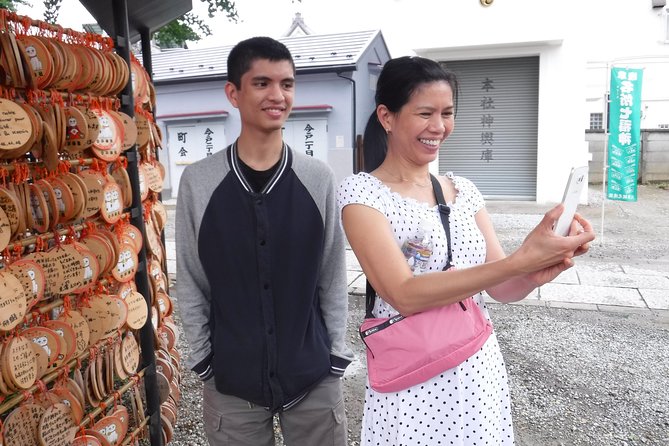
Senso-ji is the star for many visitors, and it can also be the place where your experience gets hijacked by crowds. Here, the approach is practical: you’ll cycle near the temple, park your bike, and then stroll inside.
That sequence matters. Arriving by bike helps you keep the flow, and parking nearby reduces time spent searching for an approach. Once you’re inside, you can take in the atmosphere at walking speed, not tourist-speed sprint.
Plan about 30 minutes for this stop. If you’re the type who likes structure, your guide’s pacing keeps you from getting lost. If you’re the type who likes flexibility, the time is long enough to browse without feeling trapped.
One note: this is a temple area, so keep an eye on pedestrian flow. It’s not hard, but it’s smart.
Asakusa Amezaiku Ameshin: Watching Artistic Candy Being Made
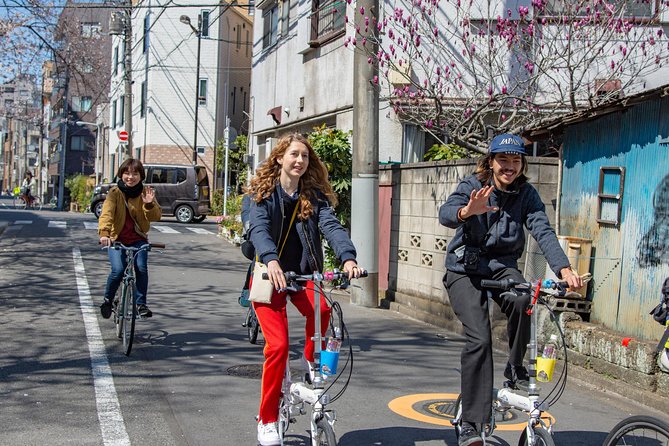
Between temple energy and river/tower views comes the most playful stop: a Japanese traditional craft candy shop, listed as Asakusa Amezaiku Ameshin.
You get to see how the candies are made—and the key word in your experience is artistry. Amezaiku isn’t just sweets. It’s a performance with hand skill, where the result looks like something you’d want to photograph before eating.
Time here is about 15 minutes. That’s just enough to watch without turning it into a long sit-down attraction. If you want an actual snack to carry you through the next cycling stretch, this is often the easiest place to do it.
Sumida River Bridge Crossing: Views Worth the Slow Moment
After the shop, you cross a bridge on the Sumida River. You’ll get wonderful scenery and a broader view than most city streets provide.
A bridge moment is a small detail, but it’s a big comfort break for travelers who don’t love constant cycling. You get light, open space, and a clear line of sight. It also gives you a chance to shake out your legs and refocus.
This part is also where good guides quietly help you. They’ll position the group so you’re not constantly stopping and starting in traffic conditions.
Cycling Under Tokyo Skytree: The Photo Stop That Feels Like Local Travel
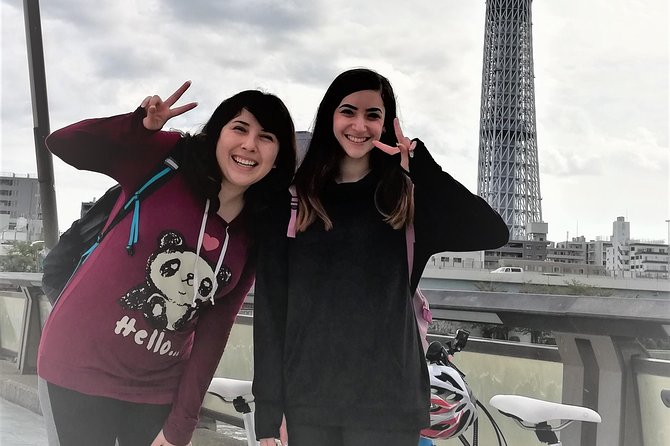
Then comes one of the headline sensations: cycling under the Tokyo Skytree.
Seeing Skytree from standard tourist paths is fine. Seeing it while you’re moving through the city’s side streets feels different. You get that “I’m really traveling” feeling, not just “I’m visiting.”
Skytree also shows up from various perspectives during this portion, and that matters. Instead of one angle, you get several. A guide can help with photo framing too, and one of the consistent themes in the tour feedback is that guide Takeshi takes photos of riders and sends them afterward.
It’s a nice service for solo travelers. If you’re not used to handing your phone to strangers, that alone can make the experience smoother.
Kyojima Minami Park: Old-Style Neighborhood Life Between Sights
The last major stop is Kyojima Minami Park, described as an old-fashioned shopping mall where you can see daily life in Japan.
This is the kind of ending that sticks. By this point, you’ve already seen the headline landmarks and spiritual spaces. Kyojima brings you back to daily Tokyo: shop fronts, routine streets, and the in-between places you’d miss if your day was only temples plus tower plus train.
Plan around 20 minutes here. The goal isn’t to “finish” the mall like a shopping errand. It’s to notice the human scale and the everyday rhythm.
And then you ride back to the meeting point to wrap the experience.
Price and Value: What You Pay For (and What You Don’t)
At about $50.08 per person for roughly 2.5 hours, the cost can sound simple. But the value is in the package.
You’re paying for:
- a local guide who handles the route and keeps the group moving safely,
- helmet safety gear,
- bike rental (folding bikes sized for most people between 140–180 cm),
- a small group size (max 6),
- and several stops with free admission listed for the temple/shrine/craft areas.
You’re not paying for a museum ticket line every time you turn a corner. The money goes more toward movement, guidance, and access to parts of Tokyo most visitors never slow down to notice.
Is it worth it if you could just take public transport? For many people, yes. You’ll likely spend time transferring, walking, and trying to stitch together a route that works for all the landmarks. A guided cycle tour compresses that planning work into an afternoon you can actually enjoy.
Weather, Raincoats, and Staying Comfortable
This is a bike tour, so weather matters. The experience is listed as requiring good weather. If it’s canceled due to poor weather, you’ll be offered a different date or a full refund.
One practical upside from real-life experience: the guide approach seems prepared. In wet and cold conditions, the bikes are in good condition, and raincoats have been used to keep the ride safe and comfortable. There’s also a sense that the guide will reach out and adjust when rain shows up in the forecast.
My advice: pack layers. Even in Tokyo, conditions can shift quickly, and your bike ride can feel colder than standing still on the sidewalk.
Who This Tour Fits Best
This tour is a strong fit if you:
- want a short Tokyo outing that doesn’t eat the whole day,
- like mixing iconic sights with quieter neighborhood texture,
- enjoy photography and don’t want to spend the day coordinating transport and pacing,
- want a guide to help you connect symbols and place meanings.
It also works well for families with teens and for solo travelers. The ride style is gentle and designed to feel manageable for recreational cyclists, and small group size makes it easier to keep together.
If you’re a serious speed cyclist, you might feel like the pace is slow. But if your goal is experiencing Tokyo with less stress, that pacing is a feature.
Should You Book This Central Tokyo Bike Tour?
Book it if you want a practical, guided way to see central Tokyo without getting trapped in crowds on every single stop. The helmet + small group setup, the thoughtful stop choices (including the daikon symbolism at Honryuin and the love-focused reputation of Imado Shrine), and the Skytree moments from street-level travel all add up to a very “do-this-in-Tokyo” kind of afternoon.
Skip it or consider another option if:
- you’re outside the listed bike height range and haven’t checked options,
- you hate riding near traffic even with a helmet and a guide,
- or you’re visiting in a period where rain is likely and you don’t want weather-dependent plans.
If your schedule can handle a bike-friendly weather window, this is a solid, good-value way to see Tokyo as a moving city, not just a list of stops.
FAQ
How long is the guided cycle tour?
It runs for about 2 hours 30 minutes.
Where do I meet the guide?
You’ll meet the guide near Hikifune Station. The listed start location is Tokyo Backstreets Bike Tour inside the Synapse shared office in Higashimukōjima, Sumida City.
Are helmets and bikes provided?
Yes. You’ll be given a helmet, and the tour provides rental folding bikes sized for people between 140 and 180 cm tall.
Are there admission fees at the stops?
The tour notes free admission tickets for the listed temple/shrine and related stops, including Honryuin Matsuchiyama Shoden, Imado Shrine, Senso-ji, and Asakusa Amezaiku Ameshin, plus Kyojima Minami Park.
What happens if the weather is bad?
The experience requires good weather. If it’s canceled due to poor weather, you’ll be offered a different date or a full refund.
Can I request a tandem bike?
Yes, but you need to inform the provider at least 3 days before your booked date if you want to ride a tandem bike.