REVIEW · TOKYO
Grand Sumo Tournament Tokyo – Osaka – Nagoya
Book on Viator →Operated by Island Travel Specialists · Bookable on Viator
Big cheers, heavyweights, and zero language stress. This Grand Sumo experience is built around one simple idea: get you into a live tournament in Tokyo (often at Ryōgoku Kokugikan), with a paper ticket in hand so you can focus on the action. You’ll also get a front-row view of how Japanese sports fans show up when they really care.
What I like most is the match-day atmosphere—fans are loud, playful, and fully invested, the kind of energy you usually only get at major league sports. I also like that you can upgrade your seats for a better view, which matters a lot in a sport where the best moments can happen near the ring edge.
The main drawback is price. At $946 per person, this is a splurge, and the final cost can reflect sold-out demand and seat scarcity.
In This Review
- Key things that make this sumo ticket experience worth your time
- Grand Sumo in Tokyo, Osaka, or Nagoya: The big-game feeling
- Ryōgoku Kokugikan: Where the Tokyo day starts (and why it matters)
- What the 4-hour tournament ticket includes (and what it doesn’t)
- Seat upgrades in sumo: How to choose the right view without wasting money
- The crowd experience: Cheering, atmosphere, and going early
- Learning the rituals and fan rules: What to expect before you watch
- Osaka and Nagoya options: Same sport, different venue energy
- Paper ticket reality check: Why this small detail helps a lot
- Price and value: Why $946 can still make sense for sold-out sumo
- Who should book this sumo tournament experience
- Should you book Grand Sumo Tournament Tokyo – Osaka – Nagoya?
- FAQ
- Where does the Tokyo experience start?
- How long is the Grand Sumo tournament experience?
- Is admission included?
- Is this a paper ticket or electronic ticket?
- Are seat upgrades available?
- Do I get a tour guide?
- Is transportation included?
- Which cities are offered?
- How big is the group?
- What happens if I cancel?
Key things that make this sumo ticket experience worth your time
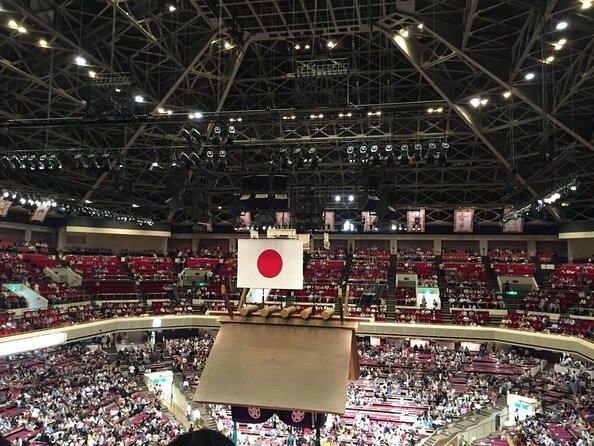
- Authentic tournament access in Tokyo, Osaka, or Nagoya, with admission included
- Paper ticket to help you avoid last-minute confusion at the venue
- Seat upgrades available so you can match your budget to your sightlines
- Fan atmosphere that feels like a real sports event, not a tourist show
- Limited group size (up to 20), so it stays manageable
- Short, focused timing (about 4 hours), so it’s easy to fit into a Japan itinerary
Grand Sumo in Tokyo, Osaka, or Nagoya: The big-game feeling
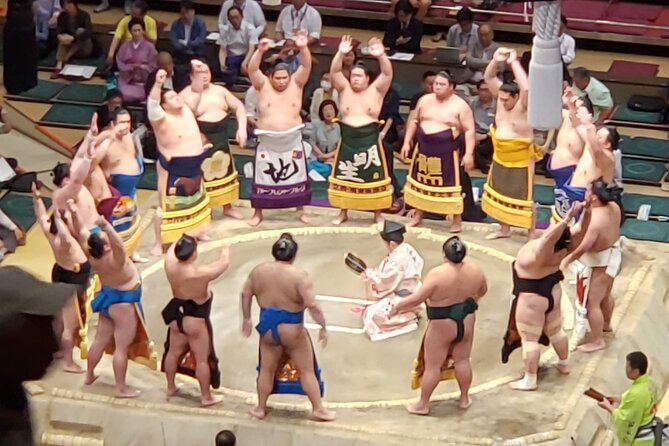
Sumo is popular for a reason. The spectacle is part sport, part ritual, part crowd performance. And when you’re in the stands with the locals, you get the full picture: cheering that builds, reactions that land instantly, and that constant sense that everyone is watching closely.
What makes this experience especially good value (even at a high price) is the way it reduces friction. You’re not scrambling for the right day, the right seats, and the right entry rules in a second language. The tournament is the point. The service is there to help you reach the point.
Also, the format is timed. You’re looking at roughly 4 hours for the outing, which helps if you’re trying to balance big-ticket cultural experiences with other plans like trains, food, and wandering. In Japan, big days stack fast. This keeps your sumo slot clean.
You can also read our reviews of more tours and experiences in Tokyo.



Ryōgoku Kokugikan: Where the Tokyo day starts (and why it matters)
In Tokyo, the meeting point is Ryōgoku Edo Noren, 130-0015 Tokyo, Sumida City, Yokoami, 1-chōme320 1階. That location matters because Ryōgoku is the sumo hub area. You’re not only going inside a stadium—you’re arriving in the neighborhood built for this sport.
The experience ends back at the same meeting point. That simple loop is a real benefit when you’re trying to navigate a new transit system. You’re not guessing where you’ll land after the final match.
You should also plan for “real venue time.” Sumo crowds can move in waves, and seats can be easy to miss if you arrive right at the last moment. One practical tip I’d follow: go early to get your bearings and catch the pre-match vibe before your attention gets locked onto the ring.
What the 4-hour tournament ticket includes (and what it doesn’t)
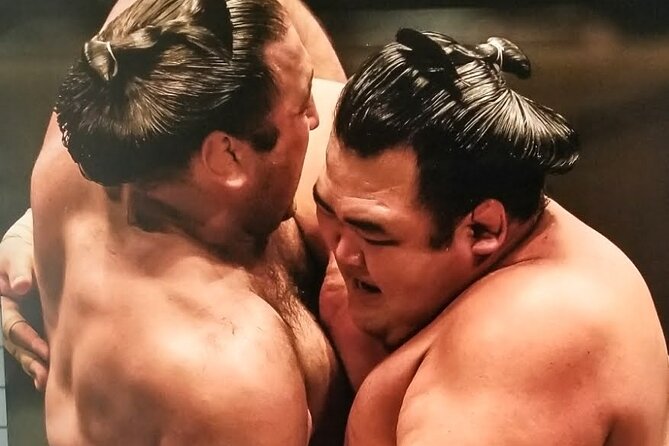
This is a ticket-only event, with admission included and a total duration of about 4 hours. In other words, your core product is tournament access plus help avoiding the language/scheduling mess.
Here’s what you should expect from a logistics standpoint:
- Admission included for the tournament itself
- Ticket format is paper, not just an app screenshot
- No included transportation, so you’ll handle train/subway to the meeting point
- No built-in tour guide listed for the experience
That last point is important for expectation-setting. If you’re hoping for a long, guided lesson about sumo history and rules, you may not get that as part of the base format. However, if you’re the type who likes to learn while you’re out, you’ll still benefit from reading up on what to watch for and using the venue staff for quick seat help.
Also note that the group size is capped at 20 travelers. That’s usually a good sign: you’re less likely to feel lost in a crowd of strangers while trying to find your section.
Seat upgrades in sumo: How to choose the right view without wasting money
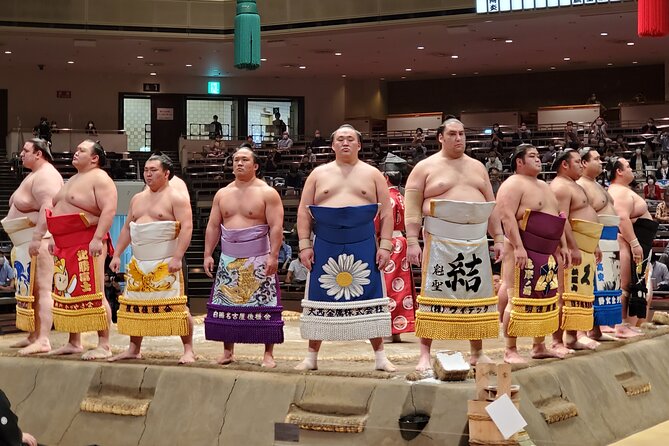
Sumo is one of those sports where your seat position changes everything. The action is concentrated, and the best moments don’t always happen in the exact center of the ring from your viewpoint. That’s why seat upgrades are a big deal here.
The experience offers upgraded seats for an additional fee. If you’re spending this much anyway, I’d treat seat choice as part of the value equation, not an optional extra.
A practical way to decide:
- If you’re sensitive to sightlines or want the clearest view, upgrade sooner rather than later.
- If you’re flexible and okay with a slightly tougher view, stick with the standard seat—just be ready to spend a few minutes locating exactly where your section sits.
One more seat-related tip: even if you think you’ve found the right area, it can take a moment to match ticket details to the actual seating rows. It helps to ask venue staff for help quickly rather than wandering for too long after you’ve already missed some of the pre-bout energy.
The crowd experience: Cheering, atmosphere, and going early
The highlight here is the atmosphere. This is not a quiet museum-style visit. It’s a live sports event where Japanese fans go all-in.
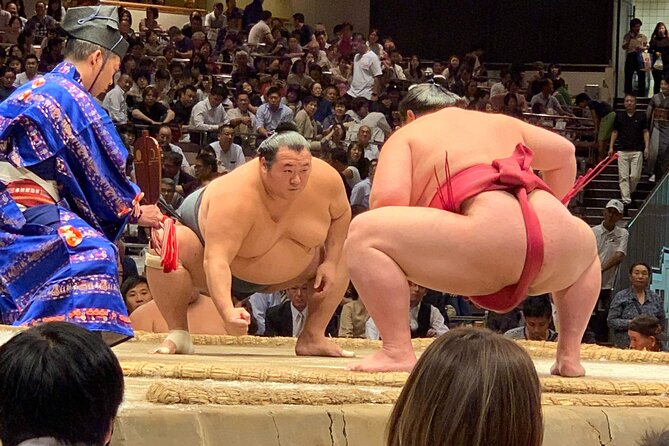
In Tokyo, the vibe at Ryōgoku Kokugikan is described as lively and fun, with cheering by fans that feels similar to a major league game. That comparison is useful because it tells you what to bring mentally: be ready to react, follow the crowd’s momentum, and pay attention to how quickly the audience shifts focus.
One of the best practical tips from real experiences with this kind of day: go early. Early gives you:
- time to get oriented inside the venue area
- the chance to soak up the festive mood before your seat becomes your whole world
- more time to browse food stalls and take in the surrounding sumo culture
Food stalls show up as part of the overall match-day feel. If you enjoy “before the event” atmosphere—small crowds, smells, snacks, and people gearing up—arriving earlier makes the day feel longer in the best way.




Learning the rituals and fan rules: What to expect before you watch
Sumo isn’t just two athletes and a ring. There are rituals, and there’s a set of “how to watch” behavior that locals understand instantly.
Even when the experience is ticket-focused, you’ll get the benefit of having your entry handled in advance. That alone reduces the chance you waste time translating instructions while everyone else is already settled.
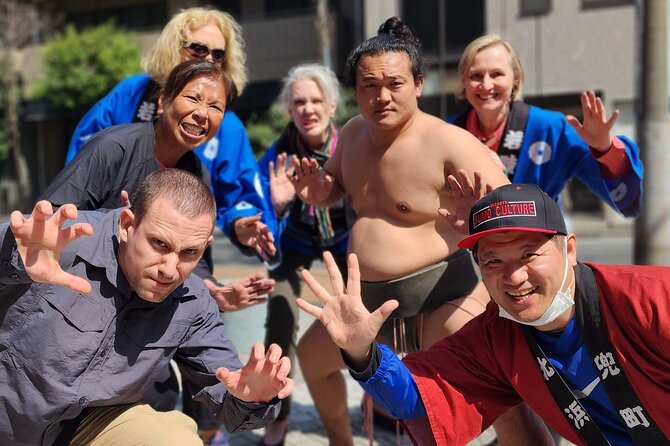
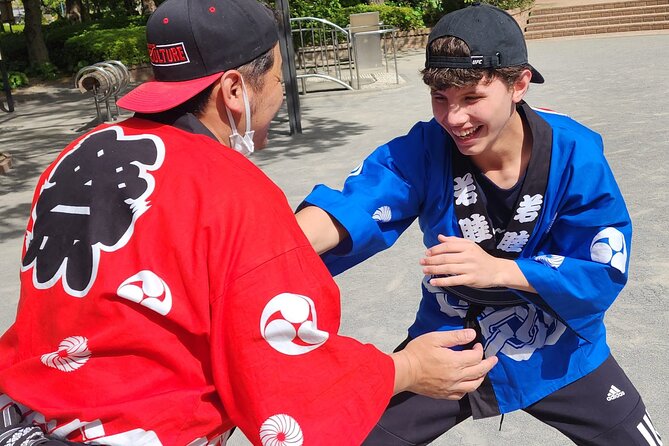
Some versions of this service have included extra guidance that goes beyond tickets—explanations of rituals and rules, pointers for watching from different vantage points, and an interactive, playful element before or around the event. One host, Ken, has shown up with a friendly style that includes sharing stories and history and even a lighthearted faux sumo play-bout concept.
If you want deeper context, look for an option where a host is actually with the group. If your departure is truly no-tour-guide, you can still self-prepare by reading basic sumo watching terms ahead of time, so the rituals don’t feel like total mystery when you’re in your seat.
Osaka and Nagoya options: Same sport, different venue energy
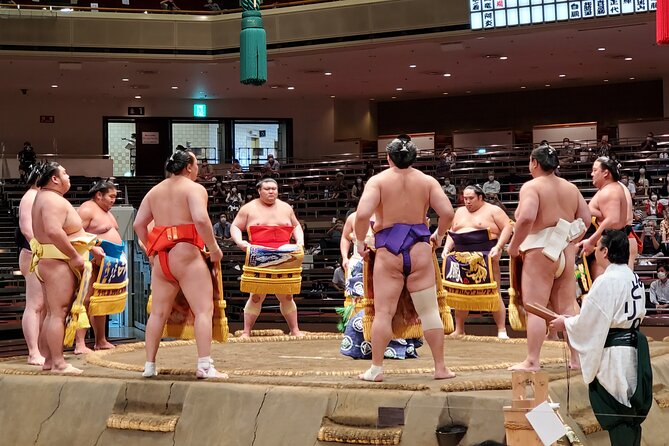
The big promise of this experience is access to an authentic tournament in Tokyo, Osaka, or Nagoya. That matters because it gives you flexibility when your travel calendar doesn’t line up perfectly with one city.
What you can rely on is the core experience structure: live tournament access, admission included, and the chance to learn how local fans behave by actually being there. The city changes the neighborhood mood and how you navigate around the venue, but the “you’re in the stands during the real event” feeling stays.
Since this review focuses on the Tokyo meeting point details, be sure your booking for Osaka or Nagoya includes the correct meeting location for that day. You’re still aiming for the same outcome: show up, get in, find your seat, and watch.
Paper ticket reality check: Why this small detail helps a lot
A paper ticket might sound old-school, but it’s a practical win for international visitors. In Japan, the last thing you want is a day-of scramble caused by a QR code issue, a mismatched name, or app connectivity problems.
A paper ticket also helps your entry go faster. You can double-check what you’re holding before you walk into the venue. And if anything is unclear—section/row/seat—having a physical ticket makes it easier to show staff what you need.
If you’re the type who likes clear, low-stress systems, this detail is worth appreciating. It’s one of those “small” logistics choices that can prevent a big headache.
Price and value: Why $946 can still make sense for sold-out sumo
Let’s talk money without pretending it’s simple. At $946 per person, this isn’t a budget activity. It’s also not a “buy anytime” kind of event.
The key value driver here is access. Sumo tournaments can be sold out, especially for good dates and strong demand. In those cases, the market cost can jump. You may see official-looking ticket prices that don’t match what you actually pay when a supplier sources seating for a sold-out session.
So how do you judge value fairly?
- If you’re buying because the tournament date is a must-do and seats are hard to find, you’re paying for certainty.
- If your trip is flexible and you have time to hunt for face-value tickets yourself, you might find cheaper options outside a sold-out situation.
- If you care about upgraded seating, your total cost can rise, but your experience quality can rise too.
In plain terms: you’re buying less stress and better odds of getting in. If that’s what you want, the price can feel justified. If you’re trying to minimize spend above all else, you’ll feel the sting.
One more consideration: the experience is non-refundable and cannot be changed if you cancel. That’s not unique to this service, but it’s part of the cost of buying early for a sold-out event.
Who should book this sumo tournament experience
This is a great fit if:
- you want an authentic, high-energy Japanese sports day
- you prefer a clear ticket solution over ticket hunting in a language barrier
- you’re okay with paying for certainty during sold-out demand
- you like match-day culture: food stalls, crowd reactions, and getting there early
It’s less ideal if:
- you’re extremely price-sensitive and hoping for low-cost seats
- you want a long guided lecture during the match day itself
- your schedule is likely to change, because it’s non-refundable
If you’re traveling with teens, this kind of event often works well because it’s active, loud, and visually obvious even when you don’t know every rule yet. The bigger win is that you’ll understand the sport just by watching the audience.
Should you book Grand Sumo Tournament Tokyo – Osaka – Nagoya?
Book it if sumo is on your Japan bucket list and you’d rather pay to make it happen than gamble on finding tickets on your own. The paper ticket, the admission included, and the focused 4-hour format make it feel manageable even in a packed trip.
I’d also book if you care about atmosphere and you’re willing to go early to get your bearings and catch the festive build-up around the venue.
Don’t book it if you’re chasing the lowest price possible, or if you expect a guided tour inside the arena as part of the base package. In that case, spend time comparing seat options and consider preparing your own sumo basics so the rituals make sense once you’re seated.
If you want one simple checklist before you commit: confirm the city/venue for your date, choose whether you want upgraded seats, plan how you’ll get to the meeting point by public transport, and arrive early enough to find your seats calmly.
FAQ
Where does the Tokyo experience start?
It starts at Ryōgoku Edo Noren, 130-0015 Tokyo, Sumida City, Yokoami, 1-chōme320 1階.
How long is the Grand Sumo tournament experience?
It’s about 4 hours.
Is admission included?
Yes. Admission is included.
Is this a paper ticket or electronic ticket?
It’s a paper ticket.
Are seat upgrades available?
Yes. Upgraded seats are available for an additional fee.
Do I get a tour guide?
The experience is listed as a ticket-only event with no tour guide.
Is transportation included?
No. Transportation is not included.
Which cities are offered?
The experience is offered for Grand Sumo tournaments in Tokyo, Osaka, or Nagoya.
How big is the group?
The activity has a maximum of 20 travelers.
What happens if I cancel?
It’s non-refundable and cannot be changed for any reason.
If you tell me your travel dates and whether you’re aiming for Tokyo, Osaka, or Nagoya, I can help you think through seat-upgrade value and what to prioritize for your day.
![[1 Group Only] Tokyo Shibuya Food Tour for Family - Food tastings that actually cover two different worlds](https://e.thetokyoexplorer.com/wp-content/uploads/1-group-only-tokyo-shibuya-food-tour-for-family-400x267.jpg)