REVIEW · TOKYO
Tsukiji Fish Market Culture Walking and Food Tour
Book on Viator →Operated by Fantasy Travel · Bookable on Viator
Tsukiji is loud, this helps you read it. This 3-hour walk turns the market area into a guided story, with street food tastings and lunch handled for you. It’s also a small-group setup (up to 10), so you’re not just herded along with strangers.
I especially like the way the tour starts with the right etiquette and context: you visit Tsukiji Hongan-ji Temple first, learn basic temple behavior, and get the meaning behind the ritual. Then a guide walks you through what matters in Tsukiji so you can snack and shop without feeling lost, with translation support throughout.
One thing to consider: the tour is built around seafood, so if you have strong dietary limits you’ll need to communicate it early. The good news is that the guide can help adjust what you eat, but you should not wait until you’re hungry and on the spot.
In This Review
- Key things to know before you go
- Entering Tsukiji by Learning Temple Etiquette First
- Outer Market Street Bites and a Lunch You Won’t Have to Chase
- Tsukiji Hongan-ji to Namiyoke Inari: The Local Side of the Market
- Price and Value: Why $85.66 Feels Reasonable Here
- Getting There: Meeting Point and the 10-Minute Window
- Who This Tour Suits Best (and Who Should Skip It)
- Should You Book This Tsukiji Food Tour?
- FAQ
- Where does the Tsukiji Fish Market Culture Walking and Food Tour start?
- What time does the tour begin?
- How long is the tour?
- How many people are in the group?
- What food is included during the tour?
- Do you visit Tsukiji Hongan-ji Temple and Namiyoke Inari Shrine?
- Is there an admission fee for the temple and shrine stops?
- Does the guide translate for you?
- What happens if I’m late for the start time?
- Can I cancel for a full refund?
Key things to know before you go
- Up to 10 people keeps the pace human and the questions actually get answered.
- Temple + shrine stops (Tsukiji Hongan-ji Temple and Namiyoke Inari Shrine) give you the local “why,” not just the “where.”
- Seafood tastings plus lunch included means fewer decisions and less time searching.
- Hidden restaurant access saves you from hunting for a good sit-down spot inside the market area.
- Guide translation support helps you navigate conversations and menus, especially for first-timers.
- Made for outer Tsukiji exploration with a focus on the market culture around the main area.
Entering Tsukiji by Learning Temple Etiquette First
Most food tours in Tokyo jump straight to eating. This one starts at Tsukiji Hongan-ji Temple, and that’s a smart move. You get a quick 30-minute orientation to how people behave in Japanese temples—things like the traditional ritual before you enter, including incense and praying in the Johdo Shinsyu style.
If you’ve never visited a temple in Japan, this part matters more than it sounds. Market streets can feel chaotic, and a temple stop gives you a calm reset and a script for what’s respectful. It also sets you up to notice details later—signs, names, and the way local spaces are used—because you’re not arriving with zero context.
Admission for this stop is listed as free, so you’re not paying extra just to get that cultural grounding. The tone here is practical: you’ll learn what to do and why, not just a lecture. And since the tour starts here at 10:00 am, you’re already in the right mindset before the food part begins.
What I like most: it makes you feel like you’re part of the area’s rhythm, not just passing through it.
Possible drawback: if you’re the type who wants zero culture and only food, you’ll still get value from the etiquette, but it might feel like a warm-up rather than the main event.
You can also read our reviews of more walking tours in Tokyo


Outer Market Street Bites and a Lunch You Won’t Have to Chase
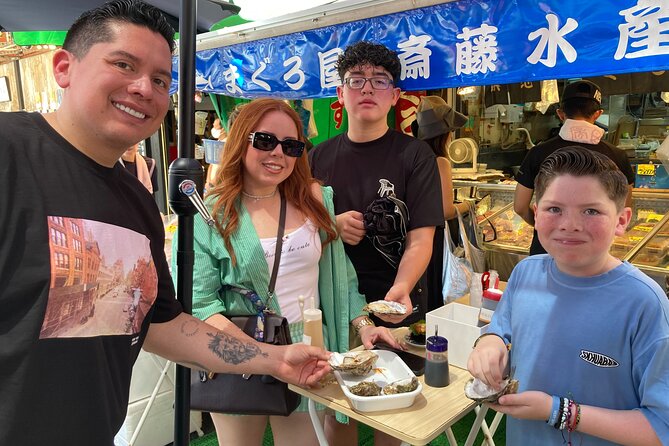
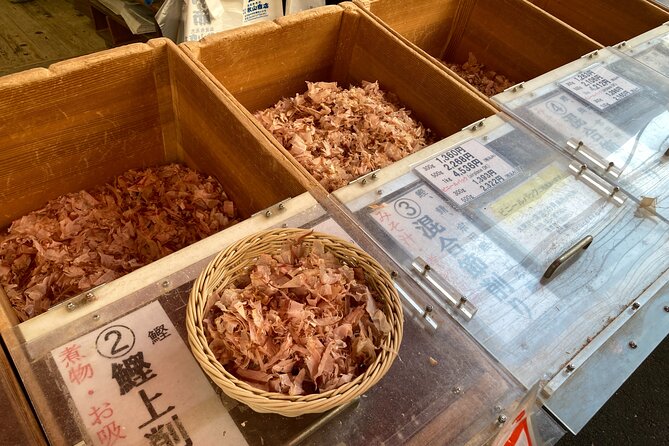
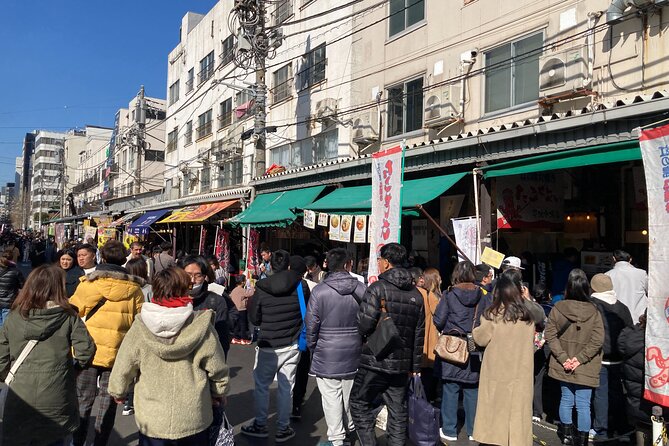
The heart of the tour is the Tsukiji Fish Market area itself, where you walk and explore the market area outside the core trading floors. The focus is on eating along the way—street food tastings plus a seafood lunch at a spot your guide helps you reach.
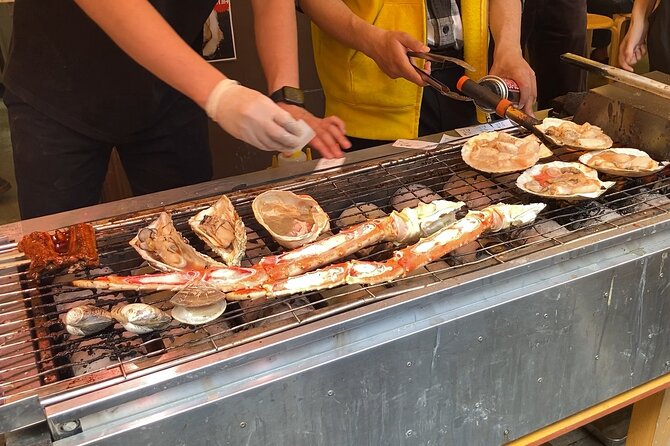
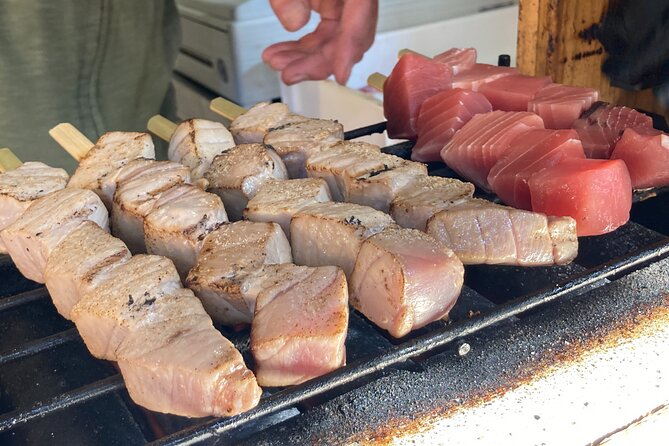
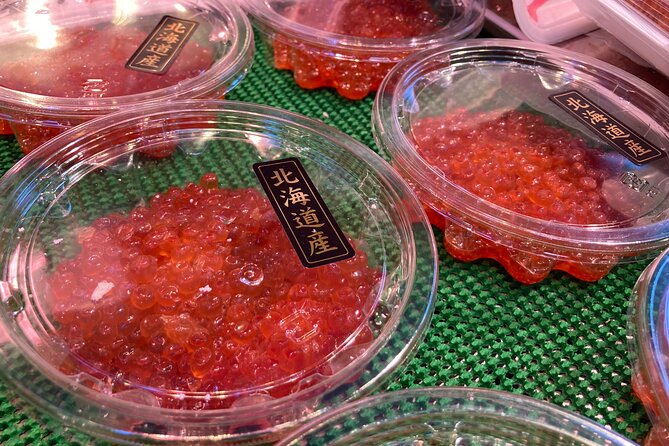
You’ll sample items commonly sold and enjoyed right there. Based on what’s been shared by past tour experiences, you can expect bites like tuna on a skewer and eel, plus sweet treats such as daifuku. Many tours include “a taste,” then send you off. This one keeps feeding you: the tastings are meant to tide you over so you arrive at lunch ready, not starving.
You also get something that’s hard to replicate on your own: a guide-directed path to a hidden restaurant inside the market area. That matters because Tsukiji can be confusing when you’re standing in the middle of it with a dead phone battery and a hunger headache. Having someone translate and point you toward a good lunch spot saves time and cuts down on trial-and-error.
Lunch is included, and the meal is described as a sashimi-style lunch in past experiences. That’s a big part of the value—sashimi lunch is not a cheap DIY decision, and a guide helps you get it without spending your limited Tokyo morning running between stalls.
One small but telling detail from past tour experiences: guides can handle waiting and help you get the right snacks. If you’re standing there wondering how long to wait in line, or which stand is worth your yen, that kind of help turns confusion into a plan.
Expect: guided browsing, frequent tasting stops, and a group lunch where you’re not sitting alone with your menu anxiety.
If you’re picky: tell your guide about what you won’t eat. There’s evidence that the guide can offer alternatives (for example, mochi when fish isn’t an option), but you should speak up early so substitutions are real choices, not last-minute compromises.
Tsukiji Hongan-ji to Namiyoke Inari: The Local Side of the Market
After the market walk, you head to Namiyoke Inari Shrine for another 30 minutes. This isn’t a random extra stop. It’s tied to the Tsukiji area and gives you a local frame for what you just saw.
At the shrine, you can learn about the history of Tsukiji Fish Market and what Shito is. You’ll also walk through an area that’s described as more “locals know it” than “tourists find it.” The benefit here is simple: you get to see wholesale sales shops along the way, so you’re not only looking at the places built for visitors. You’re seeing the working face of the neighborhood.
Shrines also tend to create a different tempo. After food stops and crowds, you’ll get a quieter moment to process what you ate and what you learned. It’s the kind of contrast that makes the whole experience feel more complete.
Admission for this stop is also listed as free. So you’re paying for the guide and timing, not for entrances and add-ons. That matters at $85.66, because the price is doing real work during the tour rather than mostly covering transport.
What makes this stop worth it: it connects culture to commerce. You see the market world, then you learn the local reasons behind it.
Trade-off: if you want a “food only” sprint, this shrine is still part of the structure. You’ll get food in the middle, but the tour is designed to be educational, not just snack racing.
Price and Value: Why $85.66 Feels Reasonable Here
At $85.66 per person, this tour isn’t the cheapest way to eat in Tokyo. But it’s also not asking you to pay for just walking and photos.
Here’s what makes the math work out:
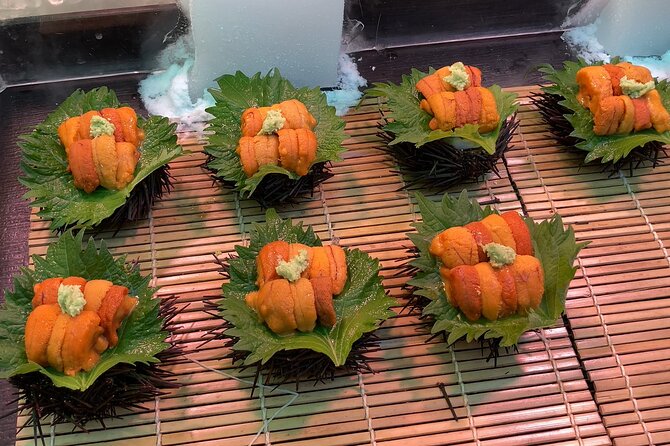
- Seafood tastings are included, so your first stops are already paid for.
- A seafood lunch is included, which can be the most expensive part if you’re pricing meals solo.
- Temple and shrine admissions are listed as free, so you’re not paying extra at multiple stops.
- You get translation support, which can save time and reduce the “guesswork tax” when ordering.
The tour runs about 3 hours, which is a comfortable length for a market experience. Long enough to feel like you’ve seen the place properly, short enough that you still have energy left to explore other parts of Tokyo after.
Small-group size is another value driver. Maximum 10 travelers means you’re more likely to get personal help—questions answered, dietary needs handled, and you can move at a pace that fits the group.
It’s also worth noting how solid the satisfaction level appears to be: the tour shows a 5-star rating with 36 reviews and a 100% recommendation rate. I don’t treat that as a guarantee, but it’s a good signal that the experience is landing with people who like food walking tours.
Getting There: Meeting Point and the 10-Minute Window
The tour meets at Tsukiji Hongan-ji Temple, located at 3-chōme-15-1 Tsukiji, Chuo City, Tokyo 104-8435. Start time is 10:00 am, and the tour ends back at the meeting point.
It’s described as near public transportation, which is important in Tokyo. You don’t want a tour where you spend the first 20 minutes trying to find the exact entrance while everyone else keeps moving.
One practical rule to know: if you’re late, the guide waits up to 10 minutes after the start time (until 10:40am). After that, the guide starts the tour and you can’t get a refund for the tour fee. That’s not meant to be harsh—it’s meant to keep timing fair for the group, especially when you’re moving from food stop to food stop.
You’ll also receive a mobile ticket, which makes check-in straightforward when you’re already navigating trains and street maps.
You can also read our reviews of more food & drink experiences in Tokyo




Who This Tour Suits Best (and Who Should Skip It)
This is a strong fit if you:
- want an easy first-time approach to Tsukiji market culture
- like learning etiquette and local stories alongside food
- enjoy trying several small bites instead of committing to one big meal
- appreciate translation help so you can ask what you’re eating
It’s less ideal if you:
- want a full-on, auction-floor, hardcore insider experience (this tour is described more around market culture, outer exploration, and tastings)
- hate seafood enough that even substitutions would feel like settling
If you’re traveling with kids, the rule is simple: children must be accompanied by an adult, and that’s it.
Should You Book This Tsukiji Food Tour?
If your goal is to eat your way through Tsukiji without wasting time figuring things out, I’d book it. The combination of tastings + seafood lunch, the small group size, and the fact that you’re taken to a hidden restaurant all point to a tour designed for real value, not just sightseeing.
Book it especially if you’re a first-timer in Japan who wants a guide to handle etiquette and language. Starting at Tsukiji Hongan-ji Temple and ending at Namiyoke Inari Shrine also means you’ll leave understanding the area, not only the snacks.
Only skip if you’re strictly food-only, you can’t do seafood, or you can’t reliably show up at 10:00 am. Otherwise, this is one of those Tokyo tours that turns a confusing neighborhood into something you can actually enjoy.
FAQ
Where does the Tsukiji Fish Market Culture Walking and Food Tour start?
It starts at Tsukiji Hongan-ji Temple, at 3-chōme-15-1 Tsukiji, Chuo City, Tokyo 104-8435, Japan.
What time does the tour begin?
The tour start time is 10:00 am.
How long is the tour?
The duration is about 3 hours.
How many people are in the group?
The tour has a maximum of 10 travelers, keeping it intimate.
What food is included during the tour?
The tour includes seafood tastings during the walk and a seafood lunch. It’s designed to help curb hunger with multiple stops rather than one meal.
Do you visit Tsukiji Hongan-ji Temple and Namiyoke Inari Shrine?
Yes. The tour includes Tsukiji Hongan-ji Temple first, and Namiyoke Inari Shrine as a later stop.
Is there an admission fee for the temple and shrine stops?
The information for both Tsukiji Hongan-ji Temple and Namiyoke Inari Shrine lists admission tickets as free for those stops.
Does the guide translate for you?
Yes. The tour includes a guide who provides translation support.
What happens if I’m late for the start time?
The guide waits up to 10 minutes after the tour starts (until 10:40am). After that, the tour starts without you and refunds are not available.
Can I cancel for a full refund?
Yes. You can cancel for a full refund up to 24 hours before the experience’s start time.