REVIEW · TOKYO
Tokyo Tsukiji Food & Culture 4hr Private Tour with Licensed Guide
Book on Viator →Operated by Japan Guide Agency · Bookable on Viator
Markets, temples, and snacks in one afternoon. A licensed guide helps you plan a private half-day around food and souvenirs, and I like that you can choose 2 to 3 stops instead of getting dragged through a fixed checklist. One thing to consider: this is not a guaranteed early-morning auction experience, and Toyosu has specific closure days that can change what you can see.
I also like the practical feel. You get a guide who can point you through the right streets and stalls, help you navigate public transport when needed, and keep the pace realistic for a 4-hour window. For value, the sweet spot is when you actually want guidance for eating, shopping, and figuring out what is open.
If you arrive hoping to see everything at once, you may feel the clock. The tour is built for walking and choosing, and time spent between far-apart stops can eat into market sampling.
In This Review
- Key takeaways before you go
- A half-day food plan that actually fits Tokyo
- Price and what you really get for $109 per person
- Getting set up: walking, pickup on foot, and easy meeting points
- Toyosu Market: modern seafood sights and the closure reality
- Tsukiji Fish Market: where your guide can save you hours
- Asakusa temple approach and Nakamise snack shopping
- Ameyoko shopping street and Kappabashi kitchenware street
- Tsukishima Monjya Street for a different kind of Tokyo snack
- Yanaka Ginza: the old-town side of Tokyo
- How customization works in real life (and where it can go wrong)
- Guide quality: navigation, patience, and smart stop choices
- Small timing traps: closures and when markets are less open
- Who this tour suits best
- Should you book this tour?
- FAQ
- What neighborhoods and food areas does this tour include?
- Can I customize the route during the tour?
- Is this a private tour?
- How long is the tour, and how many stops can we realistically see?
- Is hotel pickup included?
- Are entrance fees included?
- Are transportation fees and lunch included?
- Is Toyosu Market open every day?
- Are service animals allowed?
- Is there free cancellation?
Key takeaways before you go
- Private, licensed, English-speaking guidance that focuses on food culture, not just sightseeing
- A 4-hour plan built for 2 to 3 sites, with customization offered so your day fits you
- Toyosu and Tsukiji as the core food stops, with different rhythms and opening patterns
- Asakusa street layers from temple approach to snack-and-souvenir shopping
- Kappabashi kitchenware street where shopping is practical, not just postcard tourism
- Street-food and sampling guidance that helps you find the right stalls and avoid long lines
A half-day food plan that actually fits Tokyo
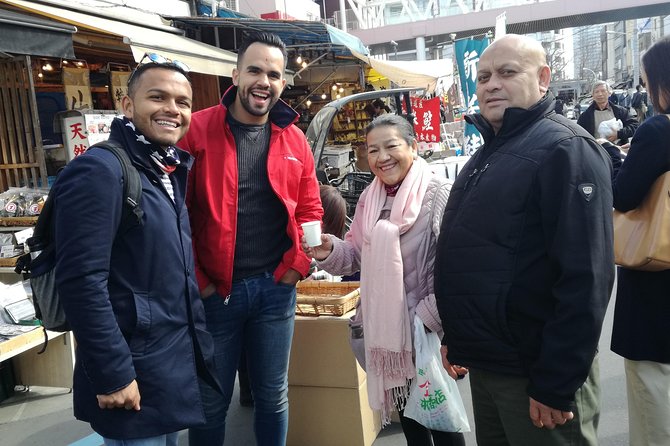
Tokyo can feel like sensory overload, especially if you’re trying to do markets and classic sights in one day. What I like about this tour is that it treats food as the thread, not the add-on. Markets first, then the streets where people shop, snack, and move between old and new Tokyo.
Because it’s private, you control the balance. Maybe you want more time eating at Tsukiji-style stalls, or maybe you want more shopping time for kitchen gear. Either way, your guide can shape the route from the listed options.
The tour is also designed to be walkable. Even with pickup offered, the experience is still a walking tour, and you’ll meet the guide in the designated area.
You can also read our reviews of more food & drink experiences in Tokyo


Price and what you really get for $109 per person
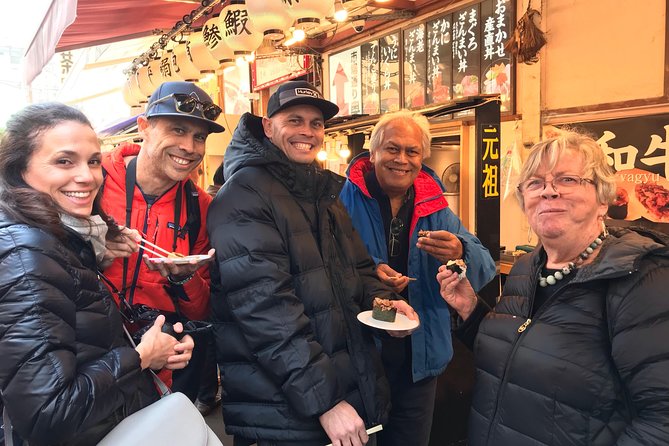
At $109.01 per person for about 4 hours, the value is less about admission tickets and more about what a good guide buys you: time, choices, and confidence. This kind of market-and-food day can be confusing on your own, and your guide’s job is to help you avoid dead ends and pointless wandering.
You should also think about what you’ll add yourself. Transportation fees and lunch are not included, and you’ll pay for what you choose to eat or buy along the way. In other words, the tour cost is for the guide and the time with them, while your food bill stays in your hands.
For me, this makes sense if you’re:
- short on time and want a focused Tokyo food day
- traveling with someone who prefers structure over map-only navigation
- keen to buy food-themed souvenirs with less guesswork
Getting set up: walking, pickup on foot, and easy meeting points
This is a private tour, meaning only your group participates. That matters because you can move at your pace without waiting for a larger group to decide.
Pickup is offered, but the tour is still a walking experience, and pickup is described as being on foot. So plan to meet your guide at the designated area rather than expecting a car to drop you at every doorstep.
If you’re pairing subway rides with market stops, bring your patience. Some negative feedback mentions losing time to transit and that the day felt too short for the number of places involved. The best way to protect your time is to pick stops that cluster naturally (Asakusa together, or Ueno/Ameyoko plus Kappabashi together).
Toyosu Market: modern seafood sights and the closure reality
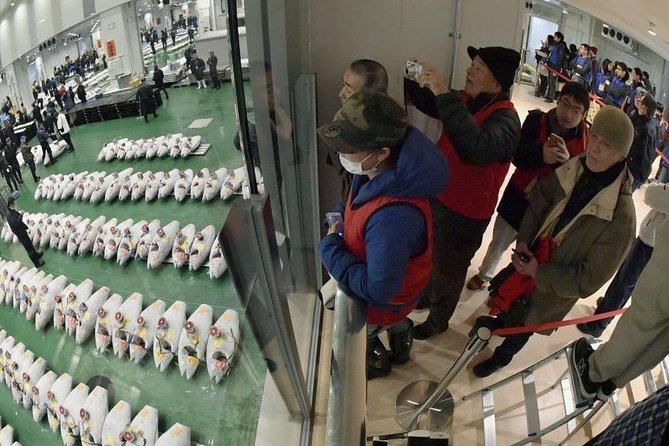
Toyosu Market is one of the tour’s two market anchors, with a scheduled 30-minute stop. It’s listed as having an admission ticket not included, so you may be paying for access details separately if needed.
The biggest practical factor is timing. Toyosu is closed on Wednesdays and Sundays, and it may also close on other irregular days. The tour information also notes that many Tsukiji-area shops can be closed when Toyosu is closed. If you book on one of those days, you should be ready for a modified experience.
When Toyosu is open, you’ll likely get a different feel than classic Tsukiji-style wandering. Toyosu is newer and more structured, so your guide’s role becomes about helping you recognize what you’re seeing and what’s worth stopping for during your short window.
My advice: if Toyosu is a top goal, double-check your day. Then choose an alternate stop that you still genuinely want, like Asakusa streets or Kappabashi kitchenware.
Tsukiji Fish Market: where your guide can save you hours
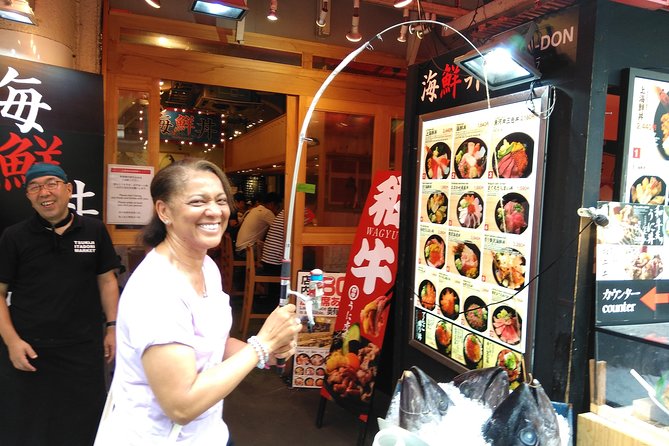
Tsukiji Fish Market is described as the old fish market of Japan, and it’s listed as free admission. You get about 30 minutes here, which sounds short until you remember how quickly the area can become a maze.
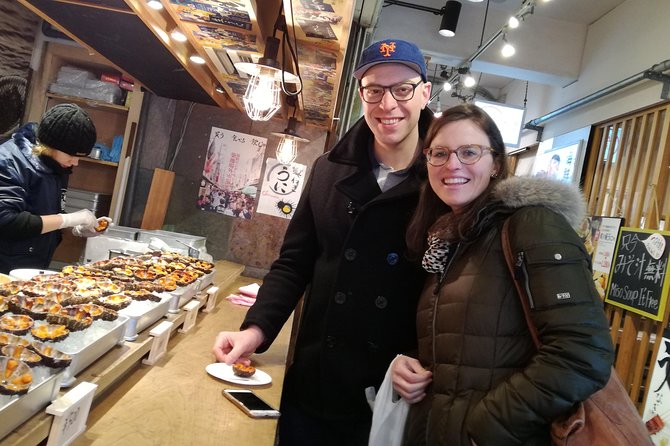
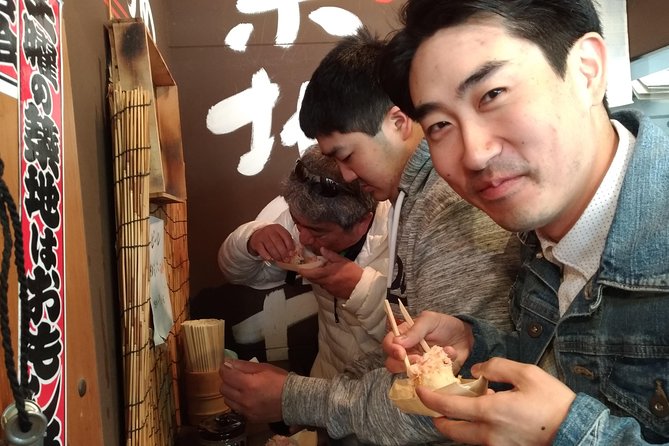
This is where I think the private guide factor shines most. Several guide-led moments in the supplied information describe finding key spots, pointing out what to try, and helping people sample across a spread of stalls. One mention includes a long stall checklist, with foods like sea urchin, wagyu beef, crab, and different rice-and-egg dishes.
Even if you don’t plan to eat everything, your guide can help you make smart choices. In a market, the question is rarely what exists. The question is where to go first, how to read stall setups quickly, and how to avoid lining up for the wrong thing.
Possible drawback: a short market stop means you’ll need to commit. If your goal is maximum tasting, tell your guide early so you prioritize. If your goal is photos plus a few bites, you’ll still want to move decisively.
You can also read our reviews of more tours and experiences in Tokyo


Asakusa temple approach and Nakamise snack shopping
Many food days in Tokyo fall apart at the temples, mostly because people try to do too much at once. Here, Senso-ji Temple is built in as a 30-minute stop, and it’s described as one of Japan’s most famous temples, with about 1,300 years of history. The Kaminarimon gate with the big red lantern is the visual anchor people come for.
Right after that comes Nakamise shopping street near Kaminarimon, also about 30 minutes. Nakamise is described as running around 250 meters, packed with traditional souvenirs, snacks, and small food treats.
This pairing is smart because it matches how Asakusa is experienced: a cultural landmark followed by food-and-souvenir shopping along the approach. If you want your day to feel like you actually stepped into a Tokyo ritual, this is the section that helps.
My practical tip: Asakusa is a great place to buy edible souvenirs. You can browse while still walking, and you’ll likely find snack-shaped gifts that are easier to pack than fragile kitchen items.
Ameyoko shopping street and Kappabashi kitchenware street
If you care about bringing home something you’ll actually use, the Ueno and Asakusa overlap is where this tour can become personal.
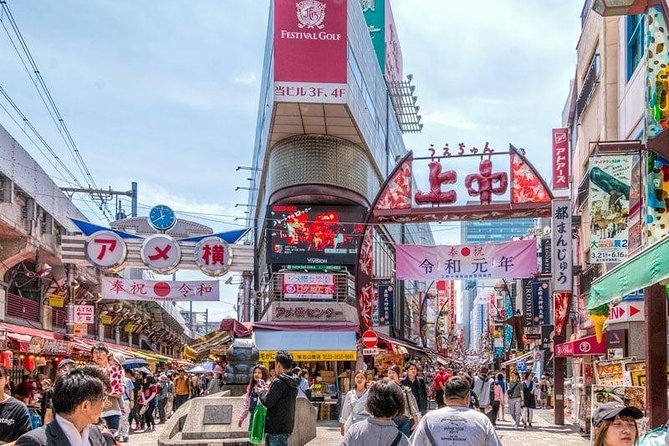
Ameyoko Shopping Street is listed as a 30-minute stop with free admission. The tour framing focuses on shopping sprees and deals, and it’s the kind of place where you can pick up casual souvenirs without it turning into a formal shopping expedition.
Then there’s Kappabashi Street (Kappabashi Dogugai), also 30 minutes. This is described as a kitchenware wonderland between Ueno and Asakusa, lined with dozens of stores that sell everything restaurant operators need. That detail matters, because it explains why Kappabashi isn’t just touristy shopping. You can find items that fit real cooking and serving.
If you’re the type who buys kitchen tools, this stop can be the most satisfying one. You’ll see how Tokyo supports food culture beyond markets, from chopsticks to serving gear and other kitchen essentials.
One drawback to watch: kitchenware shopping can expand fast. If you have your heart set on tools, set a budget and a time limit early with your guide so you don’t miss your market window.
Tsukishima Monjya Street for a different kind of Tokyo snack
Not every Tokyo food tour makes room for something messy, hot, and very local. Tsukishima Monjya Street is the listed option for that.
The description of monjayaki is specific: it’s a liquid-y, hot batter-based dish made with flour and dashi (Japanese stock). It’s also described as admittedly unattractive at first glance, but that the taste wins you over once you get past the appearance.
That matters because Tsukishima can be the best choice if you want a snack that feels more like street culture than a museum exhibit. Your guide can help you decide whether this fits your energy level on the day.
If you’re sensitive to crowded food-stall environments, mention that early. A private guide can steer you toward the version of street food that works for your comfort.
Yanaka Ginza: the old-town side of Tokyo
To balance the markets and shopping streets, the tour also includes Yanaka Ginza Shopping Street. It’s described as one of Tokyo’s best shopping streets, with an old-town Shitamachi atmosphere that feels more nostalgic.
The listed time is 30 minutes. That makes it a good option if you want a calmer rhythm before you head back to your evening plans.
Yanaka Ginza also pairs nicely with a food day because you can shift from seafood-and-stalls energy to a slower, strolling kind of Tokyo. If you want a break from big crowds and want something that feels locally lived-in, this can be a strong choice.
How customization works in real life (and where it can go wrong)
The tour is sold as customizable: you choose your 2 to 3 sites from the available options. In practice, customization is what decides whether you feel rushed or refreshed at the end.
Here’s what I’d watch:
- Your guide is limited by time. For a 4-hour walk-based tour, you can’t expect to hit too many far-apart areas without losing market time.
- Transit eats minutes fast. One concern mentioned spending too much time on trains between places. If you customize, cluster your picks geographically.
- Make sure your expectations match the day’s market status. If you expected an auction-era atmosphere and your schedule starts later, it can feel disappointing.
Customization is also where the guide’s personality matters. Multiple guide names appear in the supplied information, including Hiromi, Nori, Michie, Shuji, Yasuho Suzuki, Toru Higaki, Maki, Koji, Kay, Yumiko, and Koba. Across the messages, the common theme is that the guide helps you navigate what to do next and how to move efficiently.
So tell your guide one thing you care about most: food sampling, temple scenery, kitchen shopping, or a slower old-town walk. Then let the route serve that goal.
Guide quality: navigation, patience, and smart stop choices
One of the most praised parts of this experience is the guide quality. People describe guides as kind, patient, and practical—especially when it comes to helping with navigation.
A recurring detail is train guidance: some guides helped people understand how to handle subway tickets and how to move through the metro. That can be a big stress reducer, because Tokyo transit rules are easy to get wrong if you’re tired.
Another praised element is stop selection inside the market itself. Instead of wandering, your guide can point out key stalls and give reasons to choose particular foods. Some messages even mention sampling across many stalls.
Rain also shows up in the supplied information. A guide reportedly did their best on a rainy day and still explained sites and food culture. That’s a sign that the tour isn’t only good weather-dependent, as long as you show up prepared.
My practical takeaway: this tour is worth it when you want an expert at your shoulder. If you’re the type who loves wandering blindly with your own map app, you might still enjoy it, but the guide’s value won’t feel as sharp.
Small timing traps: closures and when markets are less open
Two timing issues show up in the provided details.
First is Toyosu closure days: Wednesdays, Sundays, and occasional irregular closures. When Toyosu is closed, many Tsukiji-area shops can also close. If your whole plan depends on that market vibe, plan an alternate route.
Second is expectations about market hours. One reported disappointment mentions a start time that was far later than expected, with the auction long over and many shops closed. You might still find open areas, but the experience can feel like a shell of the dream.
How to protect your day: confirm your start time before you go in, and ask your guide what level of market action you can realistically expect that day. If you’re booking specifically for the auction atmosphere, don’t assume.
Also remember: the tour is listed as a walking tour with meet-up within a designated area. That means arriving on time matters more than with a car-based tour.
Who this tour suits best
This experience fits best if you want a Tokyo food day with structure and a guide who can steer you toward the right stops.
You’ll likely be happiest if you:
- have limited time and want 2 to 3 meaningful areas in 4 hours
- care about food culture as much as landmarks
- want help navigating the market maze and the surrounding shopping streets
- enjoy buying usable souvenirs, especially kitchenware and snack-shaped gifts
It’s less ideal if you:
- want a full packed itinerary across many neighborhoods without transit time
- only want auction-era market action at dawn and nothing else
- plan to keep rearranging stops at the last minute without time awareness
Should you book this tour?
If your goal is a guided food-focused afternoon that includes a market stop plus Asakusa or shopping streets, I’d say yes. The biggest value is the private guide helping you choose, navigate, and sample in a way that fits a short time window.
Book it especially if Kappabashi kitchenware, Tsukiji seafood food culture, or Asakusa street browsing are high on your list. Just be honest about two things: your market day can be affected by Toyosu closures, and a 4-hour tour means 2 to 3 stops max with smart pacing.
FAQ
What neighborhoods and food areas does this tour include?
The listed options include Toyosu Market and Tsukiji Fish Market, plus shopping and food streets such as Ameyoko, Senso-ji and Nakamise in Asakusa, Kappabashi kitchenware street, Tsukishima Monjya Street, and Yanaka Ginza.
Can I customize the route during the tour?
Yes. The tour is described as customizable, with your guide helping you choose 2-3 sites from the available options.
Is this a private tour?
Yes. It’s a private tour/activity, and only your group participates.
How long is the tour, and how many stops can we realistically see?
The duration is about 4 hours. The tour design supports choosing around 2-3 sites from the listed options.
Is hotel pickup included?
Pickup is offered, and the tour is a walking experience with pickup on foot and a meet-up on foot within a designated area.
Are entrance fees included?
Entrance fees are not included overall. Toyosu notes that an admission ticket is not included, while Tsukiji Fish Market is listed as free admission.
Are transportation fees and lunch included?
No. Transportation fees and lunch are not included, along with other personal expenses.
Is Toyosu Market open every day?
No. Toyosu Market is listed as closed on Wednesdays and Sundays, and it may also close on other irregular days.
Are service animals allowed?
Yes. Service animals are allowed.
Is there free cancellation?
Yes. Free cancellation is offered, and you can cancel up to 24 hours in advance for a full refund.