REVIEW · TOKYO
Tokyo City 1-Day Private Tour with Bilingual Driver
Book on Viator →Operated by Tour Japan · Bookable on Viator
Tokyo can feel like a puzzle. This private day helps you snap it into place with a 10-hour plan you can shape on the fly. You get door-to-door pickup, then a driver who helps you move efficiently between classic Tokyo stops and a few modern pivots, all without cramming your schedule like a group bus.
I love two things about it. First, the tour is completely customizable, so if your priorities aren’t the same as someone else’s, you don’t have to “take what you get.” Second, it’s set up for an easy pace: you’re not wrestling trains, staircases, and transfers all day, which matters a lot when you’re short on time or traveling with kids or older family members.
One drawback to plan for: the day follows a set route, and not every wish gets full treatment—most notably, the Imperial Palace stop is area-based, not a long inside-the-gardens experience. If your heart is set on specific interior access, you’ll want to confirm what your day will actually include with your guide.
In This Review
- Key points before you go
- Private, customizable 10-hour Tokyo: what you’re really buying
- Pickup, the bilingual driver, and how the day stays easy
- Tsukiji Fish Market: the best way to start, if you like your mornings loud
- Asakusa and Senso-ji: classic Tokyo, with breathing room
- Imperial Palace area: great views, but manage expectations
- Meiji Jingu Shrine: a reset button in the middle of the city
- Shibuya, Harajuku, and Ebisu: fashion energy with quick hit options
- Odaiba on Tokyo Bay: tech, views, and a weather-friendly bonus
- Price and logistics: is $425 per group worth it?
- Timing, flexibility, and the one thing you must watch
- Who this tour fits best (and who should choose something else)
- Should you book this Tokyo private day?
- FAQ
- How long is the Tokyo City 1-Day Private Tour?
- How much does the tour cost?
- Is this tour private?
- Do you pick me up from my hotel?
- Can the itinerary be customized?
- Are admission tickets included for the stops?
- What if the weather is bad?
- What is the cancellation policy?
Key points before you go
- Private means just your group, so your schedule isn’t held hostage by other people’s shopping sprees.
- Bilingual driver support helps you get where you need to be and reduces the language stress of Tokyo logistics.
- Customizable route lets you trade time between tradition (Tsukiji, Asakusa, Meiji Jingu) and modern Tokyo (Shibuya, Odaiba).
- A lighter walking day compared with trains all day, which is a big win for seniors and families.
- You control the pace, but you still need to keep timing realistic so later stops don’t get squeezed.
Private, customizable 10-hour Tokyo: what you’re really buying
This isn’t a “sit and listen” tour. You’re renting the most valuable thing in Tokyo on a short timeline: time plus transport. You’ll start with pickup (offered as part of the experience) and then move in your own vehicle between major areas, with enough flexibility to adjust the flow.
That customization is the real power. If you want to linger for photos around Senso-ji, you can. If your group wants a quick pass through Shibuya and move on, you can. Several guide experiences described the day as smooth and organized—especially when the driver helped keep a plan intact while still letting families move at a comfortable tempo.
Where this can get tricky: Tokyo days are not immune to reality. Traffic, weather, line flow, and transit timing all exist. Even with a private day, you still need to treat the schedule as a living thing. If you run late early, later stops can shrink—one common theme in the less-positive stories is a mismatch between expected flexibility and what time allowed.
You can also read our reviews of more city tours in Tokyo


Pickup, the bilingual driver, and how the day stays easy
You’re not just getting transport. You’re getting a bilingual driver who can act like a first-pass guide: helping with where to go, how long to spend, and how to get your group moving without confusion.
I like that this format can reduce the “Tokyo friction tax.” Instead of figuring out trains, station exits, and transfer timing, you’re focusing on the moments that matter—market chaos, temple atmosphere, shrine steps, and the photo magnets of modern Tokyo. For families and older travelers, that’s not a small thing. One highlight from guide experiences was how comfortable the day felt for elderly parents: fewer long walks, easier pacing, and enough time at each stop to actually enjoy it.
Just know what you’re paying for. You’re buying a driver who can help manage the day and give some context, but the amount of narration can vary depending on the person assigned to you. If you want lots of storytelling, it’s smart to ask your driver up front what kind of guiding style you’ll get, and to flag the topics you care about (food culture, religion, modern neighborhoods, history facts, or shopping).
Tsukiji Fish Market: the best way to start, if you like your mornings loud
Tsukiji Fish Market is where the day earns its Tokyo credentials fast. Even if you’ve seen photos, being there in person is a different level. You’ll get about 1 hour, and admission is listed as free for the experience.
In practice, think of Tsukiji as a sensory walk-through. Seafood, produce, and the whole wholesale-market energy is the point. If your group loves food, this is the stop that sets the tone for the day. If you prefer calmer scenery, you might treat Tsukiji as a “taste and view” hour rather than trying to cover everything.
Tip: arrive hungry enough to enjoy what you find, but don’t plan your whole meal during the tightest part of the market. Keep it flexible. If you’re traveling with kids, the market is often a hit because it’s visual and fast-moving, but you’ll still want to keep them close in a crowd.
Asakusa and Senso-ji: classic Tokyo, with breathing room
Asakusa is where Tokyo feels human-scale again. The focus here is the neighborhood built around Sensō-ji, the famous Buddhist temple dedicated to Kannon. You’ll have about 1 hour, with admission listed as free.
This stop works well with a private format because the area can be packed. With your driver, you’re less likely to lose time getting oriented. Instead, you can spend the hour doing what you came for: temple views, classic street energy, and those small details around the edges.
What I’d aim for in that hour:
- A slow approach, not a sprint.
- Time for photos without holding up your whole group.
- A quick look for snacks if your group wants them, then move on while the momentum still feels fun.
If your day involves kids or older folks, Asakusa is also a good place to regroup. The walking is manageable compared with some other Tokyo neighborhoods, and the sights are rewarding even when you don’t zoom through everything.
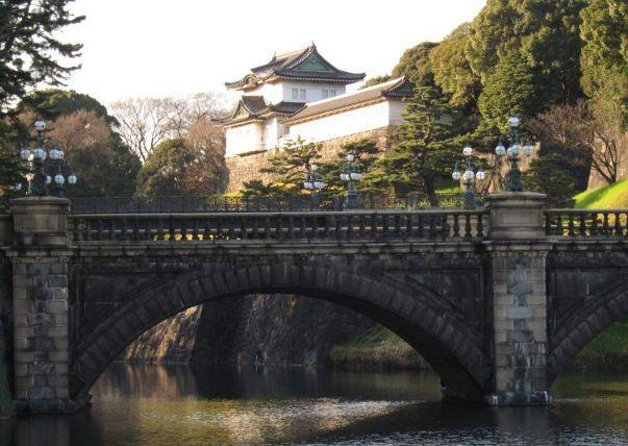
Imperial Palace area: great views, but manage expectations
The Imperial Palace stop is about 1 hour, and admission is listed as free. But here’s the key consideration: this experience doesn’t position you for a long, inside-gardens tour. You’ll likely get access to the palace-area area and views rather than a full garden circuit.
So if your dream is deep access inside the grounds, you should treat this stop as “see the area, take photos, understand the setting,” not as a major, interior palace visit.
That said, the Imperial Palace area still works on a private day because it offers a different Tokyo rhythm. The tone shifts from streets and markets to a park-like, more spacious feel. For groups who like contrasts—old authority surrounded by modern Tokyo—this is a strong mid-day anchor.
You can also read our reviews of more private tours in Tokyo

Meiji Jingu Shrine: a reset button in the middle of the city
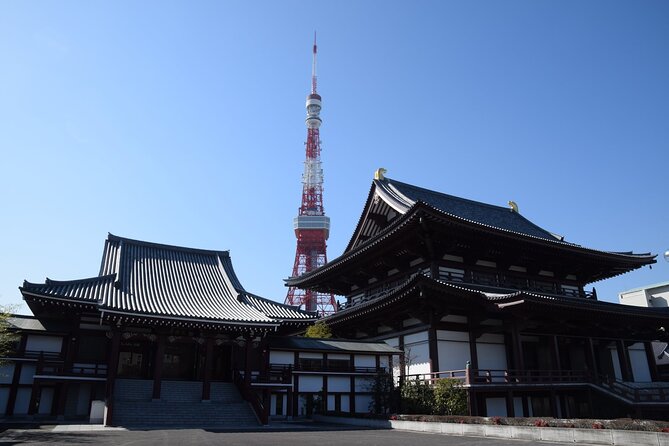
Meiji Jingu is a Shinto shrine dedicated to Emperor Meiji and Empress Shōken. You’ll have about 1 hour, with admission listed as free.
If you need a breather from Tokyo’s motion, this is where you get it. The shrine approach and the surrounding forest atmosphere create that calm pause people travel for. On a private day, it also becomes easier to slow down. Your driver can time the transitions between neighborhoods so you arrive at a decent pace and don’t feel rushed through the calm parts.
Practical note: shrine grounds involve walking, even if the walking isn’t extreme. Wear shoes that handle city sidewalks and you’ll feel better about spending time here without “making it a chore.”
Shibuya, Harajuku, and Ebisu: fashion energy with quick hit options
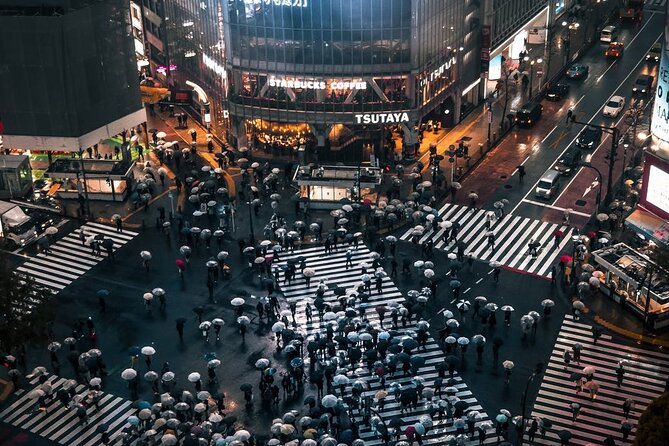
This is the “modern Tokyo” section, and it’s set up as a flexible block. The itinerary lists Shibuya / Harajuku / Ebisu together for about 1 hour, and then a brief Shibuya moment (around 15 minutes).
You’ll be around Takeshita Street in Harajuku, lined with fashion boutiques, cafes, and restaurants. Shibuya’s broader identity shows up too: major stations, big-city motion, and iconic pedestrian flow.
How to make this part pay off:
- Decide what your group wants: people-watching, photos, shopping, or a quick street stroll.
- Don’t try to do everything in one hour. Pick one or two “must-do” micro-goals.
- If your group includes teens or fashion-forward adults, Harajuku is often the fun lever. If not, keep Harajuku light and spend more time around Shibuya’s central vibe.
One reason I like this structure for a private day: you can shift the emphasis. If you’re not into shopping, you can push for viewpoint time or a photo stop. If you want snacks and street shopping, you can.
Odaiba on Tokyo Bay: tech, views, and a weather-friendly bonus
Odaiba is a high-tech entertainment area on an artificial island in Tokyo Bay. You’ll have about 2 hours, with admission listed as free in the itinerary details.
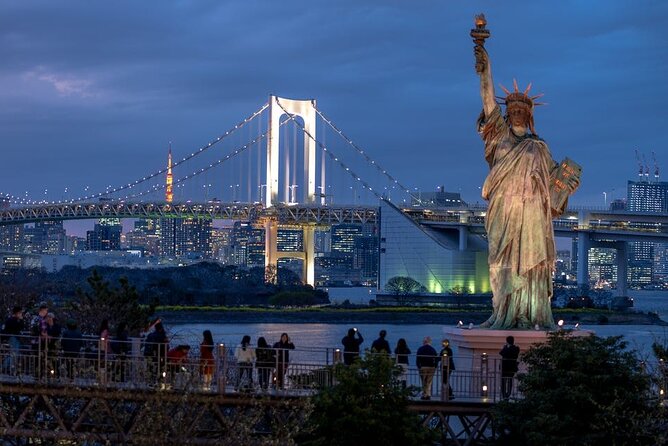
The area is known for a few “pick your mood” activities: Seaside Park for open-air views, Mt. Fuji views from the Daikanransha Ferris wheel area (on clear days), and Miraikan, the science museum. Even if you don’t go inside any paid attractions, the waterfront and the futuristic city vibe give you a nice change of pace.
This stop can also be a lifesaver when weather is unpredictable. The itinerary’s structure gives you a chance to spend time in areas where you can easily move indoors if needed. One rainy-day story in the guide experiences described how the driver adjusted with indoor options when visibility dropped and walking became less pleasant.
Tip: check your group’s tolerance for walking on wet days. Odaiba can be enjoyable even when the weather isn’t perfect, but your comfort matters more than ticking off every viewpoint.
Price and logistics: is $425 per group worth it?
At $425 per group (up to 6) for about 10 hours, the value depends on how you travel.
If you have a full group of six, the math gets much easier: that’s roughly $70 per person for transport plus a bilingual driver handling the big logistics between stops. For families and multi-person groups, that can be a smart alternative to paying for multiple taxis and spending half your day navigating.
If you’re traveling as just two people, it can still be worth it if:
- You want maximum sightseeing with minimal stress.
- You’re short on time (like a layover or a tight trip window).
- You want help with timing and route decisions without worrying about stations and transfers.
For solo travelers, it’s harder to call it “cheap,” but it can still make sense if the day is designed around your interests and you’d otherwise lose time figuring things out.
Where the price can feel unfair is when a group expects heavy guiding narration but gets mainly driving and light commentary. The private format helps, but it can’t guarantee the exact storytelling style you want. If that matters, set expectations early.
Timing, flexibility, and the one thing you must watch
A common success pattern in the better guide experiences: the driver keeps the day organized while still adjusting when needed. Names that showed up in positive stories include Abdul, Maz, and Khan, often described as prompt, friendly, and helpful with keeping the schedule realistic.
On the flip side, the caution is obvious: if the driver isn’t familiar with specific stops you requested, or if your group is late returning to the car, the later parts of the itinerary can suffer. That matters most with tight sightseeing blocks like Shibuya’s shorter stop.
Here’s how you protect yourself:
- Share your priorities before the day starts (what must happen, what’s optional).
- Ask for a simple plan: where you’ll start, what order matters most, and what the time pressure points are.
- Build in a “buffer personality.” If you tend to run late, tell the driver early so they can manage the day without stress.
Who this tour fits best (and who should choose something else)
This tour is a strong match if you want a lot of Tokyo in one day without the strain of constant transit. It’s especially good for:
- Families with kids who need fewer transfers.
- Older travelers who want to reduce long walking.
- Groups that like seeing both classic and modern areas in the same day.
- People on short trips who don’t want to spend their limited hours sorting logistics.
It’s less ideal if:
- You only want one neighborhood and want to linger there for hours.
- You’re planning very specific timed attractions that require strict scheduling (the Imperial Palace garden expectation is a good example of where misunderstandings happen).
- You want deep, specialized guiding on niche topics—this format can help, but the narrative style depends on the assigned guide.
Should you book this Tokyo private day?
Book it if you’re trying to maximize your sightseeing time, want a comfortable way to move across Tokyo, and you like having the structure of a plan with the option to adjust. The combination of classic stops like Tsukiji and Asakusa, plus modern Tokyo areas like Shibuya and Odaiba, is a good “first Tokyo” mix.
Consider another option if your top priority is a long, inside-the-gardens Imperial Palace visit or if your trip requires very strict timed entrances that aren’t mentioned in the day’s flexible structure. Also, if you care a lot about heavy narration, send a message in advance with what you want covered so your expectations line up with how your guide works.
FAQ
How long is the Tokyo City 1-Day Private Tour?
It runs for about 10 hours.
How much does the tour cost?
The price is $425.00 per group, up to 6 people.
Is this tour private?
Yes. It’s a private tour/activity, and only your group participates.
Do you pick me up from my hotel?
Pickup is offered as part of the experience.
Can the itinerary be customized?
Yes. The tour is completely customizable, so you can choose your own adventure during the day.
Are admission tickets included for the stops?
The itinerary shows admission ticket free for each listed stop (Tsukiji Fish Market, Asakusa, Imperial Palace, Meiji Jingu Shrine, and the other areas).
What if the weather is bad?
This experience requires good weather. If it’s canceled due to poor weather, you’ll be offered a different date or a full refund.
What is the cancellation policy?
Free cancellation is available. You can cancel up to 24 hours in advance for a full refund.
If you’d like, tell me your travel dates and who’s in your group (ages, interests, any mobility needs), and I’ll suggest a smart way to order your priorities within these stops.