REVIEW · TOKYO
Tokyo: Traditional foot-kneaded Udon noodles class
Book on GetYourGuide →Operated by Izusha's WASHOKU Kitchen · Bookable on GetYourGuide
Foot-kneading udon sounds weird, until it works. In a small home kitchen in Musashino, I like how this class turns a classic meal into a hands-on, laugh-at-yourself cooking workout. You get to learn traditional udon shaping while stepping right on the dough, not just watching from the sidelines.
You’ll also get dashi basics (the stock that powers so much Japanese flavor) and a finished meal that’s more than “class food.” One consideration: it’s in a real home setting, so if you’re uneasy about kneading by foot or anything getting a little messy, you’ll want to mentally prepare.
The session has a comfy, local rhythm: noodle prep, a savory pork soup dipping sauce, then a casual tea moment with matcha and wagashi. The drawback for some people is timing—150 minutes goes fast, so if you want lots of extra free time to wander Musashino afterward, plan for a buffer.
In This Review
- Key things worth your time
- Foot-Kneading Musashino udon in West Tokyo
- Getting there: a pickup from Higashimurayama station
- Inside Izumi’s home kitchen: utensils, apron, and small-group pace
- From dough to noodles: what foot-kneading teaches you
- Dashi basics: the stock behind so much Japanese cooking
- Pork soup dipping sauce: hot, savory, and totally practical
- The meal: your udon, your outcome
- Matcha and wagashi tea ceremony, casually done
- Vegetarian and vegan udon lessons (optional)
- Price and value: is $70 worth it?
- Food allergies and what to tell the host
- Who should book this foot-kneaded udon class?
- Should you book? My decision guide
- FAQ
- How long is the udon class?
- Where does the class take place?
- What’s the group size?
- What will I make during the class?
- Does the experience include matcha and wagashi?
- What languages is the instructor speaking?
- Is there a vegetarian option?
- Do I need to tell the host about allergies?
- What are the booking terms?
Key things worth your time
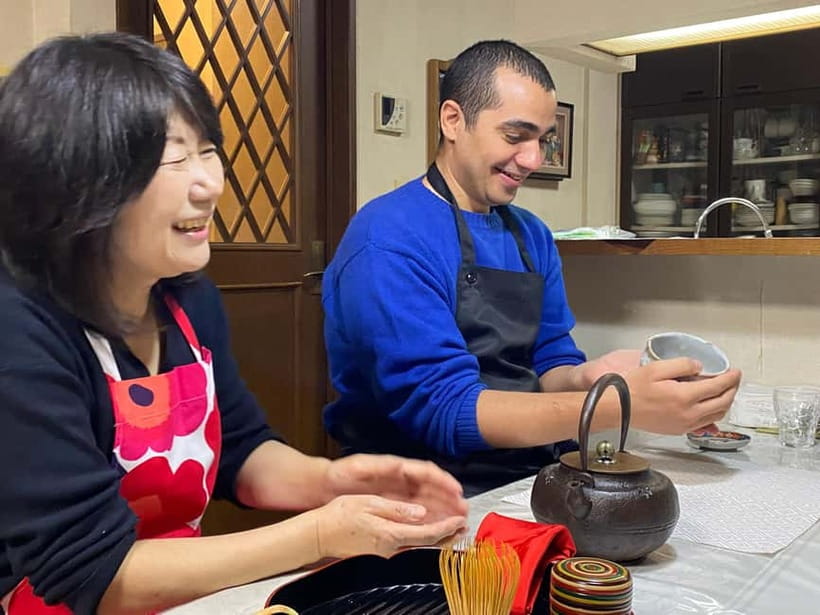
- Foot-kneaded Musashino udon: you shape dough by stepping on it, like the local method.
- Dashi from scratch: you learn the stock behind Japanese cooking, not just the noodles.
- Cold noodles + hot pork soup: the contrast is the point, and you’ll eat your own work.
- Small group of up to 4: more hands-on attention and easier questions.
- Matcha and wagashi: a relaxed tea break after cooking, not a rushed “show.”
- Vegetarian lesson is optional: you can choose a meat-free path if you ask ahead.
Foot-Kneading Musashino udon in West Tokyo
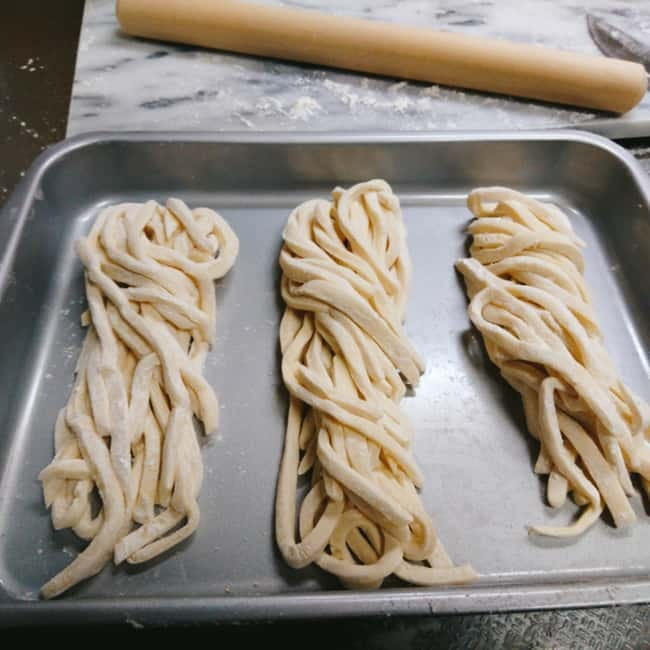
This class focuses on a specific style: Musashino udon, from Musashino in the west of Tokyo. Historically, wheat farming was common here, which helps explain why udon has such a long connection to the area. The fun part is the method: the dough is kneaded with your feet.
Yes, it sounds silly at first. Then you do it, and it makes sense. Foot-kneading helps you apply steady pressure, and it’s surprisingly satisfying once you get the hang of keeping your balance. It turns a “cooking class” into something closer to a hands-on craft workshop—one where you’re building dough texture with your own body.
If you like learning food the practical way—watch, try, correct, and then eat what you made—this one fits. And if you’re a first-timer, the format is friendly: each guest makes their own udon, not a share-the-plate situation.
You can also read our reviews of more tours and experiences in Tokyo



Getting there: a pickup from Higashimurayama station
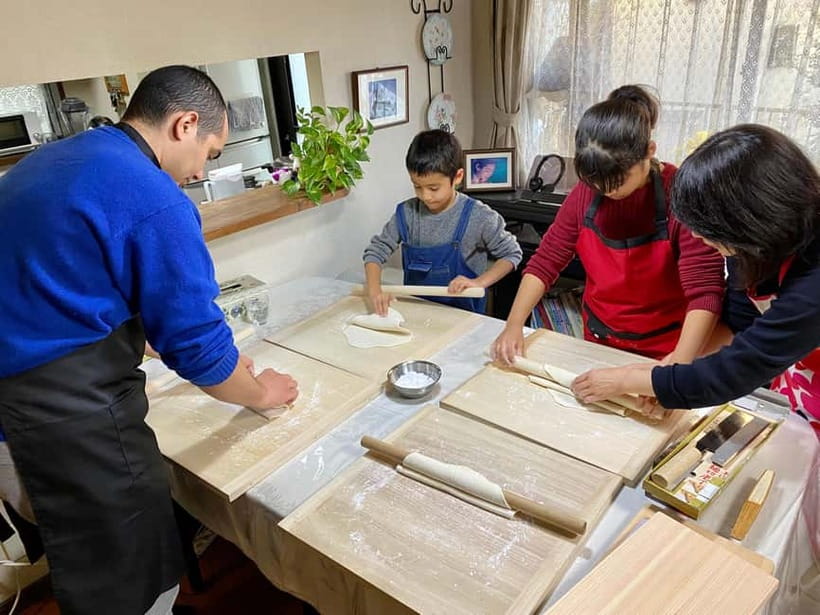
Logistics are simple. The host will pick you up from Higashimurayama station and ride you to the venue in Musashino. That matters because the class happens at a private home kitchen setting, where finding the exact place on your own can be more work than it should be.
Also, the group is small—limited to 4 participants—so you’re not stuck in a big bus-load scramble before you even start cooking. Once you arrive, you’ll be in the instructor’s kitchen space, surrounded by the tools used for this noodle style.
One practical note: the public transportation fee to the station isn’t included. If you’re coming from central Tokyo, just budget that last train ride, and you’ll be fine.
Inside Izumi’s home kitchen: utensils, apron, and small-group pace
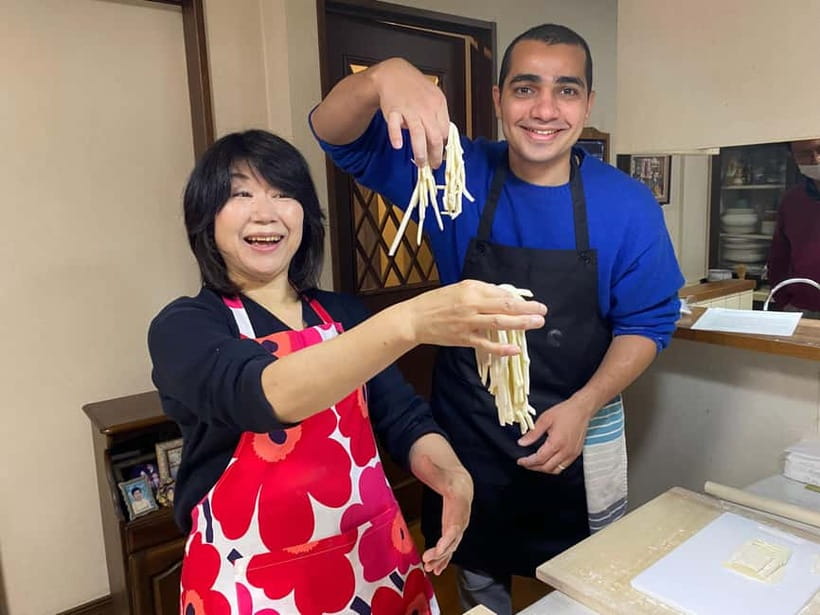
This isn’t a cooking studio. You’re learning in the kitchen of an ordinary Japanese house, which changes the feel. Instead of a theatrical setup, you get real-work kitchen tools and a more relaxed pace.
You’re provided with:
- An apron
- All ingredients and kitchenware
- Recipes you can take home
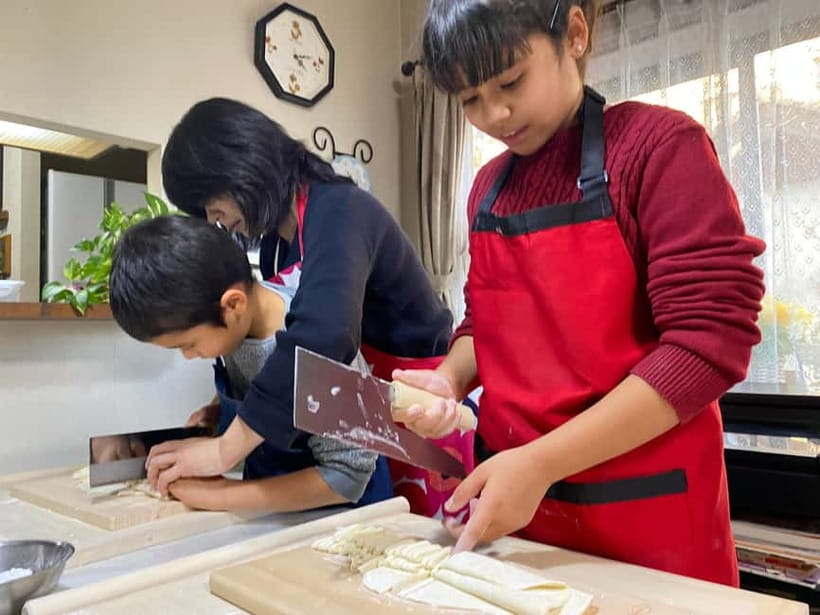
The class also starts with equipment that’s specific to udon making. You’ll use a large wooden kneading board, a long rolling pin, and a large bowl for shaping the noodles. For cutting, there’s a special udon knife. None of that is “museum gear”—it’s the real workflow for rolling dough into sheets and cutting noodles cleanly.
If you learn better with personal coaching, you’ll like the small group setup. With only up to four people, there’s room for correction and follow-up questions without the instructor having to rush down a checklist.
From dough to noodles: what foot-kneading teaches you
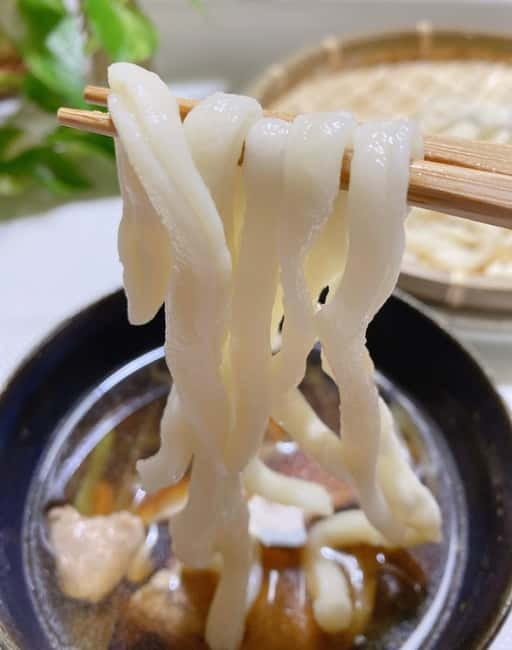
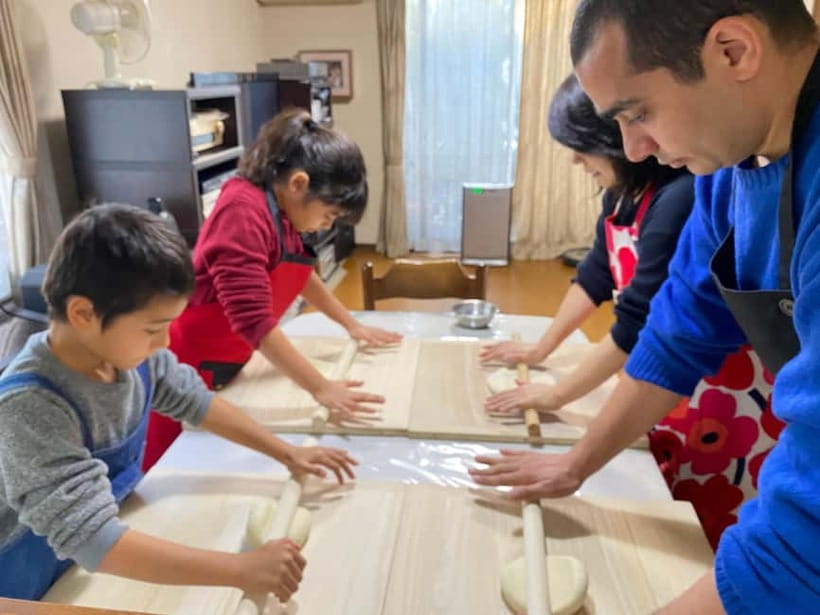
The process starts with making udon dough. Then comes the signature part: stepping on the dough with your feet. This isn’t a stunt for photos; it’s part of how the dough gets worked so it becomes stretchy and manageable for rolling.
Expect an active, slightly goofy sequence:
- Form dough in the way you’re shown.
- Knead it using the foot method.
- Roll it into a dough sheet.
- Cut it into noodles using the proper knife.
That rolling and cutting step is where you’ll see the difference between doing this once and doing it the “right way.” The dough sheet needs to be rolled evenly, and the cutting needs consistency so your noodles cook similarly.
If you’re thinking, Will I mess it up?—yes, you might at first. But that’s the point. You’re not just tasting food; you’re learning the technique. And because you make your own udon, you get real feedback on what works.
A couple of small tips to keep in mind for a smoother experience:
- Wear footwear you’re comfortable moving in, since you’ll be using your feet for kneading.
- Pay attention to how the instructor positions your hands and body. Balance affects control, even if you’re focused on the dough.
Dashi basics: the stock behind so much Japanese cooking
After the noodle dough work, you shift to dashi, a key Japanese stock used across countless dishes. This part is valuable even if you never plan to make udon again, because dashi is one of those foundations that changes everything you cook.
You’ll learn how to prepare the stock, then you’ll use it to make a soup that’s commonly served as a dipping sauce for noodles. In this class, that soup includes pork, and it’s cooked with the dashi flavor as the base.
Why this matters: a lot of Japanese home-cooking skill is about balance. Dashi isn’t just “broth.” It’s the backbone that makes umami feel clean instead of heavy.
If you enjoy learning core techniques (not just recipes), the dashi lesson is the part that can keep paying off long after the class ends.






Pork soup dipping sauce: hot, savory, and totally practical
Once the dashi is ready, you’ll prepare a pork soup that you’ll use with your noodles. The idea isn’t to make something complicated. It’s to learn a flavor pairing and a serving style that shows up again and again in Japanese noodle meals.
And here’s the clever part of the whole setup: you’ll eat freshly made cold noodles with rich hot pork soup for dipping. That temperature contrast is the “aha” moment.
Cold noodles help the wheat flavor taste crisp and clean. Hot soup brings the depth and comfort. Together, they make a meal that feels both simple and deeply satisfying. It’s the kind of contrast that makes Japanese cooking feel thoughtful without being fussy.
The meal: your udon, your outcome
The reward comes right after you finish cutting and shaping your noodles. You’ll sit down and eat your own Musashino udon with the dipping soup you helped make.
This is one of those experiences where you realize why technique matters. When noodles are freshly made and cut with intent, they don’t just taste good. They feel different—chewier, more alive, and harder to compare to store-bought versions.
The contrast with the soup also keeps you from feeling like you’re just eating “the same flavor three ways.” You get to experience how broth and noodle texture interact.
If you’re worried about portion size: you’ll get a full meal experience, not a tiny sampling. You’re cooking enough to serve yourself, and the class is designed so you actually finish what you make.
Matcha and wagashi tea ceremony, casually done
After the cooking portion, there’s time for a casual Japanese tea ceremony. You’ll enjoy matcha with wagashi, traditional Japanese sweets.
This tea break isn’t a separate “tourist add-on.” It’s a reset after kneading dough and working with hot soup. It also gives you a chance to slow down, digest what you just learned, and try the sweets that are meant to pair with tea.
One small thing that can add to the mood: the room can feel lively, with music playing in the background—one class experience included tunes ranging from Queen to Fuji Kaze. Not every session will be identical, but the atmosphere is friendly and relaxed, not quiet-and-formal.
Vegetarian and vegan udon lessons (optional)
If you don’t eat meat, you’re not stuck. Vegetarian lessons are optionally available, and you can request a meat-free approach.
The key practical move is to tell the organizer in advance if you follow a vegetarian or vegan diet. Dashi and soup ingredients can vary, and the class includes both the stock and a pork soup option. So you’ll want to confirm what adaptation is possible for your diet before the day arrives.
Even if you’re not vegetarian, this option can still be useful. It can show how Japanese umami building works beyond pork-based soup, which is a helpful skill to learn.
Price and value: is $70 worth it?
At $70 per person for about 150 minutes, this isn’t a budget activity. But it also isn’t just “pay for food.” You’re paying for:
- A small-group, home-kitchen setting
- Your own udon-making session with real tools
- Dashi instruction
- A meal built from what you made
- A matcha and wagashi tea moment
- Recipes to take home
- A provided apron
- Pickup from Higashimurayama station
For me, the value hinges on what you want from the day. If you like classes where you actively do the work—knead, roll, cut, cook—then the price starts to feel fair. You’re getting skills, not just tasting.
If you prefer passive experiences (watching cooking is enough), you might find it expensive compared to a simple meal. But if you enjoy learning and don’t mind getting a little hands-on (and foot-on), this price buys a lot of participation.
Food allergies and what to tell the host
The class includes instructions and notes to share allergies in advance. If you have any dietary restrictions or cannot eat certain ingredients, tell the host ahead of time. This is especially important because dashi and the soup components can include specific ingredients.
In practice, sending a quick message with your allergy and what you avoid will help the instructor adapt safely. That also reduces stress for you on the day—because you’ll already know you can eat what’s prepared for your session.
Who should book this foot-kneaded udon class?
Book it if you want a genuinely hands-on food lesson that feels local. This is especially good for:
- First-time cooking class students who want clear steps and a friendly tone
- Food lovers who want to learn dashi, not just eat noodles
- People who enjoy “active” learning, including foot-kneading
- Vegetarians who are open to asking for the optional lesson and planning ahead
You might skip it if you don’t want to knead dough by foot or if you know you’ll feel stressed by a home-kitchen setup.
Should you book? My decision guide
If you’re the type who remembers what a dish feels like when you make it yourself, this class is an easy yes. The biggest reason is the combination: Musashino udon technique + dashi foundation + a meal that matches the work you did, followed by matcha and wagashi.
Before you book, check one thing: whether you’re comfortable with the foot-kneading portion. If that sounds like fun instead of a hassle, you’ll likely have a great time and come away with skills you can reuse.
If you’re traveling with limited time, this is also a nice one because it’s only 2.5 hours. You won’t need half a day to fit it into a Tokyo plan.
FAQ
How long is the udon class?
The experience lasts 150 minutes (about 2.5 hours).
Where does the class take place?
It’s held in Musashino, a suburb in West Tokyo (Honshu, Japan). The host provides a pickup from Higashimurayama station to the venue.
What’s the group size?
It’s a small group limited to 4 participants.
What will I make during the class?
You’ll make Musashino udon noodles, including making the dough, foot-kneading, rolling the dough sheet, and cutting the noodles. You’ll also learn to make dashi and prepare a pork soup that’s used as a dipping sauce.
Does the experience include matcha and wagashi?
Yes. After the meal, you’ll have a casual Japanese tea ceremony with matcha and wagashi.
What languages is the instructor speaking?
The instructor teaches in English and Japanese.
Is there a vegetarian option?
Vegetarian lessons are optionally available. You should let the host know in advance if you need a vegetarian (or vegan) lesson.
Do I need to tell the host about allergies?
Yes. Please inform the host in advance about any allergies or ingredients you cannot eat.
What are the booking terms?
You can cancel up to 24 hours in advance for a full refund. You can also reserve now and pay later (pay nothing today).