REVIEW · TOKYO
Tokyo: Sumo Morning Practice Viewing Tour at a Real Stable
Book on Viator →Operated by Local Guide Stars · Bookable on Viator
Sumo feels like a secret world. Get special access to a working stable and see morning practice up close, with time for photos and straight-from-the-source explanations of sumo culture.
I especially loved having a guide explain the rules and rituals as you go. It turns what could be just watching muscle and noise into a real understanding of what matters in the ring and the training culture around it.
One thing to consider: this is practice, not a big show. You’ll still see plenty, but the pace is calmer than a stadium bout, and the early morning start may be tough.
In This Review
- Key things you’ll notice
- Why a real Tokyo sumo morning practice beats a staged show
- Getting there at 8:30 am: simple, but plan for groggy legs
- The on-site experience: rules, rituals, and watching how they train
- Photos with sumo wrestlers: what you should expect (and what you shouldn’t)
- The guide makes or breaks it: Tomo, Mao, and the rule-by-rule flow
- How the 2 hours work: watching time, not waiting time
- Price and value: $118.92 for access you can’t DIY
- Who should book this sumo morning practice tour
- Possible drawbacks to keep your expectations realistic
- Should you book it? My decision checklist
- FAQ
- What is the duration of the Tokyo sumo morning practice viewing tour?
- What time does the tour start?
- Where is the meeting point?
- Do I get a mobile ticket?
- Can I take photos with sumo wrestlers?
- What group size should I expect?
- What is the cancellation policy for a full refund?
Key things you’ll notice
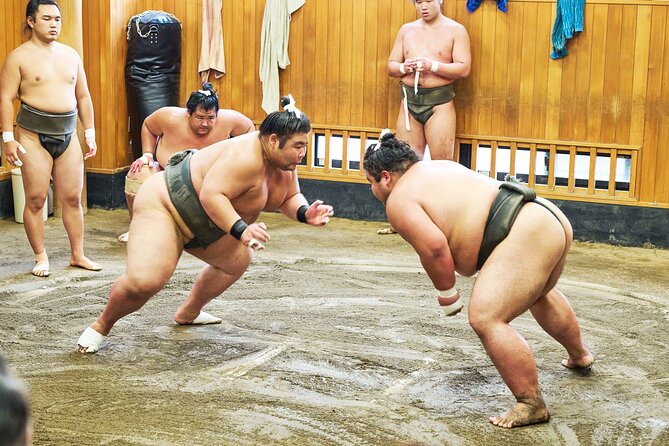
- A real working stable in Tokyo, with special access to watch morning training
- 1.5 hours of practice time, so you get more than a quick peek
- Photo opportunities with sumo wrestlers, which is rare for most visitors
- Rule-and-ritual guidance while you watch, so you’re not guessing
- A quiet training environment, where questions are handled without disrupting practice
- Small-ish group control (up to 50 people) for a more orderly experience
Why a real Tokyo sumo morning practice beats a staged show
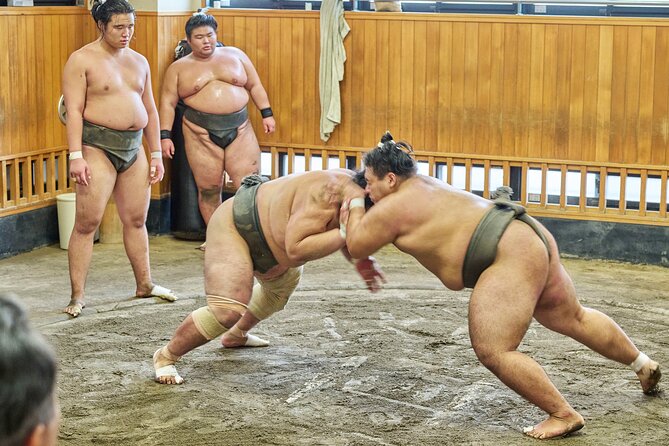
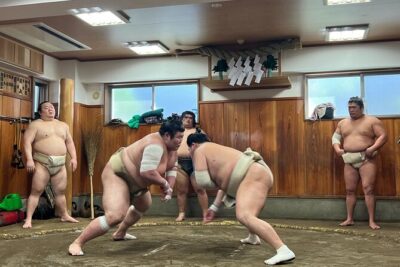
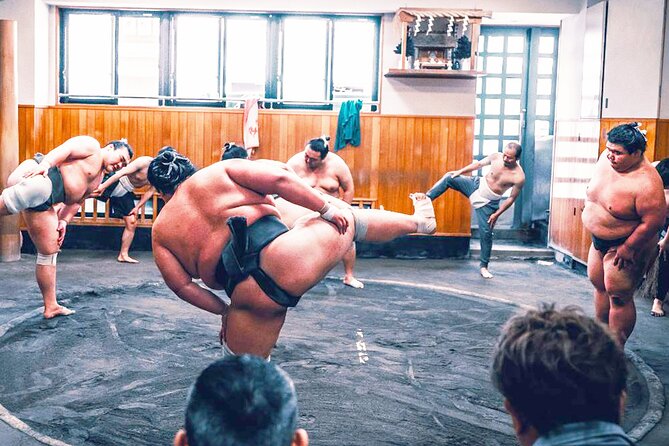
Tokyo has plenty of sumo-themed experiences. This one is different because it focuses on the morning routine at an actual training stable. That matters, because sumo training is where the discipline shows. You’re watching athletes do the work that shapes how they compete later.
I like how the format supports your curiosity. You don’t need to arrive with a study guide and a head full of terminology. The guide steps in with clear explanations of what you’re seeing—rules, traditions, and the reasons behind common training elements.
And yes, you’ll still get the fun part: you can take photos with the wrestlers. That’s not just a souvenir moment. It makes the whole thing feel more human, like you’re meeting people instead of watching legends from a distance.
You can also read our reviews of more tours and experiences in Tokyo
Getting there at 8:30 am: simple, but plan for groggy legs
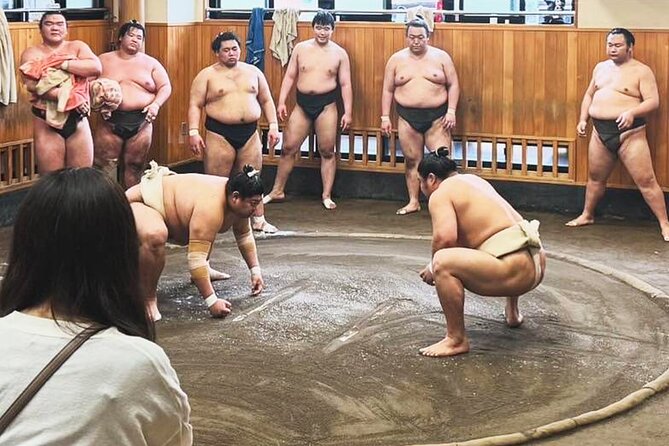
The tour starts at 8:30 am, meeting at Kiyosumi-shirakawa Station (noted as 1-chōme-6-13 in Koto City). That early start is the trade-off for authentic training. Sumo practice doesn’t wait for your sleep schedule.
The good news is that the meeting point is described as near public transportation. You should be able to get there without a complicated transfer plan. Still, since this is an early-morning activity, I recommend building a small buffer into your plan—use the extra time to get oriented and avoid showing up rushed.
The session runs about 2 hours total. Most of that time is actually spent watching training (about 1 hour 30 minutes), which is what you came for.
The on-site experience: rules, rituals, and watching how they train
Once you arrive, the real value kicks in. You’re not just observing from the edges. You’re guided through what’s happening so your attention has something to land on.
During sumo training, the atmosphere can be unusually strict about quiet. One of the standout details from the experience is that training time is treated seriously. People aren’t meant to talk during the session, and that changes how you experience the stable.
That’s why the guide’s role becomes extra important. The guide explains the sumo rules and cultural rituals while you’re there, so you can follow along even if you’re seeing customs that don’t make sense on first glance.
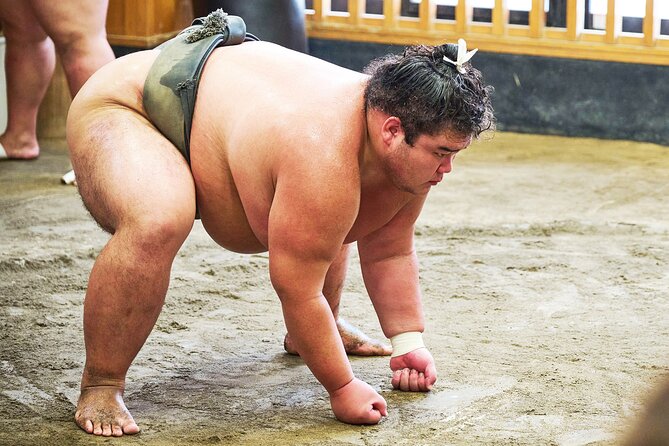
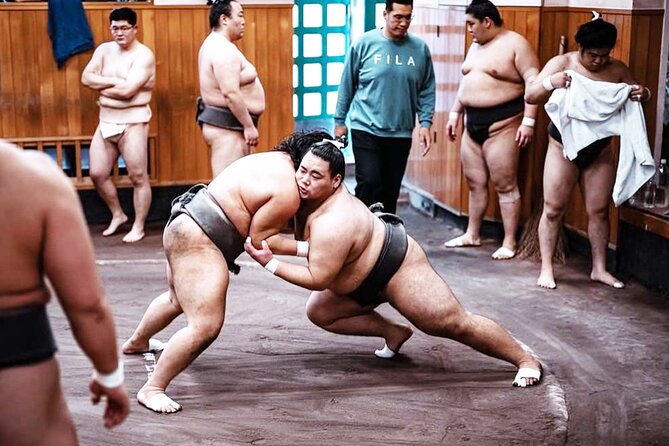
If you’ve only ever watched televised bouts, you might notice something: training behavior often looks slower, more repetitive, and more intentional than you expect. The goal isn’t drama. The goal is technique, timing, strength work, and conditioning—plus the daily seriousness of the lifestyle.
Photos with sumo wrestlers: what you should expect (and what you shouldn’t)
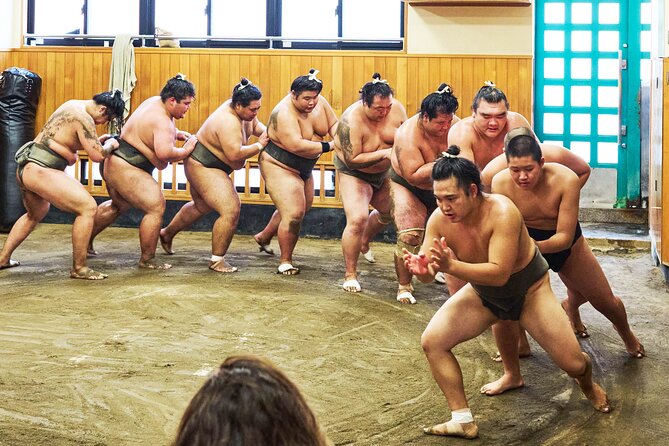
Many experiences promise photos, then quietly restrict them in a way that leaves you frustrated. Here, the experience explicitly includes the opportunity to take photos with the wrestlers. That’s a big deal for anyone who wants more than memories from behind glass.
The key expectation to keep realistic is the setting. This is a training stable, and training runs on strict timing and rules. So photos aren’t likely to feel like a theme-park meet-and-greet.
In fact, one of the best practical tips you’ll take from the experience is how questions and interaction are handled around the training itself. In one example shared from the experience, the guide created a WhatsApp group so participants could ask questions without speaking during the session. That’s a clever way to keep the stable calm while still giving you answers.
Bottom line: your photo moment should feel respectful and brief. Plan to enjoy it, then go back to watching what’s happening between the moments.
The guide makes or breaks it: Tomo, Mao, and the rule-by-rule flow
A major reason this tour earns such high marks is the human factor—especially how the guide explains what you’re seeing.
Guides named in the experience include Tomo and Mao. What stands out is their willingness to go beyond the basics. One guide is praised for answering lots of questions and even suggesting great meal options afterward. Another is noted for providing solid background so the experience feels understandable, not just impressive.
When a guide truly explains the culture—why certain rituals exist, what different actions mean, and what to watch for—you spend your time better. Instead of thinking, I wonder what they’re doing now, you start thinking, Oh, that’s part of the drill, and here’s why.
And because the session is morning practice, your guide’s pacing helps you connect the dots quickly. You get the essentials fast, so the rest of the session feels like it clicks rather than drifts.






How the 2 hours work: watching time, not waiting time
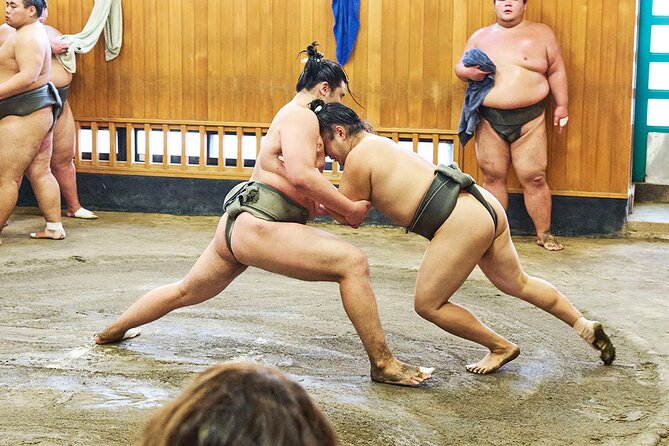
This tour is built around a clear promise: rare access and a meaningful viewing window. That’s why the timing feels right.
You’ll spend about 1.5 hours observing training, with the rest of the time used to get from the meeting point and settle in. There aren’t a bunch of extra stops or long transitions. The value comes from being present during the training itself.
The group size has a cap of 50 travelers. That’s not tiny, so don’t expect full privacy. But it’s also not the giant scale where you lose the connection to the guide. You should still be able to follow explanations and take photos during the allowed windows.
Also, because it’s described as something most travelers can participate in, it’s a solid option if you’re generally comfortable with standing and viewing in a structured setting. If you have specific mobility needs, it’s worth checking directly with the provider before booking, since no detailed accessibility notes are given here.
Price and value: $118.92 for access you can’t DIY
At $118.92 per person, this isn’t the cheapest thing on your Tokyo list. But I think the price makes sense if—and only if—you care about authentic access.
Here’s the value equation that matters:
- You’re getting access to a real training stable, not a museum-style performance.
- You’re watching real practice, not a staged routine designed for visitors.
- You’re getting guided context so you understand what you’re seeing.
- You’re included for photos, which is usually the most restrictive part of these experiences.
If you tried to replicate this on your own, you’d face time sinks and uncertainty. You’d have to figure out where training happens, how to gain entry, and what rules apply to observers. That’s exactly the friction this tour removes.
So I’d call this “fairly priced” for the kind of access you’re buying. If your goal is just a quick taste of sumo culture, you might feel it’s expensive. If your goal is a front-row look at training with guidance, it feels closer to worth it.
Who should book this sumo morning practice tour
This tour suits you best if you want:
- A behind-the-scenes view of sumo, focused on training rather than a performance
- A guide-led experience so you can understand rules, rituals, and what to watch
- A photo chance that feels connected to the real setting, not staged tourism
It’s also a strong fit for people who like authenticity more than flashy spectacle. One of the consistent messages is that the experience feels intimate and not overly touristy. That’s the whole point: you’re learning what a normal training morning looks like from the inside.
If you’re traveling with kids, this may work well too—especially because the guide’s instructions about staying quiet during practice create a clear, structured experience. Just remember: early mornings and quiet rules are part of the deal.
Possible drawbacks to keep your expectations realistic
Even though the reviews are extremely positive, there are a few reasonable considerations that affect comfort and expectations.
- It’s training, not a bout. That means less adrenaline and fewer big dramatic moments than a tournament day. The value is technique and lifestyle, not constant high-impact action.
- Photo and interaction are likely limited by rules. You get photos, but it won’t be a free-for-all.
- It starts early. If you’re a late-sleeper, plan your week around this morning.
If those sound fine, you’ll likely love it.
Should you book it? My decision checklist
Book this tour if you answer yes to most of these:
- You want real access to a working stable, not a sumo show built for visitors.
- You’d rather understand the sport than simply watch it.
- You like guided experiences that explain traditions as you go.
- You care about capturing photos in a setting that feels legitimate and respectful.
Skip it (or think twice) if:
- You mainly want tournament-style drama.
- You hate early mornings.
- You’re looking for a private, one-on-one experience.
FAQ
What is the duration of the Tokyo sumo morning practice viewing tour?
The tour lasts about 2 hours in total, with about 1 hour 30 minutes spent observing training.
What time does the tour start?
The start time is 8:30 am.
Where is the meeting point?
You meet at Kiyosumi-shirakawa Station (listed as 1-chōme-6-13 Shirakawa, Koto City, Tokyo 135-0021, Japan).
Do I get a mobile ticket?
Yes. The experience includes a mobile ticket.
Can I take photos with sumo wrestlers?
Yes. The experience includes the opportunity to take photos with the sumo wrestlers.
What group size should I expect?
The maximum group size is 50 travelers.
What is the cancellation policy for a full refund?
You can cancel for a full refund up to 24 hours before the experience’s start time. If you cancel less than 24 hours before, the amount paid won’t be refunded.