REVIEW · TOKYO
Tokyo: Sumo Morning Practice -Stable Visit Tour with a Guide
Book on Viator →Operated by gotcha · Bookable on Viator
Sumo sounds loud even before you see it. At this Tokyo morning practice, I love how breathing and facial expressions stay visible from a distance, and I love that you get a real chance to take photos and ask a question at the end. One thing to consider: the stable has strict rules (no flash/video and no food inside), so you’ll want to plan ahead and follow them.
This is also a tour that runs like a small, calm operation. The group stays capped at 10 people, and the guide sets expectations early so you can watch the Ikazuchi Sumo Stable training without disrupting the morning focus.
In This Review
- Key things to know before you go
- Entering Ikazuchi Sumo Stable for a Tokyo morning practice
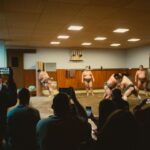
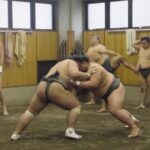
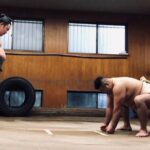
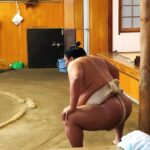
- What you’ll actually see: breathing, facial strain, and hard collisions
- The coach voice, and why it’s not just for drama
- Photo time and question-and-answer: your chance to connect
- Stable rules: no flash, no food, and keep conversation tight
- Value for $82: why this morning format beats just arena watching
- Book it or skip it: best fit for your Tokyo schedule
- FAQ
- What time does the Tokyo sumo morning practice tour start?
- Where is the meeting point for the tour?
- How long is the tour?
- Is a mobile ticket provided?
- Can I take video or use flash photography inside the stable?
- Is food allowed during the morning practice?
- What is the cancellation policy?
Key things to know before you go
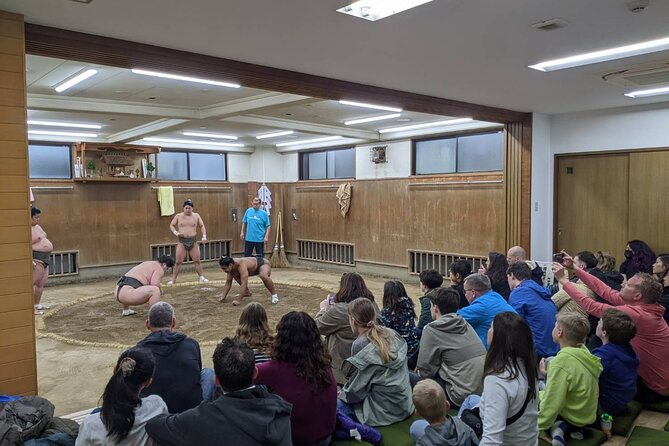
- Ikazuchi Sumo Stable training up close: You watch morning work close to the action, not from some distant arena seat.
- Sensory details matter here: You’ll notice breathing, facial strain, and the sound of bodies colliding.
- Coach energy is part of the experience: His strong, harsh-sounding voice may surprise you, but it’s tied to trust with the rikishi.
- Photo time is real, but rules are strict: No flash; video and flash photography are prohibited inside.
- Questions happen at the end: You can ask your guide or the people there questions after practice.
Entering Ikazuchi Sumo Stable for a Tokyo morning practice
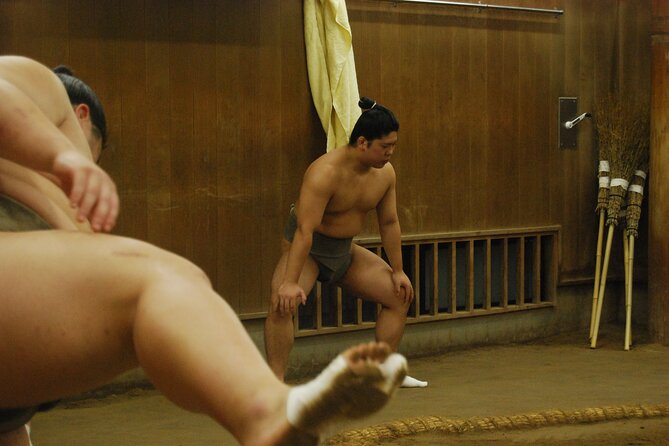
The tour starts at 8:30 am in Oshiage (Sumida City), at the Water section, 1-chōme-1-1 Oshiage, Sumida City, Tokyo 131-0045. Expect it to feel like a quick handoff from “tour mode” to “practice mode.” You’ll be watching a real stable routine, not a staged show.
The timing is part of the value. Morning practice is when sumo wrestlers and their apprentices sharpen their technique, preserve the sport’s traditions, and do the work that keeps skills from slipping. Since your visit runs about 2 hours total, you get enough time to see training in motion and still have a clear, guided flow for photos and questions.
Logistics-wise, the meeting point is near public transportation, so you’re not stuck with a long walk just to start your day. And because the group is small, you won’t feel packed in while you try to watch what matters: the practice itself.
You can also read our reviews of more guided tours in Tokyo



What you’ll actually see: breathing, facial strain, and hard collisions
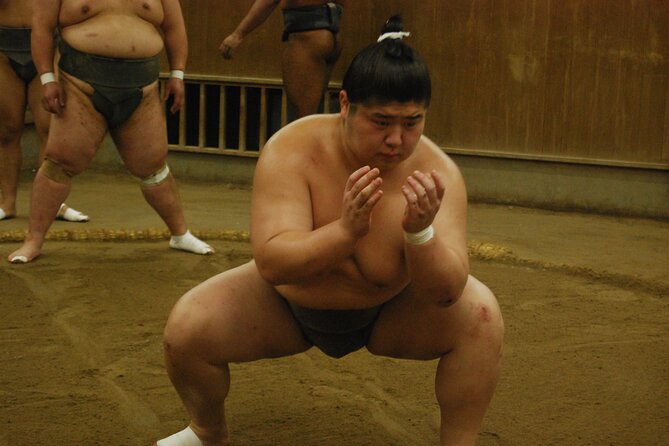
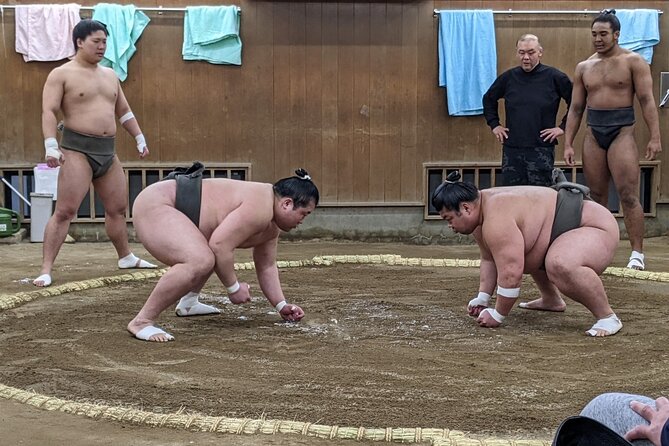
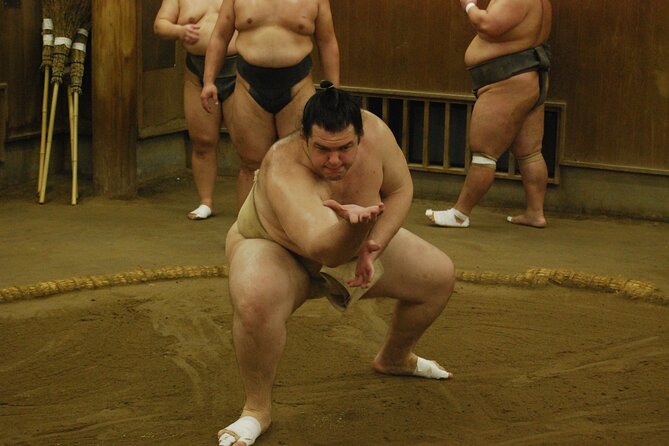
This tour’s big selling point is closeness. It’s not just “sumo exists and you see wrestlers.” You get a view where you can notice breathing and facial expressions from a distance. That’s the difference between seeing sumo as sport and seeing it as physical labor.
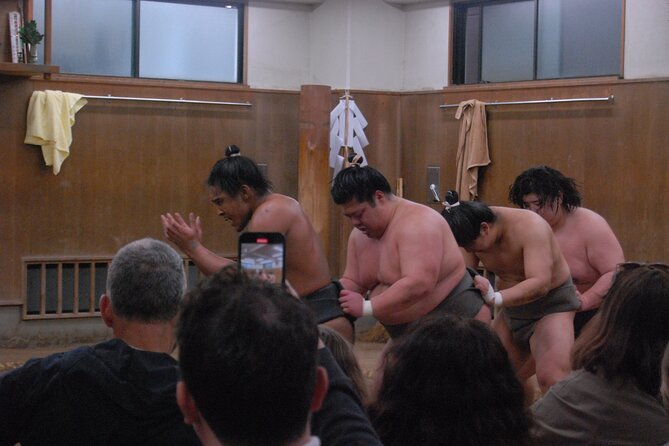
You’ll also hear what sumo feels like. During practice, there are tense moments where bodies move in tight bursts, and you catch the sound of collisions and the rhythm of training. It’s a more grounded, more human experience than the polished look you get from big arenas.
Another part I like is that you’re watching people in their apprenticeship stage, not only the top-level showpieces. The apprentices practicing alongside the rikishi helps you understand that sumo is taught and passed down, day after day. That makes the morning feel less like entertainment and more like work with purpose.
The coach voice, and why it’s not just for drama
The tour description warns you about one thing: the coach’s voice can sound strong and harsh. That can feel jarring at first if you’re used to tour guides speaking in a friendly tone. But the tour framing makes a clear point: the voice like that is connected to the trust built with the students and the rikishi who train with him.
So when you hear that direct, forceful calling, don’t assume it’s rude or chaotic. Within the context of a stable, it’s part of how the routine is kept sharp and how attention stays locked on technique and discipline. You’re watching an environment where correction is immediate and focus is non-negotiable.
This also affects your own behavior as a visitor. The stable’s concentration matters. If you want your experience to feel respectful—and to let the people training keep their mental rhythm—go into it ready to be quiet and attentive. That’s when the whole visit clicks.
Photo time and question-and-answer: your chance to connect
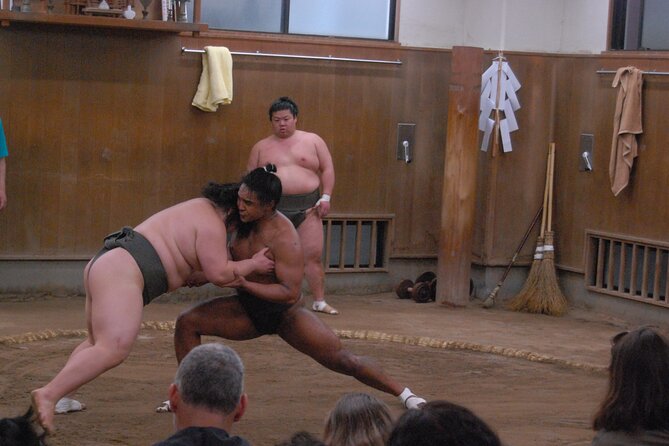
You’ll get an hour of training time, then a photo segment, and then a chance to ask a question. That structure is smart. Watching practice for a full stretch helps you build context before you start asking stuff, and then the question time helps you convert what you saw into understanding.
The photo part is also real. You can take photos with the sumo wrestlers after training. Just note the rules: video and flash photography are prohibited inside the stable, while photos without flash are fine. That means you should turn off video recording and set your camera so it won’t pop a flash unexpectedly.
It’s also worth thinking about what questions you bring. Since you’ll likely get only one structured window, focus on what you genuinely want to understand, like what you’re seeing in training and how the stable routine works. Asking good, simple questions makes the Q&A time more useful for you and less disruptive for everyone around.
Stable rules: no flash, no food, and keep conversation tight
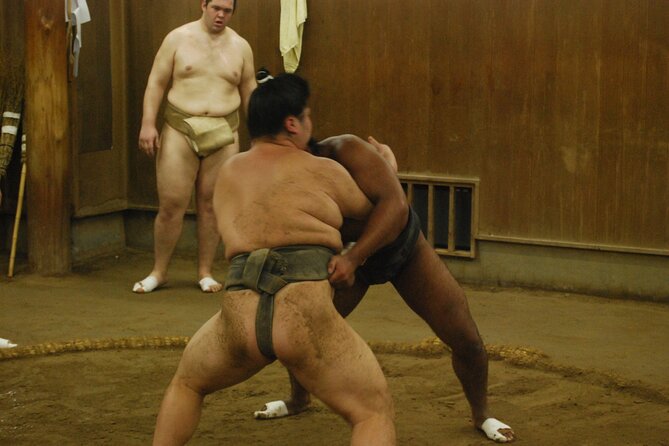
This tour is built around practice concentration, so the rules are not optional fine print. They’re the reason you get to watch what you’re there to see.
Here’s what you need to plan for:
- No video and no flash photography inside the stable.
- No private conversations during the tour so the rikishi and apprentices can keep their focus.
- No snacks, bread, rice balls, or other food during morning practice.
- Bring your own drinks with lids.
This is one of those experiences where small planning saves you from awkward moments. If you’re the type who likes to snack on a morning tour, swap that habit for a drink you can seal up. You’ll also want to use a camera setting you can control fast, so you don’t accidentally try to shoot with flash.
Also, since your tour is in a working stable, treat it like you’re stepping into a real training space. Keep your movements tidy. Keep voices low. And if you see signs of strict silence during parts of the session, follow that lead.
You can also read our reviews of more tours and experiences in Tokyo
Value for $82: why this morning format beats just arena watching
At $82, you might wonder what you’re really paying for. Here’s how the value shakes out based on what’s included:
- A tour guide
- A special brochure
- Training access with the organized format for watching practice and then doing photos/Q&A
The good news is that the details state the admission ticket is free. So in practical terms, your money is mostly buying the guide’s timing, coordination, and the chance to fit your visit into a stable’s real routine instead of trying to arrange everything on your own.
The bigger value is sensory. At the official Kokugikan games, you usually see plenty of action, but you don’t get the same close feel for breathing, facial strain, and body impacts. This is closer to the raw, in-the-moment side of training. If you care about understanding sumo as a daily discipline, not just a match outcome, this morning stable visit is a smart use of time.
And because the group is small, the experience stays more watchable. When you can see expressions and hear what’s happening without a wall of people blocking your view, you actually get something you can’t easily reproduce from an ordinary sightseeing stop.
Book it or skip it: best fit for your Tokyo schedule
I think this tour is a strong pick if you want a sumo experience that feels lived-in. It’s especially good if you like structured access to a place that’s otherwise hard to experience as a normal visitor. You’ll also like the format if you want more than sightseeing: you’ll watch training, get photo time, and then have a chance to ask questions.
This also tends to work well with people who don’t want a huge day plan. About 2 hours is manageable, and the 8:30 am start is early enough to feel special without eating your whole morning.
You might want to skip it if you strongly dislike rule-heavy experiences or if you’re coming with expectations of lots of casual chatting. This visit runs on quiet concentration and clear boundaries. If that kind of environment doesn’t match how you travel, you may find it harder to relax into the experience.
Still, if you’re excited about seeing sumo as training—breath, strain, collisions, discipline—this is the kind of Tokyo morning that sticks with you.
FAQ
What time does the Tokyo sumo morning practice tour start?
It starts at 8:30 am.
Where is the meeting point for the tour?
The meeting point is Water section 1-chōme-1-1 Oshiage, Sumida City, Tokyo 131-0045, Japan.
How long is the tour?
The tour is about 2 hours total, with about 1 hour of training time.
Is a mobile ticket provided?
Yes, the tour uses a mobile ticket.
Can I take video or use flash photography inside the stable?
No. Video and flash photography are prohibited inside the sumo stable. Photos without flash are fine.
Is food allowed during the morning practice?
No. Snacks, bread, rice balls, and other food are not allowed during morning practice. You should bring your own drinks with lids.
What is the cancellation policy?
You can cancel for a full refund up to 24 hours before the experience start time. If you cancel less than 24 hours before, the amount paid isn’t refunded.