REVIEW · TOKYO
Samurai sword cutting experience
Book on GetYourGuide →Operated by 株式会社テイク · Bookable on GetYourGuide
Samurai sword practice is one part ritual, one part skill. You’ll step into iaido with traditional costume, calm greetings, and hands-on cutting with a real Japanese sword. What makes it special is the mix of mindset and technique, not just swinging metal around.
I especially like the structure: you start with mental unity and sword basics, then move into practice swings before you actually cut. I also like the fact that you use real gear, including old swords over 100 years old, plus rolled tatami mats for your cuts.
One consideration: this isn’t a casual photo stop. It’s not suitable for children under 14, pregnant women, wheelchair users, or people with visual impairments, and you should expect a real physical instruction session that asks you to follow timing and safety directions.
In This Review
- Key things you’ll notice right away
- What Samurai Sword Cutting as Iaido Feels Like
- Meeting at Samurai Theater Tokyo and what to expect on arrival
- Costume change, greetings, and mental unity (the real start)
- Sword explanation and practice swings before the cut
- The cutting moment: tatami mats twice, timing on your side
- Real Japanese swords over 100 years old, plus armor on display
- Photos, videos, and your commemorative moment
- Price and value: is $93 per person fair?
- Who should book (and who should skip it)
- Practical tips so your tatami cuts land right
- Should you book this Samurai sword cutting experience?
- FAQ
- Where is the meeting point for the Samurai sword cutting experience?
- How much does the experience cost?
- What languages are available during the session?
- What do you do during the experience?
- What type of sword will you use?
- Is practice clothing provided?
- Do you get to cut tatami mats yourself?
- Is photography and video included?
- Who is this experience not suitable for?
- Can I cancel and get a full refund?
Key things you’ll notice right away

- You change into traditional iaido clothing, so the session feels like more than a demo
- Greetings and meditation-style focus are part of the flow, not a side note
- Real swords (100+ years old) are used, along with practice tools and an imitation blade
- You cut rolled tatami mats twice, and you can choose the timing during the session
- Battoushi Do instruction is provided by a real teacher, with a full demonstration
- Armor on display helps you feel the age and weight of the samurai era
What Samurai Sword Cutting as Iaido Feels Like
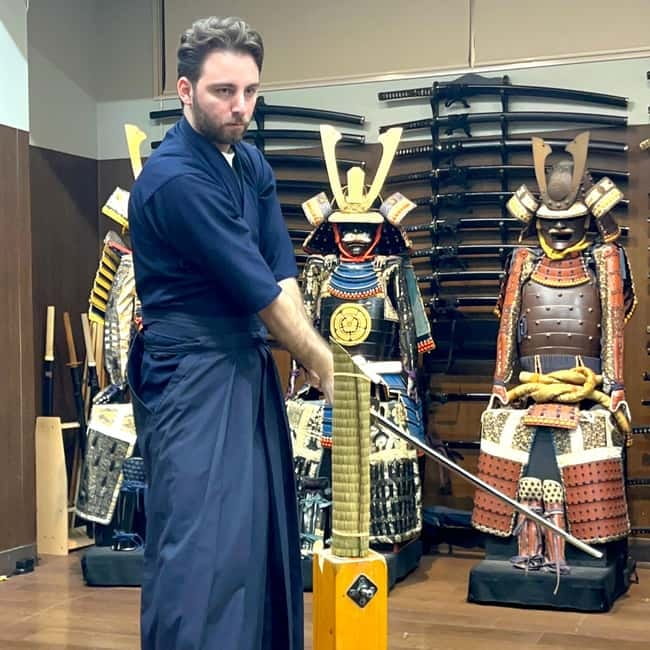
Iaido isn’t about random sword swinging. It’s about controlled movement, calm focus, and doing the cut with intent. In this experience, you’ll see how that mindset shows up step by step, from the first greetings to the moment your blade meets the tatami.
You’ll start by changing into iaido clothing, which matters more than it sounds. When you wear the practice suit, your body naturally shifts into the posture and pace the instructor is teaching. That makes it easier to understand why samurai sword practice is as much about discipline as it is about technique.
The session also leans into the spiritual side of practice. You’ll do greetings and mental unification as part of the routine, so you’re not just learning mechanics. You’re learning how focus is supposed to feel while you’re preparing a cut.
You can also read our reviews of more tours and experiences in Tokyo.



Meeting at Samurai Theater Tokyo and what to expect on arrival
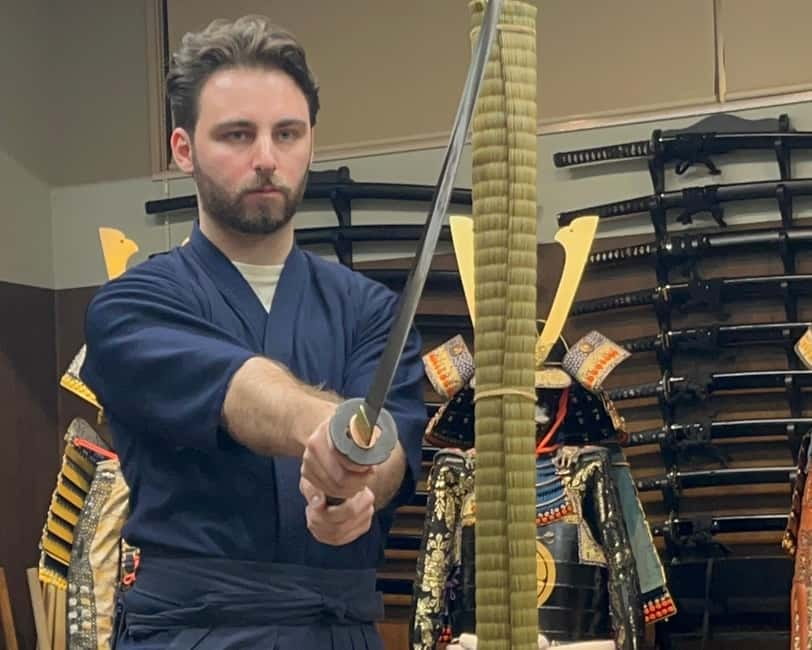
This activity starts back where you begin: search for Samurai Theater Tokyo in Google Maps. When you arrive, expect a guided check-in and then a smooth handoff into the costume and instruction flow.
Because the session includes switching gear, practicing swings, and then cutting a rolled tatami target, you’ll want to arrive on time so you don’t feel rushed during the early steps. The day moves from explanation to practice to demonstration to your own turns at the mat.
You’ll also have support in English and Japanese, which helps if you’re trying to understand the key ideas behind the movements rather than just copying them. If you have a question about timing, grip, or what you should focus on, this is the kind of class where the instructor can actually help.
Costume change, greetings, and mental unity (the real start)
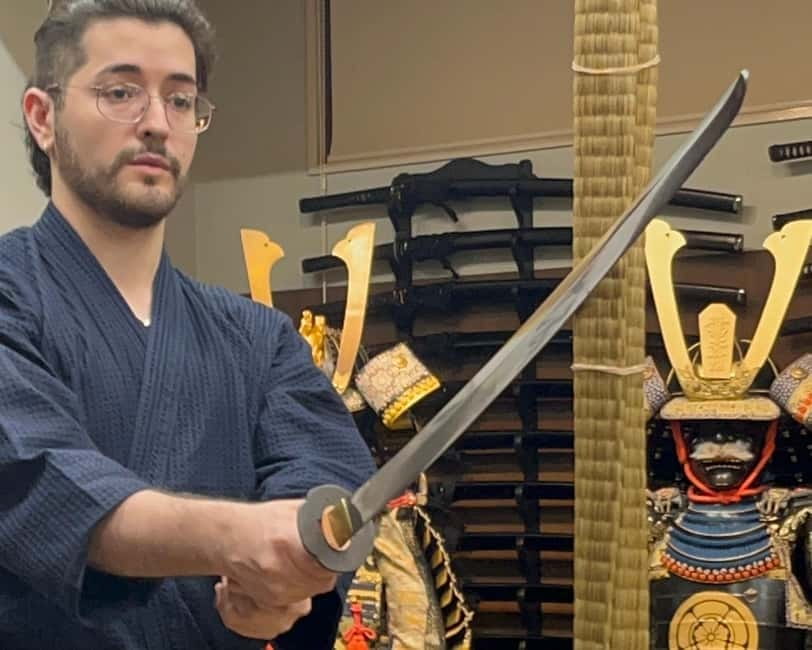
A lot of sword experiences skip the “how you’re supposed to be” part. Here, that part is built in.
First comes the traditional iaido costume change. Then you’ll get into the routine with greetings and mental unification. You’re not expected to have prior knowledge. The value is that you get guided through the steps that make iaido feel like a real practice tradition, not a stunt.
This mental section matters because it shapes your physical timing. When you’re calm and centered, the movements feel more precise. And when the instructor later explains the cutting approach, it lands better because you already felt the headspace you’re supposed to bring to the sword.
You’ll also have opportunities to watch the teacher, which helps you connect what you feel in your body with what the motion looks like when it’s done correctly.
Sword explanation and practice swings before the cut
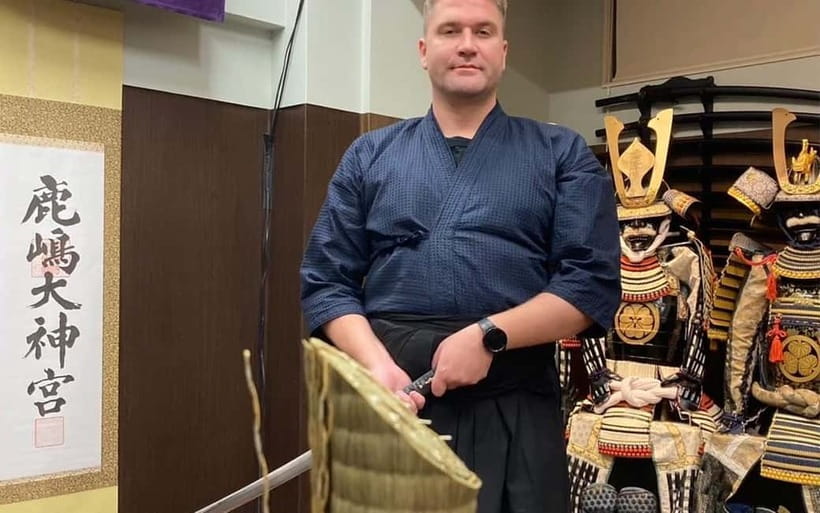
You’ll begin with a clear explanation of the Japanese sword and what you’re working with. That’s useful even if you’re new, because sword cutting is full of small details that affect safety and results—things like how to hold, how to move, and how to time the cut.
After the explanation, you’ll practice swinging. This is where you build your muscle memory and confidence. You won’t be dropped straight into the tatami without a learning phase.
They also include different tools: a practice sword and an imitation sword, so you can learn the motion pattern before switching to the real sword. This is one of the smartest parts of the session. It lets you learn without panic, then apply what you’ve practiced when it counts.
The cutting moment: tatami mats twice, timing on your side
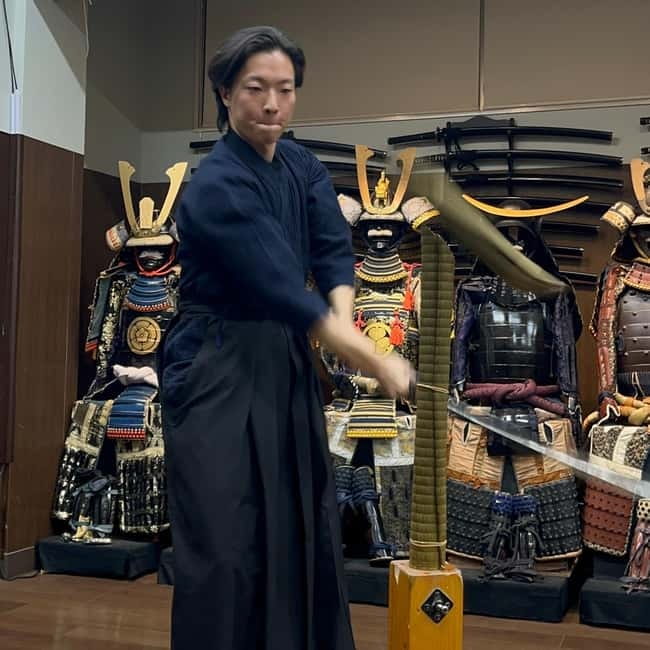
Here’s the heart of the experience: you’ll follow the instructor’s directions to cut the rolled tatami mats twice.
The key detail I appreciate is that you can cut at the timing you want. That doesn’t mean it’s “do anything.” It means the instructor sets the framework, and you control when you make your cut within that structure. That helps you feel ownership of the motion instead of just reacting.
Before your cut, you’ll watch the instructor’s demonstration. Seeing the teacher perform the movement first is not just for entertainment. It gives you a mental picture to aim for: posture, pace, and the moment the blade goes forward.
Then it’s your turn. You cut the tatami twice, and after that you’ll likely watch the teacher’s performance again, followed by more greetings and mental unification. That rhythm—do, watch, refine—is a proven learning pattern, even if you’re not thinking about it that way in the moment.






Real Japanese swords over 100 years old, plus armor on display
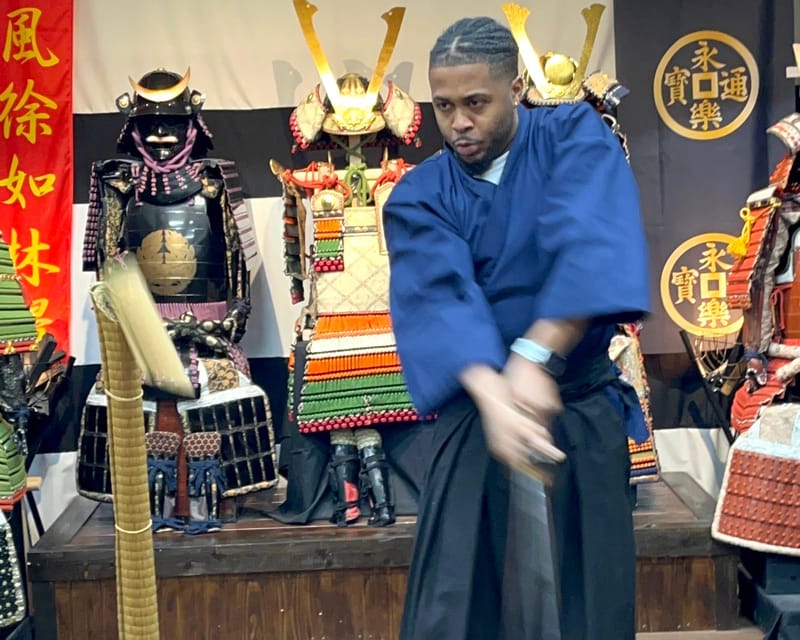
One of the most memorable parts is the gear and the setting.
You’ll use real Japanese swords that are more than 100 years old. That alone changes how you approach the practice. Even if you’re not a sword expert, handling a real blade (with guidance) makes the session feel serious. You’re not just playing with props.
You’ll also see a lot of armor on display, and that adds texture to the experience. It’s one thing to learn about samurai in abstract terms. Seeing armor helps you understand that this was heavy, crafted equipment made for real people in real roles, not a fantasy costume.
If you care about cultural atmosphere and not just the action, this part helps anchor the whole class.
Photos, videos, and your commemorative moment
You can take pictures and videos of yourself cutting the tatami if you wish, and photography is included in the experience.
After your cuts, you’ll also get a commemorative photo. That’s a nice touch because the session is short and very physical, so having a keepsake you can refer back to helps you remember the key details of what you practiced.
Practical tip: since you’re doing controlled cutting, don’t worry about getting the perfect shot while you’re focused on your movement. Let the instructor’s pacing guide you, and then capture afterward or during the moments the routine allows.
Price and value: is $93 per person fair?
At $93 per person, this isn’t a budget “try it once” activity. But it also isn’t just a generic show. The value comes from several things that add up:
- Instruction from a real teacher of Battoushi Do
- Use of real swords (over 100 years old), not only replicas
- A guided progression: sword explanation, practice swings, demonstration, then cutting
- Cutting for you, not only watching
- Tatami mats, practice clothing, and multiple training tools included
- Photography and video recording included
If what you want is a culture-and-craft lesson with real equipment and structured guidance, the price makes more sense. If you only want quick entertainment, you might feel it’s more structured and formal than you expected.
I’d call it fair pricing for a guided, hands-on class that includes real tools, real cutting, and real instruction—especially because the session includes both the mental and physical parts of iaido.
Who should book (and who should skip it)
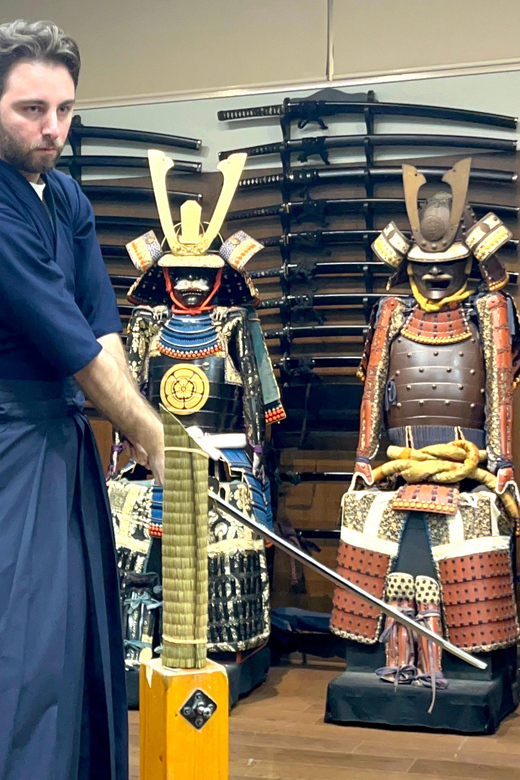
This works best for you if you want a hands-on iaido experience and you’re curious about samurai discipline. It’s also a good fit if you enjoy learning from a structured teacher, because you’ll get explanation, demonstration, and feedback-style learning through repeated practice.
It may not be the right match if you need step-by-step accessibility support, because it’s not suitable for wheelchair users and it isn’t suitable for people with visual impairments. It’s also not suitable for children under 14, or for pregnant women.
If you’re comfortable following safety directions, moving through a training routine, and taking part in a focused activity, you’ll probably enjoy the balance of spirituality, technique, and action.
Practical tips so your tatami cuts land right
You’ll get instruction, but a little prep makes a big difference.
- Treat it like a lesson, not a challenge. You’ll get the best results by following timing and posture cues.
- Ask questions during the session. If anything feels unclear—like how to focus or when to commit to the cut—this is your chance to get direct answers.
- Wear the provided practice suit confidently. The costume change is part of the method, so don’t try to “fight it” with your own gear.
- Use your timing. Since you can cut at the timing you want within the instructor’s guidance, don’t freeze. Commit when you’re ready.
- Plan for photos without rushing. Let the cutting sequence run first, then handle keepsakes.
The biggest win comes from staying present. When you stop thinking of it as “sword event” and start treating it as “practice with rules,” everything clicks faster.
Should you book this Samurai sword cutting experience?
Book it if you want a guided iaido-style sword practice where the experience includes costume, greetings, and mental focus, then moves into two guided tatami cuts using real tools. You’ll likely feel you got your money’s worth because the session is more than watching—it’s doing, with instruction from a real Battoushi Do teacher and access to real swords over 100 years old.
Skip it if you’re looking for a quick photo-op only, or if the activity doesn’t fit your needs due to the listed restrictions (age, pregnancy, wheelchair access, or visual impairment). In other words: choose it if you want the real practice vibe. Don’t choose it if you only want a light, passive experience.
FAQ
Where is the meeting point for the Samurai sword cutting experience?
The start point is the location you find by searching for Samurai Theater Tokyo on Google Maps. The activity ends back at the same meeting point.
How much does the experience cost?
The price is $93 per person.
What languages are available during the session?
The experience is available in English and Japanese.
What do you do during the experience?
You change into traditional iaido clothing, take part in greetings and mental unification, receive an explanation of the Japanese sword, practice swinging, watch the instructor demonstrate cutting, and then cut rolled tatami mats twice following the instructor’s instructions. You can also take photos and videos if you want, then do additional greetings and receive a commemorative photo.
What type of sword will you use?
You’ll use both training tools and real equipment. The experience includes an imitation sword and a real sword (real Japanese swords that are more than 100 years old).
Is practice clothing provided?
Yes. A practice suit is included.
Do you get to cut tatami mats yourself?
Yes. You’ll follow the instructor’s directions to cut the rolled tatami mats twice.
Is photography and video included?
Yes. Photography and video recording are included, and you can take pictures and videos of yourself cutting the tatami if you wish.
Who is this experience not suitable for?
It isn’t suitable for children under 14, pregnant women, wheelchair users, or visually impaired people.
Can I cancel and get a full refund?
You can cancel up to 24 hours in advance for a full refund.