Tokyo’s neon feels different when you know where to walk. This intimate 2-hour Shinjuku tour strings together the big-name nightlife corners and the quieter, older bits of the neighborhood—so you get the story, not just the sights. You’ll skip the map and follow a guide through Shinjuku’s maze, hitting alley life that big bus tours often can’t touch.
What I like most is the mix of worlds in one loop. You’ll get Kabukicho’s red-light district overview, then step into the low-key postwar bar lanes of Omoide Yokocho, and later slow down at Hanazono Shrine before ending at the tiny-bar lanes of Shinjuku Golden Gai. The other win is the guide. People highlighted guides like Haydn and Kane as especially engaging and quick to answer questions, plus they shared practical ideas for what to do next after the walk.
The one drawback to weigh is that this route includes nightlife areas, including a red-light district. If you want Shinjuku only at the postcard level, this tour might feel a little too real for your comfort.
In This Review
- Key highlights worth your attention
- Tokyo at 5 pm: Why this Shinjuku walk feels efficient
- Kabukicho orientation: getting the story behind the red lights
- Omoide Yokocho: the postwar alley bar lane that people actually remember
- Hanazono Shrine: a calm reset that makes Shinjuku feel human
- Golden Gai: tiny bars, old-school Tokyo energy, and the right way to look
- What you’re really paying for: value at $24 for a guided night loop
- The guides: why the human factor shows up in the details
- Logistics that keep the night easy
- Should you book this Shinjuku alleys tour?
- FAQ
- How long is the Shinjuku history and alley walking tour?
- What time does the tour start?
- Where does the tour meet?
- How much does it cost?
- What’s included in the tour price?
- Are food and drinks included?
- How big is the group?
- Can I cancel for a full refund?
Key highlights worth your attention
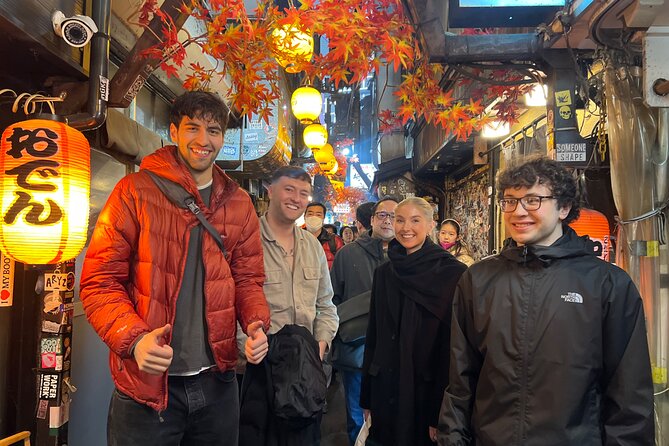
- Small group (max 15): easier questions and less crowd pressure on a tight walking route
- Off-the-main-street lanes: you’ll reach places that are hard to find on your own
- Night-to-spirit contrast: Kabukicho and Golden Gai, then a shrine stop to reset your head
- Tickets included for key stops: you don’t have to plan purchases across multiple locations
- Guide support with navigation: Shinjuku is big, and this helps you not waste time guessing
- Evening timing (5:00 pm): lets you see how the area looks when night energy kicks in
Tokyo at 5 pm: Why this Shinjuku walk feels efficient
Shinjuku is one of those places where you can spend hours going in circles and still miss the good corners. The best part of starting at 5:00 pm is that the neighborhood shifts quickly—shop lights and signage start to matter more than daytime landmarks. That timing makes the walk feel like a guided story: first the area’s edge, then the hidden alley rhythm, then the shrine pause, then the night-bar atmosphere again.
This tour is also built for your time. At about 2 hours, you’re not committing to a half-day production. You’re getting a tight sampling that helps you understand what to chase later on your own. If you’re short on days in Tokyo, that matters. If you’re arriving from another city and the layout feels overwhelming, it matters even more.
I also like that it loops back to the same starting area. That means you’re not left figuring out a new pickup point near midnight.
You can also read our reviews of more walking tours in Tokyo


Kabukicho orientation: getting the story behind the red lights
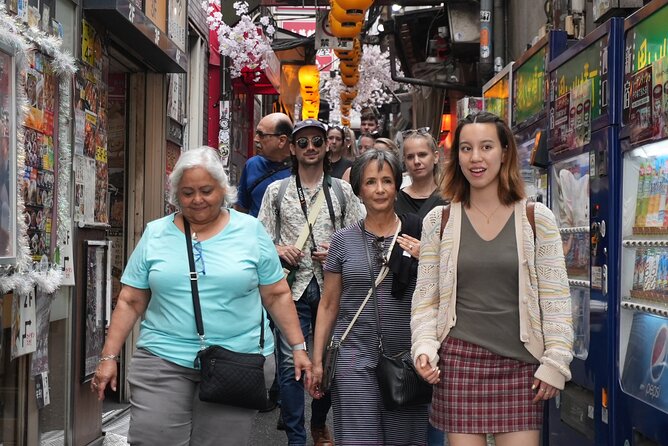
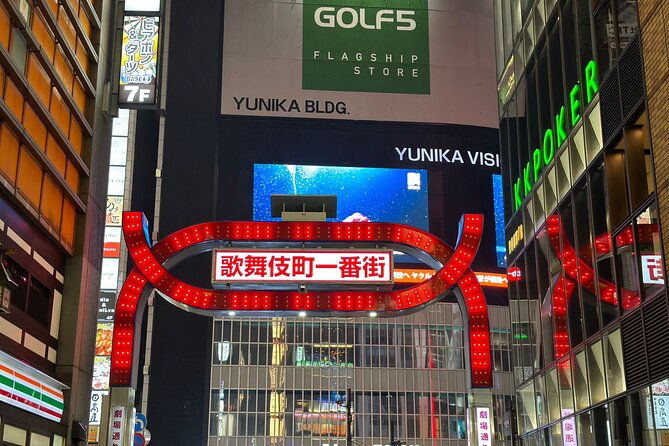
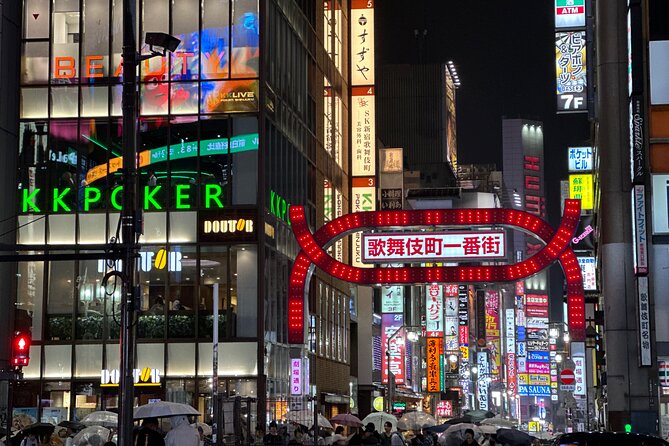
The first stop frames Kabukicho, Shinjuku’s red light district. Instead of treating it like a blur of signs, you get an overview that helps you read what you’re seeing. That kind of context is more useful than you’d expect. Without it, the streets can feel random—bright, crowded, and hard to interpret.
Here’s what you should keep in mind. You are walking through an adult entertainment zone. You don’t need to do anything there besides observe respectfully and keep moving. Still, it can feel uncomfortable for some people, especially if you’re traveling with kids, or if you prefer neighborhood tours that avoid nightlife edges.
The value is that you’ll learn the basics early, so later stops in Shinjuku make more sense. Kabukicho isn’t just about the obvious visuals—it’s the gateway to understanding why Shinjuku has so many layers at once.
Omoide Yokocho: the postwar alley bar lane that people actually remember
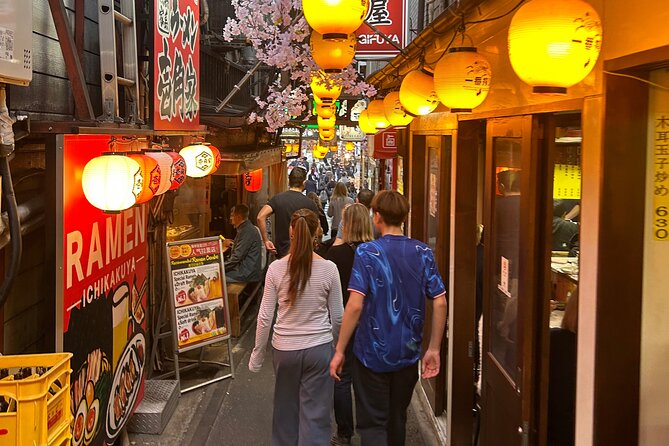
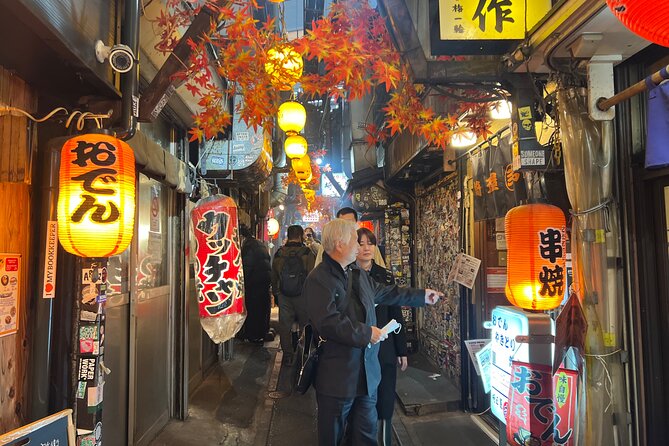
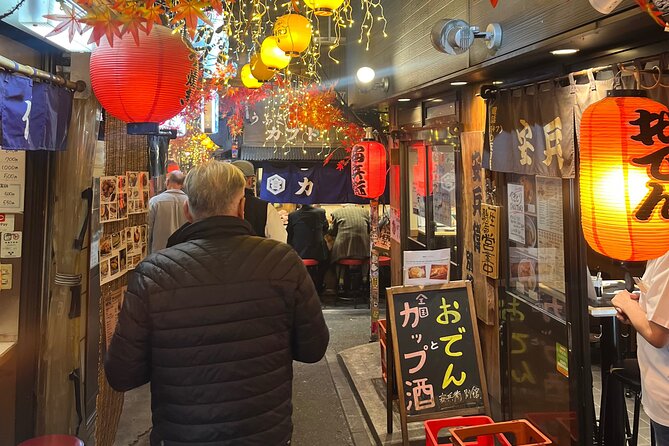
Next comes Omoide Yokocho, nicknamed the piss alley. It’s known for being a tight alleyway packed with small bars, and it has roots in the postwar period, with construction dating to the 1950s. That’s the kind of detail that changes how you look at the place. You’re not just seeing nightlife—you’re seeing a survival story in architecture form.
What makes this stop work on a walking tour is pacing. It’s short enough that you’re not stuck in one spot, but long enough to notice how the alley layout forces you into close-up city life. You’ll pick up cues like what makes the lanes feel timeless and why people keep returning to it even as Tokyo modernizes around it.
One practical consideration: food and drinks aren’t included. So if you want to sample something here, plan to do it on your own after the walk. I like that setup because you can choose what fits your budget and appetite—just don’t expect the tour price to cover meals.
Hanazono Shrine: a calm reset that makes Shinjuku feel human
Then the tone shifts. Hanazono Shrine is one of Shinjuku’s older shrines, and it’s a great introduction to how shrine spaces work in Japan. Even if you’ve visited other shrines, this stop has a special effect because it interrupts the surrounding street energy. After neon and alley noise, a shrine feels like you turned down the volume.
This is the part of the tour where your brain catches up. You start connecting the idea that Shinjuku isn’t only a night destination. It also has long-standing spiritual and community roots. That helps you understand why certain streets and corners feel important beyond entertainment.
A drawback? It can feel like a change of gears. If you want purely nightlife vibes for the whole evening, the shrine stop may feel like a breather rather than a highlight. For most people, though, that contrast is the point—it gives you a balanced snapshot of Shinjuku’s character.
Golden Gai: tiny bars, old-school Tokyo energy, and the right way to look
Your last major stop is Shinjuku Golden Gai, a street of small bars and some of the area’s oldest bar spots. Golden Gai is famous, but what I’ve found is that it’s easy to view it like a photo set. A guided walk helps you slow down and actually notice how the lanes are arranged and why the vibe is so specific.
Golden Gai works because it isn’t a single venue—it’s a network of very small spaces. You see the street-level approach: narrow passages, doorways, and the way the atmosphere changes from one corner to the next. That’s exactly what Shinjuku is like when you strip away the big signage and focus on the human scale.
The best advice I can give you here is to treat it like a neighborhood, not a checklist. Peek in if you’re welcome to do so, watch for the flow of people coming and going, and keep your questions ready for the guide—because the guide commentary can turn what looks like random nightlife into something you understand.
You can also read our reviews of more historical tours in Tokyo



What you’re really paying for: value at $24 for a guided night loop
At $24 per person, this tour sits in a pretty affordable band for a guided, multi-stop evening walk in central Tokyo. The smart part is what’s included with your fee: you’re paying for a walking tour plus a guide, and several key locations have admission included (Omoide Yokocho, Hanazono Shrine, and Golden Gai). Kabukicho itself is treated as an overview, so there’s no extra admission there.
Food and drinks are not included, which is standard for this kind of walking tour. But the tradeoff is that you’re not locked into an expensive set meal you didn’t choose. If you want to eat after, you’ll be better positioned to pick a place, because you’ll know where you are and what kind of street environment you’re in.
Also, the group limit matters. With a maximum of 15 people, it’s easier for the guide to keep an eye on the group and for you to ask questions without shouting. In Shinjuku, that’s not a luxury—it’s how the tour stays smooth.
The guides: why the human factor shows up in the details
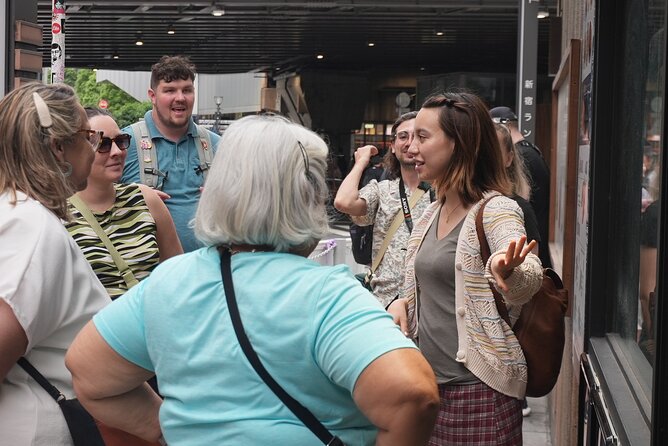
From the feedback you shared, the guides are a real selling point. People specifically called out Haydn and Kane for being social and for having a lot to say about both the area and Japan beyond Shinjuku. One theme across the comments is that questions weren’t just allowed—they were welcomed.
That kind of guide matters on a neighborhood tour because the whole purpose is interpretation. Shinjuku can look like chaos if you only rely on what’s in front of you. A guide helps you connect the dots: why this lane exists, why this area feels different, and what you should notice without feeling like you’re doing research with your feet.
Another practical plus: the guides offered follow-up ideas for where to go afterward. That’s the kind of help that can save you time later, especially if you’re trying to plan dinner or decide between two neighborhoods you’re already excited about.
Logistics that keep the night easy
The start point is Happy Lemon Keio Shinjuku Shop at 1-chōme-1-4 Nishishinjuku, Shinjuku City, Tokyo 160-0023. The tour starts at 5:00 pm and ends back at the meeting point, so you’re not stranded mid-walk. It’s also noted as being near public transportation, which is important in Shinjuku because you’ll likely arrive by train.
You’ll get a mobile ticket, which keeps things simple once you’re in the area. And since the tour is around 2 hours, dress for walking and be ready for an evening atmosphere.
Should you book this Shinjuku alleys tour?
I’d book it if you want Shinjuku in a way that’s both practical and culturally aware. The itinerary hits the recognizable nightlife faces—Kabukicho and Golden Gai—but it also includes stops that slow you down and give you context, like Hanazono Shrine. That combination is what makes this more than a photo walk.
Skip it if your ideal Tokyo evening is purely family-friendly street sightseeing. Because it includes a red-light district overview, this tour has nightlife energy even when it’s educational.
If you’re new to Tokyo, on a tight schedule, or you hate spending time figuring out which streets connect to which, this is a solid use of $24: you’re buying guided navigation, a tight route design, and admission coverage for multiple stops, all in one small-group night walk.
FAQ
How long is the Shinjuku history and alley walking tour?
It runs for about 2 hours.
What time does the tour start?
The tour starts at 5:00 pm.
Where does the tour meet?
It meets at Happy Lemon Keio Shinjuku Shop, 1-chōme-1-4 Nishishinjuku, Shinjuku City, Tokyo 160-0023, Japan.
How much does it cost?
The price is $24.00 per person.
What’s included in the tour price?
The walking tour and a knowledge guide are included. Admission tickets are included for Omoide Yokocho, Hanazono Shrine, and Shinjuku Golden Gai.
Are food and drinks included?
No, food and drinks are not included.
How big is the group?
The tour has a maximum of 15 travelers.
Can I cancel for a full refund?
Yes. You can cancel up to 24 hours in advance for a full refund.