REVIEW · TOKYO
Tokyo: Mount Fuji One Day Trip Lake Kawaguchi & Lake Yamanaka
Book on Viator →Operated by F Trip · Bookable on Viator
Fuji in one packed day is a serious payoff. This one-day trip from Tokyo takes you around Mount Fuji and the Fuji Five Lakes World Heritage area, with classic viewpoints plus a few fun photo stops that feel like bonus side quests. I especially like how the schedule hits several top sights without making the day feel random.
Two things I like a lot: the English-speaking guide (I’ve heard names like Taiyo, Yuan, Kyo, Lucy, and Saki pop up in the guide roster) and the fact that most stops are free to enter, so your money goes mostly to getting there. One possible drawback: it’s a long day of bus time, and the experience can feel more like organized sightseeing-and-photo timing than slow, deep storytelling.
In This Review
- Key highlights you’ll actually feel
- Why This Fuji Day Trip Works from Tokyo
- Group size and bus time: the real logistics of 10 hours
- Lake Kawaguchiko: Fuji from the shoreline, 25 minutes
- Oishi Park: flowers plus lake-plus-mountain framing, 25 minutes
- Lake Yamanaka: the closest Fuji view and the Swan Lake nickname, 25 minutes
- Oshino Hakkai: eight spring-water ponds and a full hour
- The Lawson photo stop near Fujikawaguchiko: 15 minutes of fun
- Chureito Pagoda at Arakurayama Sengen Park: the classic wide view, 1 hour
- Arakura Fuji Sengen Shrine: built in 705, 15 minutes
- Hikawa Clock Shop: calm town street scenes with Fuji behind, 20 minutes
- Guides and pacing: how to make this day feel smoother
- Price and what you’ll still pay: the value math
- Who this tour suits best (and who should skip it)
- Should you book this Tokyo to Mount Fuji one-day trip?
- FAQ
- What’s the price of the Tokyo to Mount Fuji one-day trip?
- How long is the tour?
- Is a mobile ticket included?
- Where does the tour start and what time?
- What’s included in the price?
- Is lunch included?
- What stops are visited during the day?
- How long do you spend at each major stop?
- What’s the maximum group size?
- Is free cancellation available?
Key highlights you’ll actually feel
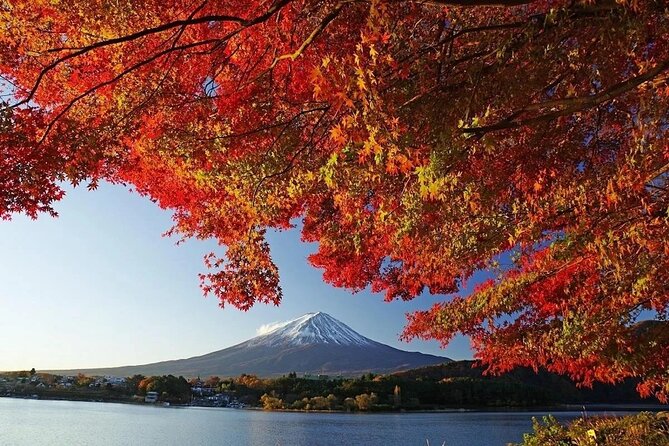
- Mount Fuji views from multiple angles across Lakes Kawaguchi and Yamanaka, plus Arakurayama Sengen Park
- Oshino Hakkai’s eight spring ponds for a different kind of Fuji scenery than the lakes
- Chureito Pagoda photo moment built around the iconic wider view over Fujiyoshida
- Arakura Fuji Sengen Shrine with roots going back to 705
- Lawson stop near Mount Fuji for an easy, quirky snack-and-photo break
- A small-group cap (45 max), usually making it easier to keep track than open-ended day tours
Why This Fuji Day Trip Works from Tokyo
If you want Mount Fuji, you usually have two choices: spend a night nearby, or accept a long day and try to make it count. This tour is built for the second option. In about 10 hours, you get a tight loop that mixes lake panoramas, a historic spring-water site, shrine culture, and that famous pagoda view everyone recognizes.
It also helps that the tour doesn’t ask you to buy your way into the scenery. The stops are mostly listed as free admission, and the price includes all fees and taxes. So you’re not constantly checking price tags while you’re trying to enjoy the day.
The vibe is practical: you’re there for Mount Fuji and the surrounding World Heritage sights, not for a fancy hotel-style experience. Bring your patience for a structured schedule, and you’ll get a lot for the money.
You can also read our reviews of more tours and experiences in Tokyo



Group size and bus time: the real logistics of 10 hours
This is an air-conditioned vehicle day, starting at 8:00 am from STAND T Japan in Marunouchi (Chiyoda), and returning to the meeting point. It runs around 10 hours (approx.), and the tour max is 45 people.
That duration matters because it shapes everything else:
- You’ll have relatively short blocks at each stop, so plan to move quickly once you arrive.
- You’ll want to be ready for photo setup. Long-lens cameras, tripods, and lots of walking can slow a group down.
- Bathroom stops are not guaranteed in the same way as a full-day free-roam itinerary—so treat the bus time as part of the deal and hydrate accordingly.
One meetup reality: the start can feel crowded when multiple groups converge at once. The best approach is boring but effective: show up early, keep your confirmation details handy, and follow your guide’s cues immediately. If your guide sets up coordination through a messaging group, make sure notifications are on and your phone is charged.
Lake Kawaguchiko: Fuji from the shoreline, 25 minutes
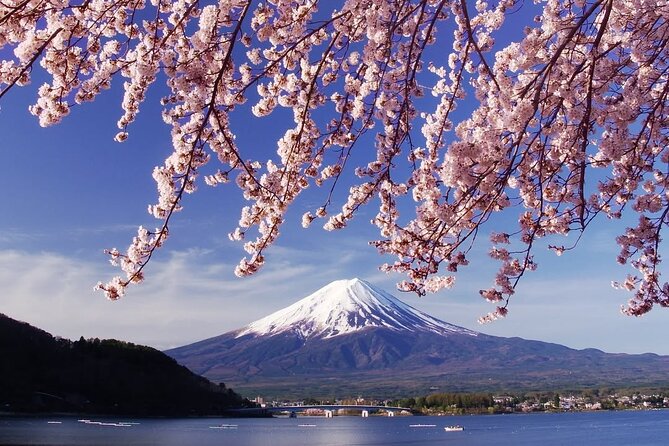
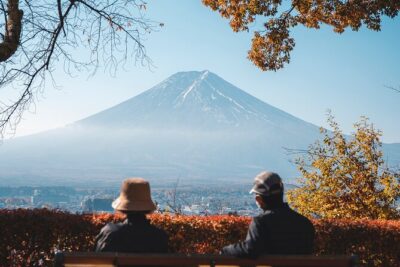
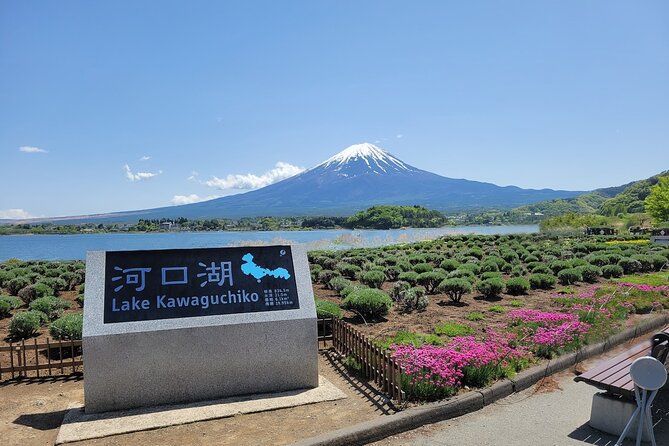
Your morning lands at Lake Kawaguchiko, the most popular of the Fuji Five Lakes. It’s known for sweeping Mount Fuji views from the shore, and it has the longest shoreline of the five lakes. On a calm, clear day, the water can make the mountain look extra sharp and graphic.
At only 25 minutes, this stop is less about wandering and more about positioning. I’d treat it like a photo sprint with breathing space:
- Walk to a viewpoint as soon as you arrive.
- If clouds roll in, don’t panic—use the time to try another angle along the shoreline promenade area, rather than waiting in one spot hoping for instant clarity.
Also, because admission is free here, you don’t lose time at ticket counters. That’s a small thing, but in a day like this it adds up.
Oishi Park: flowers plus lake-plus-mountain framing, 25 minutes
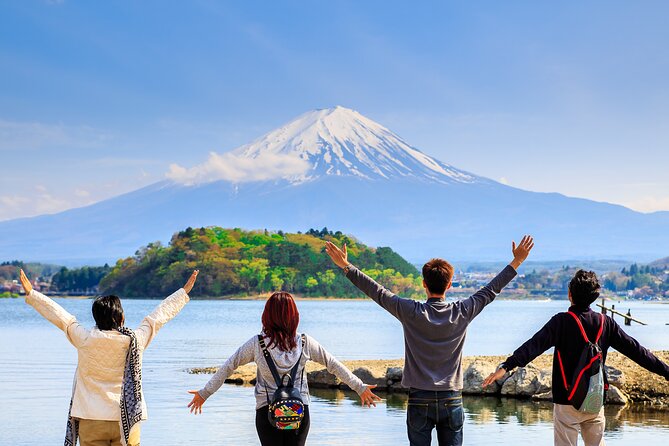
Next up is Oishi Park, a scenic area where you can take in flowers, Lake Kawaguchi, and Mount Fuji all at once. The lakeside promenade is designed for exactly that layered view, with blooms that change by season.
This is the stop I’d aim for if you want the day to look more like a postcard than a checklist. Even in off-peak bloom periods, the layout gives you something to foreground—pathways, flower beds, and lake edges.
Still, remember the time limit (25 minutes). If you’re photographing, decide early what you want in your frame:
- mountain-centered compositions,
- or a foreground-with-flowers approach.
Either way, keep moving. With a group schedule, standing still too long can make you miss the best angles as the crowd swells.
Lake Yamanaka: the closest Fuji view and the Swan Lake nickname, 25 minutes
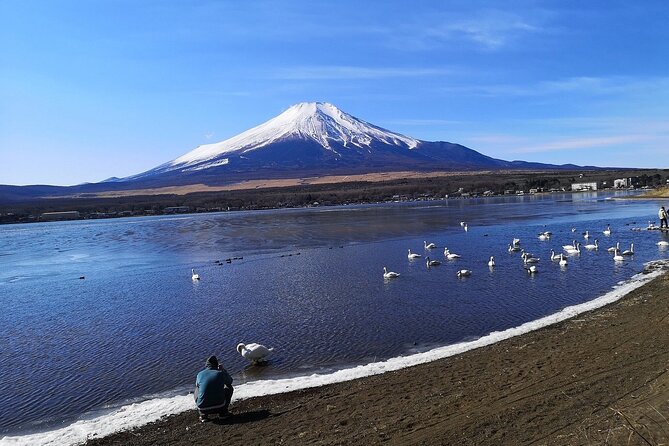
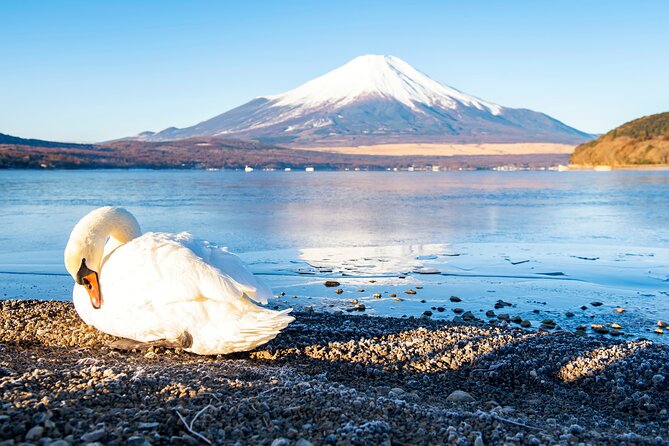
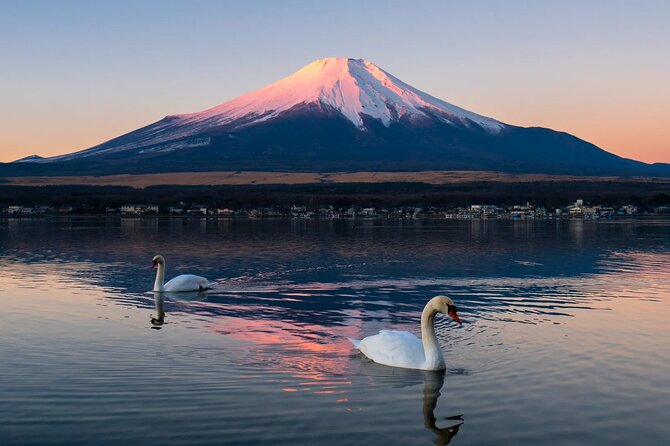
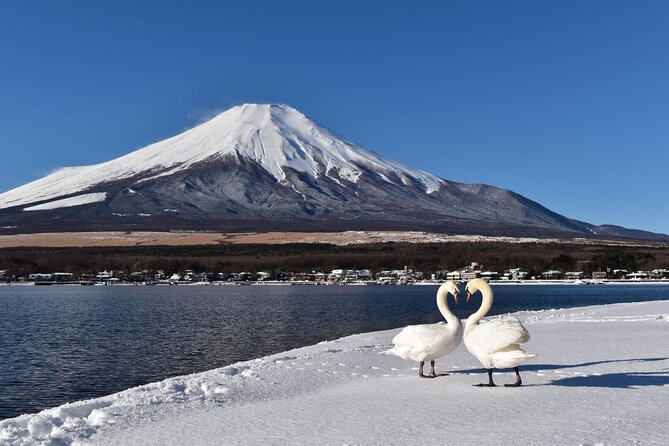
Lake Yamanaka (called Swan Lake) is the largest of the Fuji Five Lakes and also one of the closest to Mount Fuji among them. This is why it often feels like the tour pivots from lakeside beauty into direct mountain attention.
With 25 minutes total, the goal is simple: find your best view quickly and get your photos before the day’s light changes too much. If you’re the kind of person who loves reflections, spend your first minutes scanning for calmer water and then lock in your spot.
Also, because admission is free, you can spend the time on the view instead of logistics.



Oshino Hakkai: eight spring-water ponds and a full hour
Then the tour slows down a bit at Oshino Hakkai, a village known for eight clear spring water ponds. It’s recognized as one of the Top 100 Famous Waters of Japan and is classified as a Natural Monument. This is your most “different” stop of the day: less mountain framing, more water systems and the way Fuji’s region feeds local life.
You get 1 hour here, which is a meaningful contrast to the lake time. That hour is long enough to wander at a comfortable pace and actually look at how the ponds sit in the village setting.
What makes this stop valuable on a one-day itinerary is the variety. Lakes are views; Oshino Hakkai is a place. If your Fuji day feels too photo-heavy, this is the moment that adds texture—clear water, ponds, and a sense that people have been using this landscape in a practical way for a long time.
The Lawson photo stop near Fujikawaguchiko: 15 minutes of fun
Next is the Lawson Fujikawaguchiko Town Hall area—an Instagram-famous Mount Fuji photo spot. Think of it as a quick, low-stress break between the bigger sights.
You get 15 minutes, which is perfect for:
- getting one memorable street-photo style shot,
- and grabbing something small to keep you going.
The tour doesn’t include lunch, so this kind of stop can be useful. I’d bring some cash or have money ready for snacks and drinks because you may want to buy something on the spot.
Chureito Pagoda at Arakurayama Sengen Park: the classic wide view, 1 hour
This is the big photo magnet: Chureito Pagoda in Arakurayama Sengen Park. It’s famous for panoramic views that include the pagoda, Mount Fuji, and Fujiyoshida city at the foot of the mountain.
You get 1 hour, which helps, because this is where crowds concentrate. If the weather cooperates, the view is dramatic. If it doesn’t, the park still gives you a strong structure—stairs, sightlines, and a classic silhouette that works in many conditions.
Practical tip: decide quickly whether you want the “whole scene” view or a tighter composition. With a group, you won’t have time for endless back-and-forth. One good set of angles will beat ten rushed attempts.
Arakura Fuji Sengen Shrine: built in 705, 15 minutes
Just nearby is Arakura Fuji Sengen Shrine, described as being built in 705 and serving as a guardian shrine for over 1,300 years. People come here seeking protection and good luck themes tied to local beliefs and harmony.
You only get 15 minutes, so this is a quick cultural stop rather than a deep ceremony experience. Still, it’s a worthwhile pause because it grounds the day. It reminds you Mount Fuji isn’t just a view people photograph; it’s also part of religious and community traditions.
If you’re the type who likes history, use these minutes to read signs, look at the structure, and treat it as a reset before the final town stop.
Hikawa Clock Shop: calm town street scenes with Fuji behind, 20 minutes
Finally, the tour heads to Hikawa Clock Shop, where a serene path leads to an iconic mountain view backdrop and classic Japanese street scenes. This is one of those spots that feels like a reward—less “must-see monument,” more “quiet moment to breathe and shoot casually.”
You get 20 minutes, which works well because you can:
- walk the path,
- grab a couple of photos with the clock-shop vibe in the frame,
- and then regroup easily for the return ride.
Guides and pacing: how to make this day feel smoother
The guide experience is a big part of why people rate tours like this highly. I’ve seen comments praising guides like Taiyo and Yuan for keeping everyone on track and giving clear instructions, and others praising Kyo and Lucy for being especially helpful. Saki also gets shout-outs for personality and for helping with photos.
Here’s how to use that to your advantage:
- Listen for the guide’s exact meetup points and departure times. This schedule is tight by design.
- Don’t wander off “just for a minute” at each stop. One person’s delay can ripple through the whole group.
- If your guide uses a messaging group (WhatsApp is mentioned as helpful for coordination), check it and follow instructions quickly.
One more reality check: a few people feel the tour is mainly about transportation and photo stops. That’s not bad—it’s just the trade-off. If you want extensive narration or long guided walks, this style may feel a bit rushed. But if you want efficient Fuji hits from Tokyo, it’s built for that.
Price and what you’ll still pay: the value math
At $58.90 per person, the tour price is positioned as a budget-friendly way to reach the Fuji area without dealing with train changes and complicated schedules. What you’re really paying for is time and coordination: a driver, an air-conditioned vehicle, and organized stops across multiple sights.
Included:
- Air-conditioned vehicle
- All fees and taxes
Not included:
- Lunch
- Other personal expenses
Since most stops are described as free admission and the tour includes fees/taxes, the major “you’ll need to budget” item is food. If you want lunch, plan to buy it yourself. Since one piece of advice you’ll see repeated is to bring cash for lunch purchases, I’d do the same just to stay flexible.
In short: you’re not paying to enter parks and shrines all day—you’re paying to get there, get guided, and get a full best-of Fuji day without planning it yourself.
Who this tour suits best (and who should skip it)
This one-day trip is a great match if:
- you’re staying in Tokyo and want a classic Mount Fuji day without over-planning,
- you want photos at multiple famous spots (lakes, Oshino Hakkai, Chureito Pagoda),
- you like having an English-speaking guide and a clear timetable,
- you’re comfortable with lots of bus time and short stop durations.
It may be less ideal if:
- you hate rigid schedules and prefer slow wandering,
- you want a lot of deep, extended explanations at every stop,
- you’re sensitive to crowds at the most famous viewpoints (like the pagoda area).
If you’re somewhere in between, that’s normal. This style tour works best as a planning shortcut. You can always add a slower day in the Fuji area later if you want more space.
Should you book this Tokyo to Mount Fuji one-day trip?
I’d book it if your goal is simple: see Mount Fuji and the surrounding icons in one long, organized day from Tokyo. The value is strong because so many sights are free, the price includes the vehicle and fees, and the route covers both the scenic lakes and the cultural stops.
I’d think twice if you’re expecting a calm, quiet, long-stay experience. This is efficient sightseeing with tight time blocks. Go with the right mindset, show up early, follow your guide’s instructions, and you’ll get what you came for: a Fuji-focused day that hits the major photo and culture highlights without the stress of doing it alone.
FAQ
What’s the price of the Tokyo to Mount Fuji one-day trip?
The tour costs $58.90 per person.
How long is the tour?
It runs for about 10 hours.
Is a mobile ticket included?
Yes, the tour uses a mobile ticket.
Where does the tour start and what time?
It starts at STAND T Japan, 100-6590 Tokyo, Chiyoda City, Marunouchi, 1-chōme51 1F, at 8:00 am.
What’s included in the price?
The price includes an air-conditioned vehicle and all fees and taxes.
Is lunch included?
No, lunch is not included.
What stops are visited during the day?
Key stops include Lake Kawaguchiko, Oishi Park, Lake Yamanaka, Oshino Hakkai, the Lawson photo spot, Chureito Pagoda at Arakurayama Sengen Park, Arakura Fuji Sengen Shrine, and Hikawa Clock Shop.
How long do you spend at each major stop?
The tour lists times such as 25 minutes at Lake Kawaguchiko, 25 minutes at Oishi Park, 25 minutes at Lake Yamanaka, 1 hour at Oshino Hakkai, 15 minutes at the Lawson spot, 1 hour at Chureito Pagoda, 15 minutes at Arakura Fuji Sengen Shrine, and 20 minutes at Hikawa Clock Shop.
What’s the maximum group size?
The tour has a maximum of 45 travelers.
Is free cancellation available?
Yes. You can cancel up to 24 hours in advance for a full refund. If you cancel less than 24 hours before the start time, the amount paid is not refunded.