REVIEW · TOKYO
Tokyo: Private City Highlights Tour
Book on GetYourGuide →Operated by Thrive Travels And Tourism · Bookable on GetYourGuide
A day in Tokyo can feel like a blur. This private Tokyo highlights tour keeps it manageable, hitting big icons like Senso-ji and Shibuya Crossing while letting you slow down when it matters. I like the mix of classic and modern Tokyo, and I like the fact you’re not trapped in a rushed bus schedule. One thing to plan for: entrance fees and lunch aren’t included, so your total day spend can be a bit higher than the base price.
If you want a personalized route, this is the right setup. The experience runs about 8 hours with hotel pickup and drop-off, and an English-speaking guide (often named Ahmad/Ahmed in past bookings) who’s praised for being flexible with timing and weather. The only real “catch” is logistics: traffic can push some pick-ups later than expected, so don’t book anything right after your tour ends.
In This Review
- Key Points to Know Before You Go
- Price and Logistics: What $319 Really Buys in Tokyo
- Pickup That Fits Real Tokyo Life (Not a Random Meeting Point)
- Asakusa and Senso-ji: The Big Temple Moment, Without the Chaos Tax
- Meiji Shrine: A Forested Reset Between Tokyo’s Extremes
- Tokyo Skytree: Panoramic Views Worth the Climb (If the Day Allows It)
- Imperial Palace East Gardens and Tokyo Tower: Two Different Kinds of Icon
- Shinjuku Gyoen National Garden: The Quiet Reset Before Shibuya
- Shibuya Crossing: Getting the Famous Scene Without the Guesswork
- Tsukiji Outer Market for Food, Then Takeshita for Fashion
- Taito City: A Bonus Area to Keep the Day From Feeling Too Locked In
- How This Private Format Helps With Weather, Walking, and Real Timing
- The Value Check: Is It Worth $319 Per Group?
- Should You Book This Tokyo Private City Highlights Tour?
- FAQ
- How long is the Tokyo Private City Highlights Tour?
- What is the price for this tour?
- Is the tour private?
- Where does pickup work?
- What’s included in the tour price?
- Are entrance fees and lunch included?
- What language(s) is the guide or greeter?
- Is the tour wheelchair accessible?
- Are pets allowed on the tour?
Key Points to Know Before You Go
- Private group, up to 5 people: your pace, your stops, your questions.
- Hotel pickup and drop-off: less Tokyo-fighting with trains and transfers.
- Icon mix that makes sense: temples + shrines, then viewpoints, then food and fashion.
- Skytree at the right angle: panoramic views, and Mt. Fuji only if the day is clear.
- A guide who can adjust: especially useful if the weather turns ugly.
- Comfort matters: you’ll walk, so bring comfortable shoes.
Price and Logistics: What $319 Really Buys in Tokyo
The price is $319 per group (up to 5) for an 8-hour private experience. That matters because Tokyo can get expensive fast when you add taxis for multiple people or hire several separate tickets for guides and transit. Here, you get a private vehicle plus a guide option, along with petrol and highway tolls, so the day feels “one bill” rather than a bunch of mini costs.
What’s not included is just as important. Entrance fees are extra, and lunch isn’t included, so plan for meals on your own. WiFi is provided onboard, if available, and you can count on a hotel lobby pickup with the guide waiting about 10 minutes before the scheduled time.
One practical note: sometimes the driver can be delayed up to 30 minutes due to traffic on highways. In a city like Tokyo, that’s not shocking, but it does affect how tightly you should plan the rest of your day.
You can also read our reviews of more city tours in Tokyo


Pickup That Fits Real Tokyo Life (Not a Random Meeting Point)
This tour starts with pickup somewhere in Tokyo—hotels, hostels, apartments, or other addresses—so you’re not trying to assemble everyone at a station you might not know. It’s also worth knowing that pickup isn’t available from airports, ports, and stations, so if you’re staying near one, you may need to arrange a short transfer first.
The group is private, and the vehicle is reserved for your day. That’s a real quality-of-life upgrade when you’re bouncing between areas like Asakusa, Shibuya, and Tsukiji—places that can be only a short ride apart, yet painful to connect quickly on your own.
If you’re the kind of traveler who likes to plan your day around convenience (and not around train schedules), you’ll probably appreciate this.
Asakusa and Senso-ji: The Big Temple Moment, Without the Chaos Tax
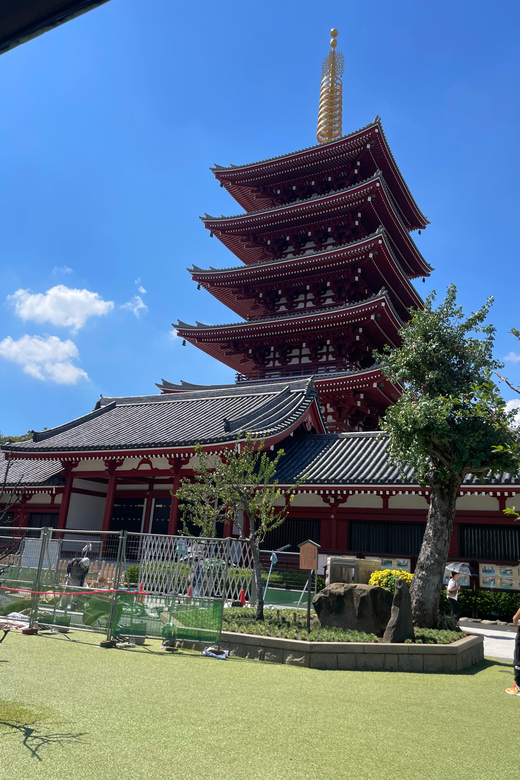
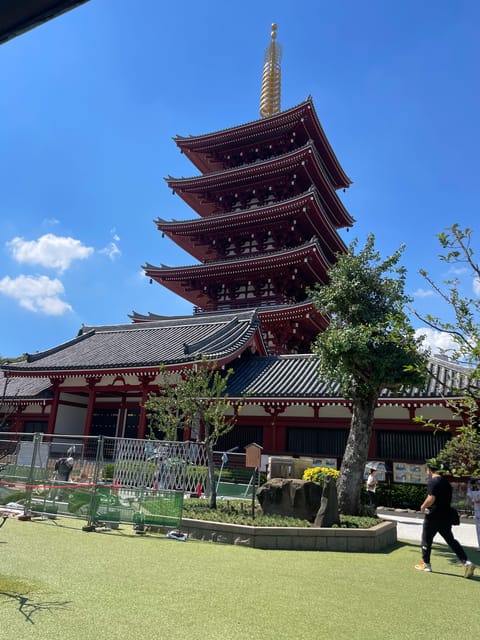
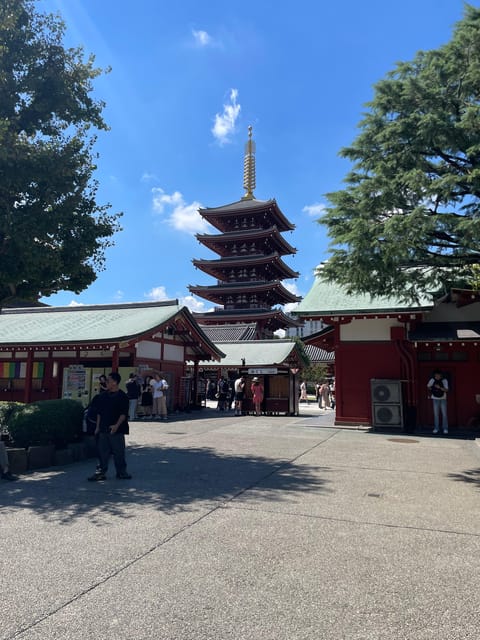
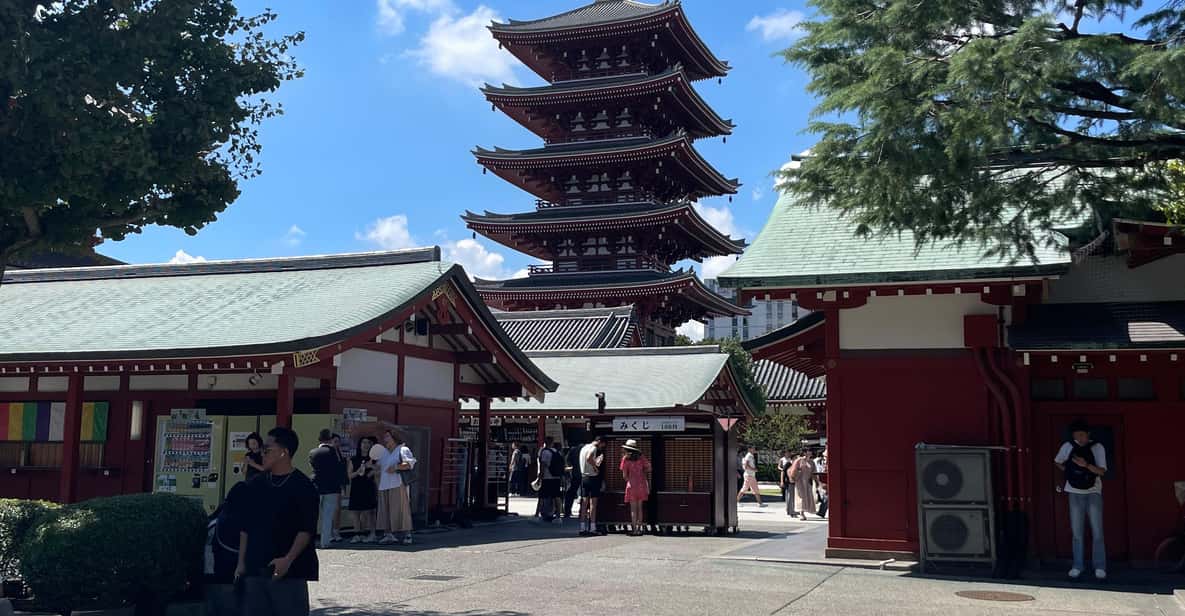
Asakusa is where many first-timers fall in love with Tokyo. You’ll spend about 1 hour at Asakusa Shrine, then it’s natural to continue into Senso-ji, Tokyo’s oldest and best-known Buddhist temple. Senso-ji is significant in a way that’s hard to fake: the main temple complex has been standing since 628 AD, and that age shows up in the atmosphere.
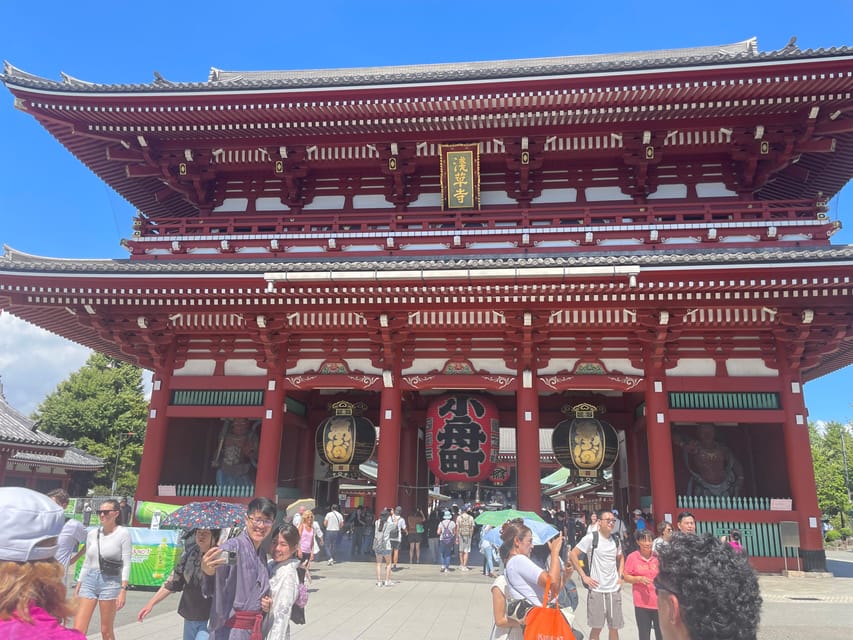
Here’s what makes this stop genuinely worth time. You can walk through Kaminarimon Gate, then browse Nakamise Street where traditional stalls line the path toward the main temple grounds. It’s an easy “slow down” zone—shopping without a high-pressure sales vibe, and sightseeing that doesn’t require you to decode every sign.
One drawback: this is also one of the most popular temple areas, so even with a private guide, you’ll still share space with crowds. The value of having your own guide is that you can choose when to linger and when to move on, instead of being forced into someone else’s pace.
Meiji Shrine: A Forested Reset Between Tokyo’s Extremes
After the temple energy, the tour swings to Meiji Shrine, with about 1 hour of time to visit and walk. This Shinto shrine is dedicated to Emperor Meiji and Empress Shoken, and it’s famous for the shift in mood: a calmer, forested setting that feels like you walked out of the city and into quieter air.
This stop is where your itinerary starts paying you back later. You’re not just ticking a box. You’re breaking up the nonstop Tokyo rhythm, which helps you enjoy the viewpoints and street scenes that come next.
If you’re sensitive to crowd noise or you want a visual change—green paths, quiet shrines, and shaded walking—Meiji Shrine is one of the best places on this route to get that.
Tokyo Skytree: Panoramic Views Worth the Climb (If the Day Allows It)
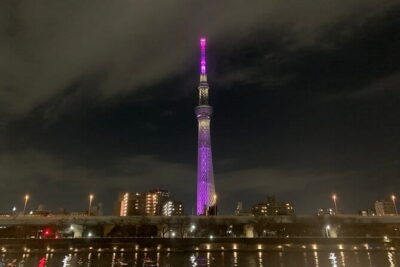
Next up is Tokyo Skytree, the tallest structure in Japan, and the day’s biggest “look at the city” payoff. You’ll have about 1 hour for sightseeing. Skytree reaches 634 meters (2,080 feet), and on clear days you may even catch glimpses of Mt. Fuji from the observation decks.
This is one of those stops where timing matters more than you’d think. In Tokyo, clouds can wipe out the “Fuji moment,” but the skyline views still tend to be impressive. Even if the far distance is hazy, you’ll still get a strong sense of how huge and layered the city is.
A small planning tip: if your goal is the clearest views, ask your guide when you should aim to be at the deck. With a private format, you’re more flexible than on a fixed group schedule.
You can also read our reviews of more private tours in Tokyo


Imperial Palace East Gardens and Tokyo Tower: Two Different Kinds of Icon
You’ll get about 45 minutes at the Imperial Palace area and time for the East Gardens. The Imperial Palace is the residence of Japan’s Emperor, and the gardens around it are open to the public, which makes it a rare chance to see a key civic space without needing special access.
Then you’ll visit Tokyo Tower for about 1 hour. The tower is another classic Tokyo landmark, and pairing it with the palace grounds gives you a useful contrast: one is about formal grounds and ceremony-adjacent calm, and the other is about the city’s skyline identity.
If you like “same-city comparisons,” this pair works well. You see Tokyo from ground-level gravitas in the palace area, then shift to a more modern, skyline-driven viewpoint with Tokyo Tower.
Shinjuku Gyoen National Garden: The Quiet Reset Before Shibuya
Before the day pivots hard into street energy, you’ll have about 1 hour at Shinjuku Gyoen National Garden. This is your break from landmark-hopping. Gardens give you something Tokyo is great at: a change of pace that doesn’t require you to leave the city.
In a long day like this, a garden stop isn’t “extra.” It prevents the itinerary from turning into nonstop standing and photo-shooting. If your feet are already warm by mid-afternoon, this is where you’ll thank yourself for building recovery time into the schedule.
Shibuya Crossing: Getting the Famous Scene Without the Guesswork
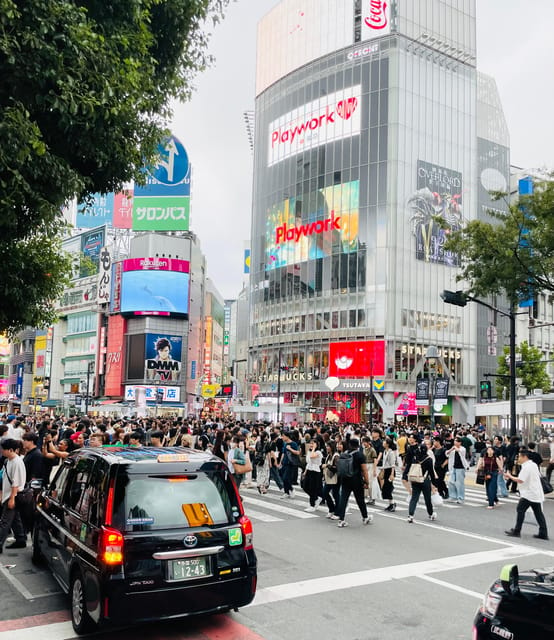
Then comes Shibuya Crossing, with about 45 minutes to visit. It’s one of the busiest intersections in the world and a symbol of Tokyo’s modern, fast-moving street culture. The scramble is famous for a reason, and being there in person is still different from any video.
The advantage of having a guide is simple: you don’t waste time figuring out where to stand, which sides are easiest to reach, and how to get across without getting swept by crowds. You can also adjust your timing depending on what’s happening at that exact moment.
If you want iconic photos, think about your spot early. If you want to just soak in the moment, give yourself time to watch how the pedestrian flow behaves.
Tsukiji Outer Market for Food, Then Takeshita for Fashion
After Shibuya, you’ll head to Tsukiji Outer Market (time varies) and then on to Takeshita Street for about 30 minutes. Tsukiji is a food-focused zone, and even though the main fish market moved to Toyosu, the Outer Market remains a popular destination for fresh seafood and local eats.
You can expect a classic market setup: stalls and small restaurants where you’ll see sushi, sashimi, and street food like tamagoyaki (Japanese omelette). This is a great place to sample without committing to a full sit-down lunch—especially since lunch isn’t included in the tour.
Then you shift gears at Harajuku and Takeshita Street, where trend fashion and youth culture take center stage. Takeshita is more about shopping and people-watching than quiet sightseeing. It’s loud, colorful, and fast, and that makes it a good match after Tsukiji’s sensory food chaos.
Taito City: A Bonus Area to Keep the Day From Feeling Too Locked In
The route also includes a stop in Taito City for about 30 minutes. Taito is known as a classic Tokyo district area, and in this kind of tour, the value is not a deep lecture. It’s a chance to wander a bit, follow your interests, and avoid the “only big monuments” trap that makes some highlight tours feel thin.
Because the tour is private, this time can be used more flexibly. If you’re shopping, looking for snacks, or want a different neighborhood feel, that half-hour can be surprisingly useful.
How This Private Format Helps With Weather, Walking, and Real Timing
Tokyo weather can flip fast. In past bookings, the guide has been praised for staying flexible when weather turned rough and finding backup options instead of forcing the original plan no matter what. That’s a big deal. It means you’re not stuck doing the same “standard photos” if the sky is gray and miserable.
Walking is another realistic concern. This tour is wheelchair accessible, and there’s also flexibility for people with walking difficulties—your guide can help reduce long walking distances by dropping you closer when possible. Still, you should bring comfortable shoes, because several stops involve moving through busy areas and sightseeing around major attractions.
Timing also gets easier when you’re not fighting transit. You’re in a private vehicle throughout the day, which helps you shift from viewpoint to temple to intersection to shopping zones without losing time to transfers.
One more practical tip: if you have specific must-see priorities (history, shopping, or technology themes are specifically supported), tell your guide early. The “private” part is not just the car; it’s your ability to steer what you focus on.
The Value Check: Is It Worth $319 Per Group?
Let’s do a quick reality check. Paying $319 per group up to five can be good value because you’re effectively paying for:
- hotel pickup and drop-off
- private transportation with tolls and petrol included
- a guide experience (when selected)
- time to cover many top Tokyo areas in a single day
You do have additional costs for entrance fees and lunch, and you’ll still want to budget for personal shopping. But compared with cobbling together taxis plus separate paid guides plus entrance tickets on a tight schedule, this private format often feels like the “less headache” option.
This tour is especially attractive if:
- you have limited time in Tokyo
- you want a clear highlights route but still want room to breathe
- you’re traveling with up to four companions (family, friends, small group)
- you’d rather spend energy sightseeing than navigating train stations
It may be less ideal if you’re the type who hates walking at all. Even with a car, some areas are spread out and crowded. If you’re in that situation, communicate needs early so the guide can minimize your walking.
Should You Book This Tokyo Private City Highlights Tour?
If your goal is to see Tokyo’s greatest hits—Skytree, Senso-ji, Meiji Shrine, Shibuya Crossing, Tsukiji Outer Market, and Harajuku/Takeshita—without turning your day into a transit puzzle, I think this tour is a smart booking. The private pace is the main reason: you can linger where you care and move on when you don’t.
Before you book, do this small homework: list which two stops matter most to you, and plan for entrance fees and lunch on top of the base price. If you share walking or timing needs with your guide ahead of time, you’ll get a better, smoother day.
FAQ
How long is the Tokyo Private City Highlights Tour?
The tour duration is 8 hours.
What is the price for this tour?
It costs $319 per group for up to 5 people.
Is the tour private?
Yes. It’s a private group experience.
Where does pickup work?
Pickup is available from hotels, hostels, apartments, or other addresses in Tokyo. Pickup is not available from airports, ports, and stations.
What’s included in the tour price?
Hotel pickup and drop-off, transportation by private vehicle, petrol, highway tolls, and WiFi onboard if available. There may also be a driver-guide option if selected.
Are entrance fees and lunch included?
No. Entrance fees and lunch are not included.
What language(s) is the guide or greeter?
English and Japanese.
Is the tour wheelchair accessible?
Yes, the tour is wheelchair accessible.
Are pets allowed on the tour?
No, pets are not allowed.